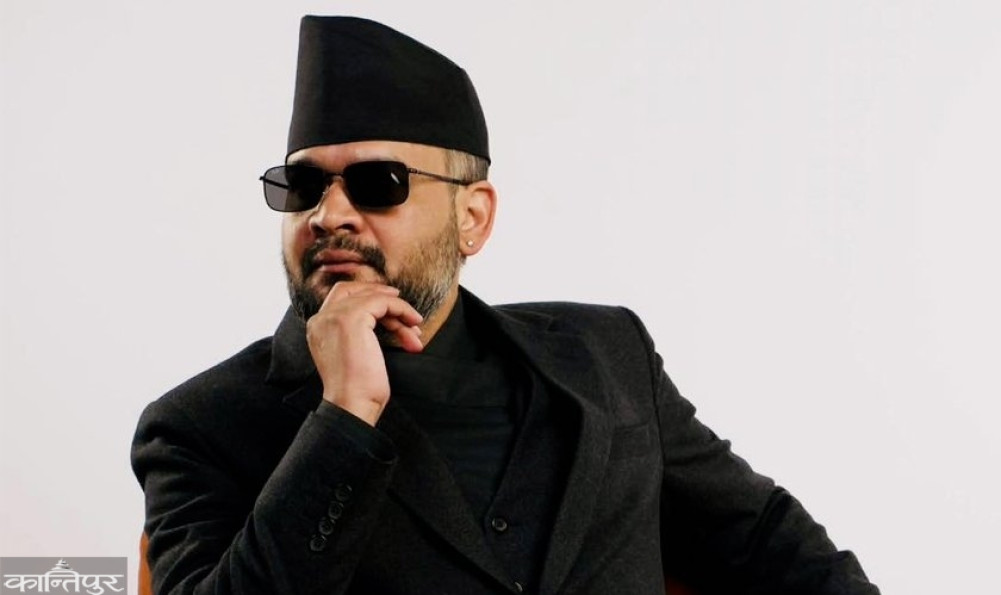
Preparations are underway to elect the parliamentary party leader, appoint the Prime Minister, and form the Council of Ministers as soon as the proportional representation lawmakers receive their certificates.
We use Google Cloud Translation Services. Google requires we provide the following disclaimer relating to use of this service:
This service may contain translations powered by Google. Google disclaims all warranties related to the translations, expressed or implied, including any warranties of accuracy, reliability, and any implied warranties of merchantability, fitness for a particular purpose, and noninfringement.
The Rashtriya Swatantra Party (RSP) is going to amend the party statute by electing senior leader Balendra Shah as the leader of the parliamentary party, paving the way for the appointment of the Prime Minister. The RSP is going to amend the statute that allows ordinary members of the party to elect the leader of the parliamentary party.
The provision related to the election of the leader of the parliamentary party is going to be amended in Article 66 of the Rastriya Swatantra Party's statute, 2079 BS. The RSP is moving towards the amendment after the said provision of the statute was not implemented in 2079 BS and will not be implemented in the coming days either. The President will appoint Shah as the Prime Minister after the leader of the RSP parliamentary party, which has 182 MPs in the 275-member House of Representatives.
The Nepali Congress is amending its statute and electing Shah as the leader of the parliamentary party. According to the RSP leaders, President Ravi Lamichhane and senior leader Shah are in continuous discussions on issues including the selection of proportional MPs, amending the statute. Lamichhane, who fell ill after the election, is resting. According to his secretariat, he had also reached the Maharajgunj Teaching Hospital for a 'follow-up' on Thursday. Lamichhane is taking medicine through a 'cannula'. 'Even though the doctor has advised him to remain on bed rest, the Speaker is continuously discussing with senior leader Shah and others on issues including government formation,' said a member of the secretariat.
According to Shishir Khanal, a leader elected to the House of Representatives from Kathmandu-6, consultations are being held to amend the statute by calling a secretariat meeting and a central committee meeting on the advice of the party's top leadership. 'The provision of the statute was not used in 2079 BS either. The lawmakers themselves chose the leader of the parliamentary party. Since it is unlikely to be used this time too, preparations are underway to amend it and select the leader of the party,' he said.
Section 25 of the Political Parties Act, 2073 BS, contains a provision regarding the election of the leader of the parliamentary party. ‘As per the instructions of the party concerned, the members of the parliamentary party of the federal parliament or the provincial assembly shall elect one of their number as the leader of the parliamentary party,’ the act states. The act, which clarifies that only the parliamentarians shall elect the leader of the parliamentary party, has made provision for the remaining election process to be as mentioned in the statute of the party concerned.
Article 66 of the RSVP Statute, 2079 BS states that a parliamentary party in the House of Representatives shall be formed in such a way that every member elected to the federal parliament shall be a member of the parliamentary party. It is stated that the party shall have one leader of the parliamentary party, one deputy leader, one chief whip, one whip and one treasurer. The act relating to political parties provides for the nomination of the deputy leader, whip or member secretary by the party leader.
Article 66 (8) of the RSVP party statute provides for the election of the parliamentary party leader by the ordinary members of the party. Clause 8 (a) of Article 66 states, ‘Before the federal election, an election shall be held to select the leader of the parliamentary party of the House of Representatives among the candidates selected by the party for the federal election through proportional and direct elections. All ordinary members of the party shall be eligible to vote in the election (of the party leader).’
The statute provides that the candidate who secures 50 percent of the votes cast in the election shall become the parliamentary party leader. If no candidate secures 50 percent of the votes, a re-election shall be held between the two candidates who secure the highest number of votes. The statute also provides that the leader of the parliamentary party shall become the Prime Minister if the party takes the lead in the government. The RSVP has not complied with the statute’s provision that the parliamentary party leader shall be elected before the election.
Point No. 4 of the agreement reached between Lamichhane and Shah on 13 Poush during the unity process states, ‘Ravi Lamichhane will remain the central president of the National Independent Party, and Balendra Shah will be the leader of the parliamentary party and the future prime ministerial candidate after the upcoming House of Representatives elections.’ Since it has been agreed to make Shah the leader of the parliamentary party and the prime minister, the RSVP is preparing to amend its statute.
When will the parliamentary party leader be selected?
RSP co-spokesperson Pratibha Rawal informed that preparations are being made to convene a secretariat meeting and a central committee meeting. ‘Since senior leader Balendra Shah has been declared the leader of the parliamentary party and the future prime minister and has gone to the election, he will become the leader of the parliamentary party and the prime minister. The RSP will arrange the procedures for that,’ she said. The Election Commission sent a letter to the relevant political parties on Thursday to submit the names of candidates to be elected under the proportional electoral system within three days. The RSVP will have to send the names of 57 people from the proportional electoral system. Those names will have to be selected from the closed list submitted to the commission. According to leader Shishir Khanal, the names of the candidates to be elected under the proportional electoral system will be finalized in a secretariat meeting.
Preparations are underway to select the leader of the parliamentary party as soon as the proportional representation MPs receive their certificates, take the oath of office of the prime minister and form the council of ministers.
Leader Khanal said that senior leader Shah will be unanimously elected as the leader of the parliamentary party after amending the party’s statute. ‘There is no dispute over who will be the leader of the parliamentary party. We only need to complete the process. We are preparing to move forward unanimously by amending the statute,’ he said. As the Election Commission has set a deadline for sending the names of candidates to be elected through proportional representation, preparations are underway to finalize the names and make a decision on amending the statute by Saturday.

According to GC, preparations are underway to distribute certificates to proportional MPs within the first week of Chaitra. After providing certificates to proportional MPs, the Election Commission will submit the House of Representatives election report to President Ram Chandra Poudel.
The RSVP plans to amend the statute by the time the proportional MPs receive their certificates. After the proportional MPs receive their certificates from the commission, Shah will be elected as the parliamentary party leader.
Party President Ravi Lamichhane and senior leader Balendra Shah are in continuous discussions on the selection of proportional MPs, amending the statute, and other issues.
When will the Prime Minister be appointed?