What is the process for implementing the report? How does the government make it public, and what can we learn from the experience of past commissions? We have attempted to answer these questions through the following six Q&As.
We use Google Cloud Translation Services. Google requires we provide the following disclaimer relating to use of this service:
This service may contain translations powered by Google. Google disclaims all warranties related to the translations, expressed or implied, including any warranties of accuracy, reliability, and any implied warranties of merchantability, fitness for a particular purpose, and noninfringement.
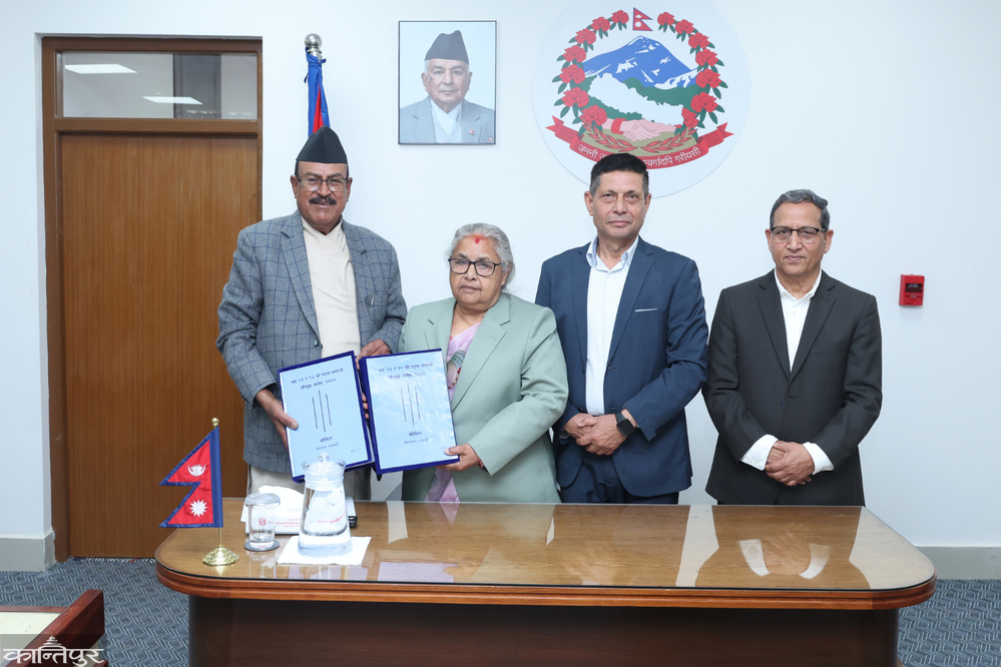
After the 'Gen-G' movement on Bhadra 23 and 24, a new government was formed under the leadership of Sushila Karki. The government formed a commission of inquiry on Asoj 5 under the leadership of Gauri Bahadur Karki to investigate the incident. The commission was given the responsibility of investigating the repression, violence and damage at that time and making recommendations. After three extensions, the commission has submitted its report to the government after months of investigation.
Now the question has arisen – what is in this report? Will the government make it public or not? Most importantly – will this report be implemented or not?
What is the process of implementing the report? How will the government make it public and what can the experience of past commissions teach us? We have tried to find the answers to these questions through the following 6 questions and answers.
Why are such commissions of inquiry formed from time to time?
There is a practice of forming such commissions to investigate and collect data and evidence about a specific incident. Especially in cases related to political change and political involvement, the practice of forming such mechanisms as an exception is when the regular state machinery cannot investigate.
These commissions do not have the executive power to investigate crimes themselves. But they collect facts and evidence and recommend action against those involved, the implementation of which is even binding.
To investigate the repression of the people's movement of 2046 BS, the interim government led by Krishna Prasad Bhattarai had formed a commission of inquiry under the leadership of the then former judge Janardan Lal Mallik, which was later known as the Mallik Commission.
A commission (called the Rayamajhi Commission) was formed under the leadership of former Supreme Court judge Krishna Jung Rayamajhi to investigate the repression of the people's movement of 2062/063 BS. The Lal Commission was formed under the leadership of former judge Girish Chandra Lal to study the suppression of the Madhesh movement, and there are demands to make its report public from time to time.
Inquiry commissions have been formed not only on the movement and suppression, but also in other situations. In 2058 BS, the Lamsal Commission was formed under the leadership of the then Supreme Court judge Bhairav Prasad Lamsal to investigate the assets of those holding public office.
What is the legitimacy of the commission's investigation?
The work of the commission of inquiry is limited to the extent of collecting facts and analyzing their evidence. The Supreme Court has set a precedent that no person can be convicted based on the report of the commission itself.
However, there is no legal basis for the recommendation that data be collected and analyzed based on evidence. There are also examples of several state bodies taking action according to regular procedures based on the report given by the commission of inquiry.
The Supreme Court itself has held that the recommendations of the inquiry commission raise moral questions on the person concerned and that they should be held accountable to the extent of the evidence found.
 The inquiry commission's report has been submitted, what happens now?
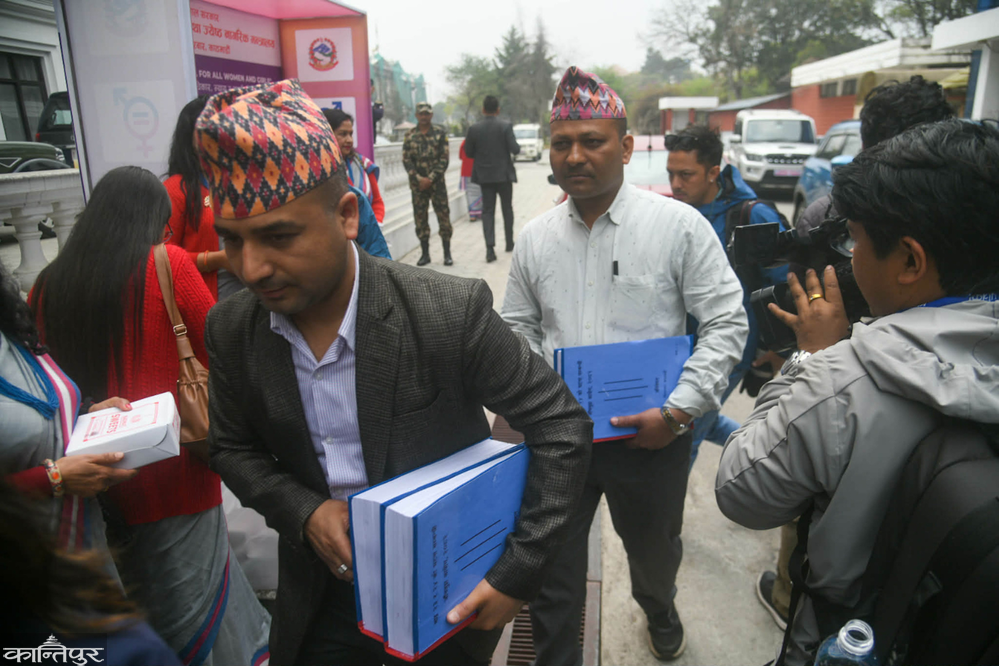
The inquiry commission on the incidents of 23 and 24 Bhadra has recommended an investigation against the then Prime Minister KP Sharma Oli, Home Minister Ramesh Lekhak and other high-ranking officials. The commission led by Gauri Bahadur Karki submitted the report on Sunday, a day before the deadline extended for the third time.
After receiving the report, Prime Minister Karki gave an initial response that she would study it and take the necessary steps. The government will decide whether to make the full details of the report public or only the conclusions. After the commission submitted its report, the Prime Minister called Home Minister Om Prakash Aryal and some ministers and commission officials to Baluwatar.
The 'Gen-G' group involved in the movement is now pressuring the government to make the full report public. In this situation, a question naturally arises - what will be the process of this report now? Will this report be made public? Even if it is made public, how will it be implemented? Looking at the experience of the reports of such commissions formed in the past in Nepal, these questions seem even more important.
In Nepal, a commission of inquiry is usually formed by a decision of the Council of Ministers. Therefore, after the commission submits its report, the report reaches the Council of Ministers. Now, even if the commission led by Gauri Bahadur Karki submits its report to the Prime Minister, it should be formally submitted to the Council of Ministers.
According to Home Minister Om Prakash Aryal, the responsibility for implementing the report of the commission lies with the Council of Ministers. According to him, initially the Council of Ministers studies the report and decides whether to accept it or not. Only after the Council of Ministers accepts the report, the process of taking it towards implementation begins.
In other words, its recommendations are not implemented just by submitting the report. A formal decision of the government is required. After the Council of Ministers approves the report, various bodies may be given responsibilities depending on the nature of the recommendations in it.
For example, if someone needs to be taken into action, legal proceedings may be initiated, if there is a suggestion for policy reform, a policy change may be required, or if relief is needed for the victim, a decision may be made to provide compensation.
Will the government make the report public or not?
Whether or not the report is made public also ultimately depends on the decision of the Council of Ministers. After the commission submits the report to the government, the government can make it public in full, make only a brief description public, or keep some sensitive parts confidential.
According to Home Minister Aryal, after the commission officials submit the report to the Prime Minister, it now reaches the Council of Ministers. The process of making it public begins only after the Council of Ministers studies and approves it. Because such reports often point out the responsibilities of political leaders, security personnel, or high-ranking state officials. Therefore, there are examples of governments sometimes delaying the publication of the report or making it public only partially.
The Lal Commission report is one of these . The government has not yet made the report of the commission formed to investigate several cases . Before the promulgation of the constitution, 56 protesters and 10 policemen, including SSP Laxman Neupane, died due to clashes and violence that took place between 2015 and 2019. An inquiry commission headed by Girish Chandra Lal was formed to investigate the incident . However, the government has not yet made that report public .
In that case, whether to make the report public or implement it also depends on the role of the government formed after the movement . It seems that the issue of making the report of the commission led by Gauri Bahadur Karki public and implementing it will also be linked to the incoming government .
In an interview with Kantipur, Home Minister Aryal said that a new mandate has come after the elections held on 21 Falgun and that in such a situation, a policy decision may be necessary to implement some recommendations . He did not reveal what the policy decisions are. However, Aryal has said that the new government will have a role after the elections. This indicates that not all the recommendations in the report will be implemented immediately. Some recommendations may require political consensus, legal amendments or long-term policy changes to be implemented.
What is the experience of commissions formed after past movements?
The practice of forming investigation commissions after movements is not new in Nepal. The Mallik Commission formed after the 2046 BS people's movement and the Rayamajhi Commission formed after the 2062 BS people's movement are prime examples of this. But many questions have been raised when looking at the implementation status of the reports of those commissions.
The Rayamajhi Commission investigated the second people's movement.
After 26 people died and more than 4,000 were injured during the 2062/063 mass movement, an inquiry commission was formed under the leadership of former Supreme Court Justice Krishna Jung Rayamajhi. The commission submitted its report to the government on Kartik 30, 2063 after a seven-month investigation.
The report found 31 high-ranking officials in the government guilty from Magh 19, 2061 to Chaitra mid-year. It suggested that a law be made to take action against ministers and assistant ministers.
In addition, high-ranking officials of the security agencies and low-level employees were also held responsible. However, many of the recommendations of the report were not implemented. Although some compensation was given to the victims, no legal action was taken against those found guilty.
 After 45 people died during the 2046 mass movement, a high-level inquiry commission was formed under the chairmanship of Janardan Mallik. The commission held the political leadership and administrative machinery involved in suppressing the movement responsible. The report mentioned that the then prime ministers and security policy-making bodies had adopted a policy of repression. The commission also recommended that the then King Birendra take action against them according to their official responsibilities. However, the report was kept secret for a long time. The government itself never formally made the report public, but it was later made public using the Right to Information Act. The National Information Commission had ordered the Ministry of Home Affairs to provide the report in 2073 BS. The experience of past commissions shows a common problem - lack of political will. Many of the people found guilty in the old movements were at the center of political and administrative power. Therefore, it seems that action has not been taken against them. Despite the recommendations of both the Commission of Inquiry and the Human Rights Commission, the government does not seem to have taken action against the guilty except to compensate the victims. It seems that the old precedents have helped maintain the culture of impunity in the movement.
Is the Karki Commission's concern that something similar will happen?
Due to past precedents, questions are now being raised about the report of the commission led by Gauri Bahadur Karki. Many are suspecting that this report will not be limited to files like the previous ones.
However, Home Minister Aryal has claimed that the report will be implemented. The formation of the commission was made for implementation and he argues that the government is not in favor of impunity.
Therefore, whether the report of the commission will be made public or not, whether it will be implemented or not, will depend on the decision of the Council of Ministers. Whether the Council of Ministers will make the report public or not, will show what political will it shows to implement its recommendations. On this basis, the real impact of this commission will be assessed.
Although the practice of forming an investigation commission after the movement is very old in Nepal, the tradition of implementing its recommendations still seems weak. So the question now is whether this report will become just another paper document or an opportunity for the state to set a new example of accountability.