Voting begins at 7 am, voters who enter the polling station by 5 pm will be able to cast their votes. The highest number of voters is 1,87,952 in Ramechhap, the lowest is 7,000 in Manang
We use Google Cloud Translation Services. Google requires we provide the following disclaimer relating to use of this service:
This service may contain translations powered by Google. Google disclaims all warranties related to the translations, expressed or implied, including any warranties of accuracy, reliability, and any implied warranties of merchantability, fitness for a particular purpose, and noninfringement.
Nepal is holding elections on Thursday, six months after the Gen-G rebellion ousted the then government and the House of Representatives. The Election Commission has said that all preparations have been completed to ensure a safe and orderly conduct of the elections.
Elections are being held to elect 165 members of parliament through the direct system and 110 members of parliament through the proportional representation system. 18.93689 citizens are eligible to vote. According to the Election Commission, voting will begin at 7 am. Voters who enter the polling station by 5 pm will be able to cast their votes.
There are 3,466 candidates for the direct system and 3,135 candidates for the proportional system. Of the direct candidates, 3,017 are men and 388 are women. One candidate is of the other gender, according to the commission. 2,263 candidates from 65 political parties and 1,143 independent candidates have filed their candidacies for the direct system.
There are 1,363 male and 1,772 female candidates from 63 parties for the proportional system. There is a system of proportional representation for the election of MPs based on the votes received by political parties. Due to the two electoral systems, voters will have to mark the swastika on the symbol on the two ballot papers.
Nepal has a higher female population than male, but there are more male voters. There are 96,63,358 male and 92,40,131 female voters in this election. The Election Commission has stated that the number of gender minority voters is 200. There are 186,142 temporary voters, including security personnel, election workers, prisoners and those living in ashrams. Temporary polling stations have been designated for them.
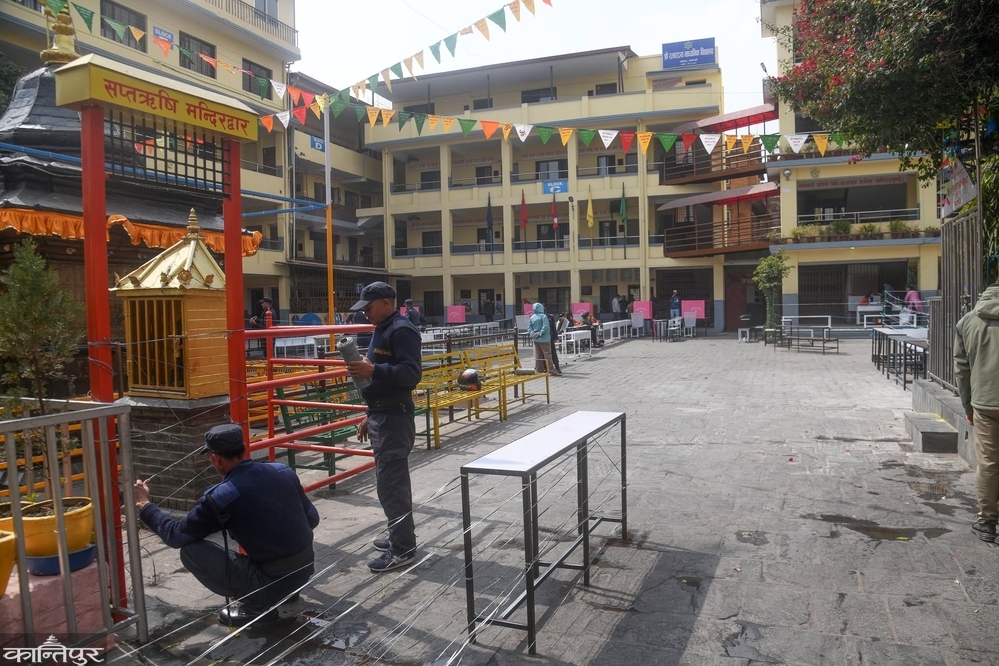
The highest number of voters are in Bagmati Province. According to the Commission, there are 36,82,310 voters here. There are 36,36,414 in Madhesh, 35,74,310 in Koshi and 33,86,6
hundred and eighty voters in Lumbini. There are 1,870,065 voters in Gandaki, 1,716,660 in Sudurpaschim, and 1,037,250 in Karnali.
The commission claims that at least 8 CCTV cameras will be installed at a counting station, wire mesh and iron bars will be installed at the ballot box immediately after the counting, and the results of proportional representation will be announced within a week. The constituency with the highest number of voters is in Ramechhap. Ramechhap, which has one constituency, has 1,87,952 voters. Manang has the lowest number of 7,000 voters. There are 23,112 polling stations in 10,967 polling stations for this election. The number of temporary polling stations is 143.
Voters will be able to vote by showing the original copy of their voter ID card if they do not have a Nepali citizenship card, a driving license if they do not have a citizenship card, a passport if they do not have a passport, a national identity card if they do not have a national identity card, and a landowner proof document (Lalpurja) if they do not have a national identity card. The name must be included in the voter list.
42.251 million 200 ballot papers have been printed for the election and sent to the polling stations. 23.23 million for the direct route and 28.30 million for the proportional route. 39 national and 4 international organizations have received permission from the Election Commission to observe the election.
Acting Chief Election Commissioner Ram Prasad Bhandari has called on all voters to participate in the election. He also informed that the commission is active in making the election free, fair, transparent and credible. ‘All programs including construction of polling stations, management, access management, gender, disability-friendly management and staff mobilization have been completed. Reliable peace and security arrangements have been made so that voters can vote for the candidate and political party of their choice without any hindrance,’ he said.
According to the Secretary of the Commission, Krishna Bahadur Raut, election materials and manpower have been transported to the polling stations even by helicopter. "We have sent employees and security personnel by helicopter to 27 extremely remote locations, including 23 in Dolpa and 4 in Humla, along with ballot papers, ballot boxes and other materials," he said. "After the voting, ballot boxes will be collected by helicopter from 61 locations in 15 districts from Taplejung to Darchula."
The Nepal Army has been deployed in the outer perimeter of the polling stations for election security. The number of soldiers deployed in the election is 79,727. 75,797 security personnel have been deployed from the Nepal Police and 34,576 from the Armed Police Force. 1,921 employees have been deployed from the National Investigation Department. 149,900 election police are also deployed for security arrangements. The commission has stated that 215,000 employees have been deployed to conduct this election.
According to commission secretary Raut, 3,680 polling stations have been placed on the list of 'highly sensitive' based on the security analysis of past elections and the assessment of the current situation. 4,442 polling stations have been classified as 'sensitive' and 2,845 polling stations as 'normal'. 'The security arrangements for the election have been made under the integrated security plan prepared by all four security agencies in coordination with the commission,' said Secretary Raut.
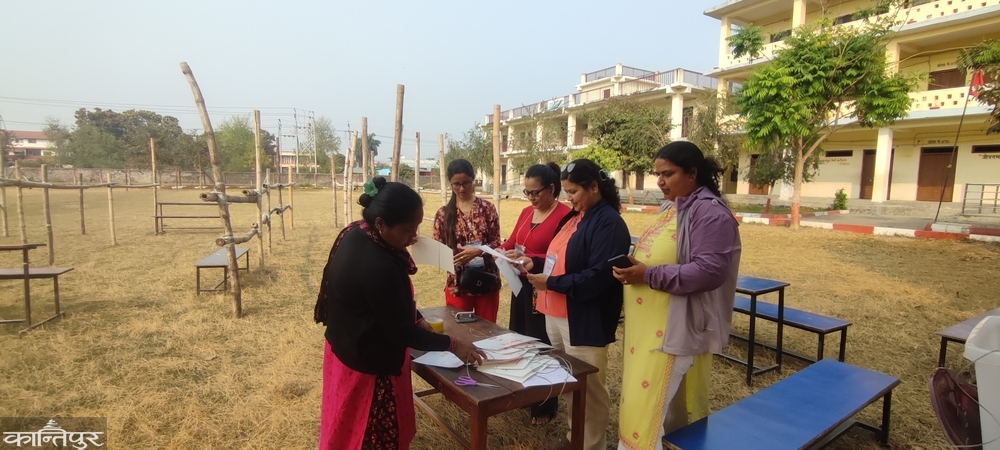
Acting Chief Election Commissioner Bhandari informed that preparations have been made to announce the direct results within 24 hours of the start of the counting. According to him, the ballot boxes will be collected after the voting is over. After the ballot boxes are collected, an all-party meeting will be held, where the rules from counting to confirmation and rejection will be determined. After that, the counting will begin.
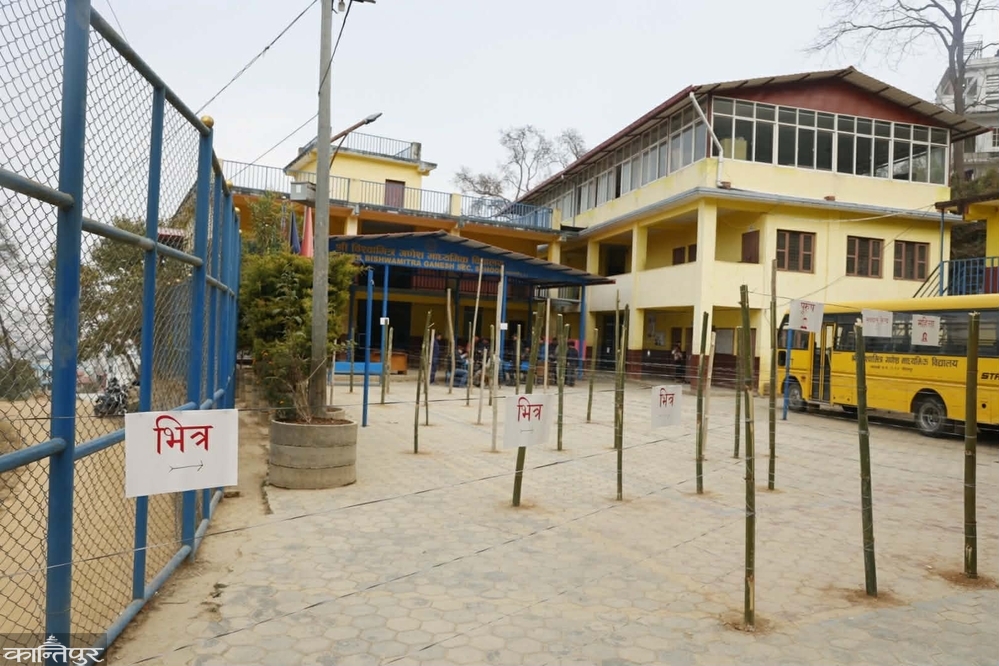
Although Acting Chief Election Commissioner Bhandari claimed to make the results public within 24 hours, employees say that it may take up to four days for all the results to be available in the direct results. After the direct counting is completed, the proportional votes will be counted. The Election Commission has claimed to make the final results public within a week. Acting Chief Election Commissioner Bhandari said that the election system and practices have been improved this time, learning from past incidents during the counting. "This time, the counting site has been made more sophisticated and secure," he said. "The counting site has been surrounded by a wire mesh and made safe. Separate areas have been prepared for the counting and the representatives of the candidates. They can watch the counting but are not allowed to approach the teller."
According to the commission, an iron fence with a wire mesh has been placed at the counting site, leaving the area where party representatives sit. At least eight CCTV cameras have been installed at each counting site. The commission has stated that more CCTV cameras have been installed at large counting sites.
The commission will update the information on the vote results on its website. Arrangements have been made to inform about the results from time to time by miking at the counting site. According to the commission, one officer has been assigned to the counting site with a user and passport to 'upload' the election results.
Former Chief Justice Sushila Karki became the acting chief executive after the then Prime Minister KP Sharma Oli resigned on 24 Bhadra under pressure from the Gen-G rebellion. Based on the recommendation made on 27 Bhadra, the day she was appointed, President Ram Chandra Poudel dissolved the House of Representatives and announced elections for 21 Falgun. Although some parties initially seemed reluctant to go to the elections, eventually all of them went ahead with the elections.

