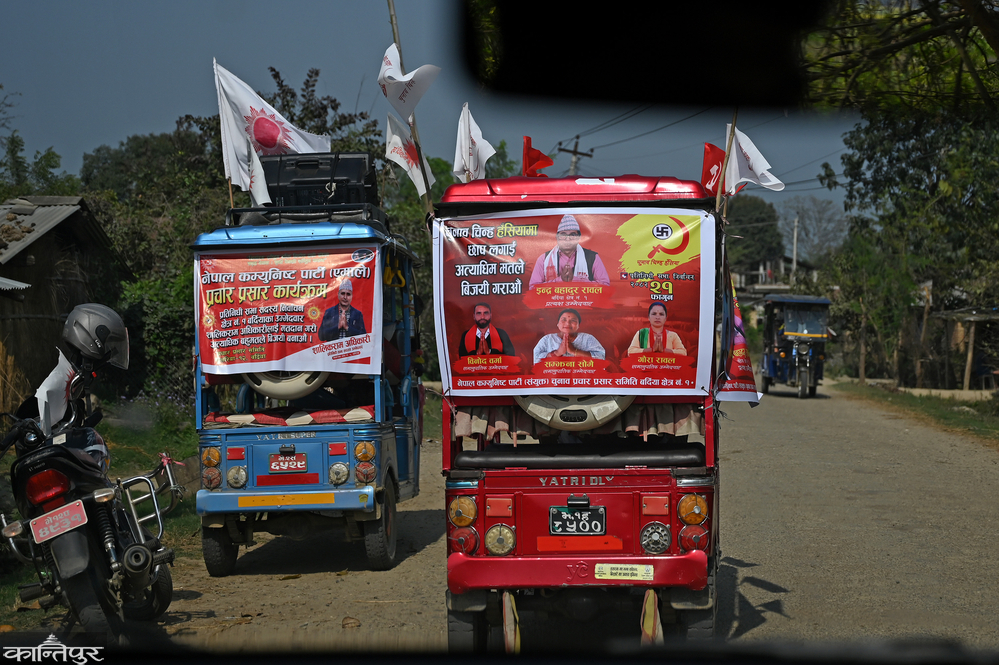
The candidates' common agenda - timely provision of fertilizers and seeds to farmers, ending human-wildlife conflict, resolving the problems of floods and river erosion, addressing the issues of squatters and freed Kamaiya, and completing road, bridge, and irrigation projects.
We use Google Cloud Translation Services. Google requires we provide the following disclaimer relating to use of this service:
This service may contain translations powered by Google. Google disclaims all warranties related to the translations, expressed or implied, including any warranties of accuracy, reliability, and any implied warranties of merchantability, fitness for a particular purpose, and noninfringement.
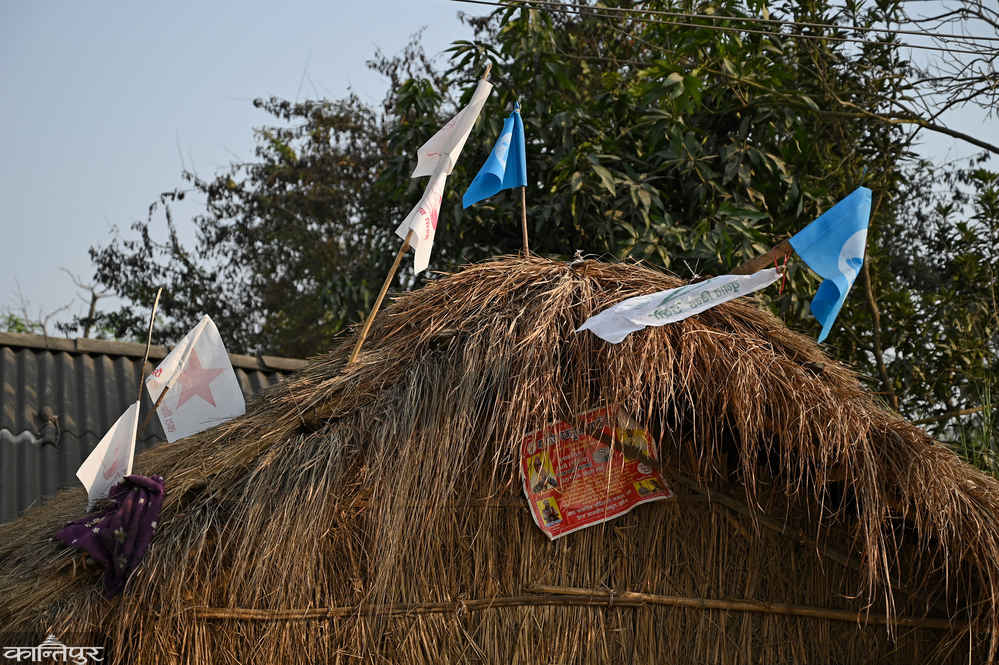
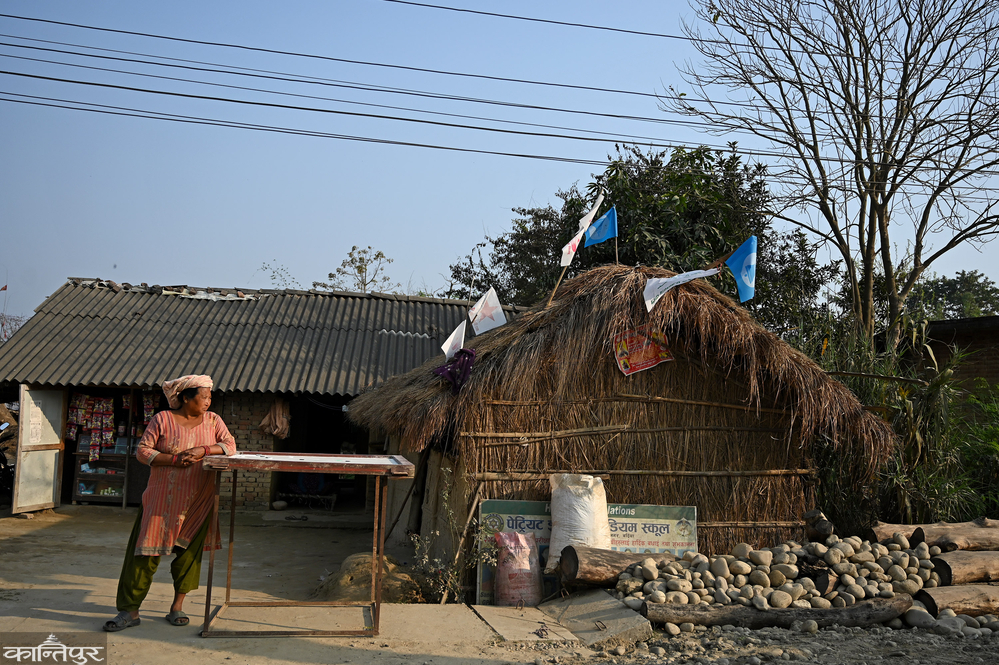
After crossing a winding dirt road about 25 kilometers north from the district headquarters, Gulariya, one reaches the liberated Kamaiya settlement located near the forest. The settlement in Barbardiya-11 is home to about 300 families. Most of the houses here are thatched with thatch, with some houses made of concrete. Most of the houses now fly flags with the election symbols of political parties. There are flags of up to four parties on the roof of a single house.
When the Kantipur team reached Mukt Kamaiya Basti on Monday, they met Thakur Singh Tharu, a candidate of the Rashtriya Swayamsevak Sangh (RSS) party. He was a candidate from the Civil Liberties Party in 2079 but could not win. This time, he has changed parties and has come to Mukt Kamaiya Basti to seek votes again. He was listening to the problems of the locals and assuring them that he would work on solving them after winning the election. This is a place where wild animals keep attacking farmlands. After I become an MP, I will install smart fencing, sensors and warning systems on the border of the forest and the settlement,' he was saying.
Barbardiya Municipality is in Bardiya-1 constituency. There are 21 candidates here, including Tharus. The number of voters is 168,034. In another constituency of the district, Bardiya-2, 15 people have entered the election contest. There are 155,232 voters here.
Other candidates, like the Rashtriya Swayamsevak Sangh (RSS) party, are seeking votes by making the problems of the Mukt Kamaiya and squatter settlements their agenda. Almost all candidates have raised the issue of reducing human-wildlife conflict, building bridges and road infrastructure, opening customs checkpoints with India, and increasing health services. Although the main responsibility of a member of the House of Representatives is to formulate laws, candidates have not given this issue much priority, and voters do not seem to be particularly interested.
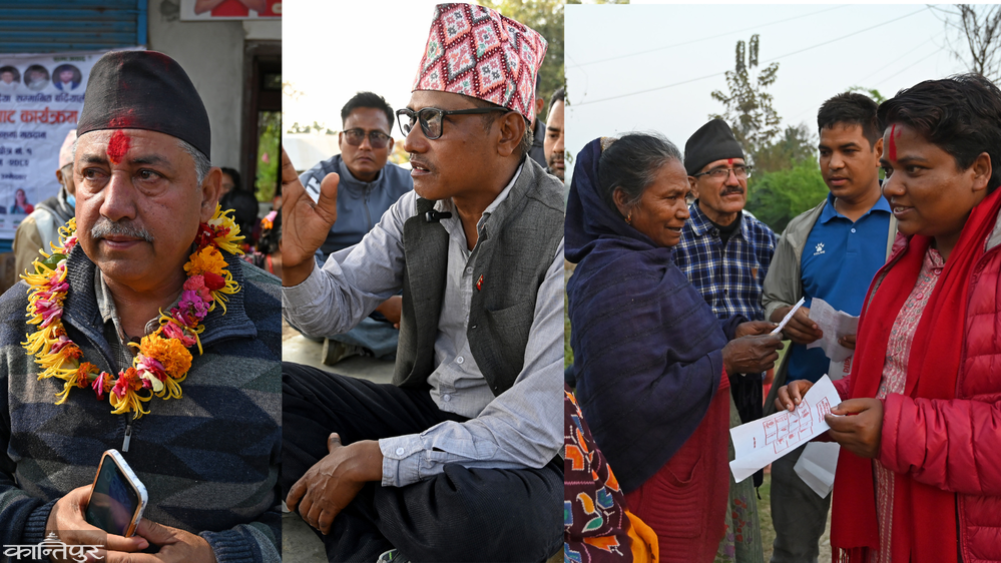
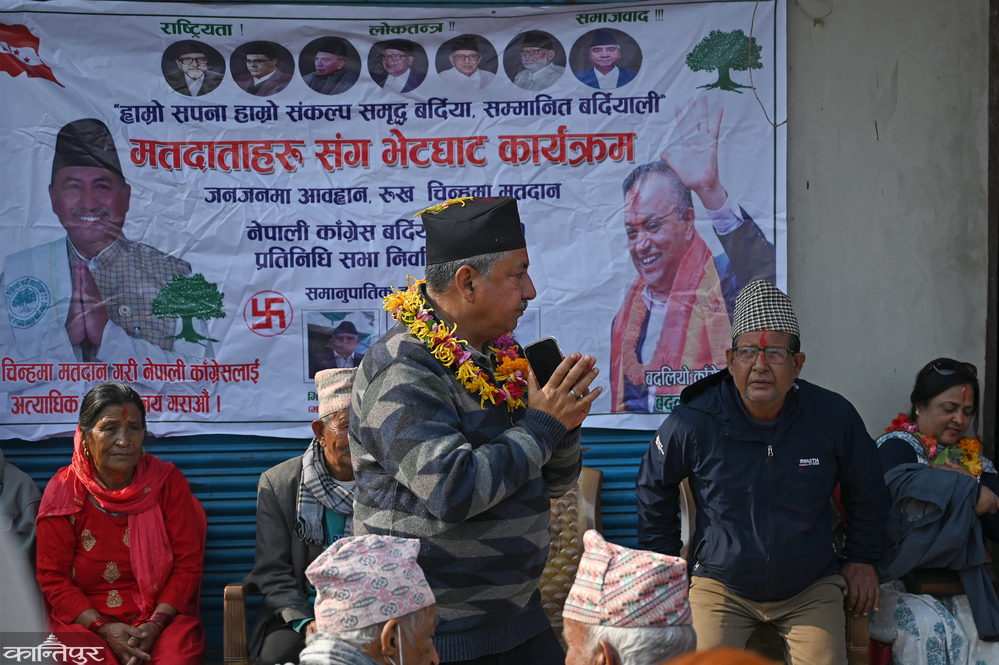
Sanjay Gautam of the Nepali Congress, who won the 2070 Constituent Assembly and 2074 and 2079 House of Representatives elections, is seeking votes by saying that he is a 'development leader'. He was telling a gathering on Monday that he is re-entering the election fray to complete the work he started in the past. 'In the past, I blacktopped dusty roads, built bridges, brought river control and irrigation schemes,' he was saying, 'That was the foundation of development. Now it is time to build a palace of prosperity on that foundation.'
Gautam says that he should be convinced to provide timely fertilizer and seeds to farmers, end the suffering caused by wildlife, and solve the problems of floods and river erosion. He has put forward six grounds for voting for him - water in the fields: investment in technology-friendly education, tourism and agriculture-based industries and employment, sustainable solution to human-wildlife conflict, organized markets and checkpoints, self-reliant Bardiya in agriculture and the existence of everyone, respect for everyone: inclusive and just lawmaking.
UML's Shalikram Adhikari is seeking votes by promising to do other new things that he started when he became the mayor of Bansgadhi Municipality in 2074 BS and other new things. 'There is a path to economic prosperity connecting Karnali via Rajnuwa, it must be completed. The Jabdighat Bridge is a national discussion, it must be built. The border checkpoints that are the economic corridor of Bardiya must be organized,' he says, 'The conflict between wildlife and humans is progressing in a very problematic manner. I have made these the main issues.' Adhikari said that he has also put forward the issues of squatters, farmers and freed Kamaiya.
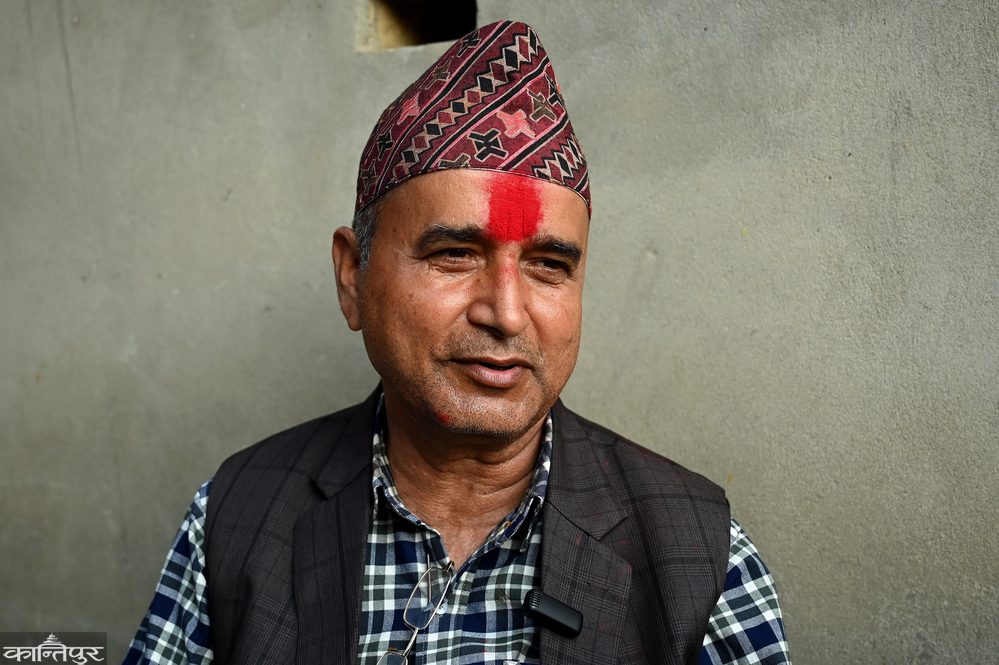
Bishnu Prasad Chaudhary is the candidate from the NCP in Bardiya-1. He is a member of the Constituent Assembly elected in 2064 and former chairman of the National Tharu Commission. He is also seeking votes by raising issues such as infrastructure construction. He is raising issues such as getting rid of human-wildlife conflict, expert doctors and health insurance in district hospitals, medical colleges and changing the form of governance of the country. He is urging people to vote for him for improving education in the constituency, converting to traditional agriculture, and building development.
Thakur Singh Tharu, the RSP candidate, is raising the problems of his community with equal priority. He is telling voters, 'Tharu culture-based homestays and ecotourism will be promoted. Tharu will be given institutional recognition for the identity of the indigenous, national, Madhesi, and Muslim communities.' Making local self-governance practical, initiatives will be taken to give legal recognition to the Badghar and Mukhiya systems as consultative structures of the local government.'
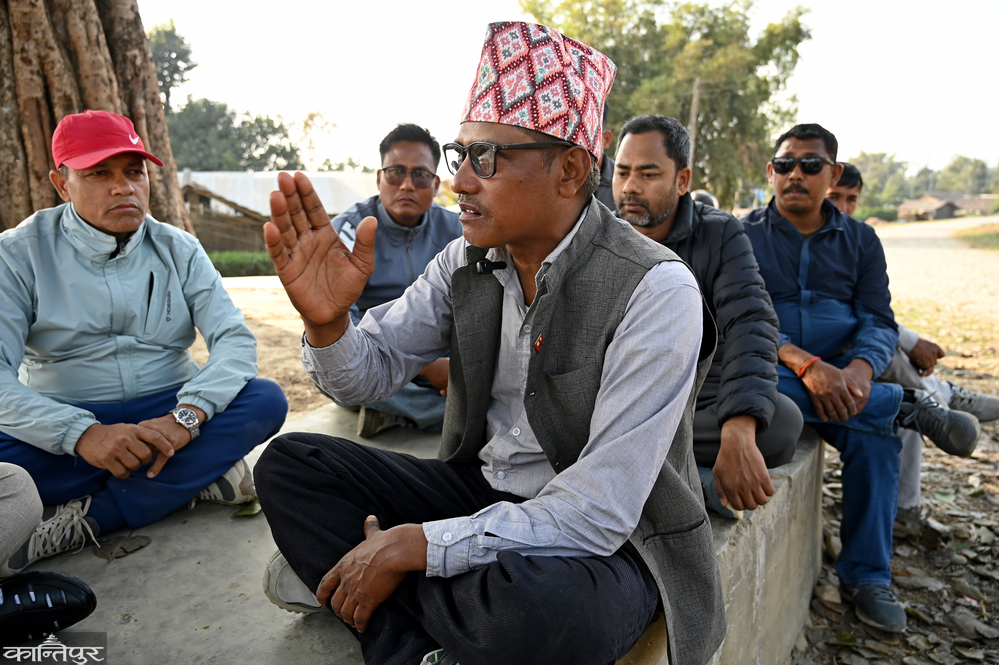
Tharu has put forward a plan to develop Gulariya Hospital as a regional treatment and research center for 'sickle cell anemia'. He plans to implement a free testing, treatment and data collection system there. 'Sickle cell anemia' is a health problem seen in the Tharu community. 'The RSVP will ensure direct access to citizen services by establishing digital service centers at the local level. An environment will be created to connect the youth with the global market through free Wi-Fi zones, coding bootcamps and digital skill training,' he said. 'The Babai and Karnali Irrigation Projects will be operated at full capacity. A middleman-free market system will be developed to increase the assured income of farmers.'
Congress candidate from Bardiya-2, Kishore Singh Rathore, is seeking votes with the promise of making Gulariya a better city than Nepalgunj. He also plans to construct a four-lane road between Gulariya and Rajapur. Despite winning the election from Banke-3 in 2079 BS, he claims to have developed Bardiya-2. “The people of this region see me as a leader who is committed to development, integrity, morality and fulfills his word,” says Rathore.
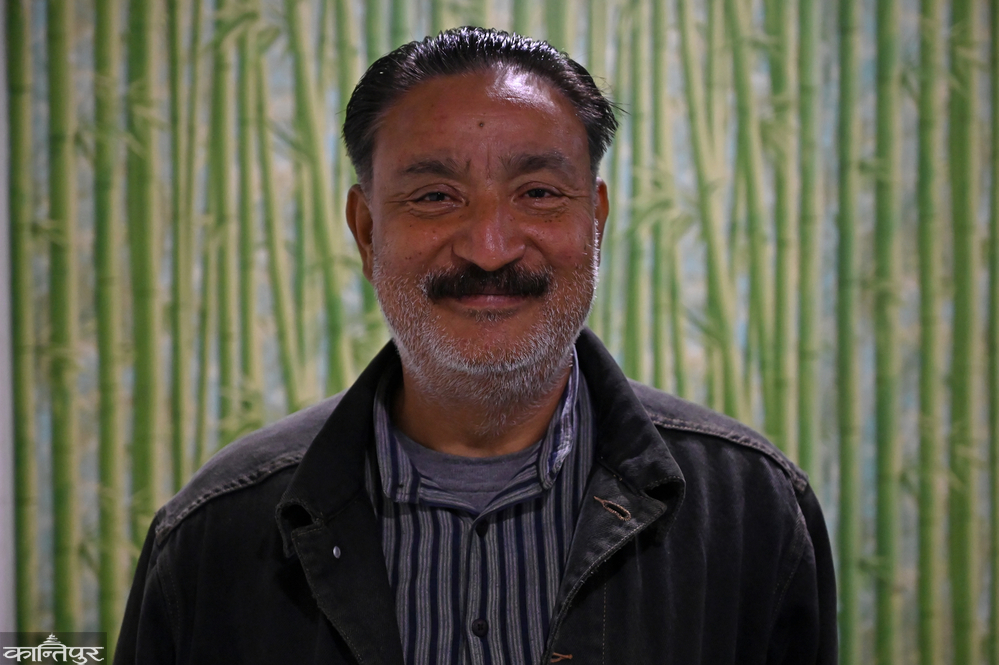
Rathore is also telling voters about plans to solve the problem of wild animals, pay attention to setting up customs offices at the border, end the situation of going to Nepalgunj for health treatment, stop river erosion, and create employment opportunities in the agricultural sector.
UML candidate in Bardiya-2, Bimala BK, is distributing a four-page commitment letter. It mentions plans to solve the problems of landless and squatters legally, formulate a unified act related to forests and parks, and build roads and bridges. She also has a commitment to arrange clothes, food, bank accounts, insurance, textbooks, bicycles, etc. for students, and build helipads in each municipality.
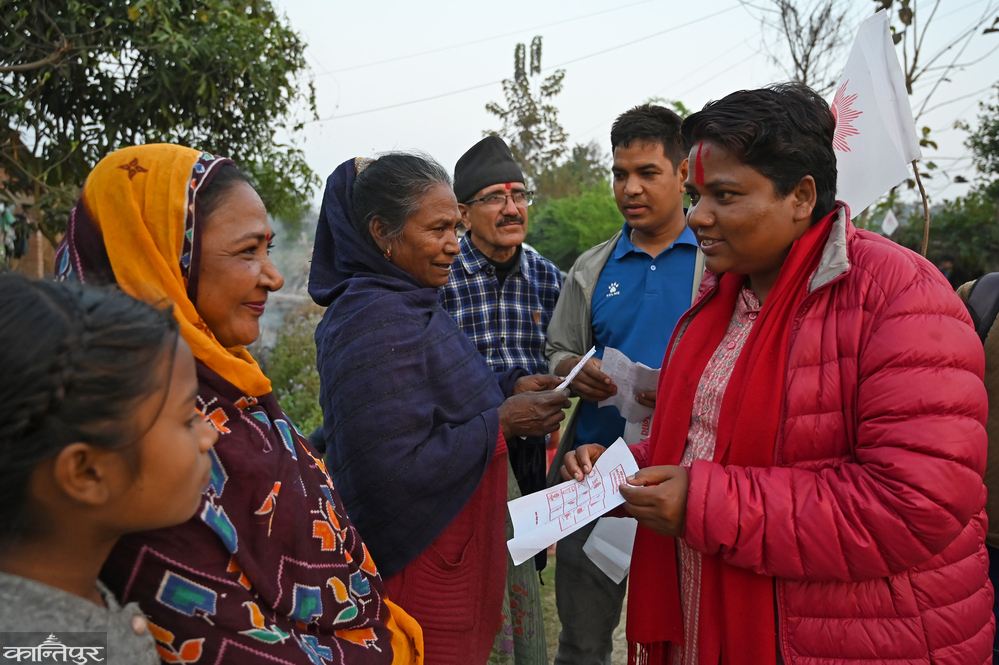
BK was seeking votes in Bangain Phata Basti on Monday evening. ‘After becoming an MP in 2074, when I got the opportunity to become the Minister of State for Industry, a bridge and a Corona Hospital were built on my initiative,’ she told Kantipur. ‘I will also play a role in formulating and implementing various sectoral plans.’ There is a project in Bardiya that is on the agenda of candidates in every election – the Babai Irrigation Project. This project has been stalled for 33 years. This time too, all the candidates are promising to complete the project.
The Babai Irrigation Project aims to irrigate 21,000 hectares of land in the east and 15,000 hectares in the west in the first phase. Although the target is to complete the canal work within 2075 BS, it is still under construction. The last time, the deadline was extended and the work was said to be completed in the fiscal year 2085/086. Rs 1.8 billion has been allocated for the project in the current fiscal year. Mangal Tharu, a farmer from Barbardiya-4, said that although this national pride project provides irrigation facilities to about 30,000 hectares, there is not enough water. ‘There is a problem getting water during the cultivation of rice, wheat and other crops,’ he said.
Project chief Gopal Sharma informed that 34.5 km of the eastern main canal and 28 km of the western main canal have been constructed. ‘There is a plan to build a 41 km main canal on the western side,’ he said. ‘Due to lack of budget source agreement, the contract will not be awarded this fiscal year. So far, the progress of the canal is 72 percent.’ The construction of the Bheri diversion, which was started for irrigation in Bardiya and Banke, has also been completed only 60 percent.
Another agenda that the candidates are raising before the voters of Bardiya is the establishment of a transport office in Gulariya. In the absence of a transport office in Bardiya, the locals are forced to reach Nepalgunj in Banke, which is 40 kilometers from Gulariya and 80 kilometers from Rajapur, to avail services including renovation. Baburam Poudel, a businessman from Gulariya, complained that candidates from all parties tend to make the establishment of a transport office a major issue in the elections but do not work on it. "If the transport office is operational, business and employment here will increase and it will be easier for the common people," he said.
The district residents are in trouble as projects such as the Karnali Management Project, Rajapur Irrigation Project, lack of manpower in hospitals, Kotheghat and Jabdighat bridges in Bardiya are not completed on time. The candidates have mentioned these plans in their manifesto. The voters of Bardiya want their leaders to play a role in making their daily lives easier. Farmers expect an environment where fertilizer is available on time. Traders, on the other hand, are hoping for customs facilities. Pramesh Yadav of Gulariya-7 said, "Farmers here always have problems with seeds and fertilizers during the farming season. When the government is unable to provide fertilizer to farmers, fertilizer is smuggled from India. Farmers' produce does not get good prices." Prahlad Godiya of Gulariya-9 said that there is a problem due to the lack of customs on the border with India. ‘Goods have not been imported and exported legally. Due to the lack of customs, traders have not been able to import goods. Due to this, the business of the Gulariya district headquarters has not been able to flourish. The business of the district headquarters itself has collapsed. The government is also not receiving revenue,’ he said.
Sunita Chaudhary of Gulariya said that leaders should listen to the problem of squatters not being able to get land titles. She said, ‘Residents of the squatters’ settlement have not been able to get land titles yet. It has been a long time since the distribution of Nissa, but they have not received them yet. They are promised to provide land titles only during the elections, but we have not received them yet.’ Ramesh Lodh said that there is a lack of physical infrastructure and expert doctors at Bardiya Hospital. He said that patients from the district have to be referred.
Bharatmani Tharu of Balapur said that it is difficult to protect children from leopard attacks. ‘Last Chait, we were irrigating the fields. A leopard attacked and seriously injured his 9-year-old grandson who was with him,' he said, 'Nowadays, I am afraid to even work in the fields. This problem should have been solved.' Santosh Chaudhary of Patharbojhi, Madhuvan Municipality-1, narrated the problem of erosion caused by the Orahi River every year. 'While erosion is taking place, the river has reached the banks of the settlements,' he said, 'We plan to vote for the candidate who prioritizes protecting the settlements.'
Dilip Gandharva, President of Gandharva Samaj Bardiya, said that the land provided by the government in 2050 in Badhaiyatal Rural Municipality-4 is being eroded by Mankhola every year. 'In every election, we are assured of solving the problems of the Gandharva community,' he said, 'but the problem is the same. Our community has been used as a vote bank by political party candidates.’
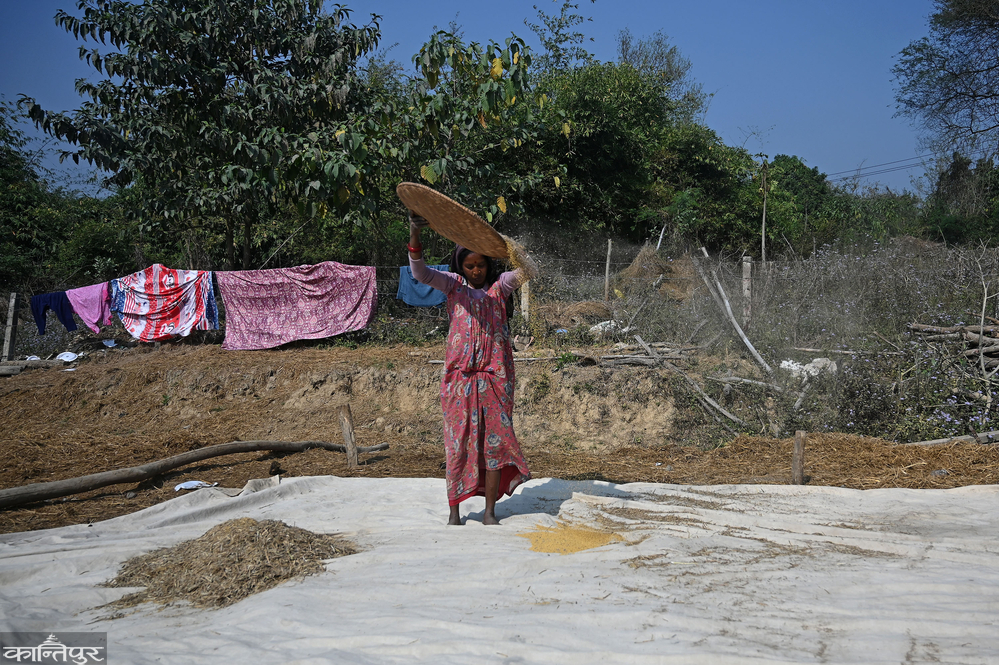
In 2071 and 2074, the flood of the Babai River in Gulariya-2 destroyed the dam at the confluence of the two rivers, completely submerging the squatter settlement of Tapara Tol, said local Urmila Gupta. ‘There is not even a small bridge in the Sarjunadi, which is 500 meters away from Gulariya Bazaar,’ she said. ‘Young children in this squatter settlement use a temporary wooden bridge. There is a fear of children falling off the bridge during the rainy season.’ Devendra Pandey, president of the Gulariya Chamber of Commerce and Industry, said that party leaders have not taken the necessary steps to advance development.