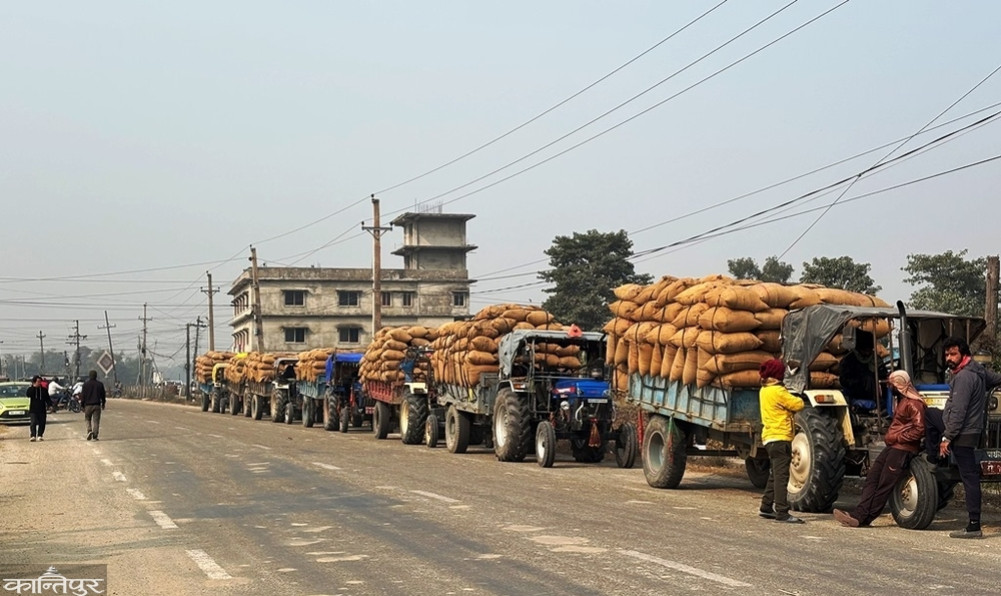
Population growth, remittances, and trade have boosted economic activity, but youth migration, shrinking arable land, and social fragmentation have raised concerns about the future.
We use Google Cloud Translation Services. Google requires we provide the following disclaimer relating to use of this service:
This service may contain translations powered by Google. Google disclaims all warranties related to the translations, expressed or implied, including any warranties of accuracy, reliability, and any implied warranties of merchantability, fitness for a particular purpose, and noninfringement.
The fertile land of the Eastern Terai, open borders, the hustle and bustle of the East-West Highway, and the greenery of tea gardens have made Jhapa one of the most vibrant districts in Nepal.
Bordered by West Bengal of India to the east and Bihar to the south, this district holds strategic importance geographically and economically. Due to the open border, trade, movement and cultural exchange continue here.
Kechana (Kachankawal Rural Municipality), which is considered the lowest land in Nepal, is also located in this district. This place is considered to be at an altitude of about 58 meters above sea level. Which further explains the geographical characteristics of Jhapa. Due to the flat terrain, fertile soil and favorable climate of the Terai, agricultural production has become the main basis here.
According to the 2078 census, the total population of Jhapa is 998,054. The geographical area is 1,606 square km. This district has an open border with India of 1,044.9 percent. Although geographically it is a Terai, it is multidimensional in social, economic and cultural terms.
Jhapa has experienced significant and rapid changes in the last 10-15 years. Population density has increased significantly. Small markets have gradually transformed into cities. Cultivable land is decreasing and land is becoming fragmented due to the sale and distribution of land. Meanwhile, the youth has turned to foreign employment.
Migration from the eastern hills to the Terai continues. In recent years, Jhapa has become a center of special attraction. The main reasons for this are fertile land, easy transport access, an open border with India and growing business potential, says Nirmal Kumar Bhattarai, former president of the Cardamom Traders Federation. ‘The general public is increasingly leaving the hills and coming down to the Terai for easy access to basic things like health, education, and entertainment,’ says Bhattarai.
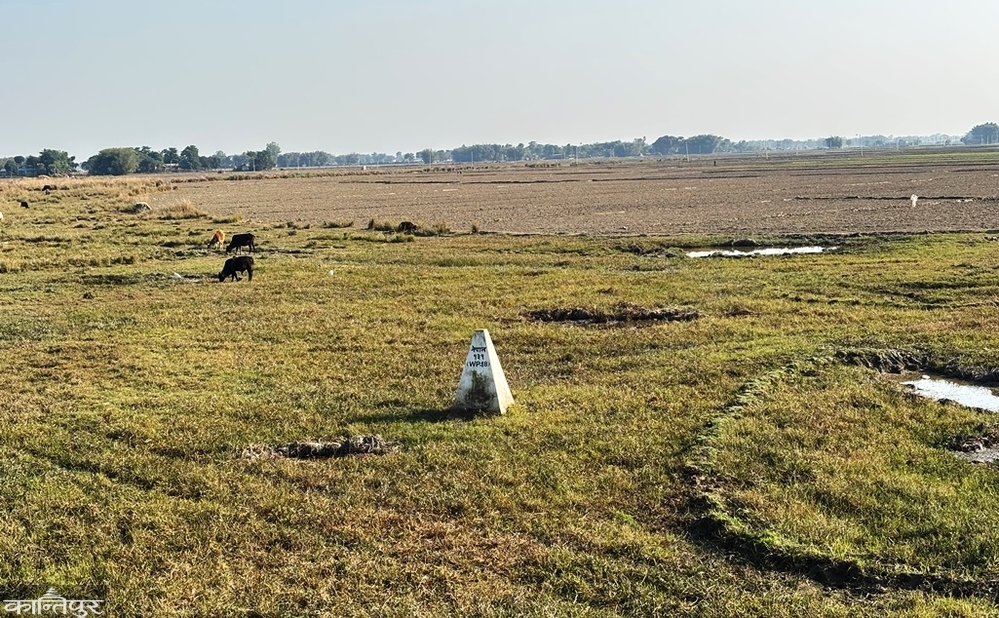
The East-West Highway has strongly connected Jhapa with other parts of the country. In addition, the open border has given further impetus to business activities. Large commercial centers like Kakadbhitta, Dhulabari, Birtamod, Bhadrapur, Surunga, Damak are expanding rapidly. However, with this pace of development, some price has also been paid.
Cultivable land is being converted into plots. ‘Houses have started growing in rice fields,’ says Prem Luwagun, a local of Buddhashanti Rural Municipality. ‘As plots reduce cultivable land, production has also automatically decreased.’ The traditional agricultural sector is under pressure from urban expansion. With the increase in population density, additional pressure has been created on social services, infrastructure, and natural resources.
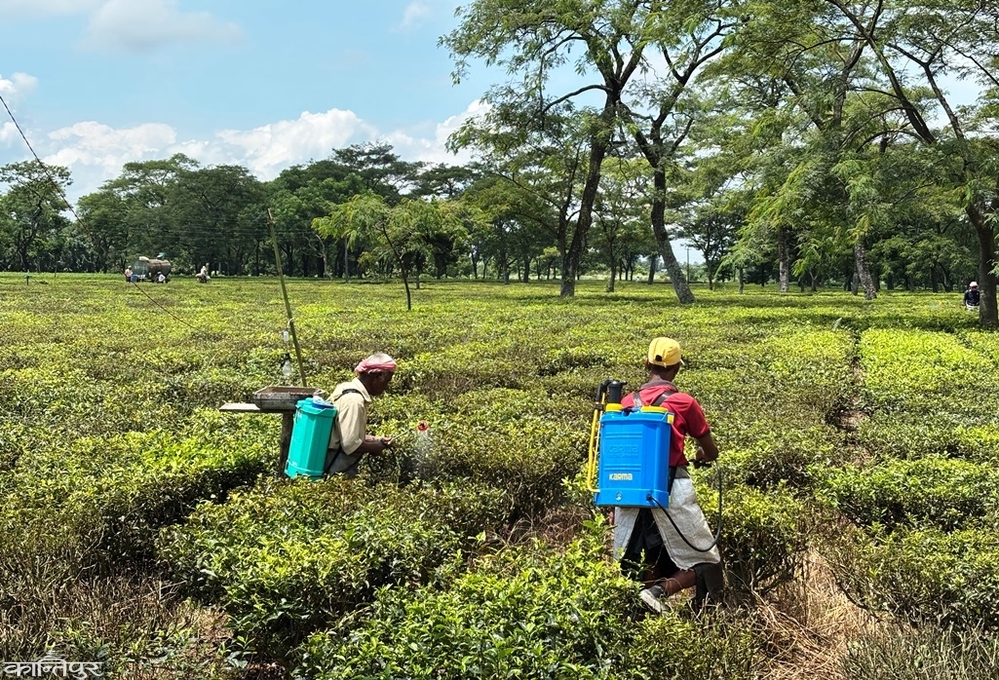
Agriculture is the backbone of Jhapa’s economy. Rice, tea, vegetables, bananas, and betel nuts are the main products of Jhapa. ‘Tea is grown in abundance, but it is difficult to cover the cost,’ says Aditya Parajuli, president of the Nepal Tea Producers Association, ‘Most tea farmers have started uprooting and starting other crops.’ Jhapa is one of the major tea producing regions in Nepal. According to the National Tea and Coffee Development Board, tea cultivation is spread over an area of about 7,175,15 hectares in Jhapa. From which 82.517 million metric tons of tea are produced annually.
Even though tea is being produced from small farmers to large plantations, farmers are suffering due to international market prices, processing costs and transportation problems. Costs have increased, but prices are not stable.
Rice farming is also equally challenging. At one time, rice and rice were exported from Jhapa to India. However, the situation has changed now. Rice and rice are being continuously imported from countries including India. Fertilizers and seeds not being available on time, inadequate irrigation facilities and labor shortage have made farming risky. After the youth went for foreign employment, only the elderly are left in the fields. In some areas of Jhapa, there is a compulsion to use Indian laborers from rice planting to harvesting. Labor shortage has been causing hundreds of hectares of land to become barren every year. ‘A lot of rice-growing land is becoming barren,’ says agricultural technician Shaligram Bhattarai, ‘Rice production is also decreasing due to lack of cultivation.’
According to the Agricultural Knowledge Center, Jhapa, 350,000 metric tons of rice have been produced this year. Rice is cultivated on 72,742.65 hectares of land. Chief Sagar Bista says, ‘This year, production has also decreased along with the area.’ Last year, 382,811.97 metric tons of rice were produced when rice was cultivated on 75,459.97 hectares of land.’
Recently, farmers have been increasingly inclined towards cash crops. Small enterprises have been started through cooperatives in vegetables, bananas, poultry farming, dairy farming, etc. But market certainty is still weak. ‘There is no guarantee of fair price for the goods we produce,’ says Hari Timsina, a poultry businessman from Mechinagar. ‘We would have been even more excited if the government had guaranteed this.’
In many villages, houses are empty. The fields are barren. The youth have gone to cities and abroad. There is a strong attraction towards cities in search of better education, health services and employment. This has weakened the social structure of the village. Collective labor, fairs, and social unity are declining. Farming has decreased, production has decreased. However, challenges are not less in the city. Problems such as unorganized settlement, traffic problems, waste management, and water shortage are widespread.
The doors of houses in the countryside of Jhapa are open, but the presence of youth is low. Gulf countries, Malaysia, Korea, Japan, Australia, and European countries have become the centers of dreams for Jhapa youth. Some have even gone to India.
Houses have been built with remittances from foreign employment. Enrollment in private schools has increased, access to health services has expanded. However, its social value is great. ‘There are only elderly people and children in the village,’ says Chudamani Sapkota of Mechinagar, ‘It is difficult to even meet the bereaved if someone dies.’ Joint families have disintegrated. Social life has become weak.
In Jhapa, youth are involved in small industries, transportation services, retail trade and agricultural enterprises. However, the bank loan process is complicated, interest rates are high and market competition is intense. Informal trade—sometimes even illegal trade—is a reality in the border district. The open border with India has given place to informal activities along with legal trade. This has not only affected revenue, but has also destabilized the local economy.
Access to social security benefits is comparatively good in Jhapa. Senior citizen allowance, disability allowance, etc. have provided relief to the elderly in medicine and daily expenses. However, the general public is becoming increasingly frustrated with government work. ‘I had to visit the ward three times because the documents were not correct,’ complains Laxmi Maya Darji of Shivasatakshi Nagar, ‘The work of causing trouble to the people has not reduced yet.’
There are still procedural hassles in getting services. Services are delayed when documents are not correct. There is a problem of health services not reaching remote settlements on time. Serious patients are forced to go to private hospitals, which has increased expenses. Seema Rasaili, a ward member of Mechinagar-6, says, ‘We are expanding the digital system to provide services faster.’ Despite the expansion of the digital system, everyone has not benefited equally due to the lack of digital literacy.
In Jhapa, people have to go from the ward office to the municipality to get services. Although the process is clear on paper, there is a delay in practice. The district administration and other bodies have been causing a lot of trouble to service recipients who go to get citizenship and passports. ‘If you know, the work will be done faster, otherwise it will take days to do even a small job,’ laments Dilip Thapa, a service recipient from Mechinagar.
There are widespread complaints that the work of those with access is done faster, while the files of those without access are stuck. This has reduced public trust in the government. The general public is disappointed. Transparency, digital services and accountability are necessary for good governance. However, implementation is weak.
Jhapa is known as the most literate district in the country. The literacy rate here is 82.83 percent. According to the Education Development Coordination Unit, Jhapa, scholarships have increased the access of children from poor and marginalized communities to school. According to Kiran Adhikari, information officer of the office, the municipality and the coordination unit have been distributing scholarships separately.
Some municipalities, including Mechinagar and Gauradaha, are also providing scholarships for higher education studies including engineering and medical. The school dropout rate has decreased somewhat. The dropout rate, which was 8 to 13 percent in the past, is now decreasing. However, quality education, skilled teachers and infrastructure are still challenges. There are 375 community, 478 institutional and about 75 religious schools operating in Jhapa.
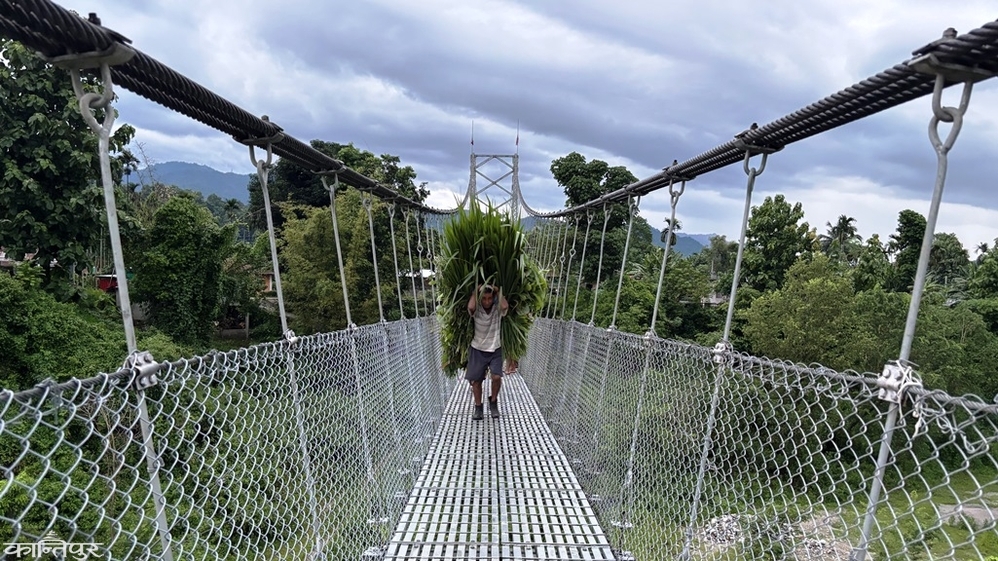
According to the Infrastructure Development Office, Jhapa, 121.29 km of roads in Jhapa have been blacktopped under the provincial government. Construction of 9 concrete bridges and 15 suspension bridges has been completed. The main road network of Jhapa is relatively strong. The roads connecting the highway and the main market are in good condition. Access to electricity has reached almost everywhere.
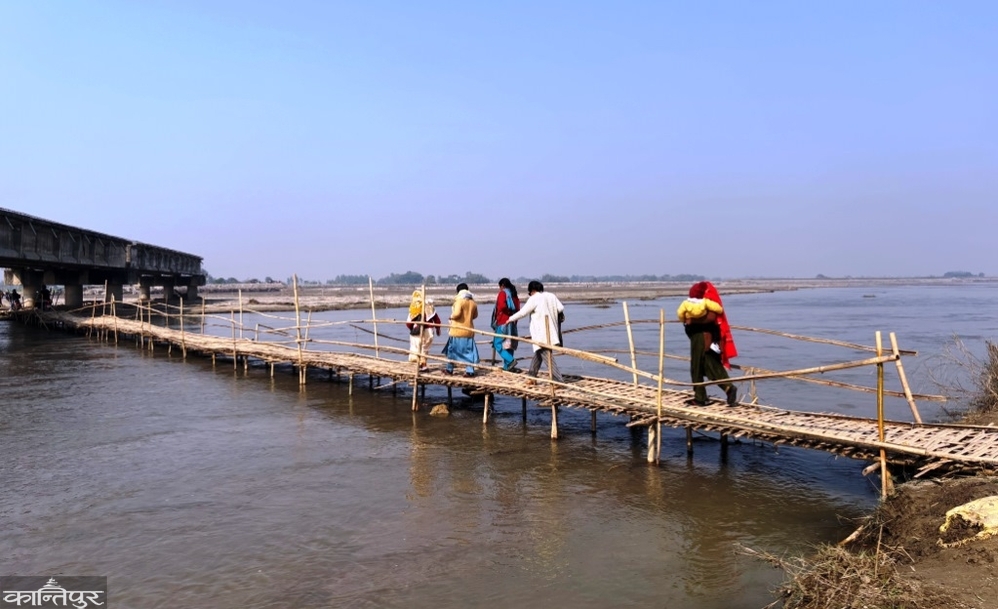
But most of the internal roads are gravel. Mud and flooding affect public life during the rainy season. The Damak-Gauradaha inner road gets filled with mud during the rains. The condition of the under-construction Birtamod-Bhadrapur road is also the same. The postal road connecting Bhadrapur-Biratnagar has also become an example of delay and poor construction. A bridge has not been built on this highway over the Kankai River for 14 years. Due to the lack of a bridge, the public is forced to reach their destination by boat during the rainy season and by crossing bamboo slats during the winter.
According to the Provincial Water Supply and Sanitation Division Office, Jhapa, 90 percent of consumers have basic access to drinking water. According to the office chief, Bikash Kafle, more than 80 drinking water projects are currently under construction in the district. More than 50 projects have been completed. However, despite the presence of drinking water taps, there is a shortage of water in the summer. Some areas in the south still rely on T-wells. Incomplete planning, delays, and poor construction quality seem to have reduced the impact of development.
The main problems of Jhapa are unemployment, lack of agricultural markets, migration, incomplete infrastructure, and the threat of elephants and other wild animals. These issues are the slogans and commitments that are repeated in every election. ‘We have voted for leaders who say they will solve the elephant problem many times,’ said Usha Dahal, a local from Bahundangi, Jhapa, ‘But, our problem has never been solved.’
There is not only hopelessness in Jhapa, but also potential. Tea industry, agricultural modernization, legitimate border trade, youth entrepreneurship, etc. If market certainty, access to capital, and infrastructure are improved, says former mayor of Mechinagar, Bimal Acharya. The locals expect, ‘At home, Let there be a working environment.' This expectation has been repeated for years. However, trust has waned due to weak implementation.
Jhapa is now at a crossroads of change. On the one hand, population growth, market expansion, and remittances have increased economic activity. On the other hand, agricultural crisis, labor shortage, incomplete infrastructure, and weak good governance have posed long-term challenges.
If a balance is achieved between agriculture and industry, local employment creation, transparent administration, and quality social services are ensured, Jhapa can become a model district of the Terai. Otherwise, experts predict that population density and unplanned development may cause more problems in the future.