The parties' commitments on issues including economic reform, development, and employment are almost identical, but they have different roadmaps on governance, federalism, and corruption control.
We use Google Cloud Translation Services. Google requires we provide the following disclaimer relating to use of this service:
This service may contain translations powered by Google. Google disclaims all warranties related to the translations, expressed or implied, including any warranties of accuracy, reliability, and any implied warranties of merchantability, fitness for a particular purpose, and noninfringement.
Political parties have brought out election manifestos with corruption control, economic development, constitutional amendment, employment provision, and public service reform as their main priorities. For the upcoming House of Representatives elections, parties have brought out manifestos under names like 'pledge', 'commitment', and 'resolution'.
The manifesto reflects the shadow of the Gen-G rebellion that took place last Bhadra. The parties have promised to address the rebellious spirit of the young generation, anger against corruption, and demand for political stability. Most parties have committed to structural reforms to make constitutional bodies effective and to amend the constitution to end partisanship in appointments.
Although the parties' commitments on issues such as economic reform, development, and employment appear to be almost the same, the party-based lines of action on issues such as governance structure, restructuring of federalism, and control of corruption have differed.
The Congress, which unveiled a brief pledge of 'Vision Ten' in Janakpur on Wednesday, has unveiled a detailed blueprint from the federal capital the next day. The UML has also unveiled a digital copy of the manifesto on Thursday. The Rashtriya Swayamsevak Sangh (RSS), which unveiled a civic charter on Sunday, has unveiled a 'pledge' on Thursday. The NCP had unveiled a pledge on 27th Magh.
Political parties have expressed their commitment to the formation of a property investigation commission to control corruption, expanding the scope of the Commission for the Investigation of Abuse of Authority, the formation of a Lokpal/Jan Lokpal, and digital transparency. The UML has not assimilated the sentiments of the Gen-G rebellion in its manifesto. The UML has viewed the rebellion of last Bhadra as a conspiracy to overthrow its leadership. UML Chairman KP Sharma Oli had to resign as Prime Minister on 24 Bhadra due to pressure from the Gen-G rebellion.
Unveiling the manifesto from Kathmandu on Thursday, Oli called the current election a referendum between those who want to destroy and those who want to build the country. ‘The country is neither the private property of any one generation, nor a laboratory of anger and passion,’ he said. ‘Running the country requires experience, energy, responsibility towards the future generation, and the participation, activism, role, and support of the young generation. Therefore, this election is not about generational change.’
Political parties have expressed their commitment to the formation of a property investigation commission to control corruption, expansion of the scope of the Commission for the Investigation of Abuse of Authority, formation of a Lokpal/Jan Lokpal, and digital transparency.
The Nepali Congress has promised to make a provision in law that people with corruption and other criminal cases will not be able to contest elections or hold office. A commitment has also been made in the legal system to make it mandatory for ministers, MPs, or high-ranking officials to publicly declare their assets before taking oath and after leaving office.
The UML is committed to conducting an exemplary and effective legal action campaign against corruption. ‘We will strictly implement the zero tolerance policy through modern technology and strong legal mechanisms,’ the UML has said in its manifesto, ‘We will start using an artificial intelligence-based detection system to monitor and investigate corruption.’
The UML has raised the issue of property investigation but has not said anything clearly. The RPP has committed to forming a citizen commission to investigate the assets of high-ranking leaders and employees after 2046. The Rashtriya Swayamsevak Sangh (RSS) has said that it will investigate the assets of those holding public office since 2001 in a transparent and legal manner, prepare a clear procedure for confiscating and nationalizing illegally acquired assets, and dissolve trade unions. The JSP has committed to investigating the assets by forming a People's Ombudsman.
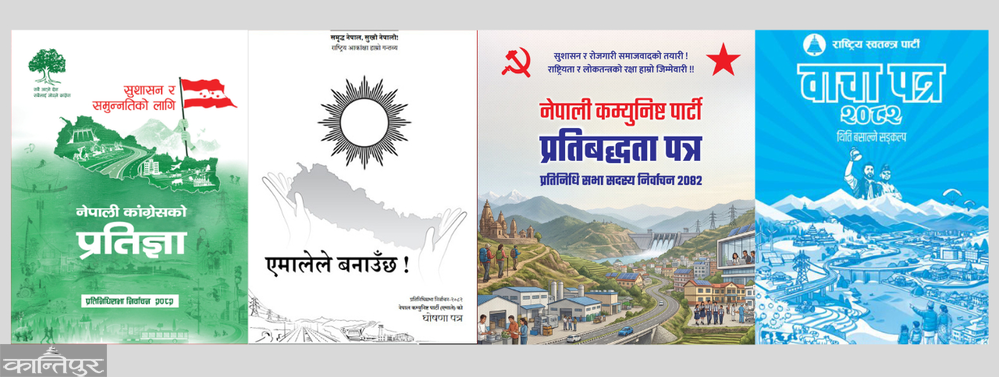
The Congress made the pledge public from the National Assembly on Thursday. Earlier, it was called a 'Manifesto', but this time the Congress has changed the name to 'Pratigapat'. While making the pledge public, Congress President Gagan Thapa also answered questions from those present at the event, outside the capital, and abroad. Thapa spent four hours answering dozens of questions raised on issues included in the pledge and those left out. Citizens who were not present at the event asked Thapa questions through digital means.
The Congress has put forward Thapa as the future Prime Minister. President Thapa himself has drawn up a blueprint for the work to be done within five years from the day of his appointment as Prime Minister. This includes the 'Project Government' that Thapa has been working on for a few years.
The Congress has said that it will amend the constitution to reform the electoral system so that a single party has a majority. But the pledge does not clarify what kind of reform it will be. The political document passed by the special general convention on 30 Poush proposes that the existing 165 constituencies be made inclusive and reserved. It proposes that the reserved areas should be on a rotational system. The pledge only states that 'we will review the electoral system and make legal and constitutional arrangements to ensure political stability by making the proportional and inclusive electoral system more robust, fair and broad.'
The UML has not said anything about the electoral system. The Rashtriya Swayamsevak Sangh (RSS) has put forward a vision of moving the parliament to a fully proportional and directly elected executive system. As per the recommendations of the commissions formed at various times, the Congress has promised to have a maximum of 16 ministries at the union level, including the office of the Prime Minister and the Council of Ministers, and a maximum of seven ministries at the provinces, including the office of the Chief Minister and the Council of Ministers. The RSS is in favor of having 19 ministries at the union level.
To end party-based appointments and divisions in state institutions and public bodies, the Congress has come up with a plan to reform the structure of investigative and regulatory bodies and institutions, including the Commission for the Investigation of Abuse of Authority, the Office of the Auditor General, and the Public Procurement Monitoring Office. The Congress is committed to freeing the economy from partisan influence. RSS Vice President Swarnim Wagle had been making public statements to abolish federalism the day the RSS reached its strength and numbers. The RSS did not participate in the provincial elections in the 2079 BS elections. The RSS's manifesto, however, calls for a 'reformed provincial structure'. RSS leaders say that the issue of federalism has been embraced to attract the public opinion of Madhesh in particular.
The RSVP will embrace federalism but its form needs to be radically reformed, says Vice President Wagle. The pledge states that there will be no MP ministers and there will be a non-partisan local government.
The Congress has promised to make arrangements for the President to serve a maximum of two terms, the Prime Minister and the Chief Minister to serve a maximum of two terms, and that the proportional representation system will only serve one term as an MP. The Congress has put forward a policy of strengthening the system rather than individuals, making good governance and public services more efficient, and improving the delays in development. For that, it has also presented a draft of dozens of law amendments.
The Congress has promised to make necessary amendments to the constitution to clarify the composition, appointment method, structure and limits of the authority of the Constitutional Council. It has committed to ensuring that appointments to constitutional bodies, universities, public institutions and diplomatic services are based on merit, ability and honesty in accordance with the principle of inclusion.
To end party-based appointments and shareholding in state institutions and public bodies, the Congress has come up with a plan to reform the structure of investigative and regulatory bodies and institutions, including the Commission for the Investigation of Abuse of Authority, the Office of the Auditor General, and the Public Procurement Monitoring Office. The Congress is committed to freeing the economy from party influence.
Congress President Thapa says that the goals of good governance, structural reforms, and development put forward by the Congress are not just election slogans. “The priorities we have in the pledge have come from in-depth discussions we have had with experts from various fields over a long period of time during the ‘Project Government,’” he said while making the pledge public. “We have presented policy, institutional, structural, and some constitutional reform issues with a solid basis and a time frame.”
Thapa also announced that everyone will unite to ‘build Team Nepal’ to implement the pledge brought by the Congress. ‘Within this, the Congress will form Team Nepal by bringing together all the stakeholders including 6,743 wards, 753 municipalities, seven provinces, all political parties represented in parliament, civil society, etc.,’ he said. ‘It will fulfill this promise.’
UML has prioritized national independence under the title ‘Country First’ in the first place of its manifesto. UML has concluded that Nepal’s sovereignty and geographical integrity are in crisis. Chairman Oli said that he is ready to make any sacrifice to protect the motherland Nepal. ‘We declare that we will not allow any kind of shortcomings in the protection and promotion of Nepal’s sovereignty, geographical integrity, independence, freedom and national interests,’ he said.
UML has committed to deciding on five basic economic development declarations from the first cabinet after the government is formed under its leadership. UML has promised a 7.5 economic growth rate, 1 million Nepalis freed from poverty, a 5-point improvement in the Human Development Index, and blacktopping of 5 kilometers of roads per day.
The UML has committed to South Asia's first inter-country pipeline, the launch of modern railways and tunnels, the expansion of 4G internet services in 77 districts, 10 GB of free internet data, and arranging cards worth a thousand dollars for youth and entrepreneurs. Similarly, the UML has also promised a grant of 1 million to easily establish companies abroad and purchase shares, an additional bonus of 5 thousand per year in the bank accounts of workers who send remittances, and interest-free loans of 2 million to students.
The Rashtriya Swayamsevak Sangh (RSS) has presented 100 grounds for departure, saying it is for the transformation of the country. The commitment not to form fraternal organizations is mentioned in the RSS's pledge. It has been said that public services will be provided online instead of offline, structural reforms will be made to end discrimination, and the suggestions and recommendations mentioned in the report of the Judicial Inquiry Commission formed to investigate the use of force in the Gen-G movement, among other incidents, will be implemented.
The RSS's pledge also includes preparing a discussion paper on the proposal for amending the constitution within three months of the government's operation in order to establish a national consensus. The RPP has also promised to amend the laws for structural reforms in the Commission for the Investigation of Abuse of Authority Act, the Constitutional Council Act, and the Judicial Council Act, including institutional capacity, jurisdiction, appointment process, and employee selection.
The Nepali Communist Party (NCP) has put forward a proposal to amend the governance structure, electoral system, and federal structure, with the sentiments of the young generation. The NCP has said that it will form a commission within a year to investigate the assets of all those who have held public positions so far. It has also been said that a high-level administration structure review commission will be formed.
The NCP has committed to increasing the economic growth rate to 10 percent within five years. गरिबीको दर २०.१५ प्रतिशतबाट घटाएर १० प्रतिशतमा झार्ने, ५ वर्षभित्र कम्तीमा ५ लाख नियमित रोजगारी थप्ने, विदेशबाट फर्किएका कम्तीमा १ लाख व्यक्तिलाई उद्यमी बनाइने पनि नेकपाले भनेको छ । जसपा नेपालले पाँच वर्षभित्र गरिबीमुक्त गर्ने भनेको छ । JSP Nepal has emphasized a directly elected executive chief with proportional representation and federalism with national identity. The RPP has proposed a two-tier governance structure. Its main issue is the abolition of the guardian monarchy, Hindu states, and provinces. The Shram Sanskriti Party has envisioned a presidential system with a directly elected executive chief and a fully proportional parliament.
उज्यालो नेपाल पार्टीले अहिलेकै शासकीय स्वरूप र निर्वाचन प्रणालीमा सुधार गर्ने भनेको छ । उसले २ सय ७५ सदस्यीय संसद्लाई २ सय १ सदस्यीय बनाउने मन्त्रालयको संख्या संघमा १५ र प्रदेशमा बढीमा ७ राख्ने, मुख्यमन्त्री प्रत्यक्ष निर्वाचित हुने गरी शासकीय मोडल अघि बढाएको छ ।
कांग्रेसले उत्पादनशील अर्थतन्त्र र समन्यायिक वितरणको कुरा गरेको छ । एमालेले उत्पादनलाई भन्दा वितरणलाई बढी जोड दिएको छ । उसले एक दशकभित्र समुन्नत राष्ट्र र डिजिटल अर्थतन्त्रको विषय उठाएको छ । रास्वपाले १२ लाख नयाँ रोजगारी, १५ हजार मेगावाट विद्युत् र १० वटा राष्ट्रिय महत्त्वका ‘सिग्नेचर आयोजना’ पूरा गर्ने प्रतिबद्धता जनाएको छ । राप्रपाले ७ प्रतिशतभन्दा माथि आर्थिक वृद्धि र ऊर्जा उत्पादन दशक घोषणा गर्ने भनेको छ ।
नेकपाले पाँच वर्षभित्र आर्थिक वृद्धिदर १० प्रतिशत पुर्याउने प्रतिबद्धता गरेको छ । गरिबीको दर २०.१५ प्रतिशतबाट घटाएर १० प्रतिशतमा झार्ने, ५ वर्षभित्र कम्तीमा ५ लाख नियमित रोजगारी थप्ने, विदेशबाट फर्किएका कम्तीमा १ लाख व्यक्तिलाई उद्यमी बनाइने पनि नेकपाले भनेको छ । जसपा नेपालले पाँच वर्षभित्र गरिबीमुक्त गर्ने भनेको छ ।
रास्वपाले शतप्रतिशत बिमा स्वास्थ्य सेवा, जसपाले १२ कक्षासम्म निःशुल्क शिक्षा र राप्रपाले निःशुल्क स्वास्थ्य उपचारको वाचा गरेका छन् । कांग्रेसले बिमा कार्यक्रमलाई राष्ट्रिय गौरवको कार्यक्रम घोषणा गर्ने भनेको छ । डिजिटल सुशासन सबैको साझा मुद्दा बनेको छ । रास्वपाले सरकारी सेवाको ‘डिजिटल डेलिभरी’ र राप्रपाले ‘पेपरलेस’ कार्यालयलाई प्राथमिकता दिएका छन् ।
कसको घोषणापत्रमा के छ ?
कांग्रेस
– ०४८ देखि सार्वजनिक जीवनका उच्च तहमा रहेका हरेक व्यक्तिको सम्पत्ति छानबिन गर्न ६ महिनाभित्र उच्चस्तरीय आयोग गठन
– नीतिगत भ्रष्टाचार र अनुचित कार्य नियन्त्रण
– दलीयकरणको अन्त्य गर्ने, नियुक्तिमा दल होइन, अब्बल
– संस्थागत सुधार र सबलीकरण : सुधारिनेछ संस्था, फेरिनेछ अवस्था
– अब्बल सार्वजनिक प्रशासन, एक वर्षभित्र सार्वजनिक सेवा ऐन
– फौजदारी अभियोगबाट मुद्दा लागे जिम्मेवारीबाट बिदा
– शपथ लिनुपूर्व र पद छाडेपछि सम्पत्ति सार्वजनिक अनिवार्य
– सार्वजनिक खरिदमा अनियमितता र मिलेमतोको अन्त्य
– ‘फास्ट ट्र्याक’ मा काम गर्न सुशासन केन्द्र स्थापना
– ग्रे लिस्टबाट मुक्त नेपाल
– विधायिकी कामलाई सघाउन संसदीय ज्ञान केन्द्र गठन
– कार्यालयकेन्द्रित होइन, नागरिककेन्द्रित सेवा
– एकीकृत सेवा, घरमै सेवा
– डिजिटल सार्वजनिक सेवा, सातै दिन, चौबीसै घण्टा
– सेवामा ढिलासुस्ती, नागरिकलाई क्षतिपूर्ति
– राष्ट्रपति एक कार्यकाल, प्रधानमन्त्री र मुख्यमन्त्री बढीमा दुई कार्यकाल, मन्त्री बढीमा तीन कार्यकाल, समानुपातिक सांसद एक पटक
– मन्त्रालयको संख्या संघमा १६ र प्रदेशमा ७
– तहगत अधिकारमा स्पष्टता, दोहोरोपनको अन्त्य
– स्वच्छ र पारदर्शी दल
– उदार र उत्पादनमुखी अर्थतन्त्र
– उद्योग, निजी क्षेत्र र लगानी : आर्थिक वृद्धिको इन्जिन
– जनताको भान्साः महँगीबाट राहत
– वित्तीय सुशासन र जवाफदेही सरकार
– लगानीमैत्री कर प्रणाली
– दक्ष युवालाई सरकारी सेवामा ‘ल्याटरल इन्ट्री’
– हरेक हातलाई काम, हरेक कामलाई सम्मान
– पाँच वर्षमा १५ लाख रोजगारी
– काम होइन कक्षा : श्रम होइन सम्मान
– विदेशमा काम, स्वदेशमा उद्यम
– गोजीमा बिमा कार्ड छ, मलाई केको डर छ ?
– बिमा स्वैच्छिक होइन, अनिवार्य, सबै उपचार बिमाबाट
– कडा रोगमा पूर्ण राहत
– एकीकृत सामाजिक सुरक्षा, कोखदेखि शोकसम्म
– ठेक्का प्रणालीमा सुधार
– समृद्धिको आधार, यातायात पूर्वाधार
– खेल्ने नेपाल, चिनिने नेपाल
– सन्तुलित विदेश नीति
०००
एमाले
– भ्रष्टाचार नियन्त्रणका लागि उदाहरणीय र प्रभावकारी कानुनी कारबाहीको अभियान
– १८ देखि २८ वर्ष उमेर समूहलाई एक वर्षका लागि १० जीबी इन्टरनेट डाटा निःशुल्क
– वैदेशिक रोजगारीमा रहेकाहरूको खातामा ५ हजार र सामाजिक सुरक्षामा निरन्तरता
– विप्रेषण पठाउने श्रमिकको बैंक खातामा वार्षिक थप ५ हजार बोनस
– वैदेशिक रोजगारीमा जाने सबै श्रमिकलाई योगदानमा आधारित सामाजिक सुरक्षा प्रणालीमा निरन्तरता
– विद्यार्थीलाई २० लाख निर्ब्याजी ऋण, पारिश्रमिकसहित इन्टर्नसिप
– शिक्षा र अनुभवको ‘ग्यारेन्टी’, प्राविधिक उच्च शिक्षाका लागि निर्ब्याजी २० लाख ऋण
– सरकारी सेवा, निजी क्षेत्र र अध्यापन क्षेत्रमा न्यूनतम पारिश्रमिकसहित ‘इन्टर्नसिप’
– सबै विद्यालयका किशोरीलाई निःशुल्क सेनिटरी प्याड, १० कक्षासम्म दिवा खाजा
– श्रमिकको मासिक न्यूनतम पारिश्रमिक २५ हजार रुपैयाँ
– सबै शिक्षकलाई योगदानमा आधारित सामाजिक सुरक्षा प्रणालीमा आबद्ध गर्ने
– स्वास्थ्य स्वयंसेविकालाई २० हजार वार्षिक भत्ता र सामाजिक सुरक्षा
– उद्यमी महिलालाई २० लाखसम्म निर्ब्याजी ऋण, २० हजार सुत्केरी भत्ता र ५ लाखको निःशुल्क जीवन बिमा
– विपन्न परिवारलाई २५ हजारसम्मको ऋण मिनाहा
– हाम्रो अर्थ : आधा दशकमा सय खर्ब– एक दशकमा २ सय खर्ब
– मर्यादित श्रम : स्वदेशमै रोजगारी, स्वदेशमै काम
– सुरक्षित, सम्मानजनक बास : आधुनिक, नागरिकमैत्री आवास
– गतिशील गाउँ, आधुनिक सहर : आर्थिक विकासको नयाँ लहर
– सहरको स्वच्छता, पूर्वाधारको पूर्णता : सम्मुनत सहर हाम्रो प्रतिबद्धता
– स्वच्छ पानी, सफा आँगन : स्वस्थ नेपाली हाम्रो अभियान
– उद्योग क्षेत्रको विस्तार, उत्पादनमा वृद्धि : २० प्रतिशत योगदान, राष्ट्रको समृद्धि
– आयात घटाउने, निर्यात बढाउने : भुक्तानी सन्तुलन राष्ट्रिय पक्षमा ल्याउने
– आधुनिक खेती, उन्नत व्यवसाय : कृषिमै रोजगारी, पर्याप्त आय
– हरियो वन, समुदायको धन : संरक्षण, उपयोग, दिगो व्यवस्थापन
– सहकारीमा सुशासन र पारदर्शिता : बचतकर्ताको हित, हाम्रो प्रतिबद्धता
– पर्यटकको वृद्धि, लामो बसाइ : गाउँ, सहरमा काम र कमाइ
– खेतीयोग्य जमिनमा कुलो र नहर : बाह्रै महिना सिँचाइ, खाद्यान्नमा आत्मनिर्भर
– स्वस्थ खाना, योग/व्यायाम : निरोगी नेपालको महाअभियान
– डिजिटल पूर्वाधार : विकास र सुशासनको आधार
– सुरक्षित यातायात, आधुनिक पूर्वाधार : दिगो विकास, समृद्धिको आधार
– स्वच्छ ऊर्जा, स्वदेशमा खपत : हरित विकास, विदेशमा निर्यात
– ऊर्जावान् खेलाडी, देशको सान : खेलकुदको विकास, राष्ट्रको मान
– स्वतन्त्र, तटस्थ न्याय र विश्व शान्तिमा आधारित असंलग्न वैदेशिक नीति र परराष्ट्र सम्बन्ध
०००
रास्वपा
– २३ र २४ भदौका घटना जाँचबुझ आयोगको प्रतिवेदन कार्यान्वन गर्ने
– २०४६ सालदेखि महत्त्वपूर्ण सार्वजनिक पदमा आसीन व्यक्तिको सम्पत्ति छानबिन गर्ने, अवैध भए राष्ट्रियकरण गर्ने
– सरकारी निकायको डिजिटल सेवा सुरु गरी सुशासनको भरपर्दो आधार तयार गर्ने
– सरकारी सेवाभित्र दलगत ट्रेड युनियन खारेज गर्ने
– प्रत्यक्ष निर्वाचित कार्यकारी, पूर्ण समानुपातिक संसद्, सांसद नभएर विज्ञ मन्त्री हुने व्यवस्था, गैरदलीय स्थानीय सरकार र सुधारिएको प्रादेशिक स्वरूप
– सरकार सम्हालेको तीन महिनाभित्र राष्ट्रिय सहमति कायम गर्ने हेतुले संविधान संशोधनका प्रस्तावबारे ‘बहस पत्र’ तयार गर्ने
– उच्च अदालत र सर्वोच्च अदालतका न्यायाधीश नियुक्ति दलगत र भागबन्डाको अन्त्य गर्ने
– राष्ट्रिय मान्यता प्राप्त राजनीतिक दलहरूलाई जनमतका आधारमा सार्वजनिक कोषबाट वार्षिक अनुदान दिने, पुस्तान्तरण सुनिश्चित गर्न पार्टी प्रमुखमा दुई कार्यकालभन्दा बढी बस्न नपाउने व्यवस्था गर्ने
– सार्वजनिक पद सम्हाल्नुअघि सम्पत्ति विवरण सार्वजनिक गर्ने
– संघीय मन्त्रालयको संख्या १८ मा सीमित गर्ने
– पाँच वर्षमा आर्थिक वृद्धि औसत ७ प्रतिशत पुर्याउने
– पाँचदेखि सात वर्षमा प्रतिव्यक्ति आय ३ हजार डलर पुर्याउने
– भारतसँग रहेको स्थिर विनिमय दर पुनरावलोकन गर्ने
– सहकारी र लघुवित्त क्षेत्रको अनियन्त्रित र फितलो नियमनलाई विस्थापित गरी सम्पूर्ण गैरबैंकिङ वित्तीय क्षेत्रलाई नेपाल राष्ट्र बैंकको प्रत्यक्ष सुपरिवेक्षणमा ल्याइने
– आगामी दशकमा ३० हजार मेगावाट विद्युत् क्षमता हासिल गर्ने
– विश्वविद्यालय र विद्यालयमा दलीय राजनीतिक गतिविधि अन्त्य गर्ने
– विजेता खेलाडीका लागि सम्मानजनक जीवन निर्वाह गर्न पेन्सन कोष खडा गर्ने
– स्वास्थ्य सेवामा सुधार र स्वास्थ्य बिमा कार्यक्रमलाई सुदृढ
– सामाजिक सुरक्षा कार्यक्रमलाई प्रभावकारी र पारदर्शी बनाइने
– सन्तुलित र गतिशील कूटनीति
– नेपाललाई ‘भाइब्रेन्ट ब्रिज’ मा रूपान्तरण गरी त्रिपक्षीय आर्थिक साझेदारी र कनेक्टिभिटीबाट राष्ट्रिय हित सुनिश्चित गर्ने
– विदेशमा रहेका नेपालीका लागि मतदानको अधिकार प्रदान गर्ने, एक पटकको नेपाल सधैंको नेपाली मान्यतालाई अंगीकार गर्ने
– भ्रष्टाचारमा शून्य सहनशीलता
– सीमा सुरक्षाका लागि सशस्त्र प्रहरी बललाई आधुनिक प्रविधियुक्त बनाउने, सीमा नाकामा नाइट भिजन क्यामरा जडान गर्ने
– शतप्रतिशत बिमा गरिएको गुणस्तरीय स्वास्थ्य सेवा
०००
नेपाली कम्युनिस्ट पार्टी
– शासकीय स्वरूप, निर्वाचन प्रणाली, संघीय संरचनामा युवापुस्ताको भावनासमेतका आधारमा संविधान संशोधन
– पाँच वर्षभित्र वार्षिक १० प्रतिशत आर्थिक वृद्धिदर
– गरिबीको दर २०.१५ प्रतिशतबाट घटाएर १० प्रतिशतमा झार्ने
– ५ वर्षभित्र कम्तीमा ५ लाख नियमित रोजगारी थप
– प्रतिवर्ष १ लाख ५० हजार आत्मनिर्भर रोजगारी थप्ने
– विदेशबाट फर्किएका कम्तीमा १ लाख व्यक्तिलाई उद्यमी बनाइने
– आगामी दशकलाई ‘कृषि लगानी दशक’ घोषणा गरिने
– किसानलाई परिचयपत्र वितरण
– पाँच वर्षभित्र १० हजार मेगावाट थप विद्युत् उत्पादन
– राष्ट्रिय ग्रिडको क्षमता १५ हजार मेगावाट पुर्याइने
– २० सहरलाई स्मार्ट सिटी बनाइने
– १०० वटा ग्रामीण बस्तीलाई ‘स्मार्ट भिलेज’ बनाइने
– एक वर्षभित्र उच्चस्तरीय स्वतन्त्र सम्पत्ति छानबिन आयोग गठन
– शक्तिशाली तथा स्वतन्त्र लोकपाल गठन
– उच्चस्तरीय प्रशासन संरचना पुनरावलोकन आयोग
– स्तन क्यान्सर, पाठेघर खस्ने, फिस्टुला, पिसाब चुहिनेलगायत महिला विशेष रोगको निःशुल्क उपचार
०००
जसपा नेपाल
– समानुपातिक प्रतिनिधित्व हुने संसद् र प्रत्यक्ष निर्वाचित कार्यकारी प्रमुख भएको शासकीय स्वरूप
– राष्ट्रिय पहिचानसहितको संघीय ढाँचामा प्रदेश पुनःसंरचना
– केन्द्रमा साझा राज्य र प्रदेशहरूमा स्वायत्तता राज्य
– निर्वाचन प्रणाली, न्याय प्रणाली, संवैधानिक निकायको पुनःसंरचना, जनलोकपालको गठन
– नागरिकताको विद्यमान लैंगिक विभेद अन्त्यका लागि संविधान संशोधन
– सामाजिक सुरक्षाको ग्यारेन्टी
– पाँच वर्षभित्र गरिबीबाट मुक्त
– राष्ट्रिय शिक्षा आयोगको गठन
– १२ कक्षासम्मको शिक्षा निःशुल्क
०००
राप्रपा
– अभिभावकीय राजसंस्था
– प्रदेश खारेज, केन्द्र र बलियो स्थानीय तह
– वैदिक सनातन धर्मसापेक्ष हिन्दु राष्ट्र
– गैरदलीय स्थानीय तह
– २०४६ पछिका उच्च पदस्थ नेता तथा कर्मचारीको सम्पत्ति छानबिनका लागि उच्चस्तरीय नागरिक आयोग गठन
– पाँच वर्षभित्र आर्थिक वृद्धिदर ७ प्रतिशत माथि पुर्याइने
– त्रिविलाई राष्ट्रिय विश्वविद्यालय
– क्याम्पसमा ट्रेड युनियनहरू खारेज
– सबै विद्यालय १२ कक्षासम्म निःशुल्क
– सबै नागरिकलाई निःशुल्क स्वास्थ्य उपचार, स्वास्थ्य बिमाको दायरा बढाउने र चाहेको अस्पतालमा उपचार गर्न पाउने व्यवस्था
– मेट्रो, पड वे, आकाशे पुल, अन्डरपास, ओभरपास, रिङरोड विस्तार
०००
श्रम संस्कृति पार्टी
– प्रत्यक्ष कार्यकारी राष्ट्रपति भएको शासकीय स्वरूप
– सांसद मन्त्री हुन नपाउने
– राष्ट्रपति राष्ट्र र सरकार दुवैको प्रमुख
– पूर्ण समानुपातिक निर्वाचन प्रणाली
– प्रदेशमा मन्त्रालय कटौती
– भ्रष्टाचार रोक्न नागरिक सञ्जाल खडा
– जेन–जीको सपनालाई योजनामा तर्जुमा गरेर नयाँ ढंगका राष्ट्रहितमा काम गर्ने
– सबैलाई श्रम संस्कृतिसँग जोडेर अनिवार्य श्रम गराउने
०००
उज्यालो नेपाल पार्टी
– प्रतिनिधिसभा २०१ सदस्यीय कायम गर्ने
– मन्त्रालयको संख्या संघमा १५, प्रदेशमा ५ देखि ७
– प्रत्यक्ष निर्वाचित मुख्यमन्त्री
– स्थानीय तह निर्दलीय
– १००० कित्ता सेयर अभियान
– जनताको जलविद्युत् कोष स्थापना
– भ्रष्टाचारीलाई आजीवन सार्वजनिक पदमा प्रतिबन्ध
– मोबाइल क्लिनिक र टेलिमेडिसिनको व्यवस्था
– रेलमार्ग निर्माण सुरु, जलमार्ग पहिचान एवं निर्माण
– पाँच वर्षभित्र वार्षिक ९ प्रतिशत आर्थिक वृद्धि
– प्रतिवर्ष ९ लाख रोजगारी
– जलविद्युत् उत्पादनमा १२ हजार मेगावाट बढोत्तरी

