Even though it has been three weeks since the Policy Research Institute submitted its report containing suggestions for preparing for the vote, the government has not moved forward with the work. The commission has already signaled to the government that it will not be possible to provide overseas voting facilities this time due to time constraints.
We use Google Cloud Translation Services. Google requires we provide the following disclaimer relating to use of this service:
This service may contain translations powered by Google. Google disclaims all warranties related to the translations, expressed or implied, including any warranties of accuracy, reliability, and any implied warranties of merchantability, fitness for a particular purpose, and noninfringement.
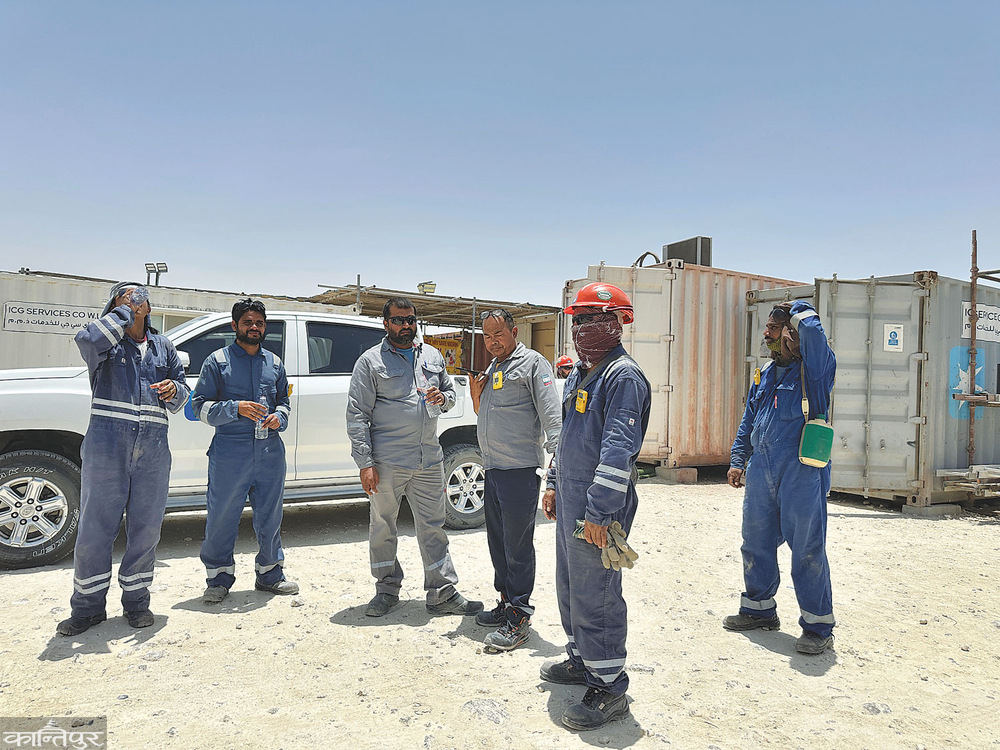
Although there has been much talk of granting voting rights to Nepali citizens living abroad, there has been no visible preparation for it. The House of Representatives elections scheduled for 21 Falgun are less than three months away. As the polling day draws closer, the possibility of voting abroad is also diminishing.
Home Minister Om Prakash Aryal of the interim government formed after the Gen-G rebellion had said that the right to vote for Nepalis living abroad would be ensured in the upcoming elections while taking office. The Gen-G youth have been raising this issue on a priority basis.
Different Gen-G groups have repeatedly put pressure on the government and the Election Commission on this issue. The 10-point agreement signed between the government and the Gen-G group on Wednesday also includes the issue of voting rights for Nepalis living abroad.
The government has also commissioned a study on this issue by a group of experts from the Policy Research Institute. The Institute had submitted a suggestion to the government in the last week of Kartik, including its conclusion that Nepalis living abroad could vote in the elections on 21 Falgun if preparations were made on time. The study report was submitted to the government on 8 Mangesh.
Senior researcher and spokesperson of the Institute, Dr. Deepak Kumar Khadka, who was involved in the study, said that they had concluded that Nepalis living abroad could be given the right to vote from the country they are in. 'We have already submitted the report after including the preparations that need to be made. The government must be making preparations. However, we are not aware of what preparations have been made,' he said.
The existing law does not speak about the right of citizens living abroad to vote. The study report has suggested amending the Voter Registration Act, the Election Commission Act, and the House of Representatives Member Election Act by bringing an ordinance.
The report says that the existing law should be amended within a week through an ordinance. However, even though it has been more than three weeks since the government received the report, it does not seem to have been implemented. 'The voting space is getting narrower every day. If we are to make an effort this time, we have to prepare on a war footing,' Khadka said.
Home Ministry spokesperson Anand Kafle says that legal, technical, and managerial issues regarding holding voting abroad are 'under discussion'. He informed that the opinion and suggestions of the Law Ministry regarding bringing an ordinance to amend the law have been received and the necessary work is being done in the ministry in this regard.
The Ministry's Law Division has already finalized the ordinance after taking the opinion of the Election Commission and the Ministry of Law on the law to be amended. However, it has been stalled due to lack of a 'green signal' from the political level regarding its further development.
The Election Commission, which has been saying that voting abroad can be done if the law and resources are provided, has already informed the government that it will be difficult to practice it in the elections on 21 Falgun, citing time pressure. Officials of the Commission have not officially spoken about it.
The study report says that it will take 45 days to compile the list of voters abroad. Similarly, the report estimates that it will take 3 months to build/purchase, test and operate the i-voting system using 'blockchain technology'.
It is mentioned that at least one month is required to send the ballot papers to the voters' addresses and have them vote on them. For that, the ballot papers should be sent to the voters' addresses by post one month before the polling day.
The study has given low priority to the issue of voting in person at diplomatic missions. This method has been given low priority considering the poor institutional capacity of the embassies, the administrative arrangements for the elections, election security, and the weak institutional capacity of the embassies.
‘The processes specified by law must be completed to make the elections fair, impartial, and acceptable. That takes a certain amount of time. The process of compiling the voter list abroad and contesting claims on it must be completed,’ a commission source said, ‘Whatever processes have been completed within the country, time must be given to those abroad to carry out those tasks as per the law. In addition, the consent of political parties is required for a reliable method of voting. It is necessary to reach an agreement on these options, such as dropping ballot papers in ballot boxes, voting by post, or using technology.’
However, the government does not seem to have discussed this issue with political parties. A commissioner of the commission said that if a decision is made to directly hold voting abroad without taking them into confidence, there will be problems in implementation and acceptability.
Former Chief Election Commissioner Ayodhee Prasad Yadav also says that when new technology or new content is added to the election process, the consent of political parties is required. ‘After all, there are diaspora organizations of political parties in foreign countries as well. Their support is also needed to implement it,’ he said.
He said that the commission needs time to prepare. Yadav suggests that it can be started by selecting a few places. The study report also suggests that it would be appropriate to start practicing it in countries with a large number of voters, diplomatic missions and open political conditions.
Political parties are in favor of not expanding it as a ‘pilot project or selective’. UML Election Department Chief Neeraj Acharya says that if the government has the capacity, all Nepalis living abroad should be given the right to vote.
‘It is not possible to give Nepalis living in some countries the right to vote and not in others,’ he said. Congress leader Pushpa Bhusal also says that the government and the commission should prepare so that everyone can vote. ‘The Congress has no problem with the right to vote for overseas Nepalis,’ she said, ‘but it should not be said that some people can vote and some people cannot.’
NCP leader Leelamani Pokharel says that the election laws should not be tampered with after the election announcement. ‘It is wrong to try to amend the law by bringing an ordinance. If the law is changed, it will affect the election,’ he said, ‘Can we make arrangements for Nepalis living in all countries to vote? What method and mechanism will we use in voting? Who will guarantee the security of votes? Such issues should be clear.’ Bhusal and Pokharel are the contact persons designated by the Congress and the NCP for the commission, respectively.
The Supreme Court had issued a directive order on 9 Chaitra 2074 to the government and the commission to grant voting rights to adult Nepalis living abroad. However, neither the government nor the commission seemed to have started preparations to implement it. In that context, the draft bill with the proposal made by the commission to reform the election law has been lying in the government drawer for years.
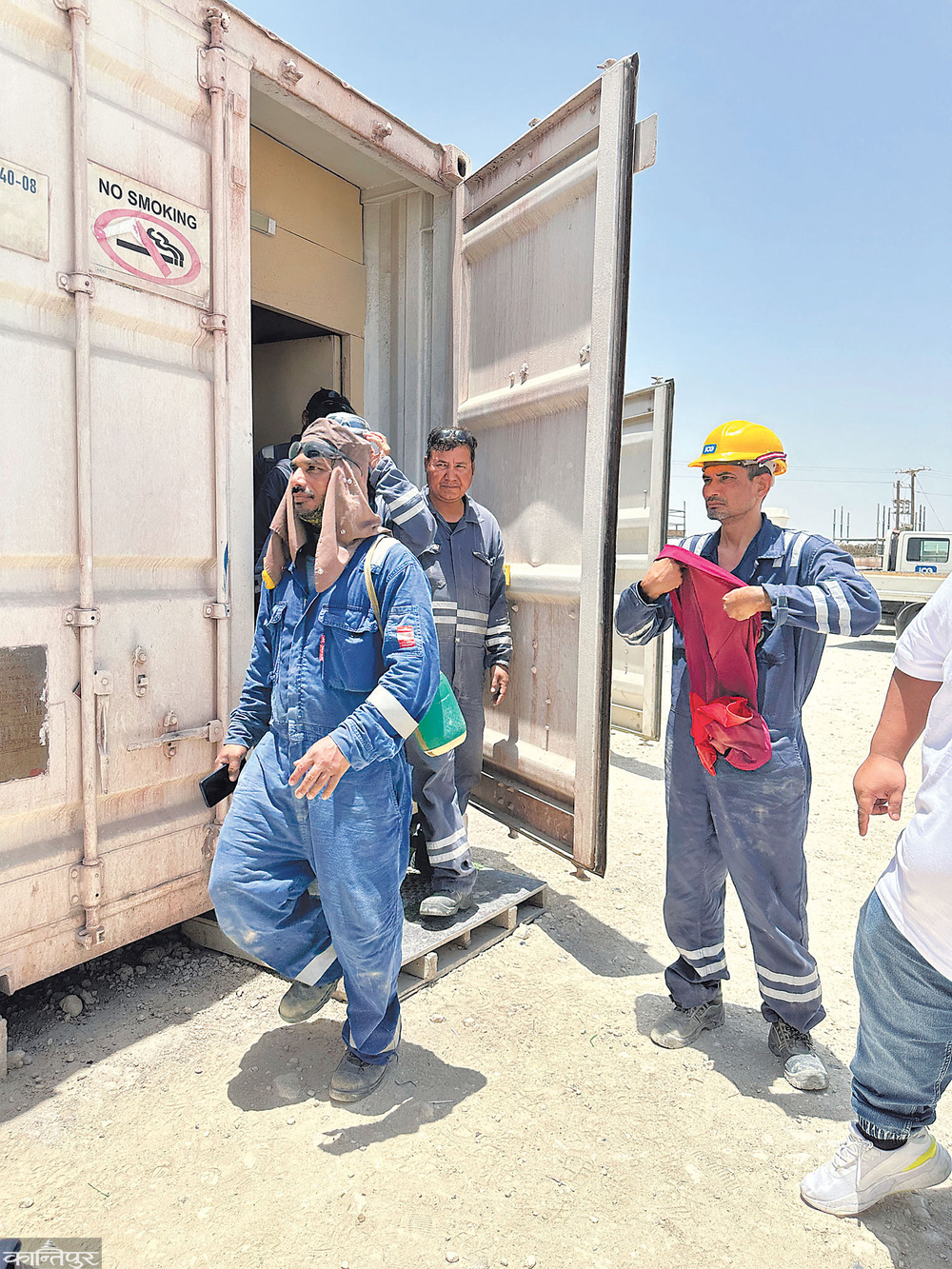
No body has accurate data on the number of Nepalis in the world. A feasibility study conducted by the commission in 2067/068 estimated that 4 million Nepalis are abroad. The 2078 census data showed that 2.2 million Nepalis have emigrated. According to the data as of last Ashar, 6.7 million Nepalis have obtained work permits for 111 countries. However, since the details of how many of them have returned are not clear, it is not clear how many Nepalis are currently abroad.
Former Chief Election Commissioner Surya Prasad Shrestha says that it is not possible to just talk about ‘popular’ things. ‘It is a good thing for Nepalis living abroad to get the right to vote. However, time is running out now. If we go in that direction, the election will not happen,’ he said, ‘Time is very short. The Election Commission cannot manage it.’
‘Time is short now, the Commission cannot manage it.’
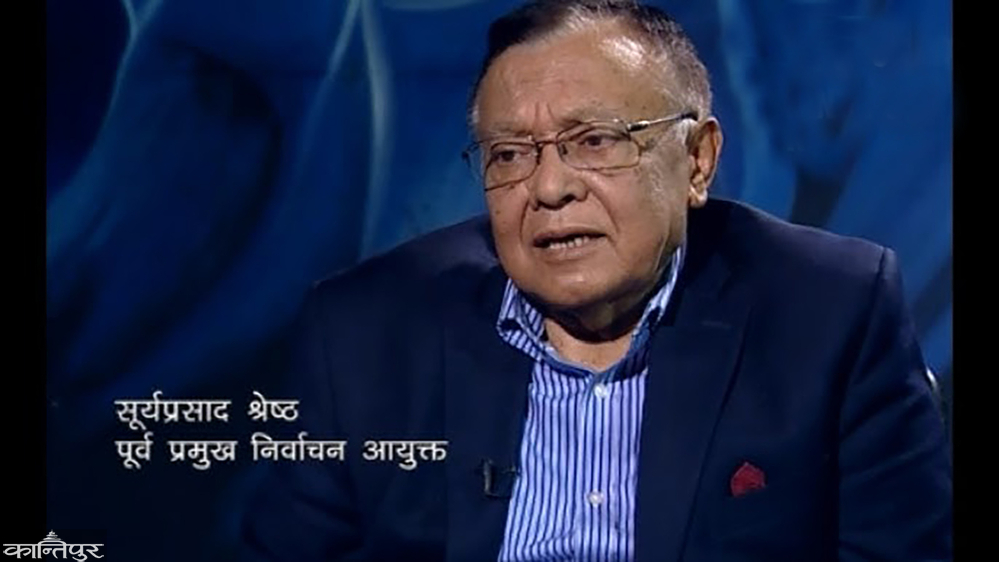
Surya Prasad Shrestha, Former Chief Election Commissioner
What is your suggestion to the government for the election?
The government should have been able to create an environment for the election by taking the media and political parties into confidence. The Election Commission should not have been allowed to interfere. The Commission has the capacity to conduct free, fair and peaceful elections. We should not try to add new things to the election method and system now.
This is not the time to introduce new technologies or talk about voting for those living abroad. Such things will only confuse those in the Commission. This election should be held within the existing method and system. It is not right to interfere and directly elect the Prime Minister. Such things should not be brought. The government should also explain it well to the youth.
The youth are demanding that Nepalis living abroad be given voting rights. The Supreme Court has also given a directive order to implement it. Isn't that what should be done?
If we do something new now, the election will not take place due to time constraints. Everyone should have the right to vote. There is no doubt about it. But is it possible for Nepalis living abroad to have the right to vote now? That is something to consider. In my experience, time is very short. The Election Commission cannot 'manage'. On the other hand, there is no accurate data on how many Nepalis are abroad and which countries they have reached. It is estimated that there are more than 6 million Nepalis abroad.
Now, political parties that are competing in the elections should also get an opportunity to present their views to the voters. The concerns of political parties should also be heard on this issue. Technical and managerial preparations are not something that can be done within the next three months. It is not right to put pressure on the Election Commission and say that it could not be done. It takes one to one and a half years for universally acceptable preparations. For this, the capacity of the Commission itself should be increased.
There is a court order. If the government also asks to hold elections including voters abroad, can the Commission back down?
It is not enough to just say do it. First, a law had to be made. The election date had to be postponed. It had to be postponed for a year. It is not something that cannot be done. Time is needed. If we try to do it now, it will hinder these elections. As soon as the situation arises that the elections have to be postponed, the legitimacy and existence of the government will be questioned again.

