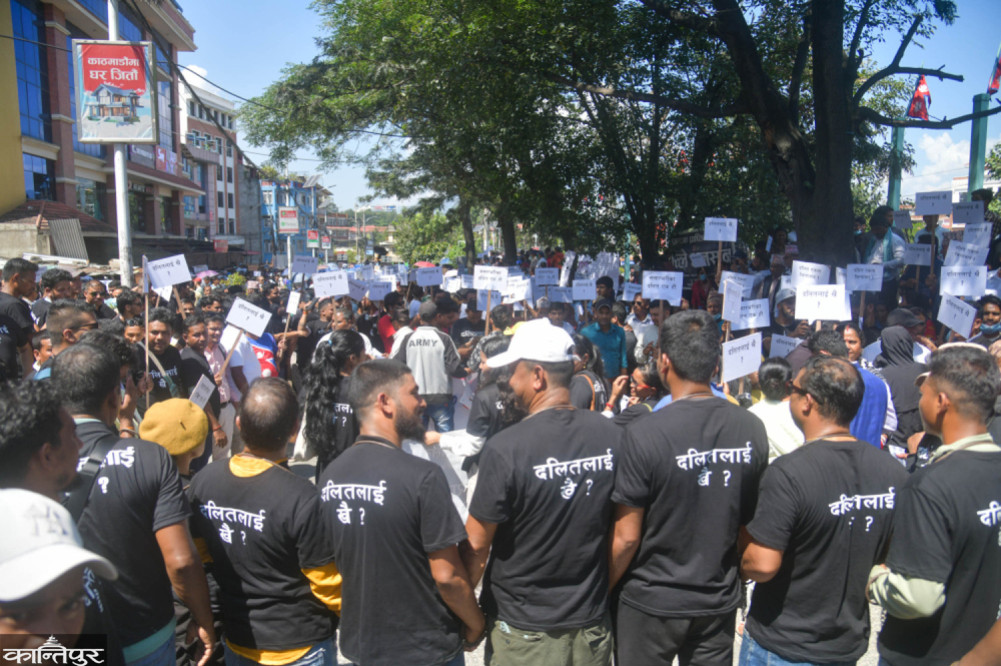
A review of 13 years of caste-based untouchability cases shows that more than half of the cases have been acquitted. The legal fight against untouchability appears weak.
We use Google Cloud Translation Services. Google requires we provide the following disclaimer relating to use of this service:
This service may contain translations powered by Google. Google disclaims all warranties related to the translations, expressed or implied, including any warranties of accuracy, reliability, and any implied warranties of merchantability, fitness for a particular purpose, and noninfringement.
Nepal's legal efforts and historical period
Human dignity, equality and self-respect are the first conditions for building any civilized, democratic and rule of law-enforced society, but Nepali society has historically been trapped in the cycle of inhumane practices like caste discrimination and untouchability for centuries. Although Nepal is a multi-ethnic, multilingual and multicultural country, caste discrimination and untouchability have not been eradicated even in the modern era.
Nepal ratified the 'International Convention on the Elimination of All Forms of Caste Discrimination, 1965' in 1971, i.e. on 21 Jestha 2063 BS, the parliament declared the country an 'untouchability-free country'. The government has also been celebrating that day as the Day for the Elimination of Caste Discrimination and Untouchability. In terms of time, today marks the 20th anniversary of this historic declaration, while the ‘Caste Discrimination and Untouchability (Offences and Punishments) Act, 2068’ has entered its 16th year of implementation as a specific law. It seems that Nepal has taken 41 years to formulate a specific law that makes caste discrimination punishable since ratifying the said international convention.
Looking at the constitutional history of Nepal, Article 11(4) of the Constitution of the Kingdom of Nepal, 2047, banned untouchability for the first time and added 10K. No. to the Civil Code, adding a provision for 1 year imprisonment or a fine of 3,000. Later, the Interim Constitution of Nepal, 2063 established it as a fundamental right. Article 24 of the Constitution of Nepal, drafted in 2072 BS, further refines the right against untouchability and discrimination, defining it as a ‘serious social crime’ and providing for compensation to the victims. Similarly, Sections 160 and 166 of the Criminal Code, 2074 BS, also prescribe imprisonment of up to 3 years for discrimination and degrading treatment.
Deep-rooted social roots and structural impact
Harmful practices and customs based on ethnicity, gender and religion are based on deeply rooted patriarchal, social and religious values/beliefs that have been ingrained for centuries. Even though communities may view them as traditional or normal, such practices expose marginalized groups and women to violence, physical and psychological health problems and even death.
According to the United Nations Country Team (UNCT), such harmful practices are a serious obstacle to development outcomes, hindering inclusive governance, economic development and education, ultimately posing a major challenge to the 2030 Agenda for Sustainable Development.
Community mentality and the direct experience of the Dalit community
In this context, a detailed survey conducted among 4,000 citizens in 16 districts of Nepal has revealed the horrific form of caste discrimination at the grassroots level. 97 percent of the citizens participating in the survey have admitted that caste discrimination still exists in their community, while a large number of participants from the so-called upper castes have been found to still believe in untouchability and impurity. Nearly 50 percent of the participants have said that Dalits are not allowed to enter the houses of non-Dalits in their community, with this problem being prevalent at 54 percent in Karnali and Sudurpaschim provinces and 46 percent in Madhes province.
This survey has also reflected the direct and painful experience of the Dalit community through statistics. Out of the 911 Dalit citizens participating in the survey, 54 percent have told the truth that they have faced direct discrimination due to their caste in the past one year. Of those who have faced discrimination, 74 percent have faced inhumane treatment such as being denied entry to the homes or kitchens of upper-caste families, 52 percent have been denied access to community drinking water taps, and 50 percent have been denied entry to village temples.
Obstruction in access to justice and lack of complaints
Despite facing such a large amount of discrimination and humiliation, it has been found that the majority of victims have never filed a complaint against their perpetrators at the ward office or police station. When examining the main reasons for not filing a complaint, 70 percent of victims said they did not want to cause further controversy or problems in the community where they live, while significantly, more than 20 percent of victims were not aware of the legal process on how to file a complaint with the relevant body regarding such incidents. This fact confirms that even though the law is strong on paper, the Dalit community is still forced to endure injustice at the ground level due to social fear, pressure, and lack of legal awareness.
Policy indifference and practical reality
Despite all this, the bitter reality is that the practice of untouchability, which is said to have been legally abolished, still persists in society. The law brought about revolutionary changes, but it could not change the mentality of society. Still, in many places in the country, Dalits are forced to drink contaminated water from streams and rivers when they are banned from wells, wells and taps. The inhumane chain of setting up separate kitchens for Dalits at public functions, banning entry to temples, and social boycotts to mental and physical torture for inter-caste marriages continues.
A review of the past 15 years shows that the act has not been effectively implemented, due to which its real meaning has not reached the people. A clear example of this policy indifference, administrative laxity and practical gap was seen in the meeting of the Law, Justice and Human Rights Committee under the Federal Parliament on 20th Jestha 2077 BS. The meeting, which called the then Home Minister, Attorney General and Inspector General of Police to discuss the mass murder of six youths including Nawaraj BK in Rukum West, had directed the Ministry of Home Affairs to establish a separate 'Dalit Cell' within the Nepal Police.
Parliamentary directive and the beginning of the 'Help Desk'
In the initial phase, there was widespread policy confusion and laxity in the implementation of the directive by the Speaker and the parliamentary committee. Only about a year and a half after the directive from the Parliament (2078 Kartik), the Ministry of Home Affairs issued the first circular to establish a 'Help Desk' targeting the Dalit community in all 77 district administration and police offices.
Before that, during discussions between the National Dalit Commission and the Nepal Police, there was a suspicion that naming a separate 'Dalit Cell' would lead to other discrimination in the society. For this reason, it was included within the currently operating 'Women, Children and Senior Citizens Cell' and help desks were started in various districts and local levels of the country by appointing contact persons (focal persons).
Institutional efforts and the need for a ‘fast track desk’
Further strengthening this effort, the Ministry of Home Affairs established a separate ‘Dalit desk’ at the Police Headquarters in Falgun, 2081 BS, about 5 years after the directive of the parliamentary committee, and directed the desks in 77 districts to be made more effective. In this way, although separate cells and desks were established for Dalits, no progress report has been made public on what/how much work they have done so far, so it can be easily estimated how effective those efforts have been.
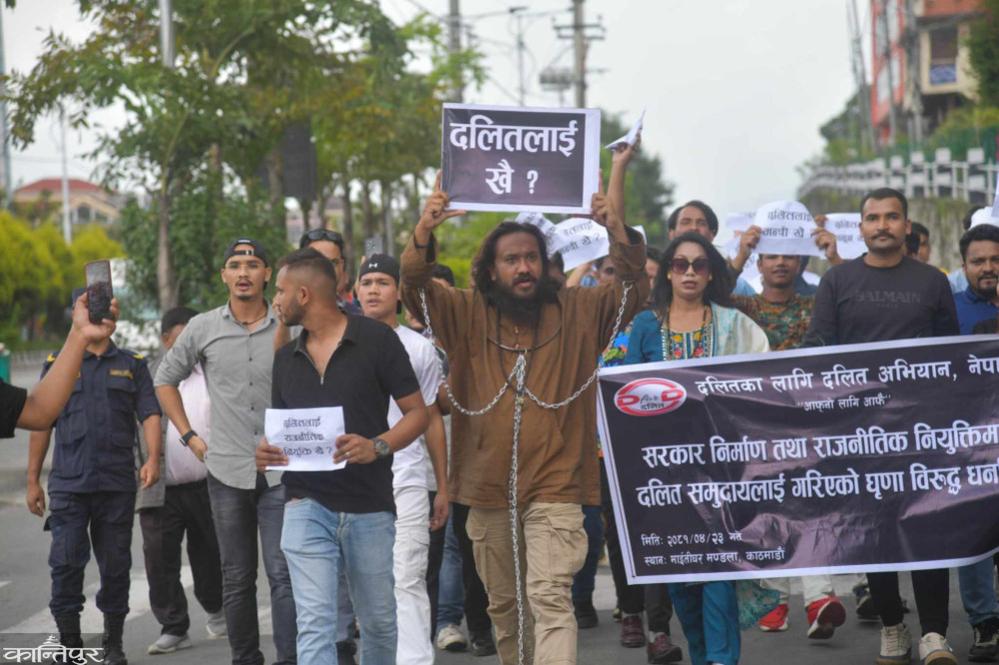
Despite this, the deep-rooted roots of caste discrimination in society are confirmed by the movement led by Deepa Nepali in 2083 BS, when the Dalit community was not given a room on rent in the Maitighar in the capital. Taking such incidents that are prevalent across the country seriously, the government has recently given important instructions to operate a ‘fast track desk’ to immediately hear cases of caste discrimination.
After high-level discussions between the ministers and experts concerned, Home Secretary Rajkumar Shrestha has been directed to operate a ‘Fast Track Desk’ to expedite the process of registering complaints and taking action. Accordingly, the Home Administration has issued a circular to all 77 District Administration Offices to prioritize the effective implementation of the existing law, but such hastily issued instructions without clarifying why the previously formed cells or desks could not work effectively and what basic requirements (such as adequate budget, trained manpower, procedures and security arrangements) are required to operate the new ‘Fast Track Desk’ are likely to remain on paper as before. Until a serious review of the failures of the old structure is carried out, the new desk alone is unlikely to ensure justice to the victims at the ground level.
Violence and helplessness of justice after the promulgation of the Act
The promulgation of the ‘Caste Discrimination and Untouchability (Offences and Punishments) Act, 2068’ was a historic step in itself. But even after the implementation of the Act, it is a bitter reality that dozens of Dalits have suffered inhuman violence and lost their lives for touching water, touching the stove, entering a temple, or for inter-caste marriages.
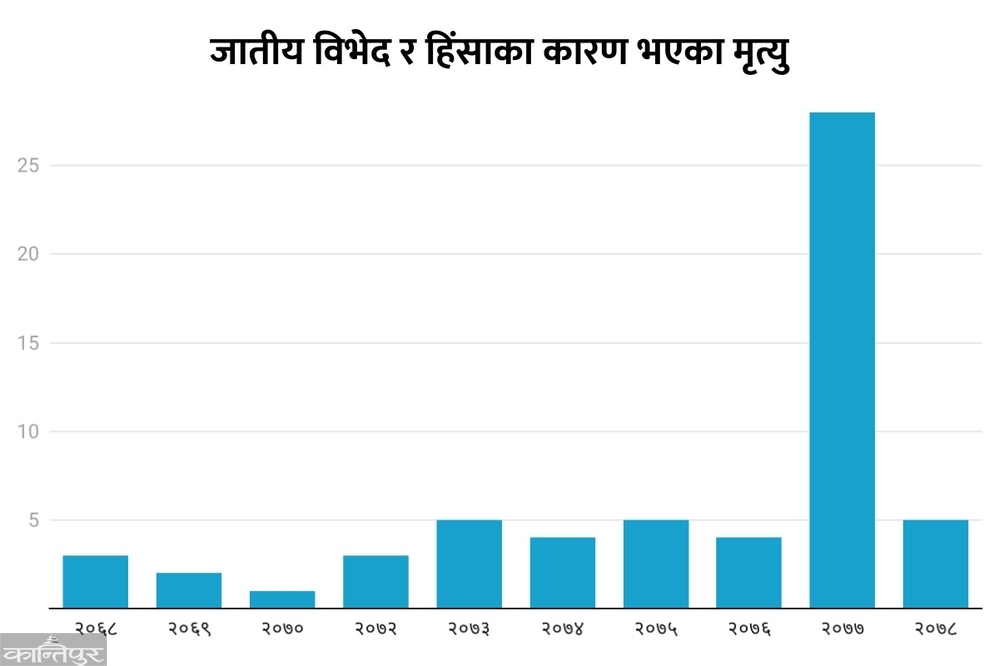
According to a study conducted by Jagran Media Center, since the implementation of this special Act, 20 Dalit citizens have been brutally murdered due to caste discrimination and untouchability. The study has also revealed some representative incidents that shocked the society, including the murder of Tikaram Nepali of Rukum for supporting inter-caste love, Angira Pasi of Rupandehi, Maya Bik of Kailali, Ditiya Reshma Baraili of Dhanusha, and Roopmati Kumari Das of Morang, who were raped and abducted and murdered, Muna Sarki of Kalikot was beaten to death for calling her 'untouchable', Shreya Sunar of Kaski, Laxmi Pariyar of Kavre, Asmita Sarki of Jhapa, Rajesh Nepali of Parbat, Sangita Pariyar of Tanahun, Jhuma Bik of Taplejung, Sete Damain of Dailekh, Shivshankar Das of Saptari, and Manveer Sunar of Kalikot, among others, who lost their lives.
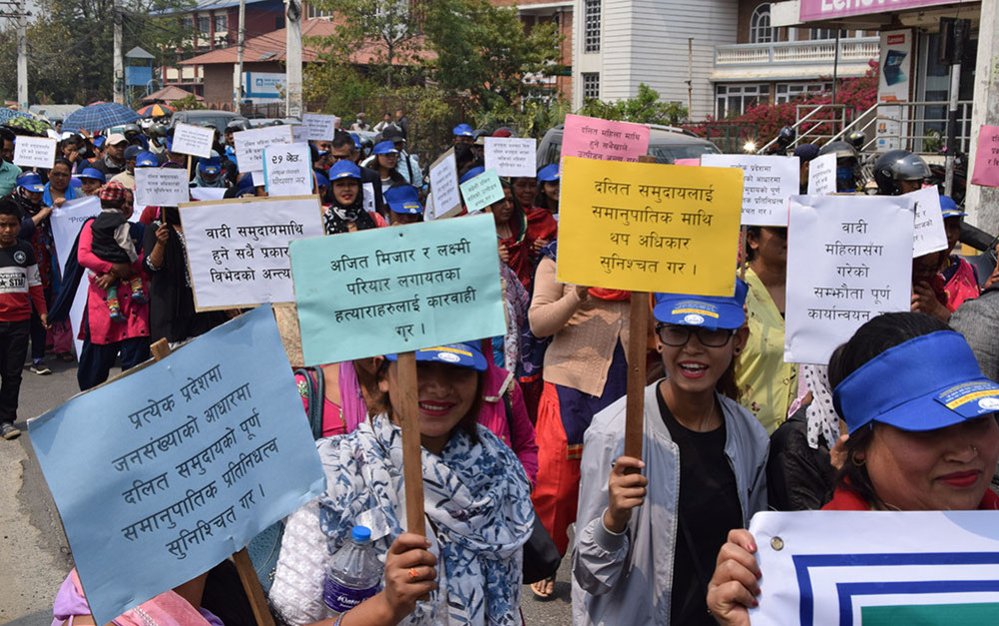
Among these, the unsolved death of Ajit Mijar of Kavre Panchkhal, who was killed due to inter-caste marriage, is still haunting the state. Mijar, who got married on Asad 25, 2073, was found hanging in the Parewatar forest of Dhading shortly after the wedding. The fact that his body has been lying in a teaching hospital in Maharajgunj for the past 10 years due to the state and legal system's failure to provide justice clearly shows the helplessness of our justice system.
Not only the loss of life, but also dozens of Dalit families have been displaced from their villages and societies due to caste oppression after the implementation of the Act. Even when such serious incidents occur, the police administration, which is considered the first door to justice, has been widely reluctant to accept complaints or FIRs. A study by the Samata Foundation shows that the police administration initially refuses to register untouchability cases and even if cases are registered due to all-round pressure, the verdict ultimately leans in favor of the perpetrator due to power, access and political pressure. Even after a decade since the establishment of the republic and the enactment of the new constitution, the failure to enact a single new, specific, unified law for the rights and overall security of the Dalit community is a major weakness of the state.
A worrying example: Rajesh Paswan's case
Amidst such a depressing and impunity-ridden environment, a recent decision from the Rautahat District Court (on 18th Jestha 2083 BS) seems to have kept the hope of legal redress and justice alive. The Rautahat District Court has delivered a historic decision in favor of the victim Rajesh Paswan in the incident of caste discrimination and beatings at a Chhath pandal in Vrindavan Municipality, Rautahat.
This case began on 3rd Mangsir 2080 BS, the day of Chhath festival. That evening, Rajesh Paswan, a member of the executive committee of Vrindavan Municipality, had reached the Bahuari-Piparia Chhath Ghat with the city mayor and other public representatives to exchange greetings. Separate Chhath pandals were built there for the Yadav community and the Dalit community. Paswan stopped there to watch the bhajan-kirtan as his family's ghat was also located in the same place.
In the meantime, some people from Bahuari village used abusive words and severely beat Paswan with kicks and punches, saying that a person from the so-called 'small caste' should not enter the pandal of the 'big caste'. The school principal Bharat Prasad Yadav, Rajesh Kumar Yadav, Pasindra Mahato and the then statistics officer (now deceased) Shankar Thakur were involved in the incident.
In the initial stage, due to pressure from the government and power, the police administration had created extreme difficulty in registering a case. But the complaint was registered only after continuous pressure and initiatives from various Dalit rights organizations/institutions, human rights activists and concerned bodies. मुद्दा अदालतमा पुगेपछि पनि पासवानले ३ वर्षसम्म विभिन्न प्रकारका सामाजिक तनाव, धम्की र आफूविरुद्ध झुटा मुद्दा दर्ता गराउने प्रपञ्चहरूको सामना गर्नुपर्यो । अन्ततः जिल्ला अदालत रौतहटका न्यायाधीश हरिसिंह धामीको एकल इजलासले पासवानको दाबीलाई न्यायोचित ठहर गर्दै प्रतिवादीहरूलाई दोषी ठहर गरी कैद, जरिवाना र पीडितलाई क्षतिपूर्ति भराउने आदेश दियो । यो फैसलाले भुइँ तहमा लडेर पनि न्याय पाउन सम्भव छ भन्ने एउटा सकारात्मक नजिर स्थापित गरेको छ ।
मुद्दाको प्रवृत्ति र १३ वर्षको तथ्याङ्कीय ऐना
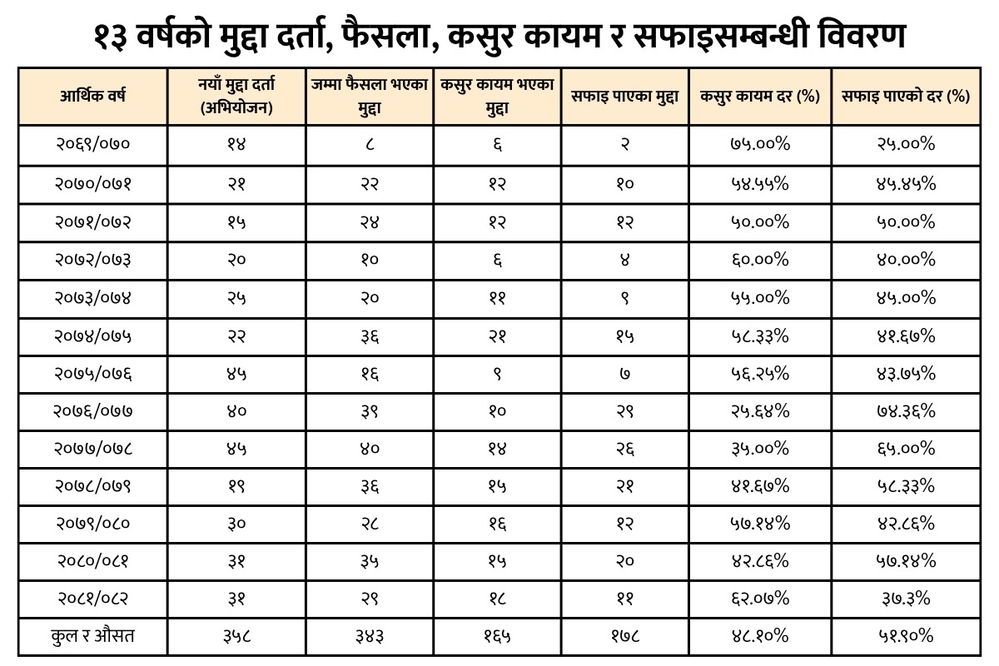
जिल्ला सरकारी वकिल कार्यालयमा रहेका ‘भेदभाव तथा अपमानजन्य व्यवहार’ (जातीय छुवाछूत सम्बन्धी) मुद्दाहरूको आर्थिक वर्ष २०६९/०७० देखि २०८१/०८२ सम्मको १३ वर्षको आधिकारिक तथ्याङ्क केलाउँदा देशको फौजदारी न्याय प्रणालीको वास्तविक चित्र छर्लङ्ग हुन्छ ।
१३ वर्षको मुद्दा दर्ता, फैसला, कसुर कायम र सफाइसम्बन्धी विवरण
तथ्याङ्कीय विश्लेषण र प्रवृत्तिहरू
– मुद्दा दर्ताको प्रवृत्ति : १३ वर्षको अवधिमा कुल ३५८ वटा नयाँ मुद्दा दर्ता भई चलाइएका छन् । आर्थिक वर्ष २०७५/०७६ र २०७७/०७८ मा सबै भन्दा बढी ४५/४५ वटा मुद्दा दर्ता भएको देखिन्छ । यसले समाजमा कानुनी सचेतना बढेको वा विभेदका घटना बाहिर आउने क्रम बढेको सङ्केत गर्छ ।
– कसुर कायम र सफाइको तुलनात्मक दर : कुल फैसला भएका ३४३ मुद्दामध्ये १६५ मा मात्र कसुर कायम (दोषी ठहर) भएको छ भने १७८ मुद्दाले सफाइ पाएका छन् । समग्र १३ वर्षको औसत हेर्दा ४८.१०% मुद्दामा मात्रै कसुर ठहर भएको छ भने ५१.९०% मुद्दामा प्रतिवादीले सफाइ पाएका छन् । यसले आधा भन्दा बढी मुद्दामा अभियोग प्रमाणित हुन नसकेको दुखद यथार्थ देखाउँछ ।
– प्रतिवादीहरूको सङ्ख्यात्मक विश्लेषण : मुद्दा सङ्ख्याको तुलनामा प्रतिवादी (आरोपित) हरूको सङ्ख्या निकै ठूलो छ । १३ वर्षमा फैसला भएका कुल ९६३ प्रतिवादीमध्ये ५३५ जना (५५.५५%) ले सफाइ पाएका छन् भने ४२८ जना (४४.४५%) माथि मात्र कसुर कायम भएको छ ।
यी तथ्याङ्कले नेपालमा जातीय छुवाछूत र भेदभावविरुद्ध अदालतबाट कसुर कायम हुने दर (४८.१०%) भन्दा सफाइ पाएर उन्मुक्ति पाउने दर (५१.९०%) बढी हुनुले अनुसन्धान प्रक्रियामा सबुद प्रमाणको कमी, पीडितलाई साक्षी संरक्षणको अभाव वा सामाजिक दबाबका कारण अदालतमा बयान फेरिने (होस्टाइल हुने) जस्ता गम्भीर चुनौतीहरू रहेका पुष्टि गर्छ ।
कानुन कार्यान्वयनका चुनौती र संरचनागत जटिलताहरू
नेपालमा जातीय भेदभाव र छुवाछूतलाई दण्डनीय बनाउने कानुनी व्यवस्थाहरू विद्यमान भए तापनि व्यावहारिकरूपमा यसको सफल कार्यान्वयन हुन नसक्नुका पछाडि बहुआयामिक र संरचनागत चुनौतीहरू छन् :
– परम्परागत सामाजिक संरचना र चेतनाको अभाव : नेपाली समाजमा सदियौँदेखि जरा गाडेर बसेको प्रथा, परम्परा र अन्धविश्वासका कारण भेदभाव एउटा सामाजिक संरचना र पद्धतिका रूपमा स्थापित भइसकेको छ । यसले गर्दा अझै पनि आम जनतामा छुवाछूत तथा भेदभाव गर्नु ‘गम्भीर अपराध’ हो भन्ने चेतना र कानुनी साक्षरता पुग्न सकेको छैन ।
– जाहेरी अनिच्छा र बाध्यतात्मक मेलमिलाप : पीडित पक्षबाट कानुनी झमेला, सामाजिक दबाब वा असुरक्षाका कारण उजुरी वा जाहेरी दिन नचाहने प्रवृत्ति छ । यदि जाहेरी दर्ता भइहाले पनि अभियोजन प्रक्रिया हुनुपूर्व नै स्थानीय स्तरमा वा शक्ति केन्द्रहरूको दबाबमा पीडित र अभियुक्तबीच जबर्जस्ती वा आपसी मेलमिलाप गराउने गलत परिपाटी हाबी छ ।
– फौजदारी न्याय प्रणाली र प्रमाण सङ्कलनमा कमजोरी : जातीय छुवाछूतका अधिकांश घटना मौखिकरूपमा हुने गर्छन् । यस्ता कसूरमा भौतिक वा डिजिटल दशी प्रमाणको चरम अभाव हुने हुँदा अनुसन्धान पूर्णरूपमा मौखिक प्रमाण र साक्षीमा भर पर्नुपर्ने बाध्यता छ । पर्याप्त प्रमाण सङ्कलन हुन नसक्दा अदालतमा अभियोजनको सफलता दर अत्यन्त न्यून छ ।
– पीडित र साक्षीको असुरक्षा एवं प्रतिकूल बकपत्र : न्यायिक कारबाहीमा पीडित र साक्षीलाई संरक्षण गर्ने राज्यसँग कुनै ठोस पूर्वाधार र संयन्त्र छैन । जसको प्रत्यक्ष फाइदा उठाउँदै प्रतिवादी पक्षले डर, त्रास वा प्रलोभनमा पार्दा पीडित वा साक्षीहरू अदालतमा पुगेर प्रतिकूल बकपत्र (होस्टाइल विटनेस) गर्ने गर्छन् जसले गर्दा मुद्दाहरू असफल भइरहेका छन् ।
– नियामक र समन्वयकारी संरचनाको निष्कि्रयता : दलित समुदायको हकहितका लागि बनेको संवैधानिक निकाय ‘राष्टि्रय दलित आयोग’ सीमित स्रोत, साधन र जनशक्तिका कारण ऐनको व्यापक प्रचारप्रसार र अनुगमन गर्न सक्ने अवस्थामा देखिँदैन । त्यस्तै, प्रधानमन्त्रीको नेतृत्वमा रहने ‘जातीय भेदभाव तथा छुवाछूत उन्मूलन कार्यान्वयन उच्चस्तरीय समिति’ र जिल्ला स्तरमा प्रमुख जिल्ला अधिकारीको संयोजकत्वमा रहने ‘जिल्ला समन्वय समिति’ हरू पूर्णरूपमा निष्क्रियप्रायः छन् ।
न्यायपूर्ण रूपान्तरणको मार्गचित्र
जातीय भेदभाव तथा छुवाछूतजन्य कसूर केवल एउटा सामाजिक कुरीति मात्र नभई समग्र मानव मर्यादा र संविधानप्रदत्त मौलिक हकविरुद्धको गम्भीर अपराध हो । दुई दशकको कागजी घोषणालाई व्यवहारमा उतार्न र फौजदारी न्याय प्रणालीलाई पीडितमैत्री बनाउन अब राज्यले रणनीति र कार्यनीतिसहितका निम्न योजना तत्काल कार्यान्वयन गर्नुपर्छ :
– कानुनी तथा कार्यविधिगत पुनरावलोकन : ऐनलाई नेपालको संविधानले प्रत्याभूत गरेको दलितको हक अनुकूल हुने गरी आवश्यक पुनरवलोकन गरिनुपर्छ । विशेषगरी यस्ता मुद्दाको हदम्याद बढाउने, प्रमाणको भार (बर्डेन अफ प्रुफ) प्रतिवादीमाथि नै रहने व्यवस्था गर्ने, साक्षीको बकपत्र गराउने विधि र मुद्दाको द्रुत सुनुवाइका लागि कार्यविधिगत सुधार गर्नुपर्छ ।
– सरोकारवाला निकायहरूको क्षमता विकास : अनुसन्धान प्रक्रिया फितलो हुँदा पीडितले न्याय नपाउने अवस्था अन्त्यका लागि अनुसन्धानकर्ता (प्रहरी), अभियोजनकर्ता (सरकारी वकिल) र न्याय सम्पादन गर्ने अधिकारी (न्यायाधीश) हरूको कार्यक्षमता र संवेदनशीलता बढाउन विशेष तालिम तथा क्षमता विकासका कार्यक्रम सञ्चालन गरिनुपर्छ ।
– तल्लो तहसम्म सचेतना : राज्यका तीनवटै तह (सङ्घ, प्रदेश र स्थानीय सरकार) ले बजेट नै विनियोजन गरेर छुवाछूतविरुद्ध स्पष्ट नीति र योजनाका साथ सामाजिक/सांस्कृतिक रूपान्तरणको महाअभियान चलाउनुपर्छ । यसका लागि विद्यालयको पाठ्यक्रममै जातीय भेदभाव तथा छुवाछूतजन्य कार्य दण्डनीय अपराध हो भन्ने विषय अनिवार्यरूपमा समावेश गरिनुपर्छ ।
– पीडित सहायता र संरक्षण संयन्त्र : संविधानले व्यवस्था गरेको ‘अपराध पीडितको हक’ को मर्मअनुरूप पीडितको सहायता, सामाजिक पुनस्र्थापना र साक्षीको पूर्ण सुरक्षाका लागि सरकारी, गैरसरकारी र नागरिक समाजको संयुक्त अग्रसरता आवश्यक छ ।
– जवाफदेहिता र शासकीय सुशासन : कानुनको इमानदार पालना र कार्यान्वयन गर्ने अधिकारीलाई पुरस्कृत गर्ने र लापर्बाही वा बेवास्ता गर्ने अधिकारीलाई दण्डित गर्ने थिति र परम्परा विकास गरिनुपर्छ । राज्यको तर्फबाट बन्ने हरेक नीति, कानुन, योजना र बजेटलाई जातीय भेदभाव उन्मूलनको दृष्टिकोणले समेत निरन्तर परीक्षण (इन्क्लुजन अडिट) गरिनु आवश्यक छ ।
नीतिगत प्रतिबद्धता र अभियान : कागजी घोषणा र व्यावहारिक कसी
राज्य र राजनीतिक दलहरूका तर्फबाट दलित समुदायको न्याय र अधिकारका लागि समय–समयमा नीतिगत प्रतिबद्धताहरू आउने गरेका छन् । यसै सन्दर्भमा, संसद्को ठूलो शक्ति र करिब दुई–तिहाइ मत पाएको राष्टि्रय स्वतन्त्र पार्टी (रास्वपा) ले आफ्नो ‘वाचा पत्र’ मार्फत ‘सरकार गठन भएलगत्तै ऐतिहासिकरूपमा पछाडि पारिएका दलित तथा उत्पीडित समुदायसँग राज्यको तर्फबाट औपचारिकरूपमा क्षमा याचना गर्ने र भविष्यमा त्यस्तो विभेद हुन नदिने प्रण गर्ने’ नीतिगत प्रतिबद्धता ल्याउनु एउटा सकारात्मक सुरुआत हो ।
तर दुई–तिहाइ नजिकको बलियो जनमत पाएको र दलित समुदायका लागि विशेष कार्यक्रमहरू ल्याउने वाचा गरेको पार्टी सरकारमा रहँदासमेत देशको नीति, कार्यक्रम र बजेट विनियोजनको यथार्थ हेर्दा दलित समुदायप्रति राज्य अझै पनि गम्भीर नभएको स्पष्ट देखिन्छ । विगतका सरकारहरूले जस्तै वर्तमान सरकारले पनि भाषणमा आश्वासन र कागजातमा मात्रै अधिकार सीमित गर्ने परिपाटीलाई निरन्तरता दिन खोजेको तथ्यहरूले प्रमाणित गर्दै लगेका छन् । सरकारले बजेट वक्तव्यमार्फत देशव्यापीरूपमा ‘छुवाछूतविरुद्धको राष्टि्रय अभियान’ सञ्चालन गर्ने घोषणा गर्नु आफैँमा सराहनीय कदम भए तापनि त्यसका लागि कति बजेट विनियोजन गरिएको हो भन्ने ठोस अङ्क र शीर्षक स्पष्टरूपमा उल्लेख नगरिनुले यो अभियान केवल प्रचारबाजीमा मात्र सीमित हुने त होइन भन्ने गम्भीर शङ्का जन्माउने ठाउँ प्रदान गरेको छ ।
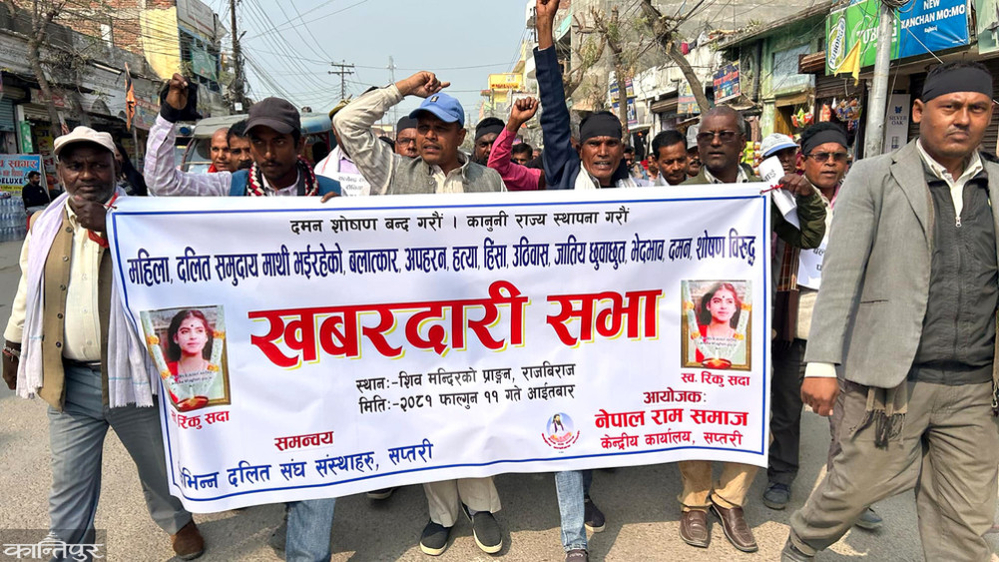
यसका साथै, राजनीतिक दलहरूको यो नीतिगत भाषा र व्यावहारिक निर्वाचन अभ्यासबीच अझै पनि ठूलो विरोधाभास र व्यावहारिक खाडल कायमै देखिन्छ । एकातिर प्रतिनिधिसभा निर्वाचनमा प्रत्यक्षतर्फ ठूलो सङ्ख्यामा उम्मेदवार उठाउँदासमेत दलित समुदायको प्रतिनिधित्व निकै न्यून हुनु र संसद्मा अझै पनि जनसङ्ख्याको अनुपातमा दलित (विशेषगरी मधेसी दलित) को उपस्थिति शून्यप्रायः रहनुले दलहरूको वाचा र व्यवहारबीचको दूरी छर्लङ्ग पार्छ । अर्कोतिर, विना बजेट र ठोस कार्ययोजना घोषणा गरिने यस्ता अभियानले दलित समुदायको वर्षौँदेखिको मुख्य मागका रूपमा रहेको ‘कला, सिप तथा ज्ञान प्राधिकरण’ गठन, राष्टि्रय दलित आयोगको सशक्तीकरण र ठोस आर्थिक समावेशीकरणका मुद्दाहरूलाई सम्बोधन गर्न सक्दैनन् जसका कारण सरकारको वास्तविक गम्भीरतामाथि नै प्रश्न खडा भएको छ ।
अतः संसद्, बजेट र संविधानले दिएका अधिकार केवल दस्ताबेज वा चुनावी नारामा मात्र सीमित भएसम्म ‘छुवाछूत मुक्त राष्ट्र’ को परिकल्पना पूरा हुन सक्दैन । अबको बाटो भनेको राज्यका प्रशासनिक डेस्कहरू (जस्तै– दलित डेस्क, फास्ट ट्रयाक डेस्क), बजेटका लक्षित कार्यक्रमहरू र दलहरूका नीतिगत प्रतिबद्धताहरूलाई स्पष्ट कार्ययोजना र पर्याप्त स्रोतसाधनसहित ‘शून्य सहनशीलता’ का साथ कार्यान्वयनको कसीमा उतार्नु नै हो ताकि समाजमा अजित मिजार र नवराज बिक जस्ता प्रतिनिधि पात्रहरूले ज्यान गुमाउन नपरोस् र राजेश पासवानहरूले न्यायका लागि वर्षौँसम्म कठिन कानुनी लडाइँ लड्नुपर्ने बाध्यता अन्त्य होस् ।