Unless there is a harmony between the formal institutions of the state, such as law, policy, and bureaucracy, and the real power structures of society, policy reforms remain limited to mere paper mache.
We use Google Cloud Translation Services. Google requires we provide the following disclaimer relating to use of this service:
This service may contain translations powered by Google. Google disclaims all warranties related to the translations, expressed or implied, including any warranties of accuracy, reliability, and any implied warranties of merchantability, fitness for a particular purpose, and noninfringement.
There was a time when a single voice echoed from corporate meetings to tea shops in Kathmandu – ‘The cost of capital has become high, which has suppressed the capacity of production. If interest rates were to fall to single digits, there would be a flood of investment in Nepal and the economy would reach new horizons of development.’ This claim of the private sector remained the main commentary on the Nepali economy for decades. Their argument was – the high cost of capital is the main obstacle to economic development.
Today, that demand has been fulfilled. According to Nepal Rastra Bank data (as of 2082 Falgun), the interest rate on loans has fallen to 6.90 percentage points. The weighted average interest rate on deposits is limited to 3.45 percent and the average interbank rate is limited to 2.68 percent. While there are deposits of Rs. 77 trillion 45 billion in the banking system, only Rs. 57 trillion 41 billion has been loaned. The credit flow to the private sector is 6.7 percent. What this confirms is that there is an abundance of capital, but there is a widespread slowdown in domestic production, demand and investment. There is a famine of entrepreneurship and courage. Entrepreneurs are in a ‘wait and see’ state.
This silence in the market is a sign that Nepal’s economy is trapped in a complex and multifaceted structural trap today. Although it is called a liquidity trap in economic terms, it is not just a problem of the monetary sector. It is a structural and systemic crisis of the entire economic ecosystem. In this light, the article presented has attempted to analyze the structural challenges facing the Nepalese economy and explore hidden opportunities.
Crisis of Trust : Policy Confusion
Nepal’s existing monetary liquidity trap has exposed a harsh reality – the story of economic development is not limited to capital mobilization alone, it is based on the unwavering trust of investors in the state mechanisms and the unequivocal guarantee of investment protection by the state. Traditional explanations such as the simple cycle of economic development—capital, investment, employment, and production—have proven ineffective in the changing context.
In fact, the investment problem in Nepal has become a complex issue of the economic-political ecosystem rather than the technical mathematics of economics. It is almost impossible to diagnose the multifaceted problems of the economy on the basis of any single factor theory. The theory of political settlement by Professor Mushtaq Khan of Oxford University confirms this objective reality. He argues that the economic progress of any country depends on the real balance of power and the distribution of benefits among the powerful groups there. Unless there is harmony between the formal institutions of the state such as law, policy, and bureaucracy and the real power structure of society, then policy reforms remain limited to mere paper ambitions.
The root cause of the problems seen in the investment sector in Nepal today is the imbalance of power between various institutions of the state apparatus. The primary concern of investors is focused on the security of investment and policy continuity, rather than the cost of capital. But instead of transforming industrial investment into productive power, state institutions are only making it a means of exploitation.
The foundation of investor trust in state institutions has weakened, as a result, investment cycles have not been able to move spontaneously. To attract the abundance of capital to the productive sector, the state is not enough to simply give investors paper assurances of investment protection. It is imperative to provide reliable guarantees of investment security and returns. This guarantee can be the catalyst to breathe life back into the almost dead investment environment.
The trap of immature de-industrialization
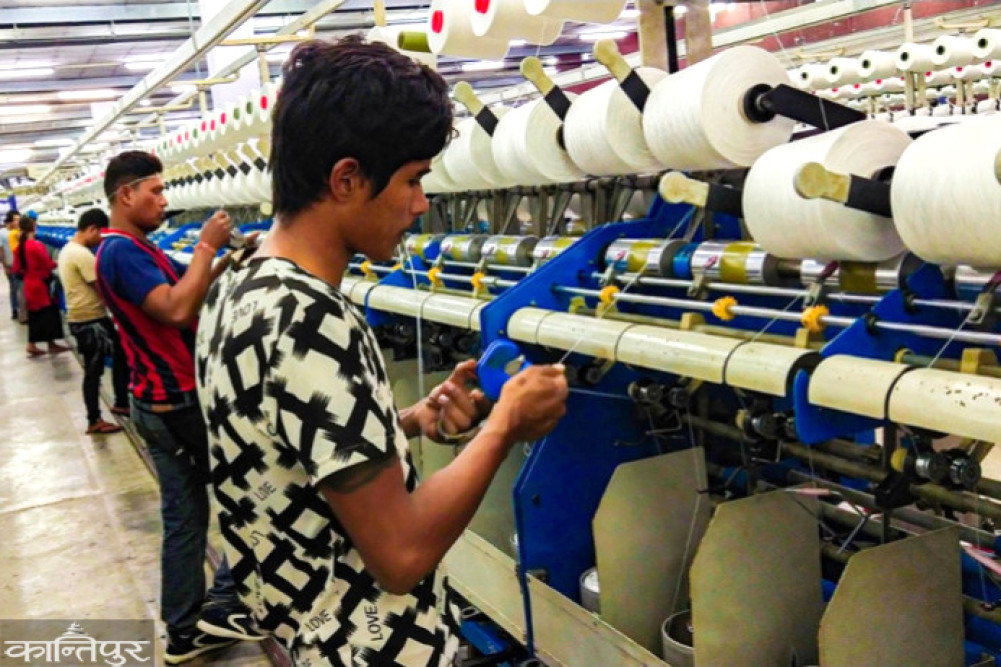
Another structural irony of Nepal's economic ecosystem is the leap from agriculture to a post-industrial service-oriented economy without passing the maturity of industrial development. Emerging economies such as Vietnam and Bangladesh, which are considered historically successful, have economically transformed the workforce displaced from agriculture not directly into the service sector, but through the ladder of manufacturing industries. As a result, today the contribution of the manufacturing sector to Vietnam's GDP has reached about 24 percent and that of Bangladesh is about 22 percent. Even neighboring India is strengthening its industrial base by increasing it above 14 percent.
But we have lost an important step in industrial development. Although the share of the industrial sector in the GDP is 12.9 percent, the share of the pure manufacturing sector, which is considered the real backbone of it, has shrunk to only 4.4 percent. The share of the service sector has reached about 62 percent. What this confirms is that jumping into the service sector without building the foundation of the industry, which is considered a strong pillar of the economy, did not develop the internal engine that could absorb capital as a means of production.
The decline in the share of industry to such a low point means that the door to employment in the country is blocked for unskilled and semi-skilled workers. Renowned economist Dani Rodrik has called this situation premature de-industrialization. He argues that if an economy moves into the service sector without sufficient industrialization, it will lose the fundamental strength of long-term economic growth.
In fact, the development of the industrial sector is not only the backbone of a sustainable and inclusive economy, but also the main basis for converting capital into long-term production. Economist Nicholas Kaldor claims that industry is the engine of economic growth. Industrial development provides a ladder of productivity for a large part of the labor force. The modern service sector based on intellectual and technology can only accommodate a limited number of highly skilled people, but only the industrial sector has the capacity to connect a wide range of human resources to the production process and create sustainable employment.
As a result of this structural failure, today, workers displaced from agriculture in Nepal are forced to migrate to low-productivity informal trade or foreign employment rather than being integrated into high-productivity factories. Due to which, the middle of our economy (service sector and consumption) has become large, but the base to support it (industrial production) has become extremely weak. Such an economic structure without a foundation has become an obstacle to getting out of the 'liquidity trap'.
The risk of 'Dutch Disease': The vicious cycle of labor export and consumption
The economic situation in which the local currency is overvalued due to the sudden acquisition of natural resources or excessive inflow of foreign currency, and the export-oriented industry and agriculture sector become sluggish is called 'Dutch Disease'. From the perspective of development economics, Nepal is today trapped in such a remittance-consumption trap, where the economic engine of the nation depends on a consumption culture without domestic production. Our lifestyle is not based on domestic value creation, but rather on the foundation of Nepali labor poured into the deserts of the Gulf and Malaysia.
According to Nepal Rastra Bank data, the volume of remittances in 2024 has reached about 28.2 percent of the gross domestic product. Remittances increased by 37.7 percent to Rs. 1449 billion by Falgun of the current fiscal year, providing temporary relief to the external sector. But it has also created serious structural risks. The reality of remittances' contribution to short-term employment, poverty reduction, and education cannot be ignored, but it has created a serious risk of shaking the very foundation of an independent and self-reliant economy in the long run.
Although high remittance flows have significantly increased foreign exchange reserves, the imbalance in the purchasing power of the currency it has caused has weakened the competitiveness of domestic industries in the international market. Direct evidence of this is the decline in merchandise exports from 15.4 percent of the gross domestic product in 2000 to only 4.5 percent in 2025. The state of our foreign trade has become so pathetic that the entire nation's annual export earnings cannot even cover the fuel import costs of vehicles. Another invisible adverse effect of remittances is seen in the domestic labor market. The massive exodus of young people has led to an acute shortage of workers in agriculture and industry and an artificial increase in wages. Although Nepal's labor productivity is low compared to India and Bangladesh, wages are high compared to those countries, making Nepali products more expensive than imported goods. This has weakened our industrial competitiveness.
Institutional Inefficiency: A Crisis of Capacity
Another major factor in Nepal's current economic crisis is the extreme decline in the institutional capacity of the state. As noted by renowned economists Daron Asimoglu and James Robinson in their book 'Why Nations Fail', the decline of a nation begins when its institutions become exploitative instead of inclusive. Nepal's current economy is also caught in the grip of such exploitative political and economic institutions. Instead of focusing on the larger national interest and building a production-oriented economy, state mechanisms are entangled in protecting the interests of a limited group and managing the balance of power.
The reflection of this institutional decay is also clearly visible in Nepal's fiscal policy. Our policymakers seem to be more interested in policy-based self-absorption than taking the risk of drastic structural reforms. The government's spending that is being diverted from easy income from remittances and customs duties has become the main obstacle to Nepal's economic development and industrial revolution today. As the saying goes, 'The best is the enemy of the great', while we are content with a decent economy supported by remittances, we have forgotten the path to real economic transformation. This inefficiency of the state is further confirmed by the data of the current fiscal year. The fact that only 39 percent of the target was collected in revenue by the middle of the current fiscal year and capital expenditure shrank to 12.1 percent indicates that the engine of state operation is inoperative. The short-sightedness of considering capital expenditure satisfactory even when it remained around 60 percent in the past ten years is the culmination of the extreme apathy and failure of the government machinery.
Rays of Hope: Areas of Comparative Advantage and Path to Upgradation
Amid the clouds of structural inertia, green signs seen in some strategic sectors have raised rays of hope. The information technology sector has emerged as a new pillar of comparative advantage in Nepal's economy. According to a study by IIDS and NAS-IT in 2022, software and digital services worth US$ 515 million were exported, with a high annual growth rate of 64.2 percent. This leap in digital services has given Nepal the impression that it can free itself from the narrow confines of physical infrastructure. This has objectively proven that our highly skilled workforce can compete in the global market.
The energy sector has proven to be another game-changer. An average annual sectoral value addition of 20.5 percent in electricity generation in the last five fiscal years and long-term energy agreements with India and Bangladesh have established Nepal as a clean energy hub in South Asia, paving the way for reducing the trade deficit. It has highlighted the potential for Nepal to transform from a labor exporter to a service and goods exporter through technology-based development and the promotion of green energy.
Similarly, the upgrade from a least developed country to a developing country in November 2026 is a strategic opportunity for Nepal. It should not be seen merely as a risk of trade facilitation cuts. Rather, it will enhance Nepal's credibility on the international stage and send a clear message to the world community that Nepal is a mature and safe country for investment. This upgrade can be a real starting point for transforming from an aid-oriented economy to an investment-oriented economy.
Conclusion: The Triad of Trust, Justice, and Institutions
Nepal's economic future cannot be ensured simply by winning intellectual debates on ideas or by making superficial changes to the external components of the state system. Systemic transformation is meaningful only when the state machinery fully guarantees discipline in policy implementation. When viewed through the lens of political economy, the ultimate foundation of economic enterprise is trust. The foundation of trust is justice. The embodiment of justice is strong institutions. In fact, the trinity of trust, justice and institutions is the lifeblood of the nation's economic life.
Only by strengthening this triple balance will a real breakthrough in rapid economic growth and a new chapter of inclusive development begin. The new government, which will be formed with a specific mandate of overwhelming popular support, has an unprecedented historic opportunity to build a prosperous nation. An attractive economic manifesto alone is not enough; structural reforms are indispensable, where the basic elements of trust, justice and institutions can flourish spontaneously. Hopefully, the new government will be the real starting point for the rebirth of the Nepali economy.