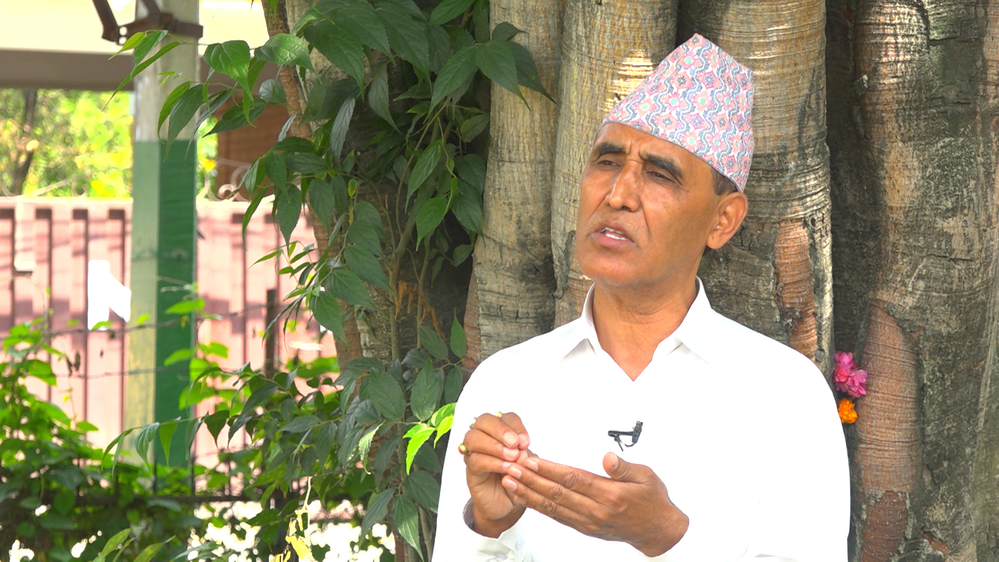
Samar Bahadur Singh, who was then the Deputy Minister of Land Reforms, was assigned to prepare this report. Singh, 63, recalled the time and explained the background behind the preparation of the report and how the work was done.
We use Google Cloud Translation Services. Google requires we provide the following disclaimer relating to use of this service:
This service may contain translations powered by Google. Google disclaims all warranties related to the translations, expressed or implied, including any warranties of accuracy, reliability, and any implied warranties of merchantability, fitness for a particular purpose, and noninfringement.
After the Balendra government moved forward based on a report prepared 31 years ago on the issue of encroachment of government and public land, there has been interest in how the report was prepared and what happened at that time.
 Girija Prasad Koirala was the Prime Minister on 16 Poush 2049. The same government had formed a 'High-Level Commission on Investigation and Protection of Government and Public Land' against the backdrop of increasing complaints of encroachment of government and public land. The initiative was taken by the then Minister for Land Reforms and Land Activist Jagannath Acharya.
Samar Bahadur Singh was the Deputy Subba in the Ministry of Land Reforms at that time. 63-year-old Singh still remembers that time. According to Singh, a complaint was filed with the Koirala-led Council of Ministers alleging that during the re-survey of 2043 BS, some government and public land that was not in the previous survey was included in the names of individuals and redistribution of land titles was made. Following the same complaint, Prime Minister Koirala had instructed Land Reforms Minister Acharya to study the matter.
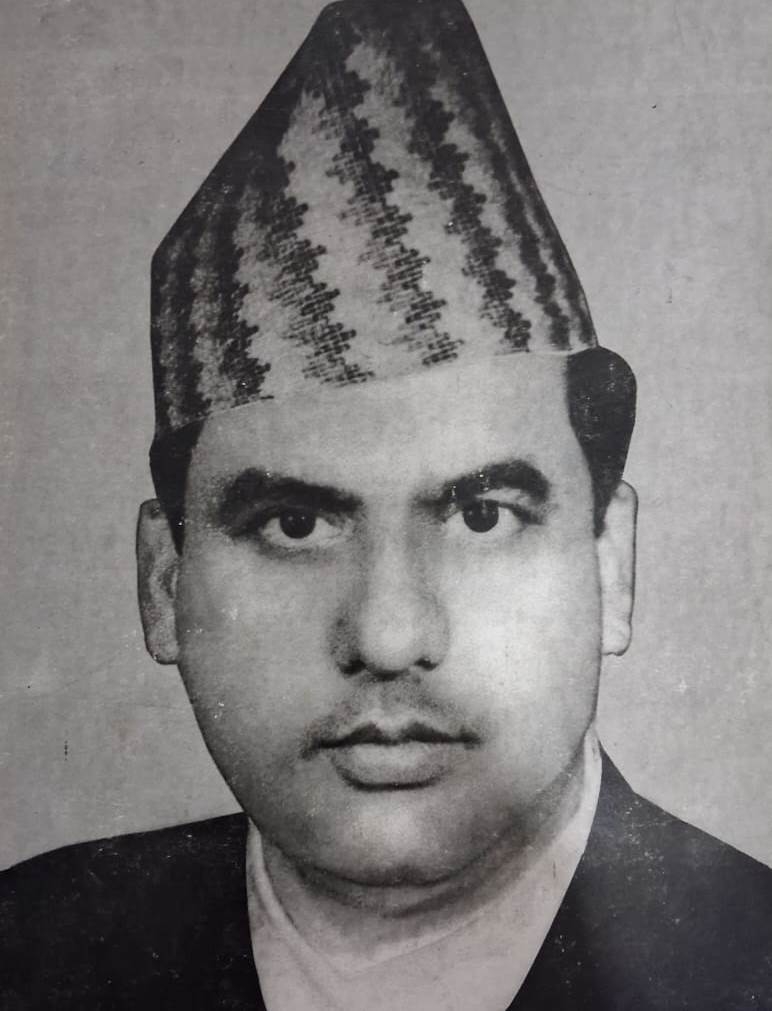 Following this instruction, Minister Acharya formed a commission under the chairmanship of his Assistant Minister Siddharaj Ojha. The commission worked for about 6 months. But before the commission could complete its work, Minister Acharya resigned due to internal disputes within the Congress. At that time, Acharya was considered close to Krishna Prasad Bhattarai and Ganeshman Singh within the Congress.
After Acharya's resignation, Siddharaj Ojha got the responsibility of Minister of State. Then he formed a high-level commission with authority under the leadership of Home Administration expert and former Land Reforms Secretary Ram Bahadur Rawal. The commission's office was established at Charkhal Adda in Dillibazaar, Kathmandu. According to Singh, after the formation of the commission, a team including Hari Prasad Aryal, Under-Secretary for Administration of the Ministry of Land Reforms, was prepared. The team formed a technical team including surveyors, surveyors and amin for on-site inspection and measurement. At that time, a separate administrative team was also formed including employees of the relevant land revenue office. Such a team was responsible for studying the condition of government and public land, examining records and collecting facts about encroachment.
According to Singh, 5-6 teams were deployed every day during the study. He said, ‘Every day, 25-26 people were in the field.’
The team deployed in the field used the survey maps and field books issued at two different times to find out how many people owned public and government land in all wards of Kathmandu. According to Singh, the team deployed in the on-site study used the maps and field books of 2022 and 2042 to determine which plot of land is where? Who has encroached on what? Which land is in the name of an individual and which land is government land? A report was prepared. In which, how much land is public land, roads, paths, drains, canals, ponds, streams, wells, rivers, ditches, schools, temples and cemeteries, and who has encroached on what land? 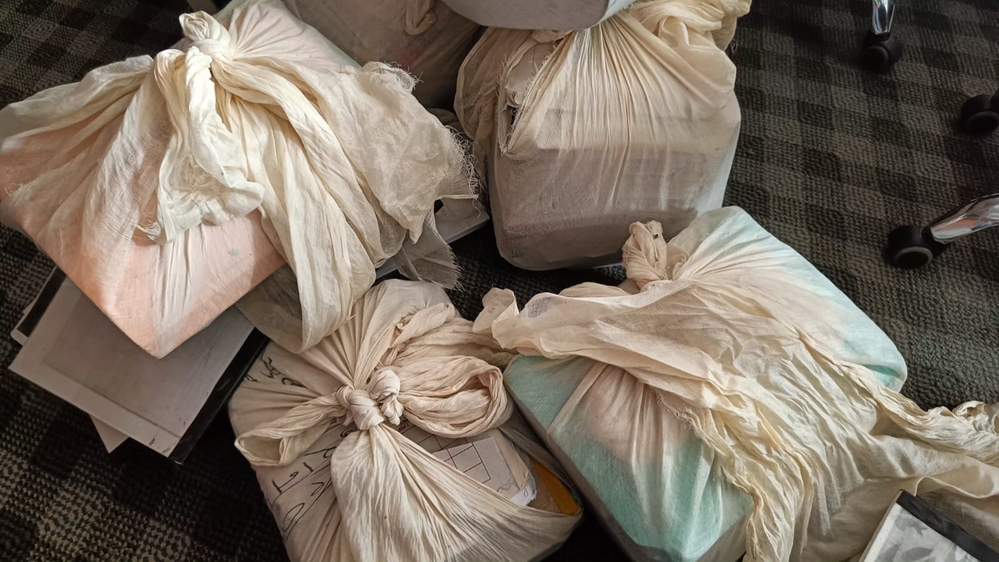 Apart from writing the report, Singh, who was also deployed in the field, said, 'What is the previous area of the person measured with a tape in the field? What was the area of government public land? Data was extracted from that area to determine how much land was encroached upon or entered and was divided into tola and ward areas.' He said that at that time, he also studied how much land was encroached on not only by individuals, but also by government bodies and how much was encroached on by semi-government bodies. He said, ‘We submitted the report we prepared to the Ministry of Land Reforms, which was then in Putali Bagaincha.’
Baburam Acharya was the surveying officer in the commission. Acharya, who later became the Director General of the Survey Department, recalled in an interview with Kantipur that the report was prepared by comparing the details of the old and new maps.
According to him, the technical team under the commission had conducted an on-site inspection of the land and also studied the records, logs and survey maps kept at the Land Revenue Office. The team had examined the relevant records one by one and identified the actual condition of government and public land.
According to Singh, separate reports were prepared for the then 35 wards of Kathmandu in the report. The original copies of the report kept in the Land Administration Division of the Ministry of Land Reforms were separate reports for each ward. In each of those reports, besides Chairman Ram Bahadur Rawal, Deputy Secretary Hari Prasad Aryal and the Chief Survey Officer, Nayab Subba, Amin, S.S. i.e. Surveyor and Amin assigned to the on-site inspection have been named and signed.
The report, which was prepared after 2 years, was submitted by the Commission to the then Ministry of Land Reforms in Putali Bagaincha in 2052 BS Poush. The report mentions that 1859 ropanis 14 annas 3 paisa of land has been encroached. The ministry sent this report to the Council of Ministers. The Council of Ministers had decided to freeze the land to implement this report. According to Singh, after the decision of the Council of Ministers, this report was sent to all three survey offices in addition to the Land Revenue Office Dillibazaar, Land Revenue Office Kalanki, and Land Revenue Office Chabahil. He said, ‘The original report was kept in the then Ministry of Agriculture and Land Reforms.’
Singh said that there had been three attempts to implement it based on this report, but all three times it was partially implemented. He recounted the past when land transactions were made in the years after the formation of the commission. He said, ‘Later, new employees were added and the number of people who looked at this report also decreased.’
Asked how the government would proceed with its work based on the 31-year-old report, Singh said, ‘We need to find out how much has been received in the name of the Government of Nepal and how much is left with whom. The Land Revenue Office should bring the remaining land.’


