Patients, healthcare workers, and government officials are raising questions about the quality of free medicines distributed by government health institutions in the absence of effective testing.
We use Google Cloud Translation Services. Google requires we provide the following disclaimer relating to use of this service:
This service may contain translations powered by Google. Google disclaims all warranties related to the translations, expressed or implied, including any warranties of accuracy, reliability, and any implied warranties of merchantability, fitness for a particular purpose, and noninfringement.
Suryaman Tamang of Bahrabise Municipality, Sindhupalchowk is currently going through a difficult and ambiguous situation. He has high blood pressure. Tests have also shown that his triglycerides and cholesterol are high. The doctor had recommended starting medication immediately. However, he did not take the medication. Instead, he stopped going to the doctor. He does not trust the free medicines distributed by the government. And, he does not have the money to buy branded medicines.
‘I do not believe that the free medicines available in government hospitals work,’ Tamang said. ‘When I ask doctors about the medicines distributed by the government, they tell me to buy them directly from outside drug stores without asking. This shows that they do not trust the quality of the medicines provided free by the government.’
The government has been distributing medicines for some non-communicable diseases such as high blood pressure, diabetes, asthma and mental health for free through government hospitals and health institutions. However, many patients do not believe that these medicines work.
The most surprising thing is that not only doctors and health workers, but also officials from the Ministry of Health do not use the medicines distributed free of charge. ‘I buy the medicines I need from pharmacies in Kathmandu,’ said Dr. Prenit Kumar Pokharel, Dean of the Karnali Institute of Health Sciences in Jumla. ‘I cannot say much about the quality of medicines as I am more involved in academic work, but I myself do not use the medicines distributed free of charge.’ Dr. Pokharel himself is a chronic diabetic and cholesterol patient. He regularly takes metformin for diabetes and rasuvastatin for cholesterol.
Most officials from the Ministry of Health and subordinate bodies also said that they do not trust the quality of the free medicines. ‘We ourselves do not use the medicines from the free list and do not give them to our children or other family members,’ said an official from the Department of Health Services on condition of anonymity, ‘The quality of those medicines is doubtful.’
There are many reasons and incidents that have raised questions about the quality of the free medicines distributed by the government. “We gave a patient suffering from mental problems an antipsychotic medicine that was on the free list for several days, but it did not work,” the official said. “Then we bought the same generic medicine from a private pharmacy and started using it. That did work.”
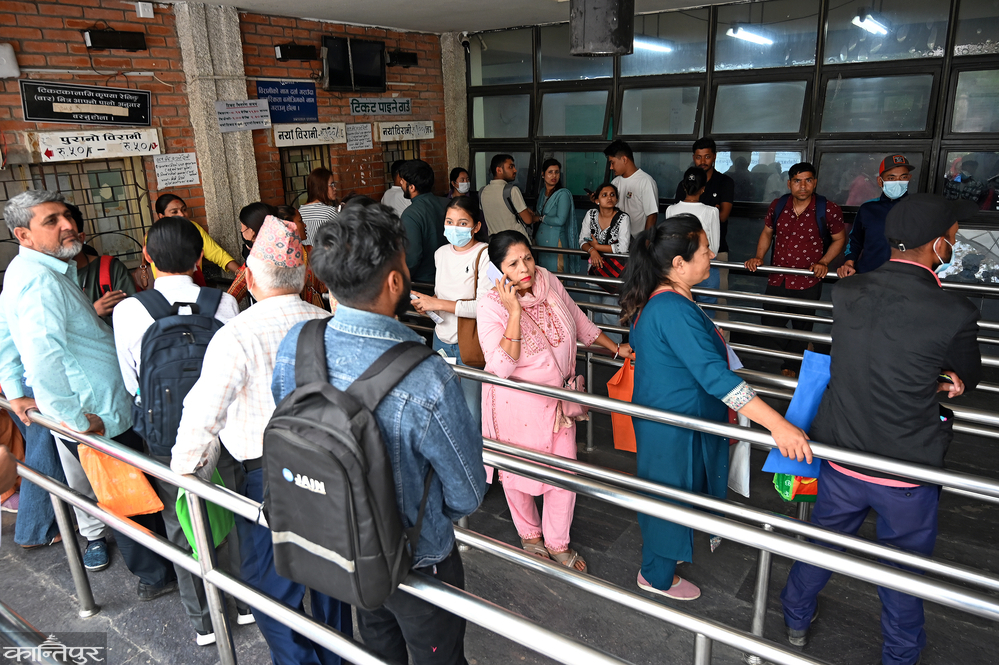 Doctors have been increasing the ‘dose’ of essential free medicines provided by the government when they do not work. In some patients, the ‘standard dose’ of 20 mg has been increased to 30 mg of antipsychotic medicine after it does not work. According to government officials, even though the dose should not be increased in such a way, doctors are forced to increase the dose when the medicine does not work.
A health worker working at a basic hospital outside Kathmandu said that none of the health workers and employees who distribute free medicines use the medicines on themselves and their families. Not only that, they do not even advise people they know to use them.
“Only vaccines produced abroad and distributed free by the government are of good quality,” said a senior health worker on condition of anonymity.
Questions have been raised not only about the medicines on the essential list but also about the quality of medicines provided under health insurance. Many doctors spoken to by Kathmandu Post also said that the quality of medicines available in private pharmacies is better than those provided under health insurance. “Even though they are from the same company, brand and dosage, the quality of medicines available in the market and those provided to insured patients is different,” said an official from the Ministry of Health on condition of anonymity. “Even though doctors have complained about this issue repeatedly, no one has taken it seriously.”
The government has been providing medicines for communicable and non-communicable diseases free of charge for decades. Earlier, the ministry itself would purchase and send them to health institutions, ensuring a certain level of quality. Until 2015, 70 types of medicines were available free of charge. After the implementation of federalism, the number of free medicines has been increased to 98.
In conversations with the Post, many experts say that since the medicines provided by the government are supplied at low prices, their quality is compromised. “Most purchases made by government agencies are made at one-third of the maximum retail price (MRP), due to which quality is compromised,” said Mahendra Prasad Shrestha, former chief expert at the Ministry of Health.
To avoid administrative hassles and accusations of corruption, health agencies often give contracts to suppliers who offer low prices. Experts say that this is also why the quality of medicines under the health insurance and essential list is compromised.
They say that the quality of medicines cannot be ensured without effective monitoring mechanisms, adequate testing infrastructure at customs checkpoints, and capacity building of laboratories and regulatory bodies.
‘The price and quality of medicines should be determined by the center and the provincial and local levels should be given budget accordingly for procurement,’ said public health expert Shrestha, ‘only in this way will it help ensure the quality of all medicines on the government’s free list and available in the market.’
The Department of Drug Management has been withdrawing medicines from the market every year, saying they are of poor quality. ‘This also indicates that all medicines available in the market do not meet the required quality,’ said Dr. Bhagwan Koirala, former chairman of the Nepal Medical Council, ‘It is the right of citizens to be confident about the quality of the free medicines they receive. When questions arise, it is the responsibility of the concerned
officer to reassure the public.’ Health officials also say that proper testing is necessary before distribution.
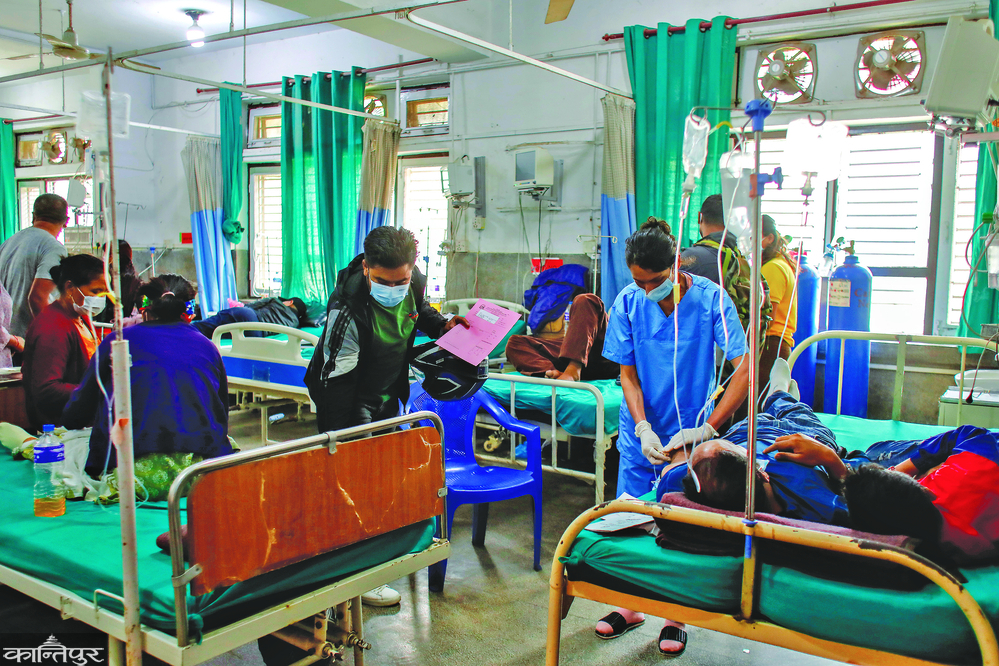 In 2025, out of more than 24,000 types of allopathic and Ayurvedic medicines available in the market from domestic and foreign companies, only 648 were quality tested. However, none of the essential medicines distributed free of charge by the government were tested.
Among the tested drugs, dozens of domestic and foreign companies were found to be of low quality. By the time the Department of Drug Management issued instructions to withdraw the substandard drugs from the market, most of them had already been sold.
Officials of the Drug Department say that adequate testing has not been carried out due to lack of budget, manpower and technology. There are only 8 technicians in the department's laboratory to test drugs. They complain that there is not enough budget available for the purchase of 'reference standards', the materials used in testing the quality of drugs.
Of the materials required for testing, one costs up to Rs 2 lakh. Only Rs 8 lakh has been provided to the laboratory in the current fiscal year. Similarly, due to lack of manpower, effective monitoring of whether or not drugs that do not meet the quality standards have been withdrawn from the market has not been possible. Currently, there are 25,000 drug stores across the country. However, there are only 20 drug inspectors supervising them.
The list of essential drugs has not been updated even in 10 years
To prevent patients from taking multiple pills, doctors often recommend a single pill prepared by mixing various necessary medicines. Such medicines are used especially for chronic patients with problems such as high blood pressure and diabetes. However, there are very few such medicines in the government's free essential medicines list.
The list of essential medicines issued in 2016 has not been updated even after all these years. Some of the medicines on this list have become obsolete and doctors have stopped recommending them.
The government's free medicines list also includes 'Salbutamol', which is given for respiratory problems such as asthma and chronic obstructive pulmonary disease. While doctors nowadays advise patients to use 'inhalers' and 'nebulizers' instead of pills for such problems.
Similarly, 'Atenolol', which is given to control high blood pressure, is also on the government's list. However, doctors have stopped recommending it as more effective alternatives are available in the market.
'In cases of high blood pressure and chest pain, doctors recommend new medicines such as amlodipine and telmisartan. "Which relaxes the blood vessels," said Dr. Pomawati Thapa, head of the Non-Communicable Diseases and Mental Health Branch under the Epidemiology and Disease Control Division, "But since such medicines are not on the government list, patients are forced to buy them from outside."
Health Ministry officials are also aware that doctors have stopped using some of the medicines included in the list. However, government health institutions have not stopped purchasing these medicines. And, most of them go to waste.


