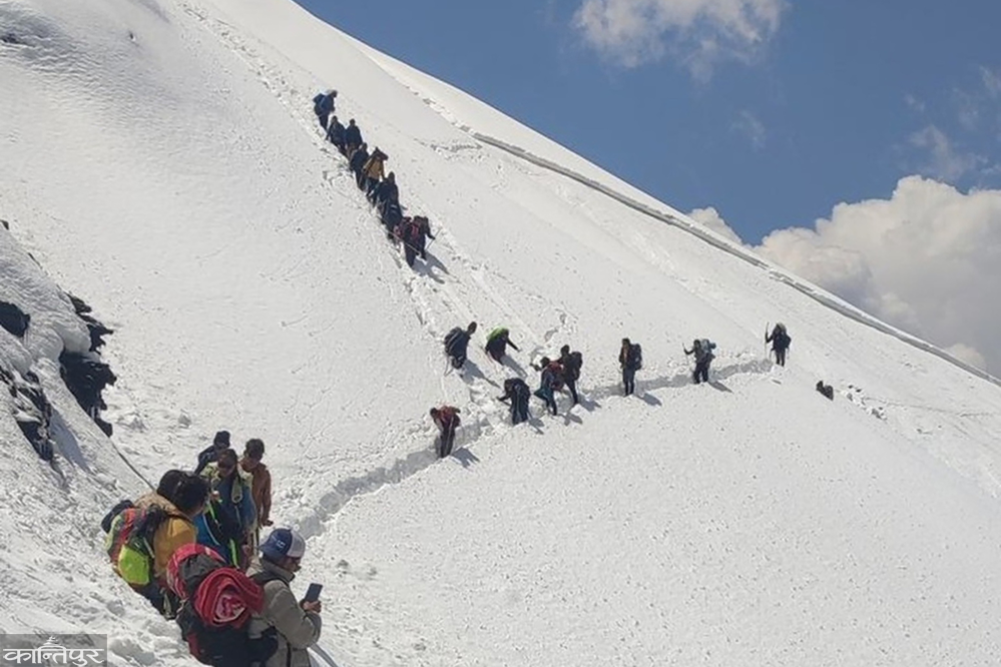
Since fishing is the main source of income, people from 7/8 year old children to the elderly who can walk have flocked to Patan during this season.
We use Google Cloud Translation Services. Google requires we provide the following disclaimer relating to use of this service:
This service may contain translations powered by Google. Google disclaims all warranties related to the translations, expressed or implied, including any warranties of accuracy, reliability, and any implied warranties of merchantability, fitness for a particular purpose, and noninfringement.
On 15th of last year, 19-year-old Dhanlal Bik of Nalgad Municipality-8, Jajarkot, who had reached Patan to pick Yarcha at Navarpani Patan in Kaike, Dolpa, died of a stroke. He had walked for four days to reach Patan with his father Hari Bahadur. After their house collapsed in the 2080 earthquake, they had problems earning a living, so the father and son had reached Patan to pick Yarcha. Hari Bahadur, who had gone to collect household expenses, had to return carrying his son's body. His family is still living in a temporary tent.
A week earlier, on 28th of Jestha, 27-year-old Kalpana Shahi of Toplagaun, Tatopani Rural Municipality-8, Jumla, lost her life in Yarcha Patan. She was struck by lightning while she had gone to the local Subbakuna Patan to pick Yarcha. A day before that, on Jestha 7, Bhim Bahadur Bohora of Manisanghu, Guthichaur Rural Municipality-1, Jumla, lost his life in a drowning accident in Jagdulla Patan, Dolpa. Residents of Karnali are forced to lose their lives every year while going to Patan to collect yarcha. Since there is no alternative for earning a living, they risk their lives to go to Patan to collect yarcha.
The number of people who lose their lives while going to Himalayan Patan to collect the valuable herb yarchagumbu is not limited. According to the Provincial Police Office, 26 people who went to various Patans in Karnali Province to collect yarcha have died in the last three years. The main source of income for the residents of Karnali is herb collection. Collecting yarcha, which has high demand and price in the international market, is like a regular job for the locals every year.
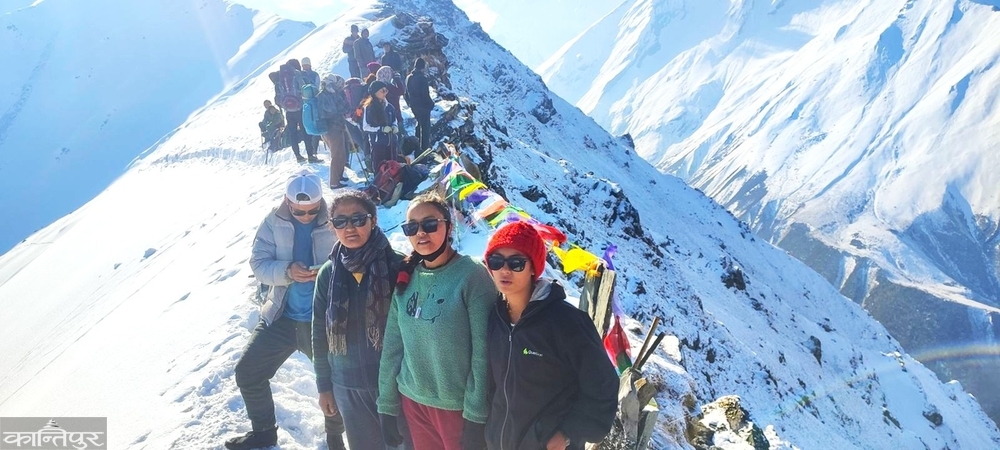
Daribhan Budha of Kaike Rural Municipality-1 in Dolpa said that those who reach various Patans in Karnali to pick Yarcha are forced to walk through snow on a difficult and steep path. ‘They have to walk through the steep and steep path for at least four days,’ he said. ‘When you suddenly reach the mountains from a low altitude, there is the same fear of falling and losing your life.’ He also said that walking for 3/4 days continuously while carrying 40/50 kg of provisions leads to various health problems.
Karan Pariyar of Aathbiskot Municipality-1, who has been going to Patan in Dolpa to pick Yarcha for two decades, said that when going to Patan, they have to carry heavy loads and navigate the path with the help of sticks. "There is no Bheri River below, no steep cliffs above, and no normal paths. If you slip, you have no choice but to lose your life," he said. "There is a risk of getting stuck in the snow and slipping in Patan too."
According to the data of the Karnali Provincial Police Office, last year, 5 people died while going to Patan to collect yarcha. 3 in Dolpa, 1 in Mugu, and 1 in Jumla. Last year, 29 people, including 10 women and 19 men, were injured, while 33 people who were sick were rescued by the police. The Provincial Police Office has stated that 26 people who went to various Patans to collect yarcha have died in the past three years. 8 people lost their lives in 2079/80 and 13 people in 2080/81.
The office has data that 82 people have been rescued in the past three years. Provincial Police Chief DIG Jayaraj Sapkota said that the lives of yarcha collectors are at risk due to difficult terrain, heavy snowfall, carelessness, and unfavorable weather conditions. This year, Karnali's patans are preparing to open for the collection of yarcha from the second week of Jestha. In Karnali, yarcha is found in Mugu, Dolpa, Jumla and the neighboring district of Rukum East. The risk of going to and returning from collecting yarchagumbu, the main source of income for the residents of those districts and the surrounding areas, and the decreasing production every year, are causing problems for the collectors.
The patans in Karnali, which used to open in Baisakh before the Corona pandemic, have started opening late for the past few years. As the yarcha collection season approaches, collectors have started necessary preparations along with managing the satusamal. Last year, yarcha collection began in Dolpa from Jestha 5. "When the snow was cleared in the month of Baisakh, the problem of the snow not melting and the yarcha not maturing was observed," said Jitendra Mahat, head of the Division Forest Office, Dolpa. "We have also started clearing the snow late to increase the breeding process of the yarcha."
The Division Forest Office has called an all-party meeting on Tuesday to prepare for the yarcha collection. Last year, about 10,000 people collected yarcha in the yarcha collections of the Dolpa National Forest and Shey-Phoksundo National Park. According to Nurendra Aryal, Senior Conservation Officer of the park, a revenue of Rs 19.3 million was collected from the collectors last year. He informed that entry is being granted through 9 posts for the collectors. In Dolpa, yarcha is found in the yarcha collections of Ruppatan, Chinarangsi, Majhdanda, Turi, Bagar, Majhdhari, Batulile, Kanda, Furke, Gyan, Jair, and Saikumari.
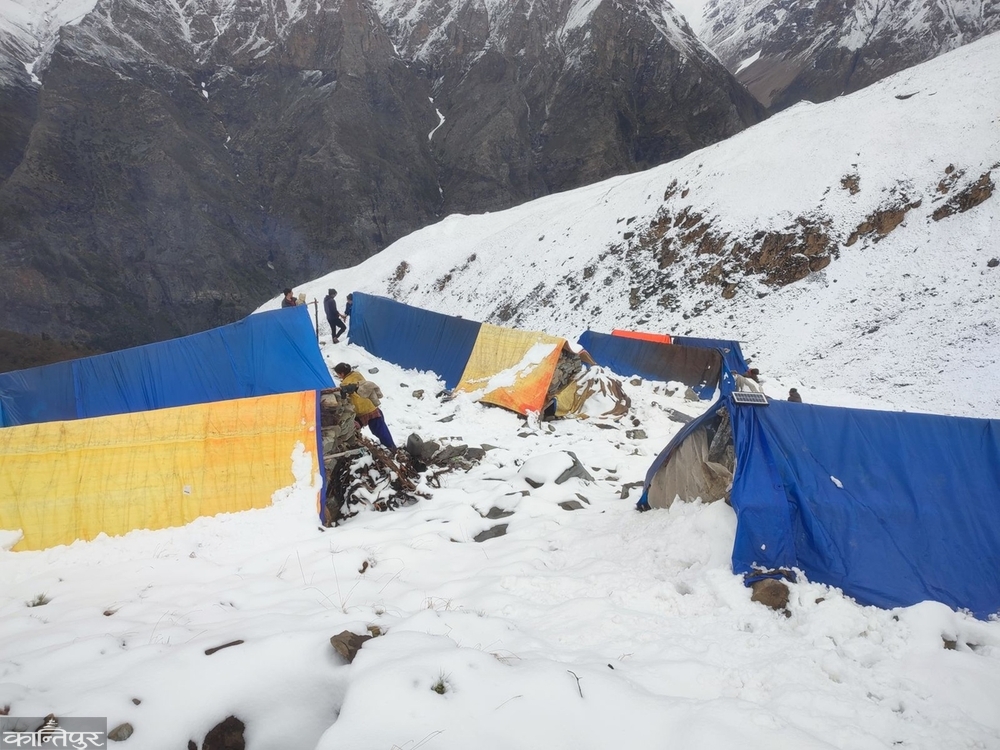 Mugamkarmarong Rural Municipality in Mugu has been setting an entry fee and opening a gate every year for collecting yarcha. Last year, the municipality collected about 6.4 million rupees in revenue from yarcha collectors. “We have been setting separate fees for collectors from within and outside the district to enter the gate,” said Rural Municipality Chairman Tshiring Kapne Lama. “Local youth have started patrolling the Patan area since the last week of Chaitra to prevent the smuggling of yarcha. Preparations are underway to open the gate from the second week of Jestha.” According to him, last year, an entry fee of 1,500 rupees was collected from within the district and 2,000 rupees from outside collectors. According to him, yarcha is found in Sano Koiki, Thulo Koiki, Rimar, and Tanke areas of the municipality. Division Forest Officer Dinesh Jung Khatri said that the Division Forest Office issued a release permit for about 40 kg of yarcha gumbu from Mugu last year. He informed that the revenue has been fixed at Rs 31,000 per kg for the Chhodpurji.
As the season approaches, collectors are busy preparing for the necessary arrangements. Kaman Budha of Tripurasundari-4 in Dolpa said that he has started preparing to go to Patan with his family of 5. ‘We have been preparing for a month and a half, we are in a hurry to cover the expenses incurred while going to Patan, arrange for necessary food and clothes,’ he said, ‘Collecting Yarcha is the main basis of livelihood, if we do not go to Patan, we will not have enough money for the whole year.’ He said that he had reached Rooppatan with his wife and 3 sons last year and earned Rs 200,000.
Parmal Shahi of Khatyad Rural Municipality-2 in Mugu is also going to Patan with his wife, two sons and two daughters-in-law. Last year, 6 members of his family earned Rs 250,000. ‘In Patan, yarcha is sold for a thousand rupees per head,’ he said, ‘Our production is not enough to eat for three months, even after deducting expenses, we can meet our food and clothing needs for the whole year from the earnings from collecting yarcha.’ He informed that it costs about 40 thousand rupees to travel to Patan and stay for a month.
Collectors are worried that even though the price of yarcha in the international market is increasing every year, the production is decreasing. Purna Bahadur Devkota of Aathbiskot Municipality-1 in Rukum West, who has been collecting yarcha for about 15 years and has been meeting his family’s expenses for the whole year, said that last year he spent about 50 thousand rupees and reached Patan with his wife Janaki, but could barely earn only 120 thousand rupees. ‘Even after staying for 23 days, we could not make more than 150 bags of yarcha,’ he said. ‘We have to climb large cliffs in remote places, risk our lives by falling from steep cliffs and hard rocky slopes, but even if we suffer, there is no alternative to going to Patan as there is no other business.’
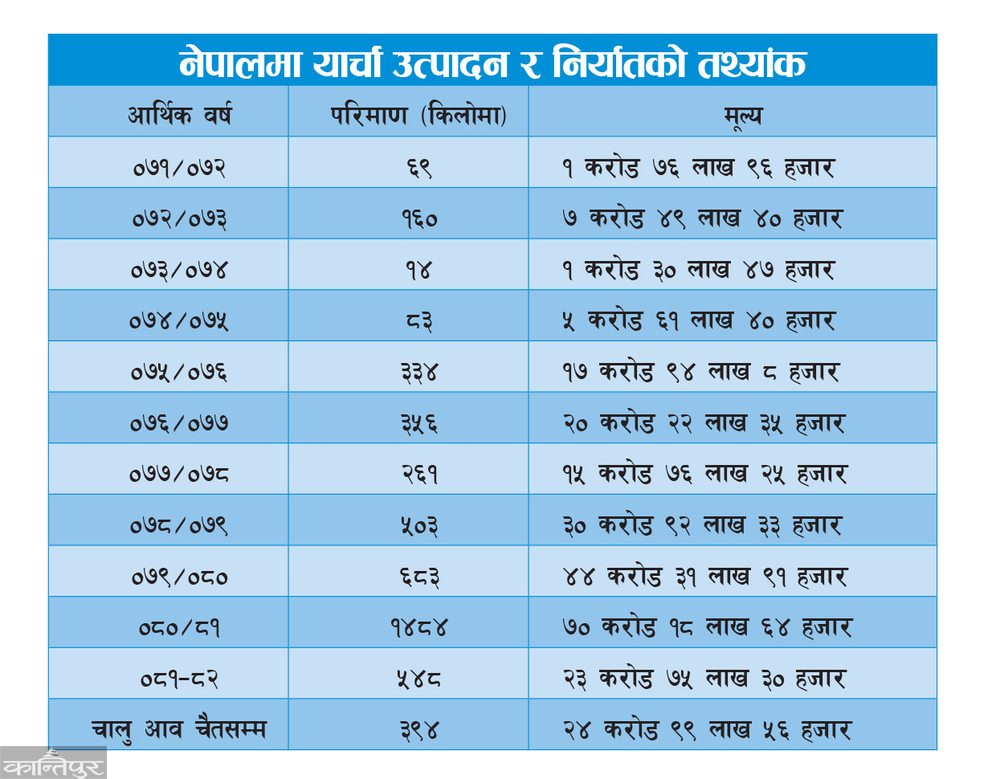 Om Bahadur Budha of Tripurasundari Municipality-4 in Dolpa, who has been going to Patan to pick yarcha since 2052, said that the decline in yarcha production has made it difficult for them to earn a living. ‘Let’s not talk about the suffering we experience when we go there,’ he said. ‘When we reach Patan, we have to risk our lives by walking on the cliffs overnight, risking our lives, including falling from cliffs and falling ill.’ Narsingh Rokaya, chairman of Jagadulla Rural Municipality in Dolpa, said that as the production of yarcha has been declining year after year, locals have not been able to earn the income they expected.
Even though production is decreasing, the price of yarrow is increasing in the world market, said herbalist Yagya Bahadur Budthapa. According to him, China is the main market for 90 percent of Karnali's yarrow. He informed that after the yarrow collection season ends, traders from China come to Kathmandu and sell yarrow at the price they set. According to him, yarrow, which was sold for 2.8 million rupees per kilo before the Corona pandemic, was sold for 3.2 million rupees last year. Although the price fluctuated before the Corona pandemic, the trader says that its price has been stable for a few years.
Some local traders sell the yarrow they collect at the 15-day temporary market on the China-Nepal border. Parbal Lama, a trader from Charkatangsong in Dolpa, said that he has been selling yarrow at 3.2 million rupees per kilo since the Corona pandemic. ‘Despite the rising rates in the world market, Chinese traders have not offered more than Rs 3.2 million,’ he said. ‘The price has been stable for 4/5 years, and I hope the price will increase this year as demand is high.’ He informed that one kilo of yarcha costs 3,000 to 3,500 gotas.
Botanist Kamal Sharma said that yarcha production is decreasing as the yarcha has not been harvested for 3 consecutive years due to the Corona pandemic, which has affected the reproductive process. ‘Production is decreasing every year, and collectors and traders are also facing market problems,’ he said. ‘The production of herbs is decreasing due to lack of favorable rainfall, increased human activities, deforestation, the effects of climate change, fires, etc.’
According to the Ministry of Industry, Tourism, Forests and Environment of Karnali Province, 409 kg of yarcha was collected in Karnali in 2089/80. In 2080/81, 354 kg of yarcha was collected, while 310 kg of yarcha was produced last year, said Surya Sharma, information officer at the Provincial Forest Directorate.
Mugamkarma Road Rural Municipality of Mugu, in a study conducted two years ago with the support of various organizations, concluded that the reproduction rate of yarcha was decreasing due to snow. During the study, it was found that less snow, increased pollution in Patan, and various human activities affecting the environment had affected the life cycle of yarcha, resulting in a decrease in production.
Former forest officer Min Bahadur KC, who participated in the study, said that in the places where yarcha was found the previous year, there was no production the next year. ‘The life cycle of the yarcha is mainly affected by snow. In natural conditions, the larvae of Thetarodes emerge underground and the fungus emerges above ground,’ he said. ‘It remains in the snow until the end of Chait, after the snow melts in Baisakh, the stromata of Ophiocordyceps emerges from the body of the larvae of Thetarodes.’
He said that the production of yarcha has also started decreasing in the lower part of Patan due to indiscriminate grazing of livestock. Dr. Laxman Sharma, a researcher working on yarcha conservation, said that yarcha, which is found at an altitude of 3,000 to 5,500 meters above sea level, has recently started to be found in small quantities at altitudes below 4,000 meters.
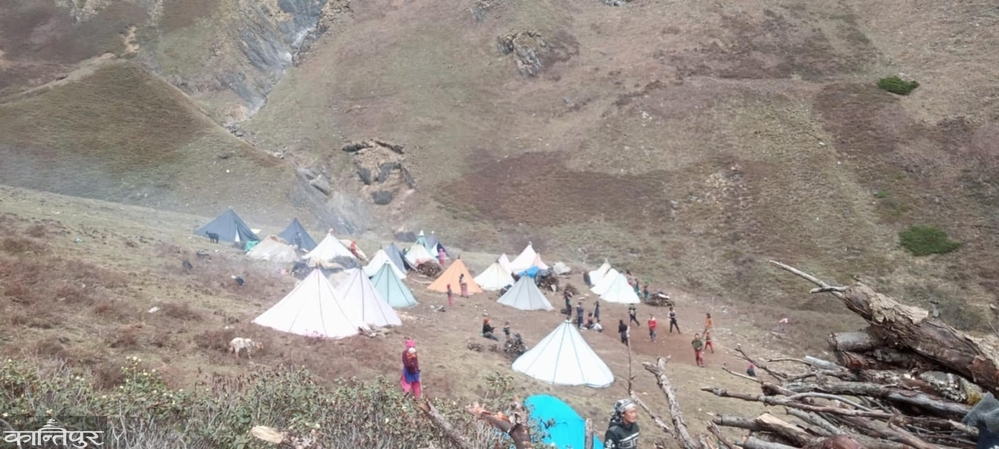
The Karnali provincial government has stated that it is making the collection of yarcha systematic. Minister for Industry, Tourism, Forest and Environment Suresh Adhikari said that a master plan has been prepared for the conservation of yarcha in Karnali. ‘To strengthen the regional economy and for the prosperity of Karnali, the conservation and marketing of local herbs is necessary,’ he said. ‘Necessary initiatives are being taken for employment creation through herbs and tourism, growth in economic activities, and overall regional economic development and prosperity.’
Collection of herbs has started from Nhamgya Kharka (Namgya Lake), a border area between Naso Rural Municipality and Narpabhumi Rural Municipality in Manang, Gandaki Province. Since Namgya Kharka is the border area between Naso and Narpabhumi, a separate management subcommittee has been formed to manage the collection of herbs. The subcommittee has been formed under the coordination of Yad Ghale, who is also the ward chairman of Naso Rural Municipality-8. According to him, the distribution of certificates had started last Wednesday. He informed that about 100 collectors had reached the lake on Wednesday and Thursday.
According to him, certificates were given to people within the district at a fee of 12,000 rupees per person and to people outside the district at a fee of 17,000 rupees. चामे गाउँपालिका–३ कोतोमा बसेर समितिले पुर्जी काट्ने र संकलकलाई परिचयपत्र प्रदान गर्ने व्यवस्था मिलाइएको छ । संकलन क्षेत्रमा जाँडरक्सी सेवन, जुवातास खेल्न प्रतिबन्ध लगाइएको छ । धुपीलगायतका बोटबिरुवा काट्नसमेत रोक लगाइएको घलेले बताए । कोतोबाट यार्चा पाइने खर्कसम्म पुग्न कम्तीमा एक दिन लाग्छ ।
संरक्षण क्षेत्र व्यवस्थापन नियमावली २०५३, संरक्षण व्यवस्थापन निर्देशिका २०५६ तथा यार्चागुम्बु संकलन तथा ओसारपसार निर्देशिका २०८० अनुसार मनाङको हकमा अन्नपूर्ण संरक्षण क्षेत्र आयोजना (एक्याप) इलाका संरक्षण कार्यालयबाट अनुमति लिएपछि मात्र जडीबुटी संकलन गर्न पाइने व्यवस्था छ ।
सोहीअनुसार संरक्षण व्यवस्थापन समितिले आफ्नो कार्यक्षेत्रभित्र संकलकलाई पुर्जी दिन पाउँछन् । एक्याप मनाङका प्रमुख ढकबहादुर भुजेलका अनुसार समितिले आफ्नो कार्यक्षेत्रमा जडीबुटी संकलनका लागि अनुमति लिने गर्छन् । संकलनको जिम्मा कसलाई दिने वा नदिने भन्ने निर्णय सम्बन्धित संरक्षण क्षेत्र व्यवस्थापन समितिले गर्ने उनले बताए । उनका अनुसार कार्यालयबाट अनुमति लिएपछि मात्र जडीबुटी संकलनको बाटो खुल्छ । उनका अनुसार मनाङभर १३ वटा संरक्षण क्षेत्र व्यवस्थापन समिति सक्रिय रहेको र यिनैले संरक्षण तथा संकलनको जिम्मेवारी सम्हाल्दै आएका छन् । मनाङसँगै लमजुङ, गोरखा, तनहुँ, धादिङ साथै रुकुम–रोल्पाका मानिससमेत यार्चा संकलनका लागि मनाङ पुग्ने गर्छन् । तर, नार्पाभूमि गाउँपालिकाका खर्कमा भने बाहिरी व्यक्तिलाई प्रतिबन्ध लगाइएको छ ।
गाउँपालिकाका अध्यक्ष कोन्जो तेन्जिङ लामाले नार र फु क्षेत्रमा जेठ तेस्रो सातादेखि यार्चा संकलन सुरु हुने बताए । ‘म काठमाडौं थिएँ । फु गाउँको लेकमा फु गाउँकाले मात्रै टिप्ने र नार गाउँको लेकमा नार गाउँलेले मात्रै टिप्ने भनिएको छ,’ उनले भने, ‘गाउँलेले निर्णय गरेको भन्ने सुनिएको छ, म जाँदै छु, यथार्थ बुझ्नेछु । यो निर्णय संरक्षण क्षेत्र व्यवस्थापन उपसमितिले गर्ने भएकाले बुझ्न बाँकी छ ।’ उनका अनुसार नार र फु क्षेत्रमा यार्चाको उत्पादन पनि कम छ । बाहिरी संकलक आउँदा सुरक्षा चुनौती र विकृति–विसंगति बढ्ने भएकाले यस्तो निर्णय गरिएको हुन सक्ने उनले बताए ।
 २०६६ मा नार क्षेत्रमा ७ जना गोरखाका बासिन्दाको हत्या भएपछि बाहिरी जिल्ला संकलकलाई स्थानीयले रोक लगाउँदै आएका छन । २०७९ देखि मनाङमा बसोबास गर्ने बाहिरी जिल्लाका बासिन्दालाई अनुमति दिँदै आएको थियो । यस पटक कडाइका साथ पालिकाभित्रकै बासिन्दालाई पनि आफ्नो क्षेत्रभन्दा बाहेकका लेकमा जान प्रतिबन्ध लगाइएको छ । नार र फु क्षेत्र संरक्षित तथा निषेधित क्षेत्र भएकाले विगतजस्तो अप्रिय घटना दोहोरिन नदिन कडाइ गरिएको स्थानीयवासीको भनाइ छ ।
प्रमुख जिल्ला अधिकारी नवराज पौड्यालले यार्चा संकलनलाई व्यवस्थित बनाउन जोखिम न्यूनीकरणका उपाय अपनाउने निर्णय भएको बताए । एक्यापका अनुसार संकलकबाट अधिकतम ३५ हजार रुपैयाँसम्म पुर्जी शुल्क लिन पाइने व्यवस्था गरिएको छ । खरिदकर्ताका लागि प्रतिव्यक्ति २० हजार रुपैयाँसम्म शुल्क तोकिएको छ । मनाङका ४ स्थानीय तहमध्ये नासों गाउँपालिका–३ धारापानी र वडा ५ थोंचेबाहेक अधिकांश लेक क्षेत्रमा यार्चा पाइन्छ । जिल्लाभर २५ भन्दा बढी लेकमा यार्चा पाइने एक्यापले जनाएको छ ।
मनाङमा २०८१/८२ मा मनाङबाट १ सय १२ किलो यार्चा संकलन भएको थियो । यसबाट संघीय सरकारको खातामा ३४ लाख ८५ हजार ९० रुपैयाँ, स्थानीय तहमा ११ लाख २८ हजार २ सय रुपैयाँ र संरक्षण क्षेत्र व्यवस्थापन समितिमा ११ लाख ३३ हजार २ सय रुपैयाँ राजस्व जम्मा भएको थियो । गत वर्ष १ हजार ५ सय २४ जनाले यार्चा संकलनका लागि पुर्जी लिएका थिए ।