The government has launched the 'Poor Citizen Drug Treatment Program' for patients with eight serious diseases, including cancer, heart disease, kidney disease, head injury, spinal injury, sickle cell anemia, Parkinson's disease, and Alzheimer's.
We use Google Cloud Translation Services. Google requires we provide the following disclaimer relating to use of this service:
This service may contain translations powered by Google. Google disclaims all warranties related to the translations, expressed or implied, including any warranties of accuracy, reliability, and any implied warranties of merchantability, fitness for a particular purpose, and noninfringement.
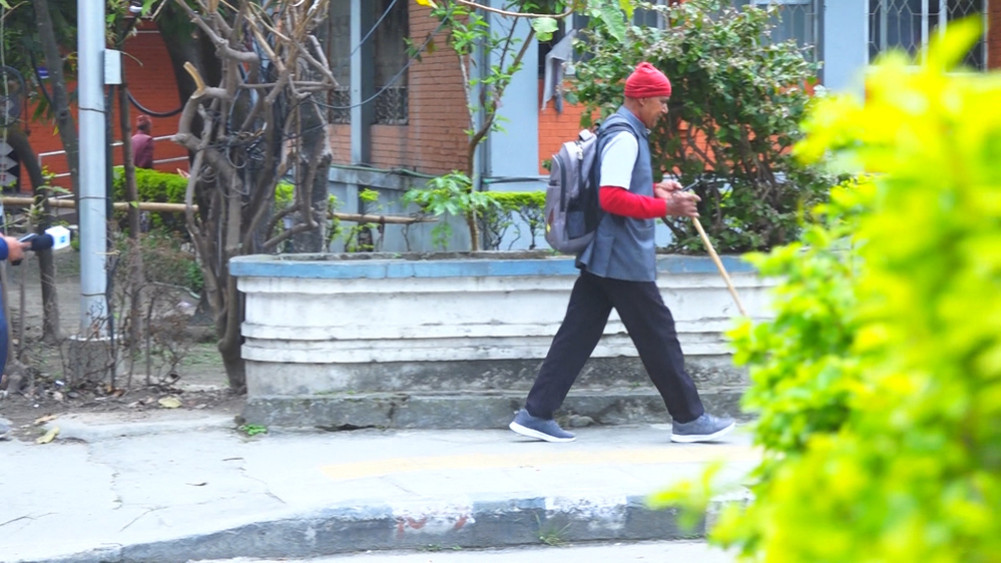
It has been over a year since Motilal Bishwakarma of Syangja started treatment for colon cancer. He has been struggling with this problem since Chaitra last year. Bishwakarma of Putlibazar-7, Mandanda, Syangja has exhausted his assets during the treatment. Unable to raise the expenses for further treatment, he arrived in Kathmandu last Tuesday to plead for help. He stood at the gate of Singha Durbar, the country's main administrative center, for hours, hoping that the new government would provide free treatment. After waiting for 6 hours, Motilal finally got entry to Singha Durbar.
'Is it because he is not my person? Why should I let him enter because he is poor?' Motilal was saddened when the Kantipur correspondent reached there. After waiting for 6 hours, he entered and met Health Minister Nisha Mehta. He expressed his sorrow. The minister sent him back to Syangja with the advice to take initiatives at the provincial and local levels for treatment.
Motilal had also come to Kathmandu after a patient undergoing treatment with him received one lakh rupees from Gandaki Province. 'I went to Kathmandu to complain why I am not getting it,' Motilal said.
In fact, Motilal has suffered this because he did not understand the process of getting concessions from the state. He is only a representative character. Many patients like him are suffering by coming to the center for treatment concessions without understanding the process.
Then how will they get the support provided by the state?
The government has launched the 'Bipanna Nagarik Drug Treatment Program' for patients with 8 serious diseases such as cancer, heart disease, kidney disease, head injury, spinal injury, sickle cell anemia, Parkinsonism and Alzheimer's. Patients get a one-time subsidy of up to 1 lakh rupees from this program.
In the case of kidney disease, such subsidy has been increased to about 4.5 lakh rupees. Initially, the patient should apply to the ward office of his permanent residence with documents proving his disease and a copy of his citizenship. Then the ward office gives the recommendation of the poor.
'A certified document is required to identify which of the 8 diseases is it. A photo is required to show which doctor or hospital the treatment was done in. After the recommendation from the local level, we will move forward the process,' said Hom Prasad Angdembe, ward chairman of Panchthar, Phagunanda Rural Municipality.
According to Angdembe, after reaching the local level with the recommendation of the poor, the recommendation committee there understands the financial condition of the patient. The hospital ensures that the treatment is available and then there is a system to give the final recommendation. After receiving this recommendation, the patient must submit the documents to the social security unit of the listed hospital. After verification there, the patient is registered in the system and given an identity card and the details are sent to the Health Insurance Board. Only then does the patient receive free treatment services equal to the specified amount.
If the patient has a poor family identity card, the process is somewhat easier, because in such a case, the service can be taken directly from the hospital. 'I had to go to the local level office with the recommendation of the ward office. The recommendation group there recommends the hospital that these citizens are poor. Patients other than kidney patients are already receiving health services of up to 1 lakh,' said Vikesh Malla, Information Officer of the Health Insurance Board. 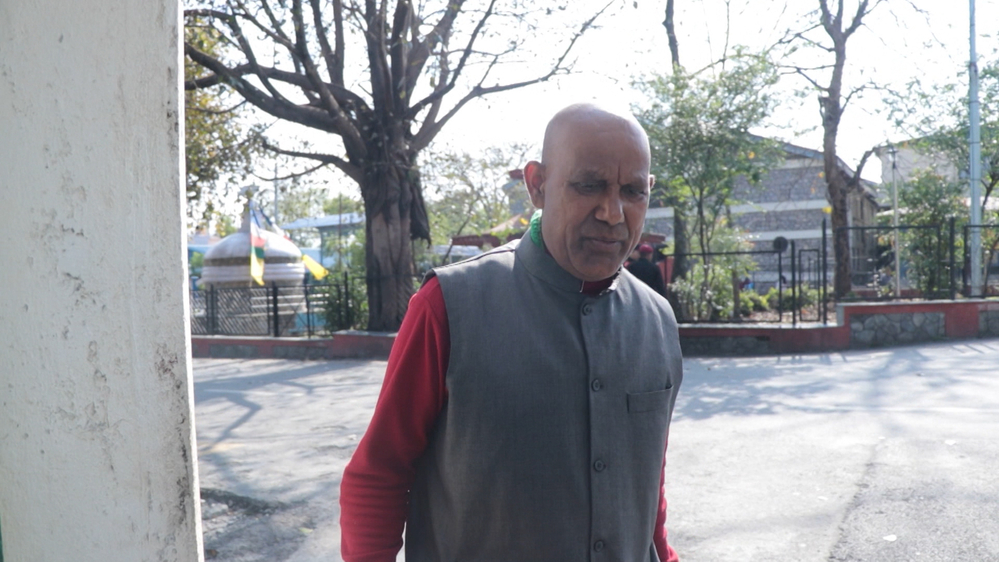
Malla says that to avail this kind of facility, the patient must be affiliated with the health insurance program. The first amendment of the Poor Citizen Drug Treatment Program Operation Directive 2080, 2082, stipulates that the patient must be affiliated with the insurance.
Apart from this, patients with serious illnesses can also get a subsidy of up to one lakh rupees annually through the health insurance program, which is different from the poor program. Although assistance is provided only once from the poor program, such a facility can be availed every year if the health insurance is renewed. 'In the case of poor citizens, they get that service only once in their lifetime,' Malla said.
In this way, provincial governments also provide assistance to patients with serious illnesses from their respective levels. Koshi Province has allocated a budget of 1.5 million for patients with serious illnesses. 50 thousand is distributed on a first-come, first-served basis. Madhesh Province deposits up to 1 lakh rupees per patient into the patient's account. Bagmati Province provides assistance of Rs 50,000-50,000 to cancer and heart attack patients among the serious diseases.
Gandaki Province provides assistance of Rs 100,000 to cancer patients. Lumbini Province provides a maximum of Rs 200,000 for cancer, kidney transplant and heart valve treatment. Sudurpaschim Province deposits Rs 100,000 in an account based on the bill for the treatment of serious diseases. Karnali Province also provides Rs 100,000 in an account for serious diseases.
This government program has helped financially weak citizens manage expensive treatment expenses. However, the concerned bodies need to make the flow of information more effective to inform the general public about the process.