The body of Sunil Sah of Mahottari, who died in a fire on 28 Falgun 2080, remains in Saudi Arabia as the identification process has not been completed.
We use Google Cloud Translation Services. Google requires we provide the following disclaimer relating to use of this service:
This service may contain translations powered by Google. Google disclaims all warranties related to the translations, expressed or implied, including any warranties of accuracy, reliability, and any implied warranties of merchantability, fitness for a particular purpose, and noninfringement.
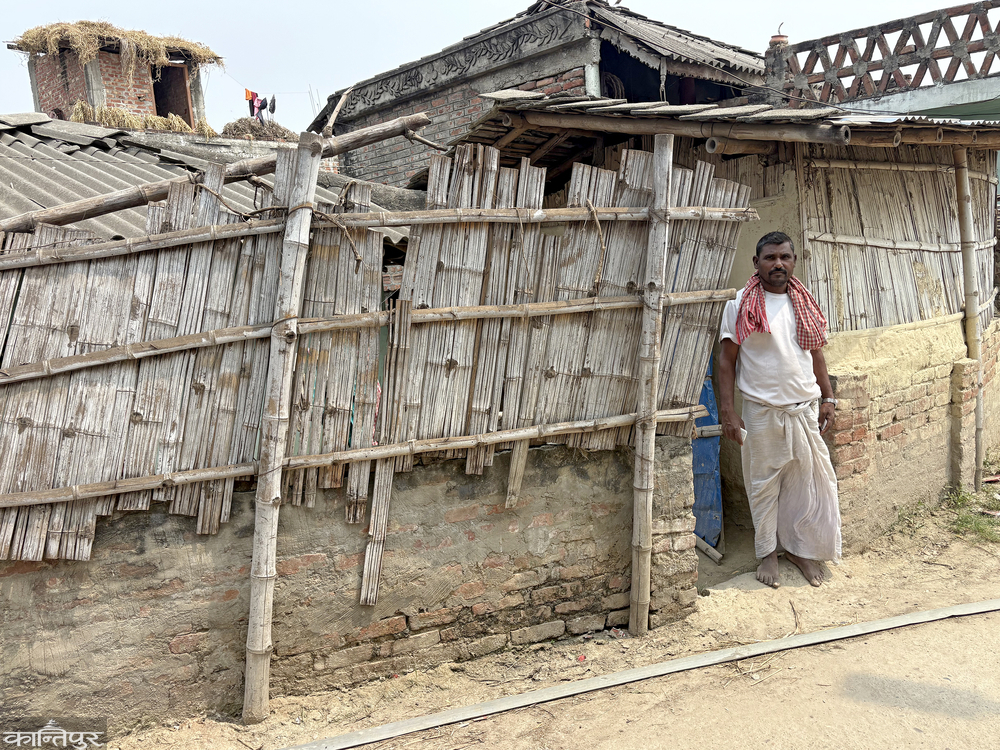
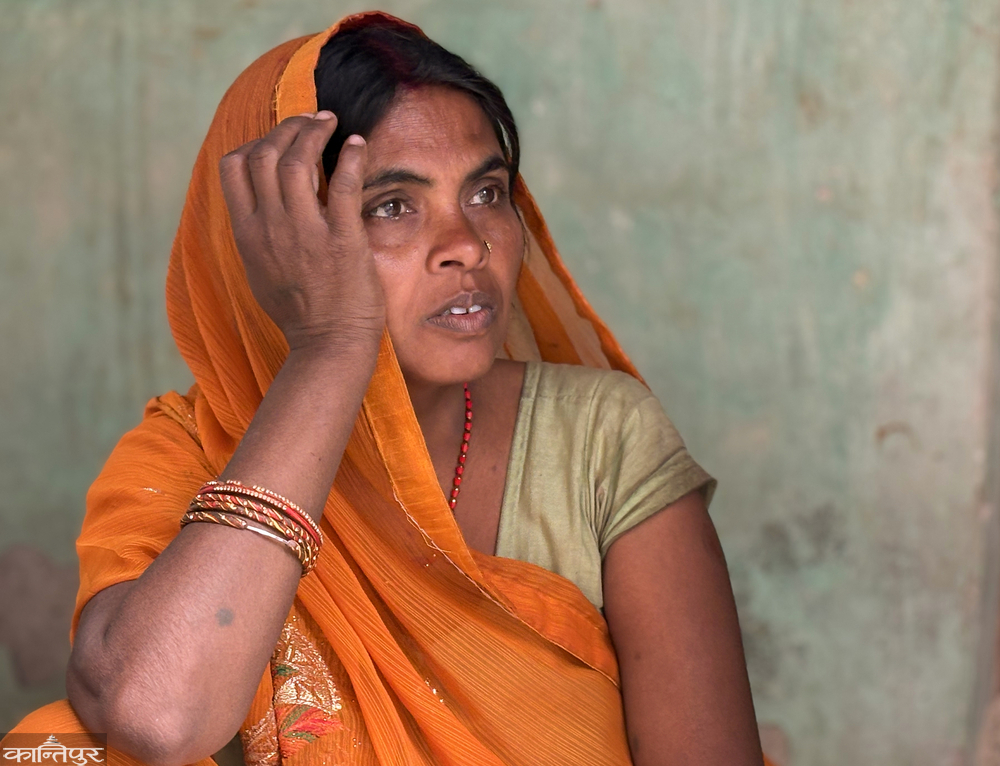
There is a house surrounded by bamboo among the concrete houses. In the courtyard of the same house built on 3.5 dhur, 50-year-old Somshila Devi Sah is sitting quietly. She doesn't care much about who comes and goes to the house. Her 52-year-old husband, Birendra Sah, says, 'Somshila doesn't feel like talking to anyone. It has been more than two years since she has laughed. She has no interest in food. She can't sleep through the night. Her body is getting weak and tired. When the doctor checks her, no disease is found.'
Somshila of Ramgopalpur-7, Sasoula, Mahottari, was not like this before. When the news of her son's death in Saudi Arabia came, it hurt her deeply. Even though he had already passed away, she didn't even get a chance to look at his face and explain her feelings. Somshila's expression kept changing.
'We are also worried when our son's body has not arrived,' said Birendra. Sunil, 21, flew to Saudi Arabia on April 7, 2022, with the dream of demolishing a house surrounded by bamboo and building a concrete house through ‘Frontline Recruitment Pvt. Ltd.’. He worked at Bunyan Industrial Company Limited in the Al-Kharj Industrial Area, southeast of the Saudi capital, Riyadh. He received a salary of one thousand riyals. On March 11, 2024 (February 28, 2080), just a month before the end of his contract with the company, Sunil was caught in a fire and died.
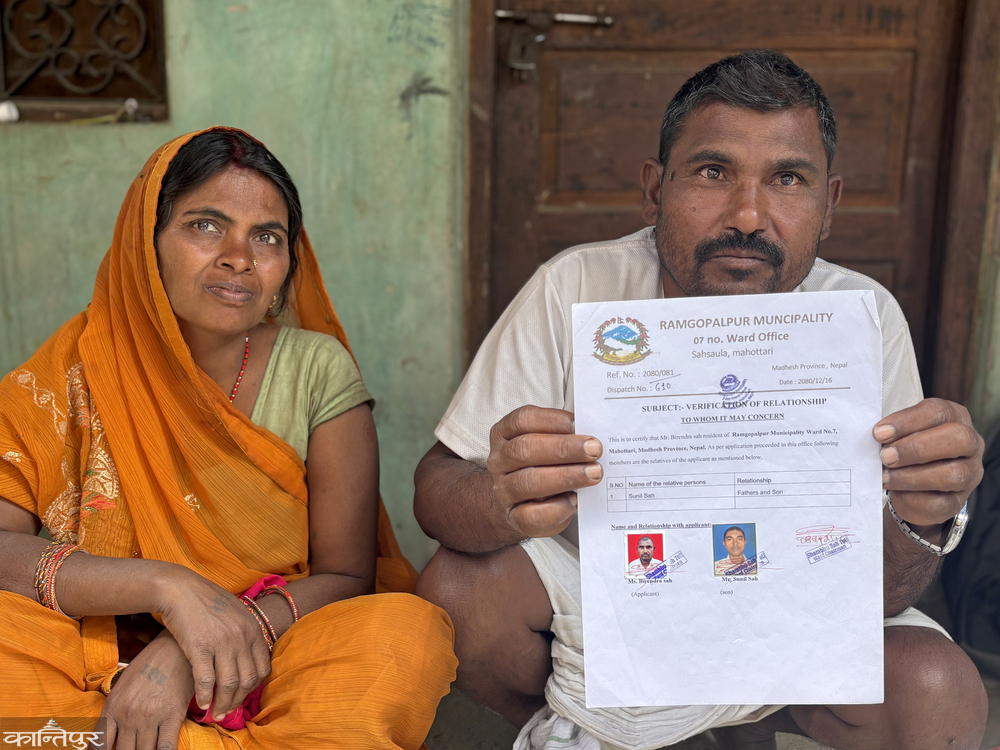
Sunil studied in the village until grade 12. The family had sent him to Saudi Arabia with a loan of 2 lakhs at an interest rate of 300 rupees. After reaching there, Sunil was also sending home 30-40 thousand rupees per month. Even after two years of the incident, Sunil’s body has not arrived. There is no way to predict when the body will arrive. ‘All I ask for is my son’s breath. But this cannot happen. When the body arrived, the last rites could be performed,’ said Somshila. Sunil was the eldest son of Virendra and Somshila’s five children. The eldest daughter is married. Two daughters and the youngest son are studying.
Sunil had studied in the village till class 12. The family had sent him to Saudi Arabia with a loan of 2 lakhs at an interest rate of 300 rupees. After reaching there, Sunil was also sending home 30-40 thousand rupees per month. Since the news of Sunil's death suddenly came, there has not been a day that Somshila has not shed tears.
She has the mobile phone that Sunil sent from Saudi Arabia to talk on 'video calls'. She keeps wondering if her son's phone will ring on her mobile. But from time to time, video calls come from the Nepali Embassy in Riyadh, the capital of Saudi Arabia, and she is told about the progress of sending her son's body. After Sunil's death, Birendra has been working as a laborer and raising his family.
‘If Sunil had not been in the fire, I would not have had to work,’ he says, ‘I would have been able to meet the household expenses with the money my son earned and sent from abroad.’ The last conversation with Birendra was two days before Sunil’s death. ‘He used to say that work was difficult. He used to talk about returning home around Holi. We were happy to hear that he was coming. But within two days, different news came,’ Birendra said. The news of Sunil’s death was given to the family by his co-worker Shubh Narayan Mandal.
Birendra has traveled to Kathmandu several times to bring Sunil’s body. The burden of debt is increasing as this grieving family travels to Kathmandu. ‘I can’t count how many times I have been to Kathmandu,’ says Birendra. ‘Every time I go, the debt increases by 10-12 thousand rupees. We are poor. We have no assets.’
The body is not identified, DNA report sought Three people, including Sunil, died in a fire at Bunyan Company. None of the bodies were identified. According to a letter sent by Bunyan Company to the Nepali Embassy on April 5, 2024, the facts of how the fire broke out in the factory are not clear. Three documents are required to send a body from Saudi Arabia to Nepal - a police report, a death certificate and a medical report.
The other three deceased were Bangladeshis and Chinese. Since they could not be identified, the decision to send the body without DNA testing was not made. A police report is not prepared until the body is identified through DNA. So far, time is passing in the DNA identification process.
Saudi Arabia had insisted on the option of sending a DNA sample from Nepal rather than sending its team to Nepal. Upon receiving the letter, the Nepali Embassy sent a letter to the Consular Services Department in Tripureshwor stating that Sunil's body could not be easily identified. Until Saudi Arabia sends an official letter stating that a DNA sample is required, there is no question of taking a sample from the family. It took eight months for the Nepali Embassy in Riyadh to receive the official letter of Sunil's death. Before that, the embassy was getting 'updates' from the company and the police agency at intervals of weeks and months. The company used to inform that no report had been received from the police.
On November 25, 2024 (10 Mangsir 2081), the Saudi Ministry of Foreign Affairs sent a letter to the Nepali Embassy stating that it was 'very urgent'. 'No close family member of the deceased Sunil was found in Saudi Arabia. It is necessary to take samples for DNA testing to determine the family identity of the remains found after the fire incident. It has been stated that a team from the Criminal Evidence Department should be sent to Nepal to collect DNA samples from his relatives,' the letter said. 'According to the information received by the ministry from the relevant agencies in Nepal, the genetic profile of Sunil's parents or children can be sent through the Nepali Embassy in Riyadh.'
Saudi Arabia had insisted on the option of sending DNA samples from Nepal rather than sending its team to Nepal. Upon receiving the letter, the Nepali Embassy had sent a letter to the Consular Services Department in Tripureshwor stating that Sunil's body could not be easily identified.
‘In order to return Sunil’s body to Nepal, a DNA test has to be conducted with a family member,’ the letter said. The consular department called Birendra to Kathmandu through ward chairman Shambhu Sah. He reached Naxal with the letter the consul had written to the police headquarters for the DNA test. From there, the police headquarters wrote another letter to the police department in Maharajgunj. Carrying that letter, Birendra reached Maharajgunj.
From there, he wrote another letter to Teaching Hospital. Then, he finally went to Teaching, gave a blood sample and returned home. ‘It was very difficult for me. When and where should I go? When and where,’ said Birendra, ‘I don’t know the place. I was very confused when I found a person living in a village looking for a big office in the city.’ The DNA test report from Teaching was sent to the consular department through the police headquarters.
50 percent match was found with the father, and the mother’s sample was collected again The Nepali Embassy in Saudi Arabia received the DNA test report on 1 February 2025. The embassy could not submit the DNA report directly to the Dilam Police Station in Al-Kharj, about 90 kilometers away. The embassy submitted it to the Ministry of Foreign Affairs in Riyadh. From there, the letter had to reach the Dilam Police Station via the Ministry of Interior, Police Headquarters, Criminal Evidence Department.
‘We started asking the Dilam Police whether the DNA report had reached or not. Dilam always replied that it had not arrived,’ says Labor Counselor Kabiraj Upreti, ‘We started following up from zero (the Ministry of Foreign Affairs) again.’ Eleven months after submitting the DNA report to the Ministry of Foreign Affairs (December 28, 2025), the Dilam Police Station told the Nepali Embassy, ‘When Sunil’s DNA was matched with his father, only 50 percent was found. Now the mother’s DNA report is needed.’
Usually, a DNA sample is taken from the mother. But the consular department or the teaching hospital did not pay attention to this technical issue. Since it would take time to get the mother's DNA report and it would be a very lengthy process, the embassy wrote a letter to the Saudi Ministry of Foreign Affairs on February 3, saying, "This cannot be done. We request that you identify the body and send it."
When will the compensation be paid? According to Saudi labor law, employers must mandatorily enroll their workers in the Social Security Insurance (Gosi). Two percent of the monthly salary of workers who are enrolled in this way is deducted for social security insurance. The body cannot be sent until the police report is completed, and the victim's family is not receiving any compensation from the Saudi Social Security Insurance (Gosi) and the Nepal Foreign Employment Board, Insurance. Since it has been a long time, the family has also decided to cremate the body in Saudi Arabia.
On February 17, the embassy held a virtual meeting with the victim's family and ward chairman Shambhu Sah on whether to bring the body or not. In it, the victim's family said that they wanted the body. Immediately, Somshila came to Kathmandu to give a sample for DNA testing. ‘It’s been a month since Somshila gave her sample and returned,’ says Birendra, ‘I think it will be okay now.’
The latest test report has not reached the embassy. Once the embassy receives the report, the process starts from scratch. That is, it has to go through the embassy-Ministry of Foreign Affairs-Ministry of Interior-Police Headquarters-Forensic Department to reach Dilam Police Station. How long does it take for this report to reach Dilam Police Station? A year or less like before? No one has the answer. ‘We also lost our son. We don’t know when the body will arrive,’ said Somshila with tears in her eyes, ‘Even if we get relief, it would be a place of satisfaction.’
When will the compensation come? According to Saudi labor law, employers must mandatorily enroll workers in the Social Security Insurance (Gosi). An amount of two percent is deducted from the monthly salary of workers who are thus enrolled for social security insurance.
There is a provision for the heirs of the deceased worker's family to receive 84 months' salary or a maximum of 330,000 Saudi riyals through Gosi. If there is only one heir of the deceased, only 50 percent, if there are two, only 75 percent, and if there are three or more, 100 percent, the amount must be paid directly to their bank accounts by the heirs. The heirs include the deceased's wife or husband, son, unmarried daughter, parents, grandparents, brothers, unmarried sisters, grandchildren and unmarried granddaughters.
Such compensation is given only to the families of workers who died at the workplace. However, due to the lack of complete documents to be submitted to Gosi on behalf of the deceased worker, the families of the victims who died have not received compensation for two decades. Only if Sunil Sah's registration is found in Gosi and all the necessary documents are complete, can compensation be claimed in Gosi. In addition to Gosi, there is also a provision for paying 'blood money' for compensation.
The amount for Gosi is received after the heirs submit complete documents. For blood money, the embassy has to fight the case in court. Due to the complicated and lengthy process, the families of workers who died in Saudi Arabia have to struggle for years for compensation. According to Dwarika Upreti, Executive Director of the Foreign Employment Board, 1,019 bodies have arrived in Nepal from Saudi Arabia in the last three years.
The employer bears all the expenses incurred in sending the bodies. "The board bears the expenses only for those bodies that are stranded and could not be brought to Nepal due to lack of expenses," Upreti said. 9 bodies brought from Kuwait 9 bodies that were stuck in Kuwait due to the Gulf War were brought back on Wednesday. The bodies of Nepali workers were brought back on a Kuwait Airways charter flight.
According to the Foreign Employment Board, the bodies of Ramesh Kumar Mochi of Siraha, Khushi Ram Chaudhary of Dang, Samjhana Gole of Sindhupalchowk, Kopila Dhami of Udayapur, Basanta Rai of Khotang, Yamuna Sunar of Surkhet, Krishna Ramja Budha of Salyan, Manju Moktan Pakhrin of Sindhuli and Ramesh Nepali of Kaski have been brought. Arrangements have been made to take their bodies home from Gautam Buddha Airport in Bhairahawa, informed the board's executive director Dwarika Upreti. After the US-Israeli attack on Iran on 16 Falgun, Iran launched a series of attacks on Kuwait, Bahrain, Saudi Arabia, Qatar and Oman, where American military camps are located. That is why the airport in Kuwait was not operational.

