Experts suggest that involving local communities in signage and conservation can help promote tourism.
We use Google Cloud Translation Services. Google requires we provide the following disclaimer relating to use of this service:
This service may contain translations powered by Google. Google disclaims all warranties related to the translations, expressed or implied, including any warranties of accuracy, reliability, and any implied warranties of merchantability, fitness for a particular purpose, and noninfringement.
A leopard has been spotted in camera trapping at an altitude of 1,110 meters in Palpa. The leopard was spotted in camera trapping installed at various locations in Tinau and Mathagadhi rural municipalities.
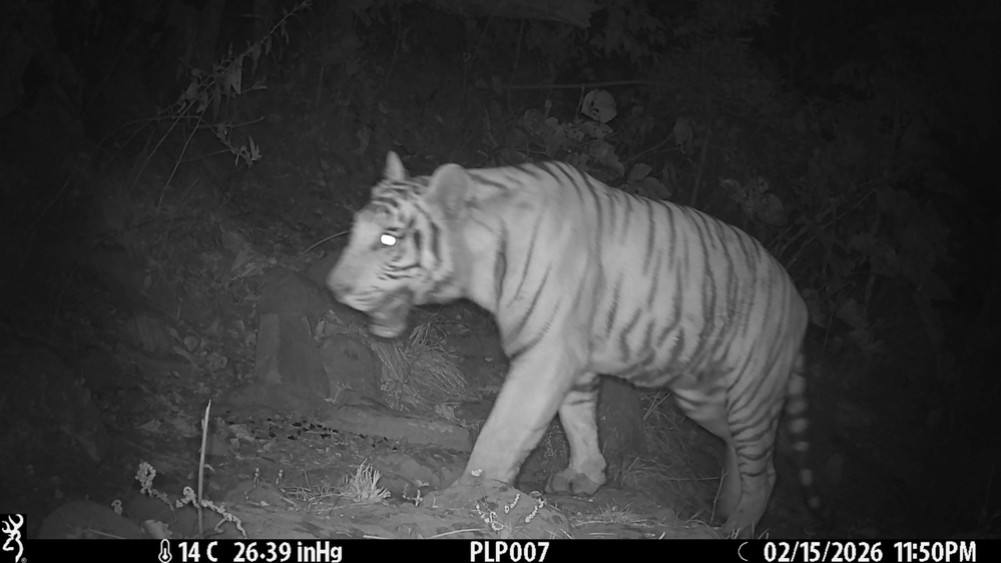
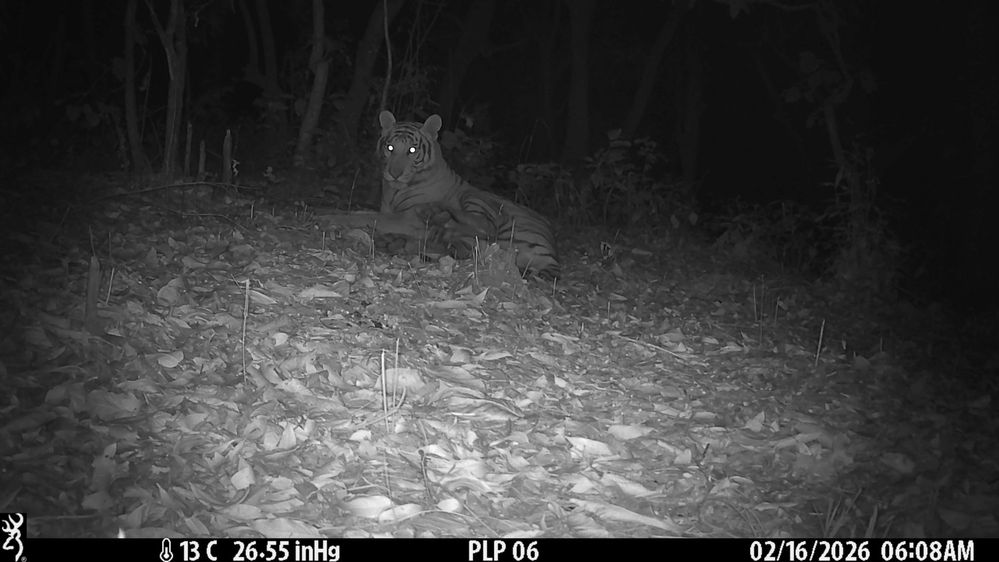
The tiger was spotted in 5 places in the cameras installed by the expert group of Tribhuvan University Zoology Central Department Associate Professor Hari Prasad Sharma.
According to Sharma, the tiger was seen in Mathagadhi at 6:08 am on February 16 and at 11:50 pm on February 15. Sharma said that 3 tigers were seen in 3 places. He said, 'We have not studied the data of all the cameras. A total of 44 cameras have been installed. Now the tiger has been detected in 3 cameras.'
'Not only in the Terai, but also in the mid-hilly region, the tiger has been captured in camera trapping,' Sharma said, 'This is an indication that the presence of the tiger is spreading beyond the Terai region to the mid-hilly region.' Earlier, a tiger was also found in the Hariyali village of Dobhan, Tinau Rural Municipality-2, Palpa.
According to expert Sharma, earlier, a spotted tiger has been recorded above 1,000 meters in Dadeldhura and Ilam districts. According to him, cameras have also been installed in Rupandehi, Arghakhanchi, and Kapilvastu. He said that spotted tigers have also been caught in camera trapping in Arghakhanchi, which is connected to the Terai. With the help of the Tribhuvan University Grants Commission, cameras have been installed in 44 places in Palpa. He said that cameras have also been installed in 50 places in Arghakhanchi.
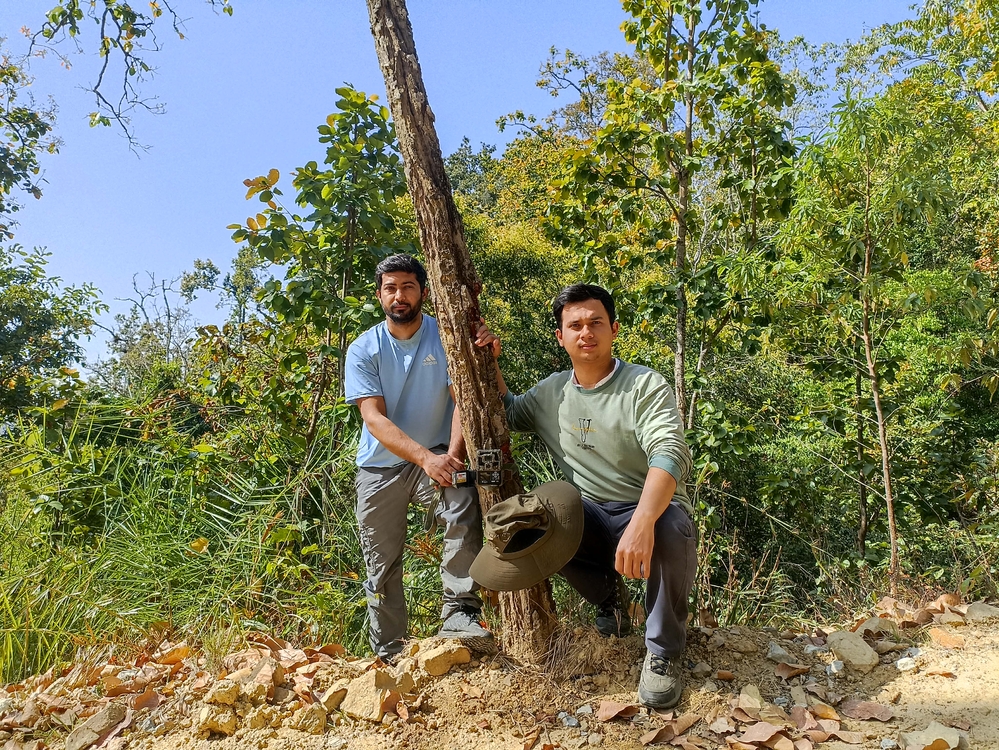
The cameras have been kept for 21 days. Sharma said that cameras have been installed in the forest areas of the community forests of the municipalities connected to the Terai in Palpa. Eight people have been mobilized to remove the cameras. He said that the cameras were installed in coordination with the Community Forest Users Federation, Division Forest Office, Sub-Division Office, and local community forest users groups. ‘It shows the possible expansion of tigers in various areas of the central hills,’ he said, ‘such facts are very important for wildlife conservation.’
Sharma said that since all the cameras are yet to be seen, they may be seen in other places as well. Santosh Thapa, former chairman of Mathaggadhi Rural Municipality and resident of Rahas, said that tiger movement has been seen sporadically in the border areas connected to the Terai. ‘Sometimes it was heard that a spotted tiger was seen,’ he said, ‘due to the lack of a detailed study, there was no information about the condition of the tiger.’ The current study has confirmed that a spotted tiger is present in this area.’
He suggested that the local level should put up signs and awareness hoarding boards at places to protect the spotted tiger. He said that the forest areas connected to the Terai are dense and although it has been heard that tigers roam in that area, it has not caused any damage. Although there are records of spotted tigers, there is no information about any damage or loss due to it so far. Last year, spotted tigers were also seen in the Jyamire area of Nisdi Rural Municipality, said Nanda Prasad Adhikari, Chief of the Nisdi Sub-Division Office.
According to Amar Rana of Mathagadhi-6, Gothadi, the leopard has caused damage in some areas. In recent years, as the number of tigers has increased in Nepal, experts have said that they have started looking for new habitats for permanent residence. Mohan Prasad Shrestha, Senior Divisional Forest Officer of the Divisional Forest Office, Palpa, said that spotted tigers were seen in the dense forests of the mid-hilly area because only one tiger lives in an area and when the number increases, another adult tiger moves in search of its habitat. Therefore, it can be assumed that the tigers are moving around.
He said that in recent times, the local community has been making various efforts from their respective places to avoid/protect against possible attacks by wild animals. ‘It has been seen in the camera traps set as a sample,’ he said, ‘it is said that a tiger needs an area of 50 square meters. That is why it has been seen in dense forest areas.’ He said that the tiger’s range may have expanded in this way due to climate change. He said that as the number increases, the habitat may also change.
Related news