The government was criticized for trying to amend pending cases, and a writ petition has even been filed in the Supreme Court, but the government is taking the process forward in each district by prioritizing the issue of withdrawing the cases.
We use Google Cloud Translation Services. Google requires we provide the following disclaimer relating to use of this service:
This service may contain translations powered by Google. Google disclaims all warranties related to the translations, expressed or implied, including any warranties of accuracy, reliability, and any implied warranties of merchantability, fitness for a particular purpose, and noninfringement.
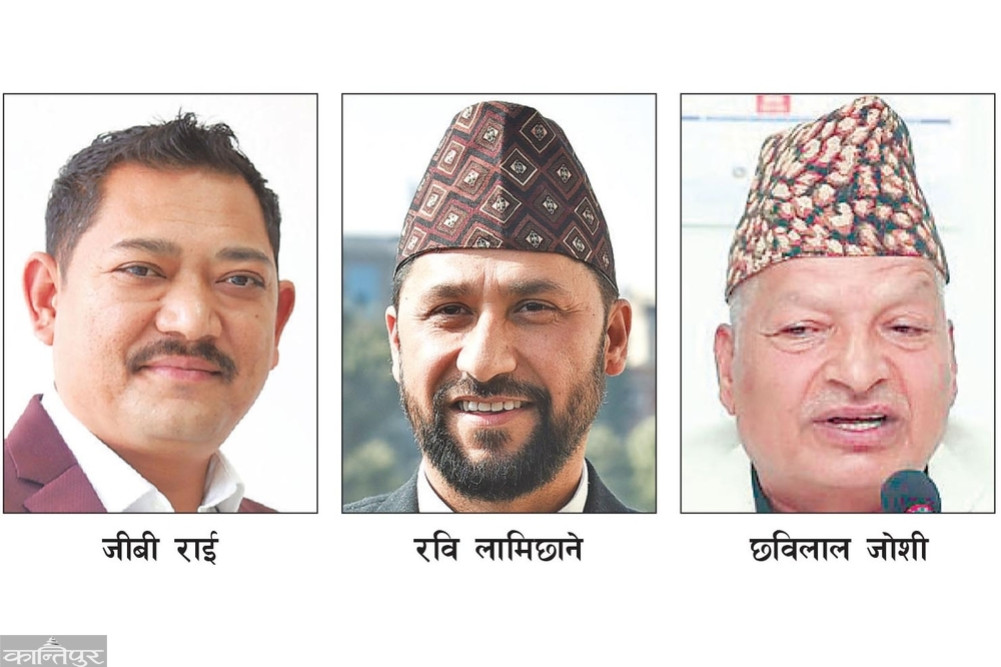
The Kaski District Court has refused to amend the organized crime and money laundering case against 50 people, including Rastriya Swatantra Party President Rabi Lamichhane and Gorkha Media Chairman GB Rai. The Kaski District Court has ordered not to amend the charge sheet until the final order of the Supreme Court comes.
Attorney General Savita Bhandari had decided to withdraw the organized crime and money laundering cases filed against Gorkha Media Chairman GB Rai and then Managing Director Lamichhane, including 50 others, on 10th December. The government was criticized for trying to amend the case pending in the court, and a writ petition has also been filed in the Supreme Court. However, the government is taking the process forward in each district by prioritizing the issue of withdrawing the case. Although the Rupandehi District Court had already refused to withdraw the case, the District Government Attorney's Office had tried to repeat the same attempt in Kaski.
The bench of Kaski District Court Judge Nitij Rai has also ordered not to proceed with the withdrawal process immediately as a writ petition has been filed in the Supreme Court on the petition filed by the Attorney General's Office. 'A decision will be taken only after the order from the Supreme Court is submitted to the district court,' said Kaski District Court Registrar Rajan Khanal.
After Attorney General Bhandari's decision to withdraw the cases on 30 Poush became controversial, Dinesh Tripathi, Yubaraj Poudel (Successful) and others filed a writ petition in the Supreme Court on 4 Magh. They have sought the court's intervention, saying that the decision to withdraw the cases is not legal and interferes with the judicial process. In the writ petition, they have argued that the Attorney General's decision to unilaterally withdraw serious cases like organized crime and money laundering is against the spirit of the constitution and the law. The writ claims that if Attorney General Bhandari keeps amending any case as she pleases, there will be judicial chaos and fair justice will be lost. The writ petition also claims that the Supreme Court should intervene as the judicial process is in danger when every government decides the cases of its close associates in this manner.
The Kaski Government Attorney's Office had filed a petition in the District Court to withdraw the organized crime and money laundering cases as per the decision of the Attorney General. The Government Attorney's Office had requested the Kaski Court to amend the indictment as per the instructions from the Attorney General's Office. However, in the hearing held on Monday, the bench of District Judge Rai ruled that the case cannot be withdrawn until the Supreme Court's decision is reached. The court has made it clear that the indictment cannot be unilaterally amended until the writ pending in the Supreme Court is resolved.
Earlier, the Rupandehi District Court has also issued a similar order. The process of withdrawing the organized crime and money laundering cases against Lamichhane in Rupandehi has also been stopped. The Rupandehi Court had also decided not to withdraw the case pending the Supreme Court's decision. The government had filed a petition for withdrawal of the charge sheet in the Rupandehi District Court in the first week of December. The presentation was also scheduled for December 6 in the District Court. The Supreme Court held its first hearing on the same day, issued a cause order, and called for discussion.
The bench of District Court Rupandehi Judge Shyamlal Ghimire had ordered that the writ was pending in the Supreme Court without even ordering the other party to be summoned and that the hearing would not be held until the interim order on the writ was finalized. Judge Ghimire had said that no order could be made in the same dispute in the Supreme Court and that a written reply was called for discussion, demanding that no order be made, and ordered that it be submitted after the finalization of the order.
Cases have been filed against Lamichhane in various cooperative fraud cases, including Pokhara's Suryadarshan Cooperative Society, in Kaski, Rupandehi, Kathmandu, and Chitwan District Courts. The prosecution claims that during the investigation, the money withdrawn from the cooperative was invested in various places and evidence of money laundering was found.
The victims of Suryadarshan Cooperative have been accusing Lamichhane and others of embezzling the cooperative's funds and investing in the Gorkha Media Network. 'This shows that the district courts are not in a hurry to implement the Attorney General's decision,' said Kiran Shrestha, coordinator of the Suryadarshan Savings Victims' Struggle Committee. 'Instead, they have moved forward cautiously, keeping in mind the sensitivity of the judicial process and the writ petition pending in the Supreme Court.' He hoped that the Supreme Court would order in favor of moving forward the judicial process without withdrawing the case.
Although Attorney General Bhandari decided to withdraw only the organized crime and money laundering cases, keeping the cooperative fraud case intact, legal experts have argued that these two cases cannot be separated as they are related to each other. They suspect that the Attorney General's decision may have been made under political pressure rather than a legal basis. They have argued that there should be sufficient legal basis for withdrawing serious cases like organized crime and money laundering.
The Nepal Bar Association has also opposed the decision to withdraw the case against Ravi. The bar argues that the decision to withdraw the case is contrary to the prevailing legal system and the principles previously propounded by the Supreme Court regarding withdrawal of cases.