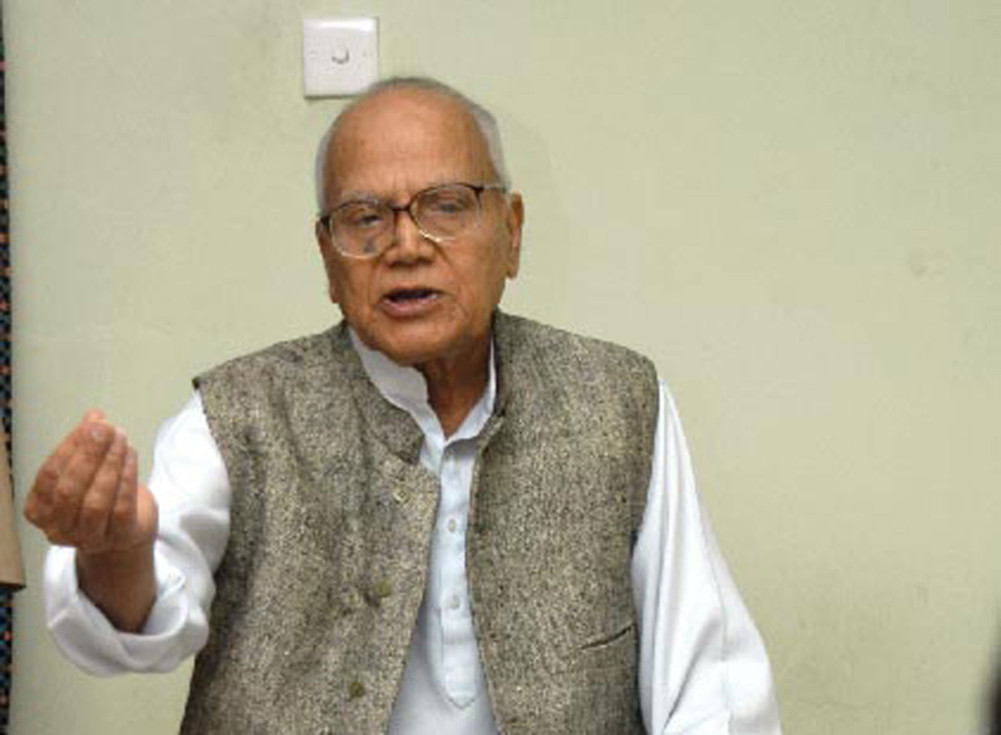
When Krishna Prasad Bhattarai i.e. Kisunji was the Prime Minister, he entered Baluwatar carrying an umbrella, a can and a tank, even after he was relieved of office he returned with only those three items. He didn't earn more wealth under the guise of Baluwatar's power, he didn't think it necessary to earn.
We use Google Cloud Translation Services. Google requires we provide the following disclaimer relating to use of this service:
This service may contain translations powered by Google. Google disclaims all warranties related to the translations, expressed or implied, including any warranties of accuracy, reliability, and any implied warranties of merchantability, fitness for a particular purpose, and noninfringement.
Umbrellas, jugs and tankas, when used in different places, convey their own sovereign meaning. But when used together, they undoubtedly act as synonyms of Krishnaprasad Bhattarai i.e. Kisunji.
Kisunji may have missed many things in his life, but as long as he was alive, he never missed an umbrella, a jug and a tank. That is, the simple life did not leave. He did not leave his ideal politics. The 'saint leader' Kisunji, who had no land or property in his name, was made an ashram by the government at Bandegaon in Lalitpur.
He lived there during the last period of his life. Even after his death, the ashram was a small tourist center. There were items like umbrellas, jugs and tankas that he used during his lifetime. Domestic-foreign gifts, documents, photographs.
During the movement of Gen-G against corruption and irregularity, some protesters started arson and vandalism from the afternoon of 24 August. Even Kisunji's ashram was affected by this. And, the symbols of his simple life, umbrella, jug and tanka burned. The rest of the items were also burnt.
Kisunji himself was the epitome of simple living. To this day no one can accuse anyone of corruption and amassing wealth. who himself was a 'saint leader' and lived in an ashram built by the government, after his death that ashram was also looted. Items that 'prove' non-corruption were burned.
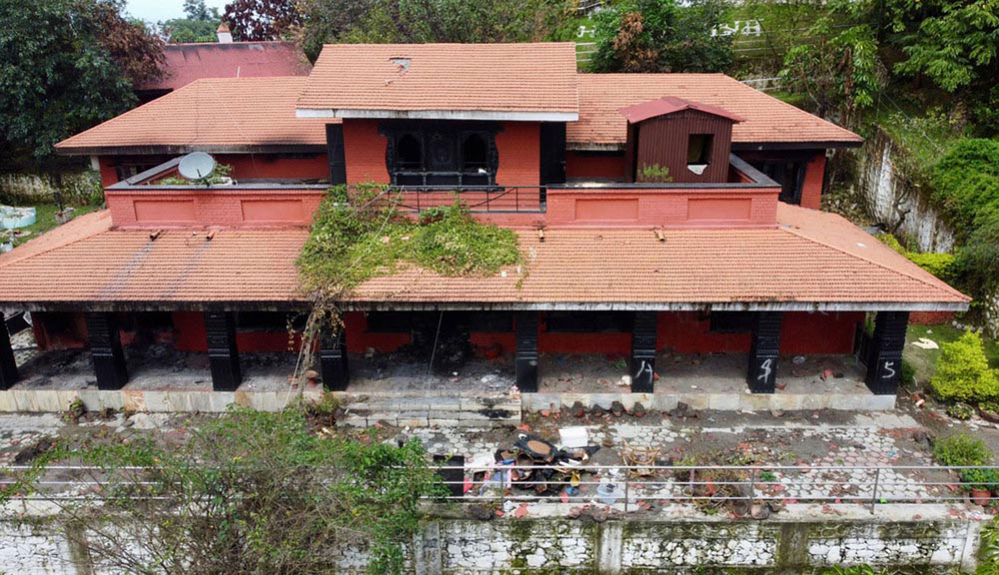
What happened in Bandegaon was very painful. In no way can the issue of arson be justified," says Nilambar Acharya, who was a minister in the cabinet formed in 2047 under the leadership of Bhattarai.
...
Bhattarai became the prime minister for the first time on 6 Baisakh 2047 with the success of the 2046 mass movement. But he was defeated in the general elections held by his own government in Baisakh 2047. He was also defeated in the by-election held in 2050. Even now, the topic of losing him due to infighting within the party is discussed in political circles.
Before the 2056 elections, the image of the Congress was badly damaged. The then Congress President and Prime Minister Girija Prasad Koirala was not in a position to attract voters. So he promoted Bhattarai as the Prime Minister after the election. As a result, the Congress got a single majority.
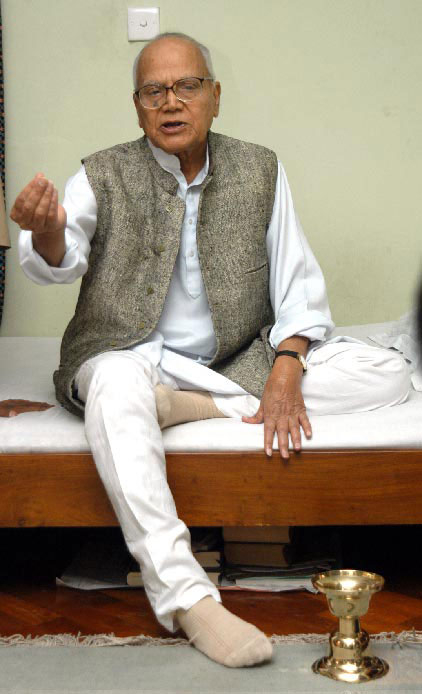 Thus Bhattarai was seen as the savior of the Congress at that time. After the election, he became the Prime Minister for the second time. But Koirala did not let it last. He was removed from Baluwatar within 10 months after making many traps.
Kisunji, who has a strong 'moral power', does not have much meaning to come and go. He came and went in positions, but maintained a simple life. He always led a simple lifestyle. Even after becoming the Prime Minister, he maintained a simple style. One could easily go to his room and meet him,” says Acharya.
When he was the Prime Minister, Bhattarai regularly used umbrellas, cans and tankas. He also had an attachment to it. Kisunji used a long and black umbrella. At other times, I used to walk with my knees bent, to cover myself when it was raining or when it was sunny. It was also a necessity of old age in a way. In the beginning he used to carry an umbrella with bamboo stalks After it had a hole in it, someone bought an umbrella with a steel handle and gave it to them.
If the umbrella broke, he would not buy a new one, but repair it. For that, he used to go to Bhairav Chata Bhandar in Indrachok. The stem of the umbrella was peeling. And when he reached there, he would say - O Babu, it's cool,'' remembers Kishore Nepal, a journalist who coordinated the press sector during both of Bhattarai's prime ministers. We used to be a few people back and forth.'
He also used to drink water from Surahi regularly. Whether it was winter or summer, he used to drink water from a jug. It kept breaking though. Should have changed. There was a boy who worked for him. Once a jar broke," Nepal recalled, "why should my jar break, go and buy it and come." The boy began to cry. And Kisunji said - don't worry, I will give you the money. He also used the
tank regularly. He brought it from Banaras. Especially important documents and clothes of the party were kept. "If he had to save something, he would keep it in that tank," Nepal says, "he would also keep his favorite kurta." The coat is also a reference to show how simple his life was. Journalist Nepal has mentioned in his book 'Mero Samya' that after becoming the Prime Minister, Bhattarai took the oath wearing his old coat.
He maintained his simple style in both terms. That is why he entered Baluwatar carrying an umbrella, a can and a tanka when he was the prime minister. He didn't earn more wealth under the guise of Baluwatar's power, he didn't think it necessary to earn.
...
Bhattarai continued his lifestyle before becoming the Prime Minister even when he was the Prime Minister. Nepal has written in 'Mero Samay' - 'He did not stop going to Lakshmi's Tea Shop in New Baneshwar every Saturday morning to drink tea and in the evening he did not stop going to New Road to buy paan and Times of India.' He had the nature to understand the problems of the country, to discuss with each other and to bring things before the 'senior' friends. He was not pressured or influenced. He easily avoided unnecessary topics. Journalist Kishore Nepal remembered two incidents.
First, in 2047, when the constitution-making process was going on, 17 journalists came to the prime minister's office wearing uniforms with the aim of putting pressure on the king's rights. He maintained that the rights of the king should be protected and that it was a matter of sovereignty, that the king was also their sovereign. Kisunji simply said – 'That's what the fathers have come for. go go The king has already spoken about this matter.' They did not say anything more, returning with salutations.
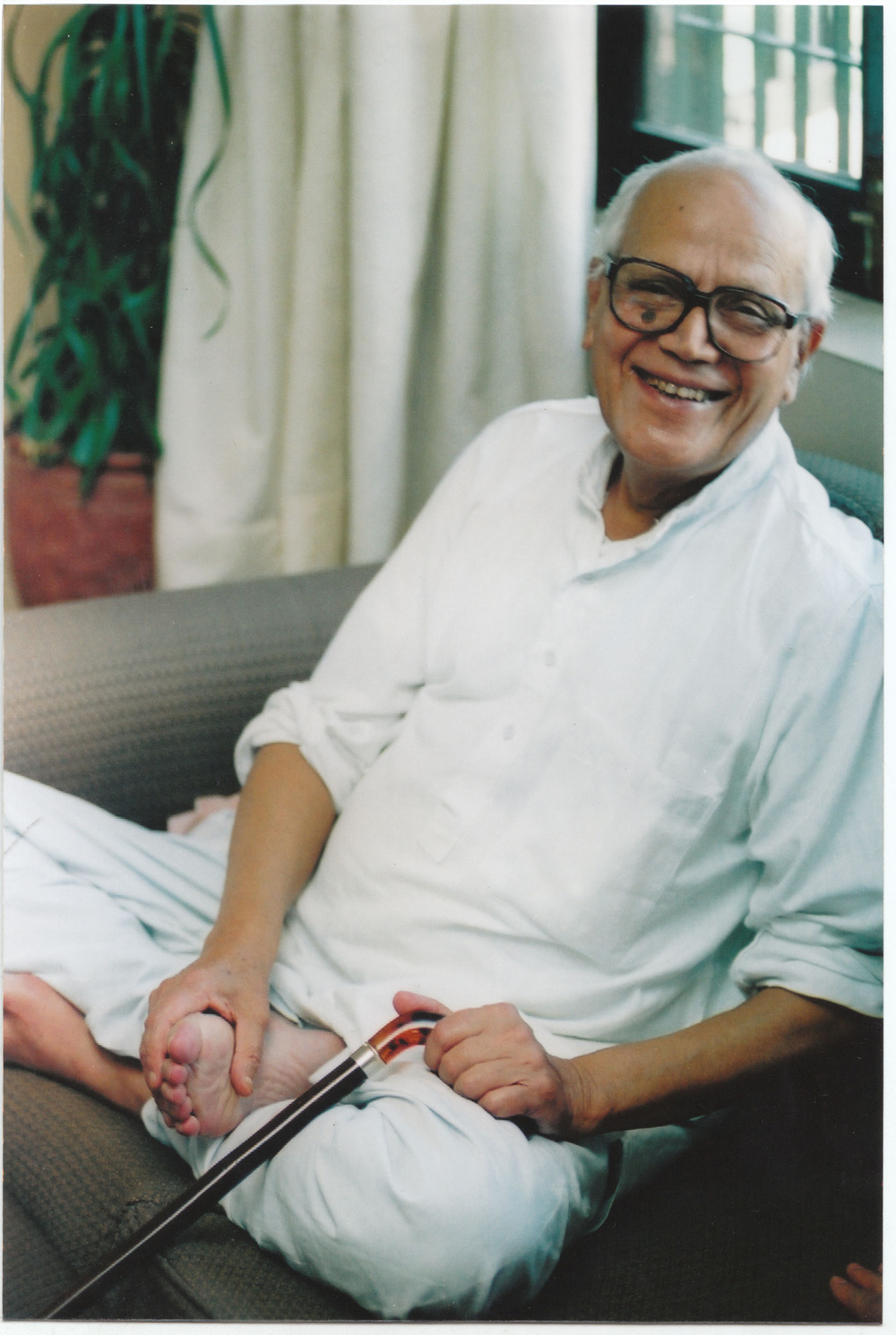 Secondly, once there was a call from the king's secretariat calling for a conversation about something. Kisunji said – 'Today I have a headache. Tell the government that Krishna Prasad will come to drink whiskey tomorrow.'' He used to make fun of life's difficulties.'
...
People have seen many prime ministers before and after multiparty. The lifestyle of the Prime Minister, who has been traveling to Baluwatar for a few months or years, has seen a change. They have also seen themselves and people around them 'progress' overnight. KP Sharma Oli, Sher Bahadur Deuba or Pushpa Kamal Dahal, who became the Prime Minister alternately for ten years after the promulgation of the Constitution (until Sushila Karki became the Prime Minister) have been involved in many controversies. There is nothing beyond them, but there is suspicion in society about its legitimate source.
Why only the prime minister? The society is surprised to see the rapid rise in the lifestyle of ministers, bosses or employees of many organizations. is durable. is angry Today, a leader who is a prime minister or a minister cannot communicate with the society, cannot meet or travel with the common people. Often ministerial and staff interest groups are accused of shrinking the signatories who legitimize the files. But Kisunji remained as an 'icon' of idealistic politics.
In the background of all this, in Bandegaon Ashram, safe umbrellas, water bottles and tanks were sitting as symbols of simplicity politics. of transparent politics. At this time, planned arson against them is simply arson against politics. Even so, Nepali politics has not been able to establish any strong ideals to show and teach.
was a reference – umbrella, jug and tanka. His physical remains are also cremated. This is a work that burns our values. "Burning the symbol is a job," says Acharya, "There was no need for the anti-corruption activists to burn the barrel."