The number of executions in Saudi Arabia is increasing every year. 1800 people have been executed in Saudi Arabia in the last 10 years. International human rights organizations have been strongly opposing this.
We use Google Cloud Translation Services. Google requires we provide the following disclaimer relating to use of this service:
This service may contain translations powered by Google. Google disclaims all warranties related to the translations, expressed or implied, including any warranties of accuracy, reliability, and any implied warranties of merchantability, fitness for a particular purpose, and noninfringement.
The Ministry of Foreign Affairs kept the incident of Saudi Arabia hanging 43-year-old Pushparaj Ranabhat from Kaski a secret for three months.
While he was executed at 7:59 in the morning on June 19 in Dammam, Saudi Arabia. There has been no free year in Saudi Arabia for the last three years, in which Nepali workers have not received the death penalty. 2080 In the second week of June
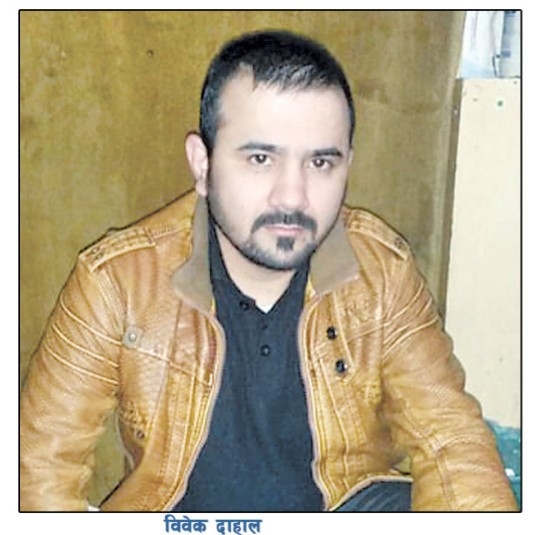 Sant Bahadur Pun's death sentence was executed . Saudi citizen Oda bin Aida bin Hamod Al Sarari was found guilty of murdering the saint, who spent 22 years in Qurayyat prison in Saudi Arabia. There were many initiatives from Nepal to save the saint. A letter was also sent to the king of Saudi Arabia to apologize to the president for having spent a long time in prison. But after the victim did not agree, the death sentence was executed . On November 6, 2079, the death sentence of Vivek Dahal from Udaipur was executed in Saudi Arabia. Da
Hal was also forgiven by the victim. But the issue of pardoning Dahal, who has spent 15 years in prison in Saudi Arabia, woke up again in the court . Dahal's death sentence was finally executed after the judge's opinions differed in the court. According to Nareshvikram Dhakal, the Nepali ambassador to Saudi Arabia, the official news was given to the embassy only after the execution of the death sentence in the Ranabhat incident. The embassy sent the news of the execution to the Ministry of Foreign Affairs.
Ranabhat's death sentence is linked to the murder of his colleague. He killed 50-year-old Bhagyanarayan Rai and 44-year-old Saroj Kumar Jha who were living in the same room on 2nd October 2080. Both Rai and Jha are from Mahottari. In this case, the decision of the lower level of death penalty was upheld by the High Court and the Supreme Court. The punishment was executed shortly after the approval of the Supreme Court.
In Saudi Arabia, even if the death penalty is imposed by the court, there is a provision that the perpetrator and the victim can reconcile by taking 'blood money'. But in the case of Ranabhat, the government agencies did not take any initiative to reconcile. In the case of the murder of a Nepali by a Nepali in Saudi Arabia, there has been a reconciliation between the perpetrators and the victims. Parbat's Uttam Kunwar, who was convicted of murdering his colleague Vishnu Ghimire, was sentenced to death. After reconciliation between the perpetrator and the victim's family, Kunwar has received forgiveness and returned to the country. Similarly, Umesh Yadav of Dhanusha, who was convicted of murdering a Pakistani citizen, also returned home after being pardoned by the family of the Pakistani citizen.
When one Nepalese person after another is being sentenced to death in Saudi Arabia, it does not seem that the government of Nepal has taken any further initiatives or tried to internationalize this issue. While according to Amnesty International's latest report, the death penalty rate in Saudi Arabia has been increasing in recent years. According to the official press agency of the Saudi government, from January 2014 to June 2025, 1,816 people were executed. Especially in drug-related cases, foreign citizens have been given the death penalty. According to Amnesty, about 75 percent of the 597 people executed for drug-related crimes in the last 10 years were foreign nationals.
In 2024, 345 people were executed in Saudi Arabia. From January to June 2025, only 180 people have been executed. Saudi Arabia executed 46 people in June alone. It includes citizens of Nepal, Egypt, Ethiopia, Jordan, Nigeria, Pakistan, Somalia and Syria. Although most of them were connected with drug cases, Nepali citizen Pushparaj Ranabhat from Kaski was connected with murder cases.
Amnesty International's Deputy Regional Director for the Middle East and North Africa, Christine Beckerle, said that they are witnessing a very frightening trend. "Using the death penalty in a cruel and merciless manner is Saudi Arabia's disregard for human life," she said while announcing Amnesty's latest report. Using the death penalty in a cruel and merciless manner is Saudi Arabia's disregard for human life - Amnesty International
According to 8 organizations including Human Rights Watch, Saudi Arabia has been among the countries that have executed the most death sentences in the world for years. They are criticizing Saudi Crown Prince Mohammed bin Salman for not fulfilling his commitments.
In 2018, Crown Prince Mohammed bin Salman promised to reduce the use of the death penalty. He also reiterated his commitment to limit the death penalty in March 2022. The death penalty was not carried out during the coronavirus pandemic. Since then, the rate of execution of death penalty has been continuously increasing .
Rameshwar Nepal, the South Asia Director of Equidem Foundation, an international human rights organization, said that the Universal Declaration of Human Rights and the International Convention on Civil and Political Rights (ICCPR) prohibit the taking of a person's life. It is a universal principle of human rights that if life cannot be given, it cannot be taken. If a person engaged in criminal activity takes someone's life, it is considered a heinous crime. He should be punished . Those who commit crimes will be reformed," he said. But, that punishment should not be death penalty.'
8 organizations including Human Rights Watch, according to Article 6(2) of the ICCPR, the provision of death penalty for crimes that do not fall under the definition of 'most serious crimes' should be removed immediately . "Given the appalling level of executions in Saudi Arabia, we urge the authorities there to immediately officially announce a moratorium on the death penalty and move towards the complete abolition of the death penalty for all crimes," said a statement by 7 organizations, including Human Rights Watch, "Saudi Arabia should remove all legal provisions that violate international human rights law." ’ Other news related to
:
Another Nepali gets death sentence in Saudi Arabia
Nepali who is facing death sentence in Saudi

