Former Foreign Secretary Madhurman Acharya says - 'Unlike the 'Boundary Protocol' of 37 years ago, China agreed to trade with India through the Lipu Pass.
We use Google Cloud Translation Services. Google requires we provide the following disclaimer relating to use of this service:
This service may contain translations powered by Google. Google disclaims all warranties related to the translations, expressed or implied, including any warranties of accuracy, reliability, and any implied warranties of merchantability, fitness for a particular purpose, and noninfringement.
Contrary to the 'Boundary Protocol' (Boundary Charter) with Nepal, it has been found that China has agreed on cross-border trade with India through Lipulekh. According to foreign experts, China accepted the Lipulek area as Nepali territory in 1988 when the 'Boundary Protocol' was renewed.
At that time Lipulek was also known as Lipudhura . But without informing Nepal, China and India have agreed to trade from Lipulekh.
Based on the Nepal-China border supervision of 1960 and the border treaty of 1961, the two countries signed the 'Boundary Protocol' in 1962. The 'Protocol' was signed by Foreign Minister Tulsi Giri, who was also the then Vice-Chairman of the Council of Ministers on behalf of Nepal. According to the former director general of surveying department, Buddhinarayan Shrestha, 79 big pillars were buried to determine the border between the two countries based on the 'protocol'. According to the protocol, the Nepal-China border is spread over a length of 1,414 km.
According to Shrestha, the 'Protocol' was renewed in 1979 and 1988. When it was renewed for the first time, the then foreign minister from Nepal, KB Shahi, signed it. The second renewal was signed by Foreign Minister Shailendra Kumar Upadhyay on behalf of Nepal. An 11-member team led by Upadhyay went to China and signed the protocol. "I participated in the team as the director general of the measuring department," said Shrestha. In the renewal, Lipudhura was accepted by China as part of Nepal.
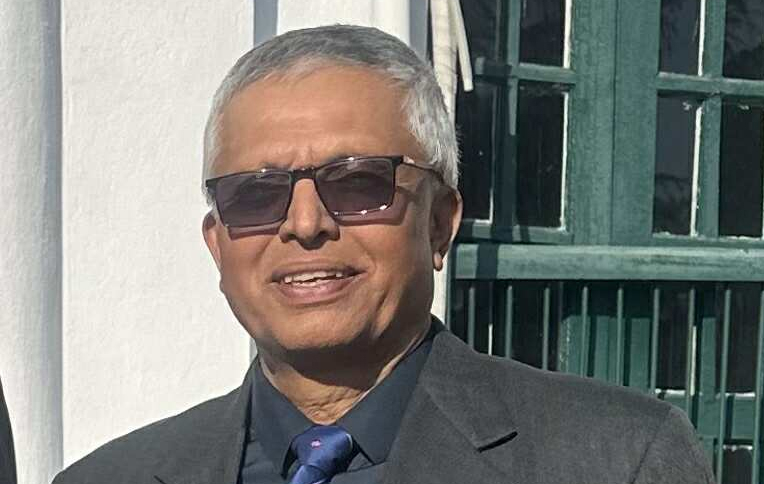
Contrary to the 'Boundary Protocol' of 37 years ago, China agreed to trade with India through the Lipu Pass: Madhurman Acharya, Former Foreign Secretary Before the first renewal of the boundary protocol, the then Prime Minister Kirtinidhi Bishtal visited China in 1978 and the then King Birendra Shah visited China in 1987 . According to the records of the Ministry of Foreign Affairs, the then Prime Minister BP Koirala visited China in 1960 before the Nepal-China Peace and Friendship Treaty. The next year in 1961, during the then King Mahendra Shah's visit to China, a border treaty was signed between the two countries.
According to former foreign secretary and former ambassador Madhurman Acharya, when the boundary protocol was signed in 1988, China accepted the territory including Lipudhura as an integral part of Nepal. This is the updated document related to the 'Boundary Protocol' between Nepal and China. It has not been renewed since then. According to an official of the Ministry of Foreign Affairs, after the 'protocol' was renewed at that time, the Indian side expressed its objection through various channels.
Since then, the "Protocol" has not been renewed, while when the first "Protocol" was prepared 63 years ago, it was said that issues related to international borders would be regularly reviewed and an updated document prepared. According to border experts, the ``periodic meeting'' regarding the ``protocol'' was being pushed due to the ``disagreement'' between the two countries, especially regarding the height of Mount Everest and the border pillar connected to Lama Bagar in Dolakha. The different claims about the height of Mount Everest in both countries have been determined on 23 November 2077 after a joint technical team has been assigned to study and measure it. From the measurements at that time, the height of Everest has been fixed at 8,848.86 meters.
Even though Nepal is trying to solve the dispute by saying that pillars number 57, 58 and 59 have been buried in Tippa from Lamabagar in Dolakha to the north by eroding about 6 hectares of land, the Chinese side is not ready . It was agreed to hold a joint meeting in China on 1-5 February 2012 to discuss the 'Protocol'. At that time, Prime Minister Baburam Bhattarai and Foreign Minister Narayan Kaji Shrestha were . A Foreign Affairs official says that the effort became futile after Prime Minister Bhattarai gave an instruction that "the preparations are not complete, not to participate in the meeting" just the day before the meeting. Since then, a joint meeting has not been held to resolve the issue of Lama Bagar.
India has been occupying the Nepalese land near Lipulek for decades by forcibly keeping the army in the Kalapani area. In order to further strengthen it, India and China agreed to trade through Lipulek in 2015. At that time, the Nepal government had sent a 'diplomatic note' to both countries expressing objection. While sending a reply, China expressed its intention to "provide facts and evidence about this and not to do any activity that would disturb the sovereignty of Nepal". India did not send a reply. Sushil Koirala was the Prime Minister at that time.
After the Chinese response, Nepal, which is gathering documents, became the Prime Minister after the change of government. After that, the issue of trade between China and India through Lipupas did not proceed. Now the same agreement has been revived. Protests have already started in Nepal regarding this. The government is also preparing to send a diplomatic note. The government has made it clear on Wednesday that Kalapani, Lipulek and Limpiyadhura are an integral part of Nepal.
The experts in border and diplomatic matters say that both sides should be able to keep their points by diplomatically opposing the agreement reached between India and China to conduct bilateral cross-border trade from Nepali territory .
Former Foreign Secretary Acharya Lipulek analyzes the China-India agreement to trade through "developed international geopolitics" as a "byproduct". "Both countries have agreed to do business through Lipupas before, later that agreement was in tatters," he said, who is also a former ambassador, "now both countries have agreed to do business from there." The root cause of this is the ups and downs in the relationship between the two countries with the US and the developments that have led to it.
Acharya says that Nepal should emphasize on sending diplomatic notes on this matter, increasing diplomatic dialogue and keeping its issues firmly on the relevant side. He suggested that preparations should be made to include this topic in the upcoming visit of Prime Minister KP Sharma Oli to China and India. "There is more political fuss than diplomatic initiatives on such matters, it does not benefit the country," he says.
Buddhi Narayan Shrestha, the former Director General of Surveyors Department commented that since India has been showing excessive and disrespectful behavior towards Nepal in the international border issue, the Chinese side has also become its ally. He also said that the latest policy taken by China by pushing the meeting related to 'Boundary Protocol' is more dangerous for Nepal. In this regard, he suggested that Nepal should take up its matter with the Chinese side through strong diplomatic channels.
"India had already violated Nepali land, was showing abusive behavior, was playing with our emotions, while now its northern neighbor China has agreed to trade with India through Lipulek, Nepali land without informing Nepal. This has created a threat to our sovereignty from both countries," Shrestha told Kantipur, "Nepal needs to convey a strong message to both neighbors on this matter through diplomatic means". It should be said that this is our territory, it cannot be done unilaterally without our approval.'

