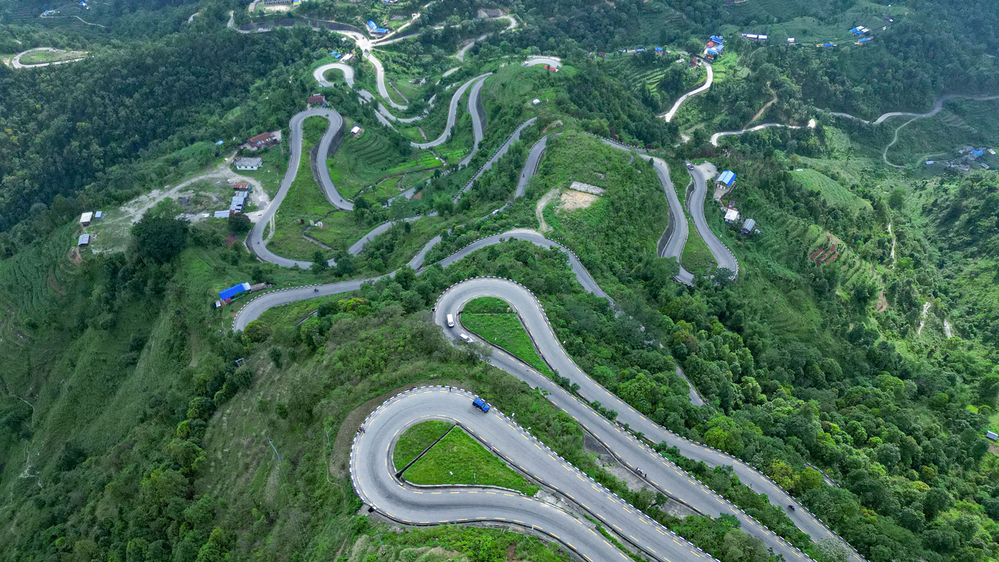
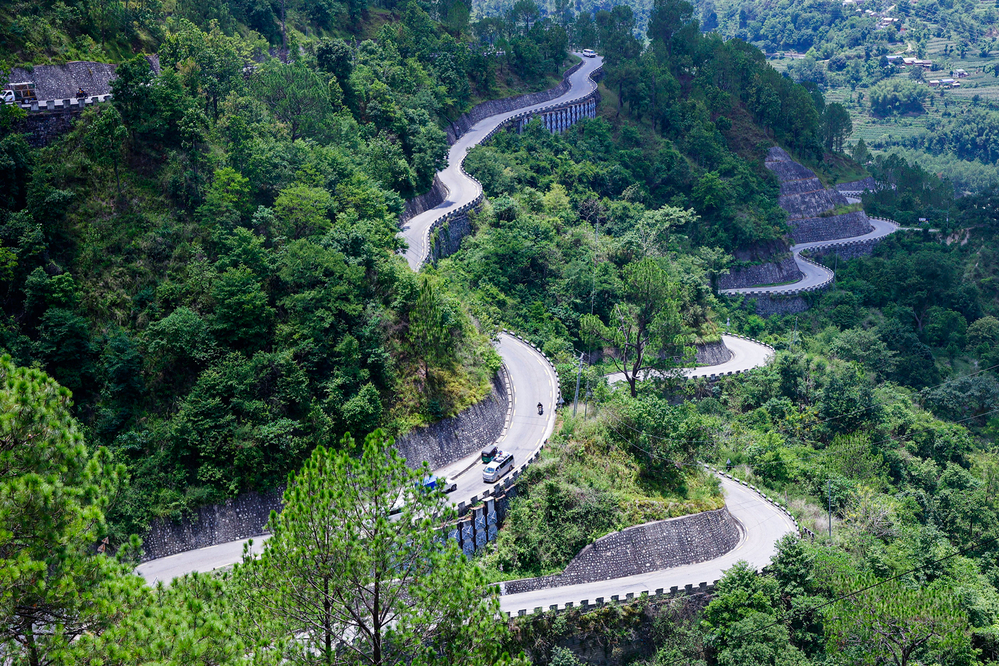
After the construction of the BP highway, the 153 km section of Koteshwar-Sindhuli Bazar in Kathmandu has been connecting the capital to Terai/Madheshsaag in a fast and efficient way since 10 years ago.
We use Google Cloud Translation Services. Google requires we provide the following disclaimer relating to use of this service:
This service may contain translations powered by Google. Google disclaims all warranties related to the translations, expressed or implied, including any warranties of accuracy, reliability, and any implied warranties of merchantability, fitness for a particular purpose, and noninfringement.
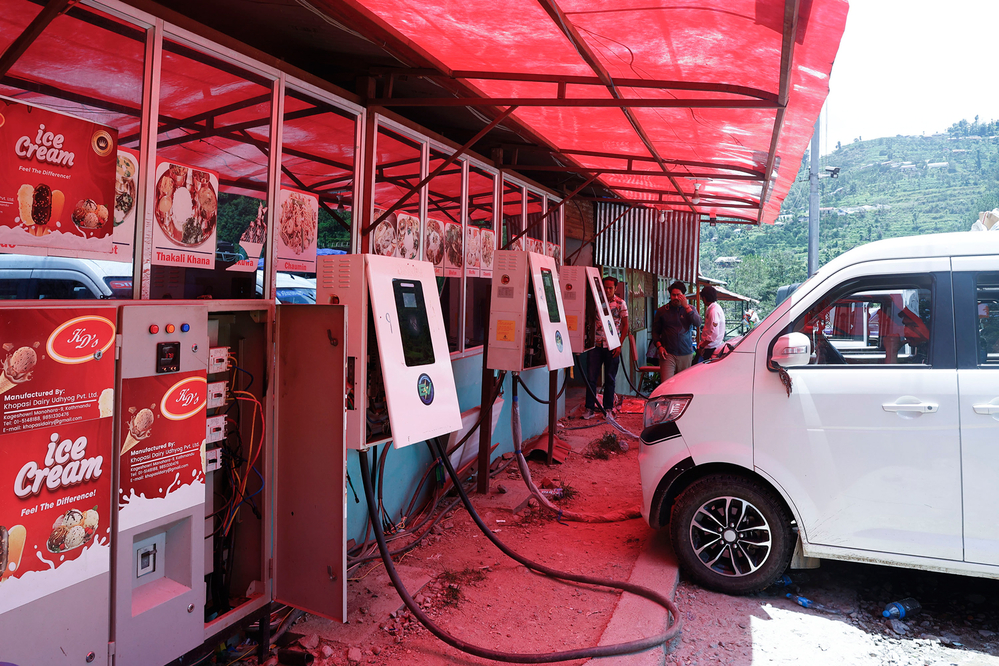
Two years ago, Bivas Thapa set up 4 charging stations for electric vehicles (micro and minimicro) at a cost of Rs. Soon after, a hotel was also opened by adding facilities with food and snacks.
In the early days, he hardly had time to speak when he set up a charging station targeting electric vehicles plying on the BP highway. Up to 52 cars a day would go to their destination only after charging. He used to serve food and snacks to the passengers coming in the car.
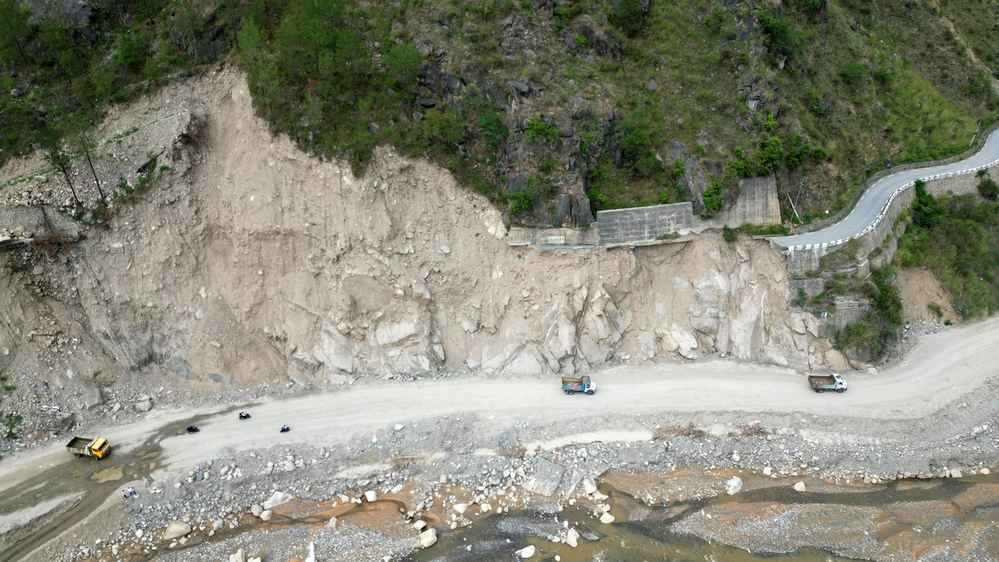
After last October's flood damaged the 12 km road of Sindhuli-Kavre section under BP highway, the number of electric vehicles passing through this section is decreasing. Now only about 30 vehicles stop for charging every day, they say. "I started the charging station with a lot of investment," he said, "the floods in Asoj created havoc, if there is heavy rain, there are no more than 10 to 12 vehicles coming to charge a day." - Vivash Thapa, businessman
Thapa has now added disappointment. "It's been 8 months since the flood, the road is still not sustainable," he said, "There was great hope that it would be rebuilt soon, due to the indifference of the government, people like us who do business have to suffer." He said, "What will happen to the roads that have been built in the coming rains?", "I am now thinking of finding an alternative to this business." He said that the car can also be charged after eating. When the road was easy, the charge reached this place. Now, after charging here, the driver is forced to charge again even after reaching Kavrevanjang.
Passengers nowadays are afraid to board the car as soon as it rains. He said that even the drivers are afraid to drive when it rains. "If the road had not been damaged, I was thinking of adding charging stations to increase the number to 20," says Thapa, "I was preparing to make this place a charging hub, but now that is not possible." "Some started going to Kathmandu via Hetaunda, some stayed at home even if it rained a little because of the road," he said.
According to him, for running hotels and charging stations, the monthly installment of the loan taken from the bank is only 1 lakh 15 thousand. "This is the closest road connecting the capital Kathmandu and Eastern Terai," he said, "Therefore many people's livelihoods are connected to the road, due to the government's laziness, many people are forced to find an alternative to the business they are doing."
From Udaipur's Gaighat, Sarlahi, Sunsari, Sarlahi, Sirha, Dhanusha, Mahottari, Sindhuli, a large number of electric vehicles travel around Kathmandu via BP highway. Earlier, when there were limited charging stations in front of the hotels that opened on the highway, drivers had to wait for their turn to charge. Now it seems that there is a crowd to charge the car somewhere empty and somewhere else. The distance from Koteshwar in Kathmandu to Sindhuli Bazaar is 153 km. As a result, Terai and Eastern districts can be reached quickly, so most of the vehicles travel through BP highway.
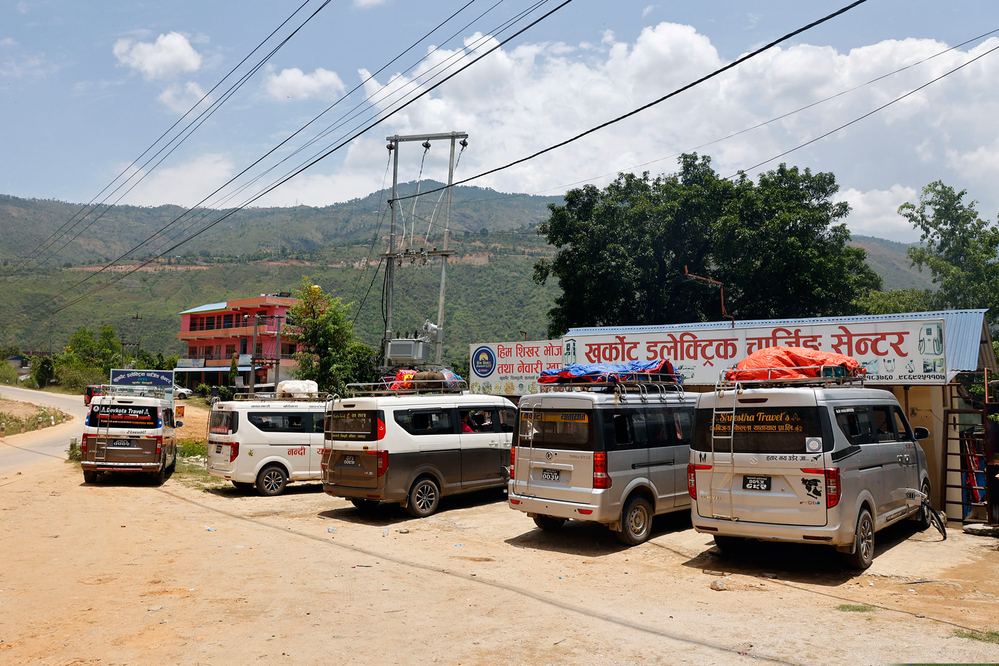
Before Asoj, 7000 vehicles (around 10000 during Dasaintihar) used to pass through BP highway. Now this number has decreased to 4 thousand according to the data of Road Division Bhaktapur. Two electric micro buses of Shivram Khadka of Kamalamai Municipality-4 of Sindhuli ply between Sindhuli and Kathmandu.
Until October, he was on track to deliver two to four vehicles. When the flood in October left his car stranded in Mangalatar for 11 days on his way from Sindhuli to Kathmandu, his despair was compounded. Seeing the condition of the road, he decided not to add the car.
"Initially there was a good income from vehicles, at that time I was planning to add two vehicles to go to Kathmandu and the same number of vehicles from Kathmandu to Sindhuli," he said.
"There used to be more electric cars than passengers," he says, "After the flood, even the rich started selling electric cars, again, compared to other cars, the wheels of electric cars are small, it's difficult to drive anywhere, the battery and motor are at the bottom, they break down after a collision and it's expensive to make."
He said that it would be a problem to drive electric vehicles on the roads with more potholes. He said that the vehicle could not be driven due to flooding on the BP highway after two days of rain. are.
"The car is near Kathmandu and the road is easy," he said, "I pay monthly installments of 1 lakh 71 thousand rupees for two." There are 26 electric vehicles under Sumitra Transport Pvt. Sindhuli. Pvt. Ltd. Chairman Harikrishna Budhathoki had only 5 electric vehicles. Four vehicles were sold after the October flood. There is only one now.
"The road is also not easy, the condition of the road in Kavre's chowkidanda is bad, when you walk with a car full of people, it slips uphill, this place has not been made easy yet," he said.
President Budhathoki said that it has been more than three and a half years since electric vehicles started plying on the BP highway. "When we started, we had 3 vehicles, now 40 electric vehicles are plying from Sindhuli every day," he said, "After the flood, there are many potholes on the BP highway, if a vehicle makes three trips, it has to be replaced and the cost is more than 7,000." Most of the hotels on the highway have expensive investment charging stations. But even charging stations often seem deserted when there aren't many cars driving by. The charging station set up by the government in Khurkot has not been operated since it was not repaired after the October flood.
District Traffic Police Office Sindhuli Chief Police Inspector Mohammad Kalim Anjum said that the number of electric vehicles traveling between Sindhuli and Kathmandu daily in July-August was around 150. "Now Sardar only moves 90 vehicles daily," he said, "due to the road, the number of electric vehicles seems to have decreased."
A few days ago, when it rained, only 24 electric vehicles traveled around Kathmandu in one day, he said. "The number of electric vehicles decreases automatically on rainy days," he said.