If the bill is passed, the Chairman of the Film Development Board will be able to be removed by the Government of Nepal and the members by the Ministry at any time. Likewise, the Board will have to obtain the consent of the Ministry before approving the long-term plan, annual program and budget.
We use Google Cloud Translation Services. Google requires we provide the following disclaimer relating to use of this service:
This service may contain translations powered by Google. Google disclaims all warranties related to the translations, expressed or implied, including any warranties of accuracy, reliability, and any implied warranties of merchantability, fitness for a particular purpose, and noninfringement.
Protests have started from filmmakers saying that the government is going to introduce a law to tighten censorship and reduce the autonomy of the Film Development Board. They have commented that the government has introduced a retrograde bill as a shadow of the five-and-a-half-decade-old Film (Production, Exhibition and Distribution) Act.
Film-related individuals and organizations have already registered petitions with suggestions in the bill branch to amend the provisions of the 'Bill to Amend and Consolidate Film Laws' registered in the National Assembly on 17 Baisakh. Their response is that the government has introduced the bill contrary to the expectation that the new law will create a favorable environment for the rapid development of the Nepali film industry. The main objection of the filmmakers has been seen towards section 5 (4) and section 6 (2) of the
bill. In Section 5 (4) of the Board, it is mentioned that the Chairman of the Board can be removed from office by the Government of Nepal and the members by the Ministry at any time.
Film workers claim that the board cannot operate autonomously due to this provision. Similarly, they have argued that the provisions of Section 6 (2) that "the board shall take the consent of the ministry before approving the long-term plan, annual program and budget" will limit the board to one branch of the ministry. Director Manoj Pandit alleges that the government is trying to mislead the
board as an autonomous body. We were already called the Autonomous Development Board. However, some progressive and some autocratic provisions have been added to the Act of 2026 by throwing out the draft prepared by film organizations over the years. "Making the board like a unit of the ministry shows how irresponsible the government is towards this sector," he says. Director Pandit's analysis is that the
bill does not touch the meaning, expression and inclusion of federalism. "The bill confirmed that the government has taken the film sector only as an entertainment sector like a casino," he says. He added, "No matter how many amendments are called, it is certain that there will be a very compromised law."
director Naveen Subba comments that the bill is retrograde. The law should be future-oriented but it is past-oriented. On the other hand, during the Panchayat, the Censorboard of the Achaladhish seemed liberal,' he says, 'The kind of organization, openness and generosity that is needed in the development and expansion of the film sector, is provided in the bill exactly the opposite.' He says that even though there is a need to make multi-country agreements to produce Nepali films and sell them in the world market, there is a need to bring the world's learning and knowledge here to nurture local talent, but such topics are not mentioned anywhere in the bill.
While filmmakers are raising the voice that the Censor Board should be abolished because of 'censorship', there is a provision in the bill that even the film that is being exhibited can be stopped immediately. Directors Subba, Pandit and others have been demanding that the age group of the audience should be separated and given a classification certificate as the interference in the creation will kill the essence of the film. Subsection 1 (a) of Article 30 of the
bill mentions that "If there is no scene that discriminates on the basis of caste, regional, territorial, religious, linguistic, cultural, caste or gender in the society, or if it is found that there is no scene of spreading violence or showing contempt or abuse, the film will be allowed to be screened in public without cutting the film based on the story, dialogue and scene according to the specified standards without any condition."
Similarly, in sub-section 1 (b) it is said that 'the film may be shown in public only after any trimming or manipulation or in compliance with any other restrictions' and in sub-section 1 (c) it is said that 'only people of a certain age group can be allowed to be shown in public based on the specified criteria'. In sub-section 4 of section 30 of the
bill, a provision has been made that the screening committee will not allow the film to be screened, stating that 'notwithstanding what is written in sub-section 1'. Sub-section 5 of Section 30 includes the provision that the film can be stopped at any time or cut down as needed and allowed to be shown.
In sub-section 7, it is mentioned that the screening of the film should be stopped immediately if it is found that the conditions are not followed during the monitoring by the ministry. Filmmaker Abhimanyu Dixit says that these legal provisions kill the essence of the film. He adds, 'We are a group that makes films using the freedom of expression given by the constitution. If the bill is passed, the film will have to be made with a lot of care.' Article 31 of the
bill has a provision to prohibit the screening of the film. In this, not only the Union government, but also the state government has been given the right to stop the demonstration. "This shows that the government can attack and restrict the sensitivity of the creator at any time," says director Pandit, "we do not accept the policy of restriction in a democracy." In opposition to this, we will start a movement.' Director Subba says that it is foolish to think that
initiators can be controlled. "These kinds of restrictions do not have much effect on creative people. No matter how strict the censorship rules are, we continue to find new ways of expression, to say what we have to say. They have not stopped making films when they are censored in 4 stages in places like Iran,' he said, 'If films are not allowed to be made in Nepal, they go to America and Thailand to make them. Good filmmakers were born in China and Iran, when the government was in control there. Perhaps our government also wants the same. Film workers also object to the provisions of the bill regarding films to be released through the
digital platform. In the sub-section 1 of section 17 of the bill, it is mentioned that 'to display films or film-related materials through digital platforms, such platforms, individuals or bodies should obtain a license from the Film Development Board'. Digital platform is defined in the bill as OTT platform, YouTube, Twitter or other digital platform. In sub-section 3 of section 43 of the
bill, there is a provision for a fine of up to 10 lakh rupees if a film or film-related material is displayed through a digital platform without obtaining a license. Earlier, commercial films from independent filmmakers were being released on digital platforms without censorship.
Director Pandit comments that censorship of digital platforms is 'censorship of the future'. Government's intervention in the film being shown on digital platforms means that the government wants to control modern development. It is a sensor on technology. It seems that the government wants to limit the creative, political and cultural power of the film, to curb the thinking itself,' he says, 'This is the most dangerous dimension of the bill.'
He said that the time has come to test whether Nepali filmmakers are aware of their political rights. He added, "It is important to seriously struggle with the issue of our rights being taken away. It is time to think."
Filmmakers also object to the proposed structure of the Censor Board. They say that if the committee is to be formed, the government representation should be reduced. In the bill, it has been arranged that government employees will remain in power as before. There is a provision in the bill that there will be only two expert members in the seven-member committee appointed by the ministry, headed by the joint secretary.
actor Harivansh Acharya says that the film development board and the censor board need experts who understand films. "Censor board can be properly censored only if there are experts who understand the film," he says. Director Subba, who has been making films since the Panchayat period, says that there is no justification for a 'dictatorial' institution like the Censor Board in a democracy.
The state should think about how the face of the country will be in contemporary times. Talking about democracy and making the system a dictatorship is contradictory, he said.
'Film workers should be given freedom of expression'
Harivansh Acharya
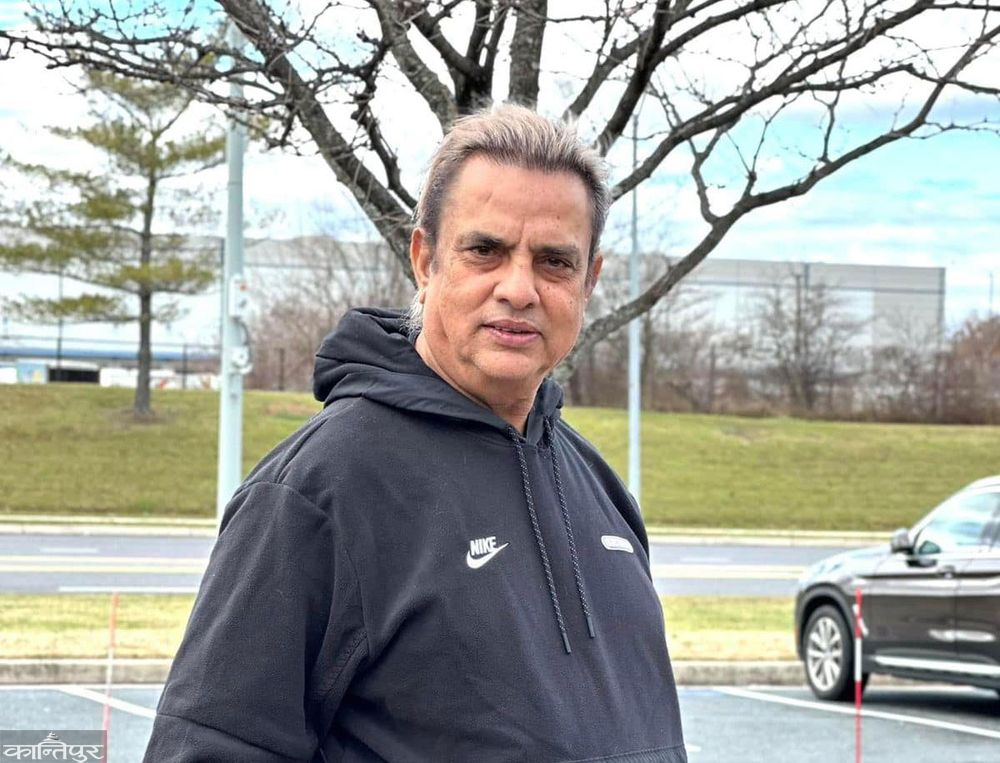 is especially during the movie 'Tan te gahore bigris ni badri'. At that time, we had to put money in an envelope as an allowance to those who were in the censors. Since the censor office was on time, they had to eat lunch themselves. It is not the case that the producer will serve lunch or bring lunch. I think it is a bribe to say that lunch.
25 years ago, is your experience the same as today's filmmakers? The
was stopped between lunch. But now it has started again. Could feed up to tea. But distributing lunch is like having a feast. That was not even practical.
How does the restriction on creation affect the film?
Creative people should be allowed to express their ideas freely through film. Strict action should be taken on issues such as national integrity, breaking ethnic harmony, disrupting national unity, satirizing people with disabilities. But first of all, filmmakers should be given the right to freedom of expression. Censorship should not be imposed on social and political topics.
Those who are on the censor board say they don't understand the film, do the filmmakers?
This happened after the political parties divided it. The censor board should have a person who understands films. Screenwriters and other people who have contributed to the film industry for a few years should be brought there. Experts are needed rather than political appointees. Experts understand the gist of the film and can analyze it accordingly. There are no people who understand movies and literature now.
There is also a voice that the sensor board should be abolished.
Censor Board is in every country. But there had to be people who understood the film. There should not be dominance of party appointees. It is wrong to have the people of the party which is in government on the censor board.