Suggestions from the Election Commission to the High-level Economic Reform Suggestion Commission to prevent political parties from collecting random donations and making 'selfish alliances' with businessmen should be subsidized by state funds.
We use Google Cloud Translation Services. Google requires we provide the following disclaimer relating to use of this service:
This service may contain translations powered by Google. Google disclaims all warranties related to the translations, expressed or implied, including any warranties of accuracy, reliability, and any implied warranties of merchantability, fitness for a particular purpose, and noninfringement.
When there are accusations that leaders have 'selfish' collusion with businessmen to control the expenses of party operations and elections, it has been suggested that political parties should be subsidized from the state fund to control it.
Parties are the basic pillars of democracy and their activities and behavior are raising questions about the system, so financial subsidies are suggested to the parties to maintain party governance.
The Election Commission has already been lobbying for financial grants. In the draft of the bill prepared by the commission to amend the law on political parties, the party has been proposed to receive grants from the state fund.
The high-level economic reform suggestion commission formed by the government has also suggested the same. In the report that was submitted to the government last week, it was suggested that there should be a legal arrangement that would not allow the candidates to spend their property in the election and grant the party from the state fund.
When questions are being raised about the federal democratic republican governance system due to the burdensome election expenses, the financial system of the political parties needs to be improved first, so it is suggested to give subsidies to the parties, says Rameshwar Prasad Khanal, chairman of the commission.
'Because elections are expensive, parties and candidates are collecting large sums of money from business houses, candidates are contesting elections by selling property,' he says, 'because of this, the question is raised that democracy is only for the rich. On the other hand, democracy has been discredited by the tendency of those who have taken donations to act in their own interests and collect the property they have spent with profit.'
The Khanal-led commission has suggested to develop a system in which the candidates cannot use their personal property or collect donations to spend freely in the election to control it, as the attempt to raise the invested money in any way after being elected increases corruption. The commission has also suggested that the commission should spend from the state fund on the candidate's campaign and the money should be spent by the party affiliated with the candidate.
It is proposed to amend the Act on Political Parties to give annual grants to political parties from the federal government fund and audit the same by the Auditor General's Office. The commission has suggested to the government to make a controlled arrangement to allow political parties to receive donations using the banking system subject to certain conditions and limits in the event that the grant from the state fund is insufficient.
This is not the first time that the debate about the need to subsidize political parties from state funds has come to the surface. The then finance minister Prakash Chandra Lohani made such a proposal in the budget statement of the financial year 2060/061. He proposed in the budget that the government would give subsidy to the respective parties at the rate of Rs. 20 per vote based on the votes received by the political parties in the last election. However, it was not implemented due to political upheaval. The Khanal-led commission said that the basis and amount of the subsidy given to the party can be determined by the government.
Former Chief Election Commissioner Bhojraj Pokharel believes that it would be right to provide subsidies from the state fund as the income and expenses of the parties are not transparent. "Donations have been boosted by acting in the interests of donors, making policies according to their wishes, making appointments," he says, "collecting voluntary donations should be stopped to improve the financial system of parties."
He says that they have been raising their voice for a long time to control corruption in the name of election expenses and party management. On the other hand, he said that since the expensive election system has many negative effects, its reform is inevitable.
Most of the candidates cannot spend even up to the prescribed limit, but due to some limited candidates of big parties and rich people who have entered politics, the entire election system has been discredited. While submitting the expenditure details to the Election Commission, false details have been submitted to show much less than the actual expenses.
"There is a situation where the election has been hijacked by money, it has prevented proper representation, and on the other hand, it has increased corruption," says former Chief Election Commissioner Pokharel, "the money is with the criminals, and the practice of reckless spending has created an alliance between political parties and crime."
The high-level Economic Reform Suggestion Commission has also analyzed that public institutions have become under the control of "invisible powers" who have contributed large sums of money to political parties and election expenses.
Former Chief Election Commissioner Pokharel says that in order to prepare equal ground for equal competition in elections, candidates should not be allowed to spend personal expenses. "Expensive elections have distorted democracy, public institutions have become weak," he says, "when appointing positions of public benefit, money transactions or unwanted collusion with businessmen are taking place, the situation of having to operate under the influence of invisible forces has weakened the political leadership."
'The concept of grant has been introduced to prevent candidates from raising donations'
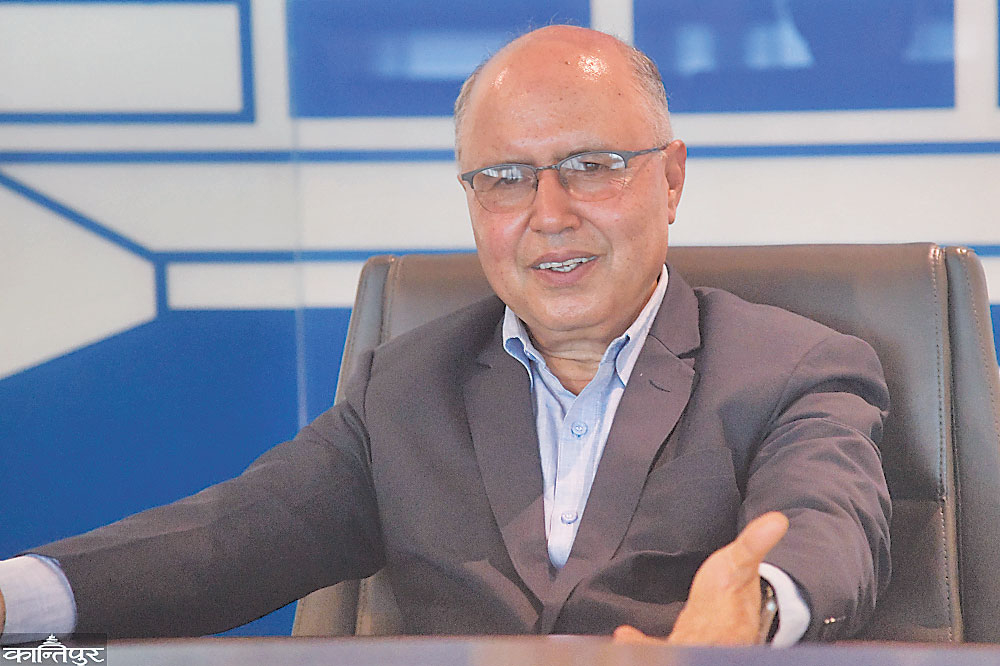 Rameshwar Khanal, Chairman, High Level Economic Reform Suggestion Commission
Why is the suggestion of grant to political parties from state funds?
There is a kind of general frustration in Nepal, the main reason for which is corruption. All party leaders have been questioned. It is common knowledge that they agree on corruption. The party wanted money rather than why the work of corruption was done together. Financial management of the parties was not correct.
It caused disgust among the citizens. That distaste is not only towards the party or the leader, but towards the system itself. Attacks on the system have increased. The main reason for this is political corruption. Unless political corruption is eradicated, it will be difficult to save democracy. If the achievements given by the constitution such as inclusiveness of federalism cannot be saved, the country will go to another conflict. That is why we have given such suggestions for political purification to save the parties. After the
, the reason for questioning the party and the leader is the current financial system of the party?
Unless the institutional capacity is strengthened, it is difficult for any organization to maintain its credibility. In a democracy, public institutions should be strengthened. There will be a change of government in 9/10 months and as soon as the government changes, there will be a trend of running secretaries, interest groups dominating various agencies, transfers and appointments due to money manipulation.
The main reason for this is that parties need money to cover their expenses. The trend of not winning the election continued until the next election was spent on huge sums of money. Thus, the proof of victory is seen by spending heavily. Because of that, the question of democracy itself started to arise. Poor and powerless people would neither come from proportionality nor dare to go directly. After the elections became expensive, the alliance of leaders and parties with some committee financial power increased. Honest people who have been in politics for a long time are getting tired.
Everyone knows that running a political party requires money. They are raising money from businessmen, from interest groups. It's killing the citizens. Those who provide financial support to parties and leaders get unwanted benefits from the government. Some take contracts. Someone increases the price of their product. They benefit in different ways. The burden is somehow on the part of the citizens. Some limited businessmen are gaining power. Don't let that happen. To prevent that from happening, the concept of giving financial subsidies to the party from taxpayers' money or government funds has been introduced.
The election has become very expensive, have you suggested to stop it?
Political party expenses required for operation. Another is election expenses. Extras were needed during elections. In the context of Nepal, the candidates enter the election competition by using their wealth. They would try to get their huge wealth back after putting it in the election. As they have to earn for that, many people join immoral work. One example of this is the indiscriminate spending of the constituency development program budget. There have been things like participating in getting contracts and asking for shares in an unauthorized manner. We have said that it should be stopped.
We have proposed that candidates should not be allowed to collect donations personally, candidates should not be allowed to use their property in the election. The main expenses incurred in the election are the candidates to convey their identity to the voters. For that, radio, TV, public meeting or any other means should be managed by the Election Commission.
That expenditure should be covered by the state fund. For that, the Commission will determine the specific means, place and time for the candidates. If there is a need for elections, voters should know the contestants and vote for the candidate of their choice. Now huge expenses are being spent to name the candidate. That was not right.
Then, should the state bear all the election expenses of the candidate?
is not complete. Part of that should be borne by the political party he is affiliated with. The party had to spend as prescribed in programs like Ghardailo. The only organization that collects donations is the party. The party should be audited by the Auditor General. The Constitution of Nepal has given that right. In that case, the accounts of the parties become transparent. Also, people who don't have money become a way to participate in elections. Participation in democracy increases. More inclusive. If that happens, democracy will not go under the control of money.
When the party starts getting subsidies from the state fund, doesn't its misuse increase?
Even if the government does not give money to the political parties, the burden is on the people. If an industry has donated a large amount of money, they are charging it by increasing the price. Political parties are discredited by indiscriminate collection of donations. Collecting random donations has been stopped, the money received will go directly to the party's account and after it will be checked by the Accountant General, the responsible party will be promoted.
According to your suggestion, how much money is estimated to go from the state fund?
We have not suggested how much the grant will be. There are 18 million voters in Nepal. 3 billion 600 million is needed after calculating the rate of 200 rupees. That too in a situation where all the voters voted. We specified 200 in the interim report. That amount is not huge for the state. Now, there is a load of more than 10 billion while raising random donations. Citizens have to bear the damage in one way or another. Now the cost to citizens is higher. 100% votes do not fall. It also reduces the liability of the state treasury. For
promotion, as far as taking TV and radio time or arranging public meetings, it seems to cost roughly 50-60 crores. Looking at the ratio of voting percentage and the estimated cost of campaigning, it seems that all the work will be done in 2.5 billion. This will reduce corruption. There is no need for party leaders to be favored by anyone or to bow down to anyone. There is no need to do political corruption for anyone.

