The faces of his wife Neera, son Nimesh, and three brothers Shammi, Shyam, and Praju, who have passed away, keep lingering in Rasik's mind. These days, he is physically exhausted - suffering from prostate cancer.
We use Google Cloud Translation Services. Google requires we provide the following disclaimer relating to use of this service:
This service may contain translations powered by Google. Google disclaims all warranties related to the translations, expressed or implied, including any warranties of accuracy, reliability, and any implied warranties of merchantability, fitness for a particular purpose, and noninfringement.
Those who know singer Ganesh Rasik (77) very closely say, "Life cruelly and unaccountably gave this Rasik, or taste connoisseur, four of the nine rasas." Those four rasas are - Compassion, Fury, Fear, and Horror.
The memories of the tangled threads of life that have passed keep attacking Rasik's psyche. He seems disturbed and restless these days. However, he has been tormented by separation throughout his life, enduring a series of family tragedies.
He was already consumed by those tragedies and the separation of his lost loved ones, when Kartik 2078 brought a great flood upon him. After 47 years of companionship, Mrs. Nira Sherchan also left for the great journey. After that, there was nothing left to lean on or hold onto. And, like the song 'O Shunyota' sung by himself, he almost became 'Zhunya O Shunya'.
Looking at Rasik's life path, it is clear that he has been walking with his feet on his feet all his life, just like the title of his own book, 'Jab Sisnuharu Tekda Hidhe'. The wounds after his relatives left him have not healed, but the memories of that series of separations have still come back to haunt him in the recent cold days. And, nowadays, he is only suffering from prostate cancer. He is in the fourth stage of Mahabyadhi cancer.
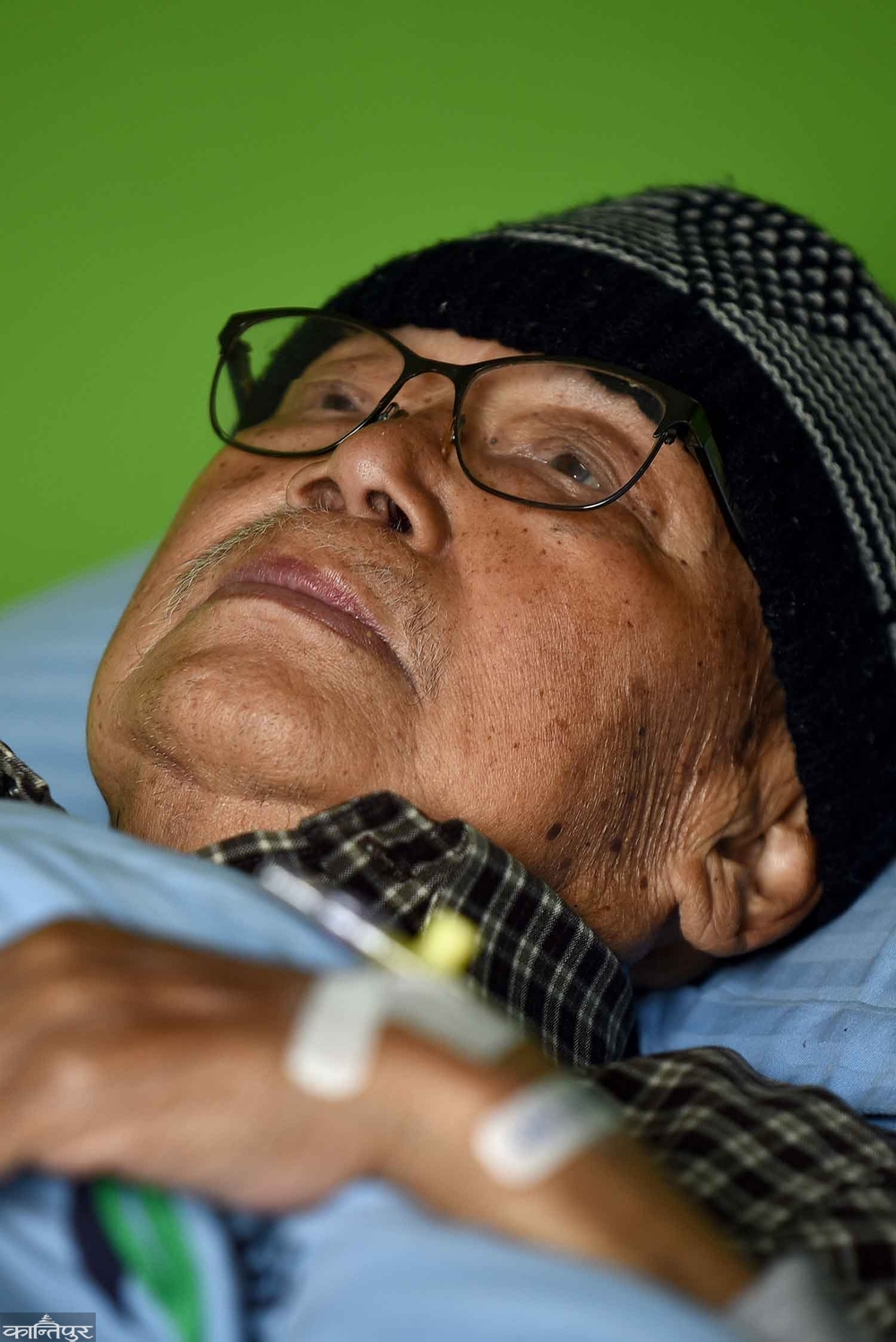
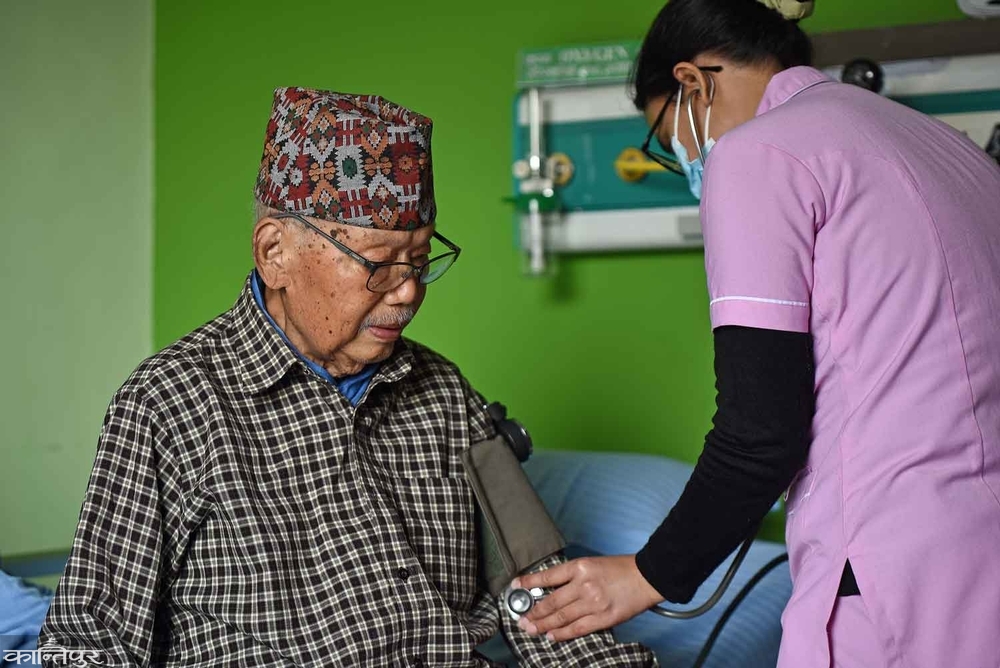
He is fighting cancer. Rasik, who reached Nepal Cancer Hospital Harisiddhi, Lalitpur for 'follow-up', said on Monday, 'Now I am very suffering brother! My legs hurt, my back hurts. I don't feel like doing anything. I always think about death, I keep having thoughts of death.' Rasik's days have completely changed after prostate cancer entered his body.
The previous regular chemo has now stopped, and he is having urinary problems. His daily routine now is to go to the cancer hospital, listen to the doctor's advice, go home, write some memoirs remembering friends and relatives when he is in a bad mood, take various medicines, look at the nearby fields and concrete city from the flower-covered balcony, and lie in bed.
The glow on his face is permanent. He looks chubby. However, he has lost 70 kg to 56. He says, 'I am sick from the inside, brother. Friends come and say, "You are not like a patient!"
...
Rasik, born in 2004 in Bhojpur, Chinamkhu, was in the 'Lekali' group 50 years ago - he used to wander from village to village singing songs. Raised in the Lahore culture, he is a multifaceted person who used to write/sing about Nepali sorrows, struggles and dreams in his songs. Deep sense of life, nature, loneliness are the content of his songs.
‘O Yangji Nana,’ ‘Nunjjot Bilne Zindagilai Dhakram Boker’, ‘Dherai Samjhe Khuha Ho’, ‘Hamro Gharbat Tamke Danda’, ‘O Shunyota’, ‘Gharbeti Nani Aanganima Deu Na Malai Bas’, ‘Nakhelnu Juwa Ra Tas’, ‘Rato Bhale Kwanya Kwanya’ are his timeless songs. ‘Kshitijlai Chun Khodda’ (story collection), ‘Rasikka Geetharu’ (song collection), ‘Akashgangako Otamuni’ (novel), ‘Dashgajama Ubbare’, ‘Jab Sisnuharu Tekdai Hide’, five books of ‘Perungo’ (memoirs) and others are Rasik’s published books.
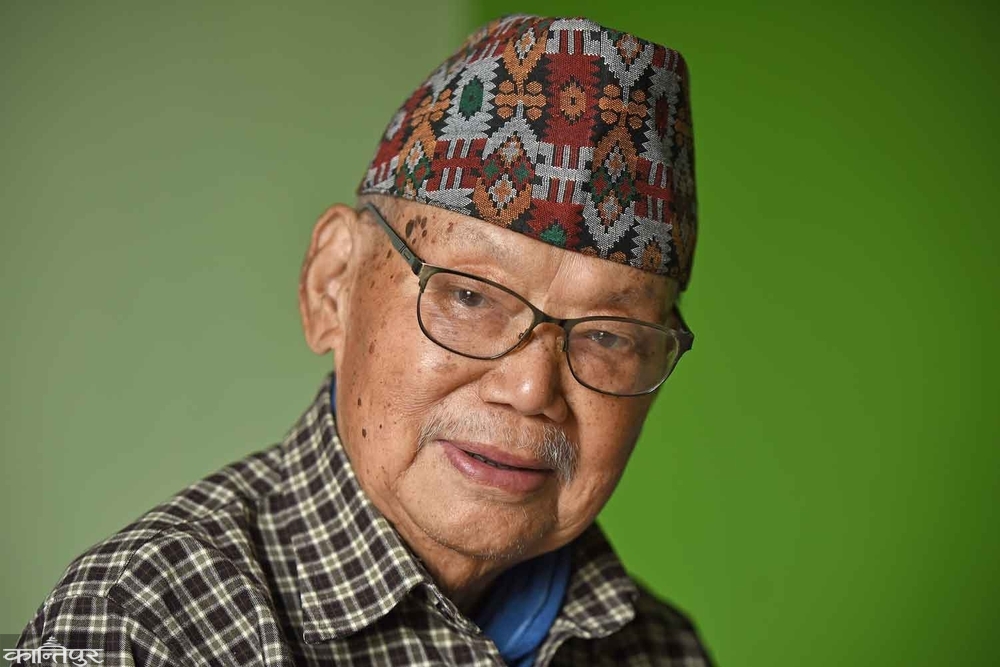
Before becoming ‘Lekali’, he was in the Ralpha group. He left after spending about 6 months in Ralpha. ‘Ralfa’s four friends, Manjul, Rayan, Ramesh and Norem, who were connected through music, had four different personalities except me – they didn’t get along with each other at all. That’s why Ralpha didn’t last long,’ said Rasik. Later, Rasik left Ralpha and started the ‘Lekali’ group with Hiranya Bhojpure.
...
One rainy day in mid-June, at his residence in Bhaktapur’s Balkot, Rasik recounted the memories of life’s separation, emptiness and family disintegration. His eyes filled with tears as he remembered them. Looking at the drops of water falling from the window, Rasik said, ‘This is also the fate of life and swans, as age increases, it falls like water and gradually fades away!’
In these days of intense pain from cancer, Rasik ponders over a single question, ‘They say – the lucky ones go to the afterlife soon, so am I the unlucky one who survived?’
Family members have gone on an endless journey that will never return. ‘I have survived because of their memories,’ says Rasik. To support him, he has a daughter-in-law, granddaughter, and daughter – Sirja Rai (Rasik), who now lives in the UK.
The faces of his three beloved brothers who left him keep wandering in Rasik’s mind – Shammi, Shyam, and Praju. ‘A young boy used to say, matching his voice with a bird – I too will become a great singer,’ he writes in his book ‘Standing at the Ten Feet’, remembering his brother Shammi. ‘The string of life he was playing was plucked without realizing it. He hanged himself in the attic of the house where he was born in the middle of the rainy season on 5 Asar 2040.’
Rasik reaches a state of despair from time to time. In the conversation, he often says – I think about death. ‘A few days before the death of a relative, the image of death kept coming to my dreams – even before the death of my wife, brother and son,’ he says, ‘Before my younger brother committed suicide in Bhojpur, in my dream, all the thatched roofs suddenly fell. My brother hanged himself on that roof.’
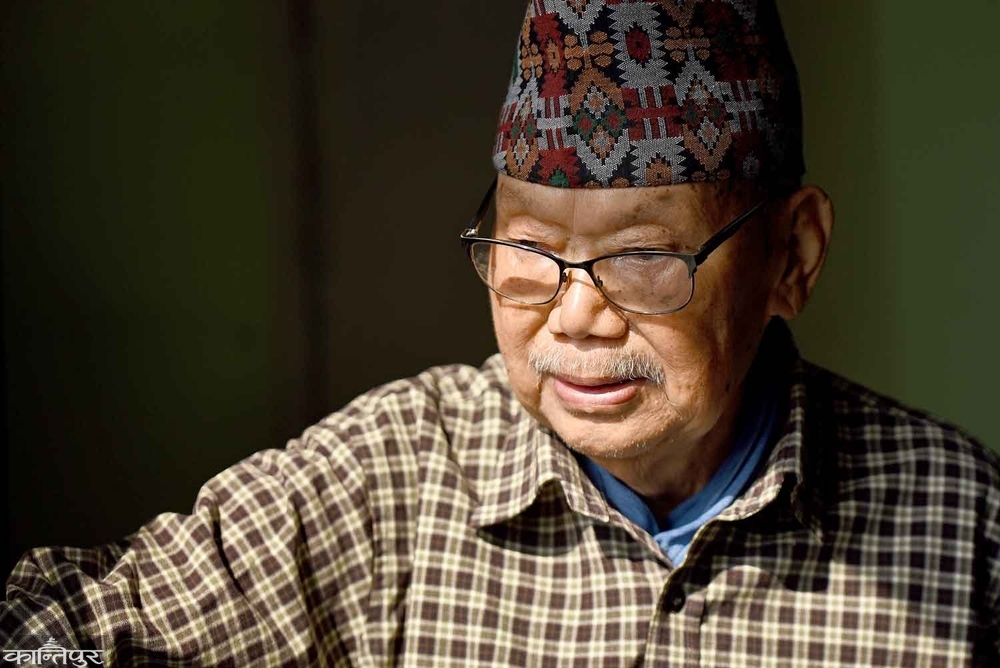
In memory of another brother Shyam, who passed away from this world after falling from the cliff of the Pikhuwa River in 2051, he writes, ‘A young man used to speak in poetry while pursuing his dream – I too will climb the Everest of life and leave. The young man, who was walking on the auspicious occasion of Vijayadashami, was hit by a kusait on the way. He could not even say, "Aiya Aama", and fell from the cliff and died.'
In memory of another brother, Police Inspector Praju, who died in a clash with the Maoists in 2060, he writes, 'A strong old man used to say to death - I was born for the country, I lived for the country, I died for the country. On the night covered by a storm, everyone survived, except him and one of his associates who became martyrs.'
Rasik was floating in the memory of those brothers, 'All of them died prematurely. They were - the three hearthstones of lineage, faith and love that I had raised on my shoulders.'
In Mangsir 2067, his son Nimesh also set out on a never-ending journey - while Fikkal was sleeping at his house in Ilam. 'I picked up the Sirak and looked. His head had fallen from the pillow to the floor. There were drops of blood drying on the floor. His forehead was wet, it was cold,' Rasik recalled the day his son walked. Rasik was shaking that day. His daughter-in-law Sushmita, granddaughter Ninisha and wife Nira, who was battling cancer, were by his side. Since then, he has been finding it difficult to stand on the ground. He recalls the loss of his son, 'I sent my son to St. Xavier's, he was absolutely brilliant. He was my friend. Shortly after I passed my share of land in his name, he fell, at the age of 32. An indelible scar was left on my heart.'
Rasik's wife Nira was diagnosed with breast cancer, and after battling it for 14 years, she was cured. But when Corona caught hold of him, she lost her battle with Corona, and Rasik's wife Nira also passed away in 2078. ‘After she suddenly left me, I became lonely, brother,’ Rasik said, ‘I am lonely, but the relatives who left me come to talk to me in my dreams.’
Rasik had also had a terrible dream when his wife, who was suffering from Corona, was admitted to the hospital. He saw in his dream that he was walking with his wife. He turned around and said – Oh! She had already reached the top of the mountain. ‘In my dream, I told her not to leave me, but she went – the path up the mountain. I cried a lot, I cried in my dream,’ Rasik said.
When he reached the hospital the next day, his wife’s hands and feet were swollen. He felt that his wife was gone, she had already gone. Within a few days of ‘walking the mountain path’ in his dream, his wife left this world. ‘I used to talk to my wife in my dream. But, it has been three or four months since I saw him in my dreams – it seems like a glimpse, whether it is real or not, the shape doesn’t come,’ says Rasik. The relatives left one after another. Rasik kept crying. ‘I can’t stop crying, I just sob. I cry inside. I cried a lot when my brothers, wife and son fell,’ he says.
...
Rasik says that he got this cancer as a gift because he had prostate problems, took it for granted, focused on work and work only and didn’t take care of his health. After being appointed to the Sangeet-Natya Academy, he believes that he did not get much attention for himself after the workload increased and the cancer spread throughout his body without him realizing it.
When his tenure at the Sangeet-Natya Academy ended, he went to Om Hospital. The team of Dr. Saroj Dhital and Amit Upadhyay announced that the prostate cancer was in the third stage. The doctors said, 'We need to operate soon', but the operation was done within a week. He took medicine for about 3 years.
Rasik went to Delhi for cancer treatment - Rajiv Gandhi Cancer Hospital. At that time, he was in the fourth stage of cancer. The hospital said - you will not recover now, go home and do what you want, be happy. He takes medicine that is not available in Nepal, medicine that lasts for 28 days costs 1 lakh rupees, which has to be ordered from India. 'They build cancer hospitals but our government cannot provide medicine,' he complains.
...
After a series of family accidents, Rasik became so devastated that he attempted 'suicide' two/three times - his wife saved him.
After financial crisis in his life, he lived in Ilam, alone in a house in a dilapidated tea garden where the ground is covered with fog. His wife lived in Kathmandu. During those terrible days of depression, he wrote a song while crying -
I want to die, time will not come
He could not walk with the stick of his dream
He could not do many of the things he had planned
He did not find anyone to whom he could express his feelings. And, the thought of ‘dying’ kept coming. And he called his wife and cried – ‘Nira! I really want to die. Should I commit suicide or what?’ On the other hand, Rasik’s ground was shaking, on the other hand, wife Nira’s whole world was shaking. She also left the house and cried – We are here, should you look at us or not?
After wife Nira cried, Rasik became calm – like the sun rising. He realized – what the hell was I thinking. Then he immediately came to Kathmandu. And, he did not stay alone. Then the harmonium started resounding in the house again. He started singing – Oh Yangji Nana.... ‘Music, songs and poetry killed my death wish. This song-music-poetry is a life-medicine, brother,' he says, 'If there is anything that can save me, it is music, which has freed me from my depression.'
Nowadays, Rasik never thinks of suicide, but rather wants to leave the world quietly, without pain and without letting anyone know. And he does not want to live long either. 'The more I live, the more my family worries. I feel like I am disturbing somewhere or the other. And, I feel like I will only live for a year or two. Now I am not in a position to write. I get tired of writing, I get tired of speaking,' he says.
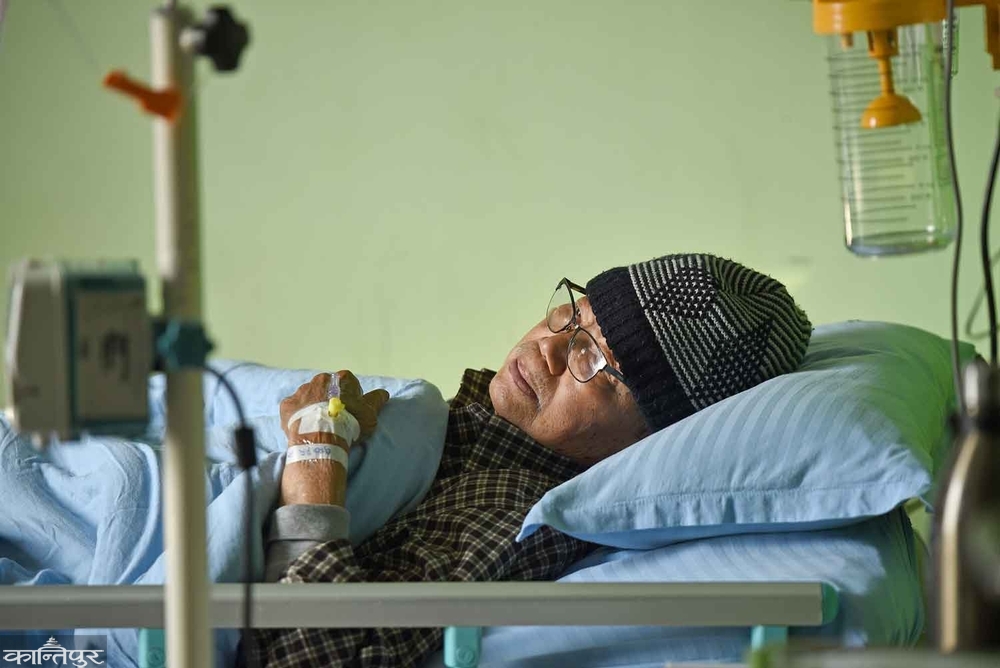
He feels that life is the 'energy of dreams'. How many dreams are fulfilled, how many are not. 'And the unfulfilled dreams probably wander like fog towards the place where they lived after death,' he sounds philosophical.
Rasik thinks – life is divided into many things, but instead, he has to focus on one thing. He tried to be a leader, a singer, a lyricist, a musician, a writer. ‘In particular, I have been unstable throughout my life. Only stable when writing and making music,’ he says.
...
Rasik’s adolescence was spent wandering around Dharan, Okhaldhunga and Bhojpur. At the end of his adolescence, he wandered from Biratnagar to Kathmandu – sang many songs, became the general manager of Ratna Recordings to the National Theatre. His heart did not settle in this city, then he reached Fikkal in Ilam – he did politics there, ran Radio Fikkal FM and spent a long time. Now he is living a boring old age with cancer in this concrete Kathmandu.
Rasik’s grandfather Harkaraj Rai was a captain of the British Navy, who fought in the First World War. It was not possible to study in the mountains, so Rasik's grandfather sent his father Narottam Rai to Darjeeling to study. After the Second World War, his grandfather resigned from the Paltan and returned to the country and joined the revolution of 2007.
In the company of Surya Bikram Gyawali and Dharanidhar Koirala, his father Narottam had built a library in the village. There was a Shakespeare series. Later, it was destroyed, and his father also passed away. His father used to sing and write songs. Rasik still hums the folk songs of Darjeeling that he heard from him from time to time-
Nepti-Chepti Darjeeling is like
Jhili and Mili Electric Light is like Indraipur...
...
It has been many years since Rasik left the Pikhuwa River that flows through Bhojpur, but the Pikhuwa River keeps coming to his mind. Those days when he built a sand house with his brothers in the river still come to mind. When he was a child, he had eaten a forest feast on the banks of that river many times. Once, his mother was also there, and a chicken slipped from Rasik's hand. It went into the bushes and disappeared. He ate the porridge indiscriminately. After the 'feast' of the forest feast was gone, he returned home after eating vegetables and rice.
In this bustling city, he wondered - where did the friends who used to swim and cover their bodies in the Pikhuwa river to fish? Where did the friends and villagers go? 'Ah! How beautiful those days were. I think, this life is also like a sand house built on the banks of that river, which will collapse. The Pikhuwa is still flowing, at what point does life stop flowing...!' He kept on sobbing as if the Pikhuwa was sobbing.
Rasik's mother Ratnamaya Rai also died of cancer, so the pain of not being able to spend much time with her sometimes turns into a flashback. 'I miss my mother a lot,' Rasik, who has become a child, suddenly sighed.
...
Rasik feels that in reality, one should know how to live life, by one's own nature. He has a self-awareness - sometimes I am introverted, sometimes self-centered. When he thinks about the path he has walked, he feels, 'When I was a wife, I was in huge debt, I had no job. Yesterday there was scarcity, now there is material happiness, but there is no family happiness. I have been cheated somewhere or the other.' He adds, 'There is one sadness - I was away from my mother when I was young, now I am away from everyone.'
Rasik no longer has any special desires. However, if his health supports him (in his words, from his deathbed), he wants to write - letters to some close friends, wife, and family members. What will he write in a letter to his wife? ‘I will write – for my wife that I could not be an honest husband, I failed somewhere when I was not with her.’ And, he wants – that letter to come in the form of a book.
Rasik loves life but says, ‘Now there is a limit to life. How much can I love? The more I love, the more pain it causes.’ He feels – life is like a dream, it passes very quickly and death is a reality, its function is to disappear and cause pain to those who live.
He repeated the same thing over and over in a long conversation. He kept saying – I will leave within a year or two. He also has another wish. It is like this, ‘After I die, don’t keep me in that courtyard of the academy as a fly, don’t let me take selfies on my body. Take my body anonymously. Take it to Aryaghat and don’t put it in the machine. If possible, take my ashes to Bhojpur and bury them – along with the graves of my wife and son.’
While being an emotional listener to his last wish, this poet was praying – let a miracle happen! Such a miracle that Rasik recovers completely. And, let him continue composing new songs by playing the harmonium.

