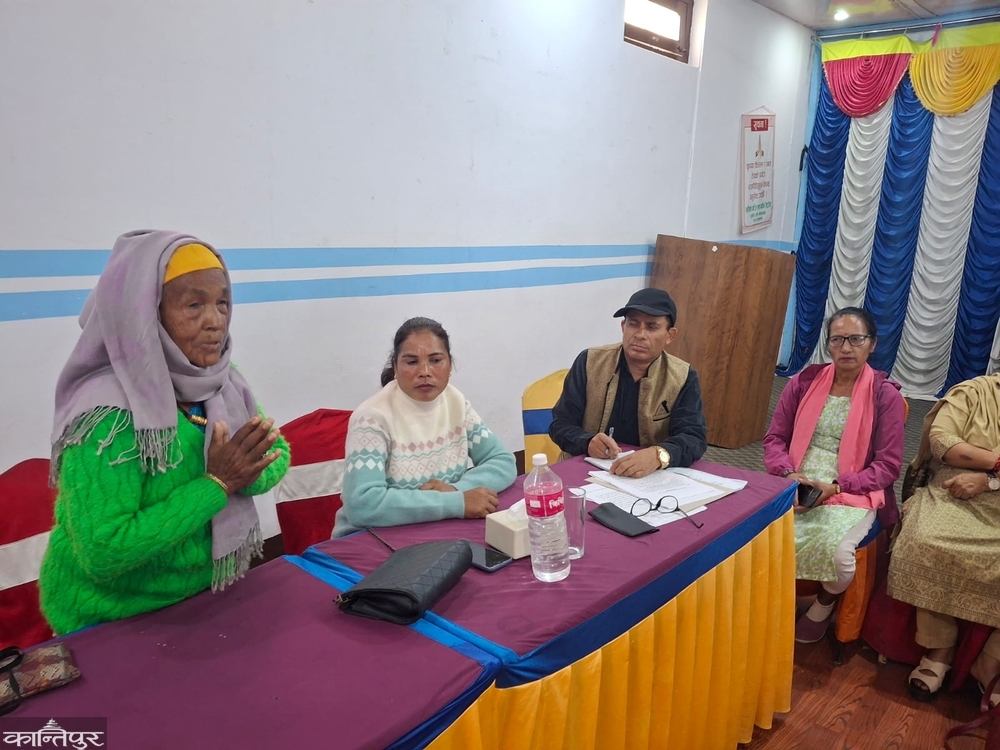
It is difficult for women who have lost their husbands to get medical treatment for amputations during the conflict and to raise children
We use Google Cloud Translation Services. Google requires we provide the following disclaimer relating to use of this service:
This service may contain translations powered by Google. Google disclaims all warranties related to the translations, expressed or implied, including any warranties of accuracy, reliability, and any implied warranties of merchantability, fitness for a particular purpose, and noninfringement.
It has been 22 years since Maila son of 70-year-old Chandrakala Adhikari of Kohalpur-5 in Banke went missing. But she has not given up hope that her son will come back. She says, "But while I was hoping, it was time to die."
Mayla son of Chandrakala was taken away by the army on 14 Baisakh 2059 . At that time, the age of the son was 29 years. Chandrakala went to the police to find her son, the king of the army reached the Chisapani barracks. But not found.
She hasn't received any news about her son yet. Chandrakala claims that the army took away his son, who was farming by raising chickens and buffaloes at home. The army beat and injured his eldest son. He is still taking medicine.
The husband of Pavitra Sunar of Baijnath-4, Baniabhar was taken away by the then rebel Maoists on 29th June 2061. Later, the husband's body was found. "What was the fault, why was it taken away, we still don't know anything," Pavitra said. According to her, her husband used to run a branch, Pavitra had a tea shop.
Pavitra became single at the age of 37. He had to raise one son and three daughters alone. She also went abroad for employment for her children. After returning to Nepal, she raised her children washing the dishes of other people's houses.
The suffering of Kali Pariyar living in the squatter village of Kohalpur is also the same. She has been restless since hearing that her husband disappeared in 2061. She has not received any news about her husband's condition. In the meantime, she became so weak that she could not even walk on her own, she needed the help of crutches.
Being a neurological patient, he spends 8-9 thousand rupees a month on medicine . Kali brought up a son and a daughter with great sorrow. "There is no big demand from the government, it is enough if at least free medicine is given to apply ointment to the amputated body . Those who die will die,' she said, 'There is no one to earn at home, there is no support from the government. It would have been easier to run the family if one person in the house had been arranged for employment.'
Ram Ratan Chaudhary of Raptisonari-4 in Banke also cannot walk without the help of crutches. During the armed conflict, both of his legs were broken when he was abducted and beaten by the then rebel side. At that time Chaudhary was working in technical service in the local body . But now he can't do any work . He said that on February 3, 2057, his father was beaten and killed by the rebels.
"I was brutally tortured and thrown to death for no reason," Chaudhary said, "I can walk a little with the help of crutches." There is no money for medical treatment . It would have been a big relief if at least free medical treatment was arranged.'
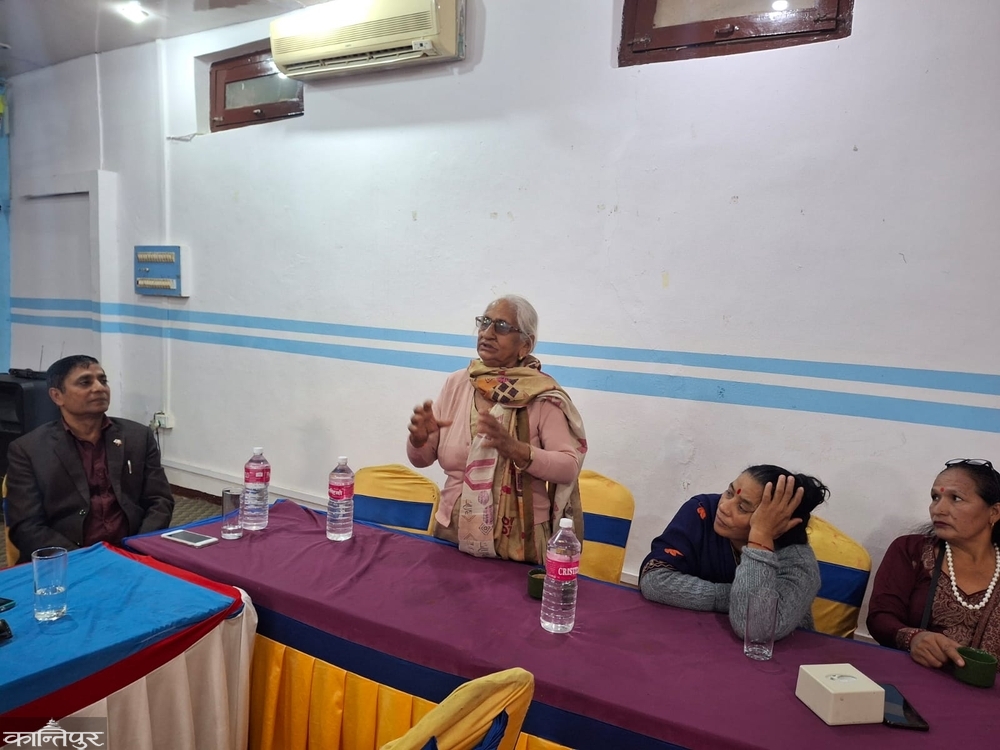
Choudhary also said that conflict victims should be given priority in government offices and tax exemptions should be arranged. He added, 'Free education should be arranged for our children up to higher education, unsecured loans should be arranged for the conflict victims who are willing to do any profession.' Chandrakala Upreti, president of Banke National Network of Conflict-Afflicted Women, says that the Disappearance Investigation and Truth-Declaration Commission should be victim-friendly.
During the armed conflict, the victim's husband was made missing by the state. She waited for her husband for 21 years. Just one year ago, she made Kush's body and cremated her husband. "The cremation has been done, but the fight with the state to get justice continues," Upreti said, "Some of the victims and witnesses have died. When will we get justice?" The Disappearance Investigation and Truth Commission has only done the work of collecting complaints. According to the interests of the conflict victims and the international community and the order given by the Supreme Court, the law on both commissions has been amended recently. After the amendment of the law, the process of filling the posts in both the commissions has also progressed .
Rights activist Prakash Upadhyay says that the commission should select a person who prioritizes the justice of the victims. "The commission will be effective only if we can bring in people who are active in the field of transitional justice, who understand the subject and can understand the feelings of the victims," he said.
Advocate Vasant Gautam said that the victim suffered more because the judicial treatment from the state could not be done quickly and efficiently. He said that after the amendment of the law, there is hope for justice for the conflict victims.