We use Google Cloud Translation Services. Google requires we provide the following disclaimer relating to use of this service:
This service may contain translations powered by Google. Google disclaims all warranties related to the translations, expressed or implied, including any warranties of accuracy, reliability, and any implied warranties of merchantability, fitness for a particular purpose, and noninfringement.
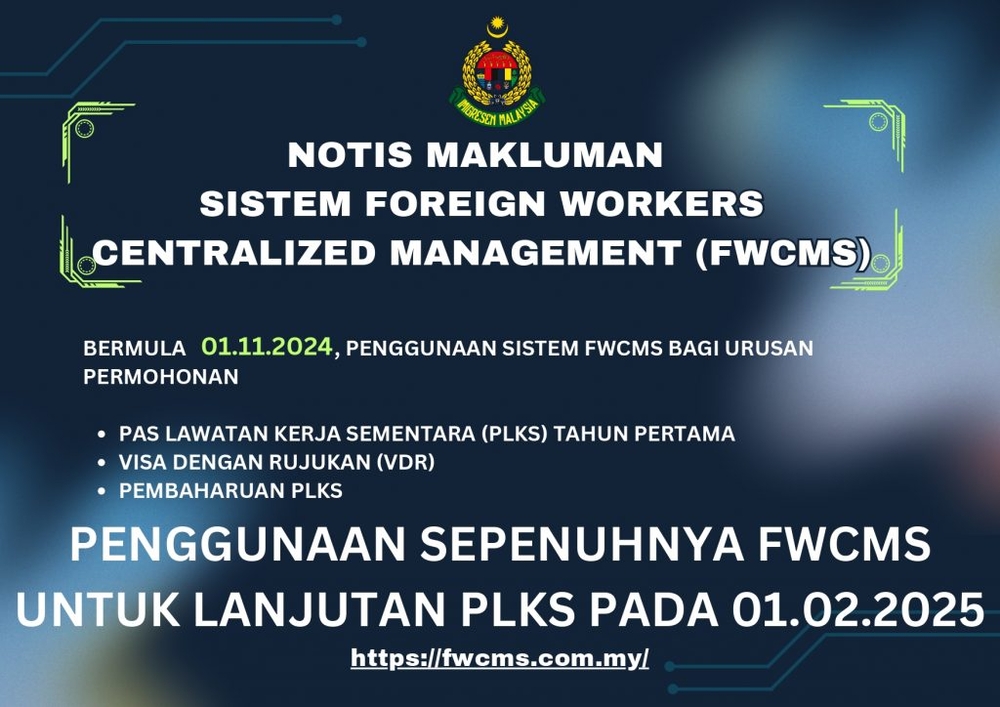
Malaysia has said that the Foreign Workers Central Management System (FWCAMS), which has been implemented for a decade, has been continued to organize the recruitment process of migrant workers including Nepal.
The Ministry of Home Affairs of Malaysia issued a notice on Monday and said that the FWCMS has been renewed since the 16th of Kartik (November 1). Malaysia has issued a notice to advance the recruitment process of workers according to this system.
Malaysia has stopped issuing visas for new foreign workers since June 1st after more than the quota set aside for foreign workers. It was decided to take foreign workers to the plantation (palm oil), garment, jewelry and barber sectors only last October. Nepalese people visit this area very little. In the plantation sector, the process of recruitment of new workers in small numbers has progressed.
Employers should use this system for calling visas (VDR) and temporary worker visas. Employers can apply for temporary work visas only after obtaining a calling visa. Calling visas are issued to workers who have passed the health examination. Since 2072, 36 health examination institutions have been added to FWCMS from Nepal to ensure quality health examination (biomedical) of workers going to Malaysia. The writ filed in the Supreme Court on 32nd July 2072 was dismissed by the bench of Judge Sapna Pradhan Malla and Nahkul Subedi in 2079, saying that the health institutions that did not meet the selection criteria of FWCMS were monopolies.
According to the labor agreement signed between Nepal and Malaysia in 2075, the employer has to bear all the fees for using the Malaysian system used in the recruitment process of workers. It is mentioned that the 6500 rupees fee paid by the employer to the health examination organization for the health examination of the workers in Nepal must be submitted in the first month.
Malaysian Acting Ambassador to Nepal Mohammad Firdoss Azam said that the partnership with Nepal has been successful in ensuring quality health examination of Nepalese workers coming for employment in their country.
In order to ensure the quality health examination of the workers, the destination countries have been choosing health institutions that have met international health standards. In which 36 by Malaysia, 19 by Saudi, Bahrain, Oman and Kuwait (Gamka), and one by Qatar, four by Korea.
It has been suggested that a 30-member high-level team consisting of experts under the leadership of Additional Secretary of the Ministry of Health, Dipendra Raman Singh, should study and suggest the health examination of Nepalis who have gone abroad for employment and bring all the listed health institutions to international standards.