Criticism of the government when the decision to give leave to employees and customers after reaching the office was made public
We use Google Cloud Translation Services. Google requires we provide the following disclaimer relating to use of this service:
This service may contain translations powered by Google. Google disclaims all warranties related to the translations, expressed or implied, including any warranties of accuracy, reliability, and any implied warranties of merchantability, fitness for a particular purpose, and noninfringement.
As usual on Monday, the government employees were reaching the office around 10 o'clock, the service users had also reached the windows and doors of the government office. Children's education had already started in school. Employees of banks and financial institutions had also reached the office. But around 10 o'clock, the news spread, "On the death of former Speaker Damannath Dhungana, the government has decided to give a public holiday on Monday."
Dhungana died at 1.30 pm on Sunday, the decision to give leave was made only around 10 am on Monday. This decision not only displayed the careless style of the government, in whose honor the holiday was given, but also left well-wishers feeling uneasy. The government has also been criticized on social media for saying that 'leaves were announced after the employees reached the office'.
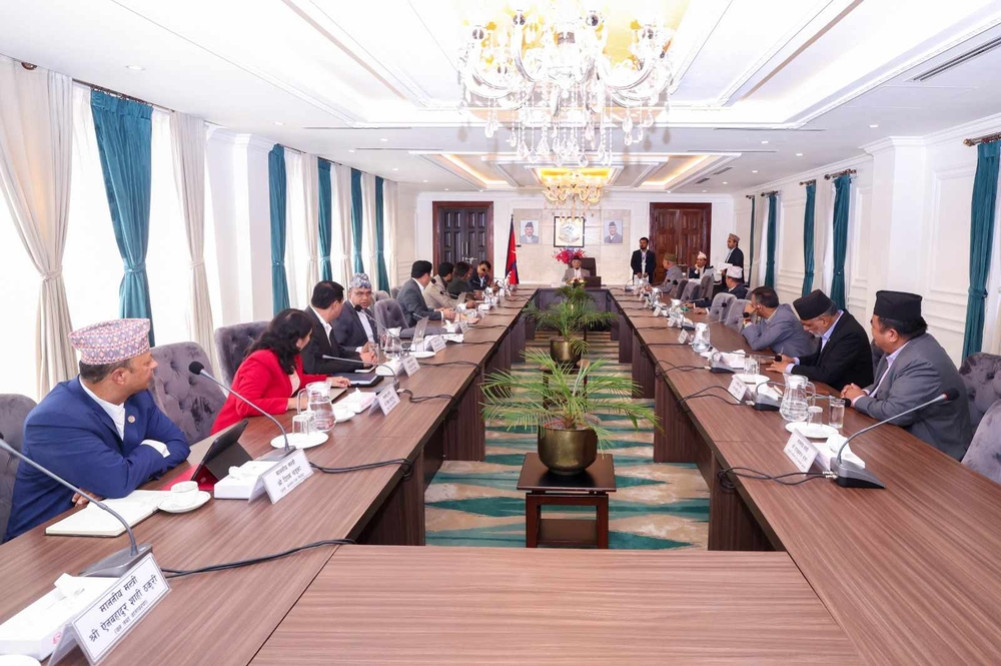
 Dhungana, who was the Speaker of the House of Representatives from 2048 to 2051, died at the age of 83 on Sunday afternoon. The decision of the government to offer condolence and leave on his death was made by the Council of Ministers that met on Monday morning. The cabinet meeting held in the morning at the Prime Minister's residence, Baluwatar, expressed grief over the death of Dhungana and decided to hold a funeral with 'national honors' and a public holiday for one day.
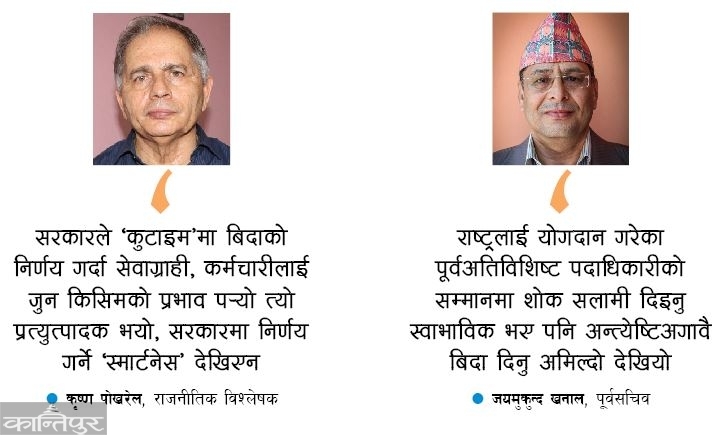
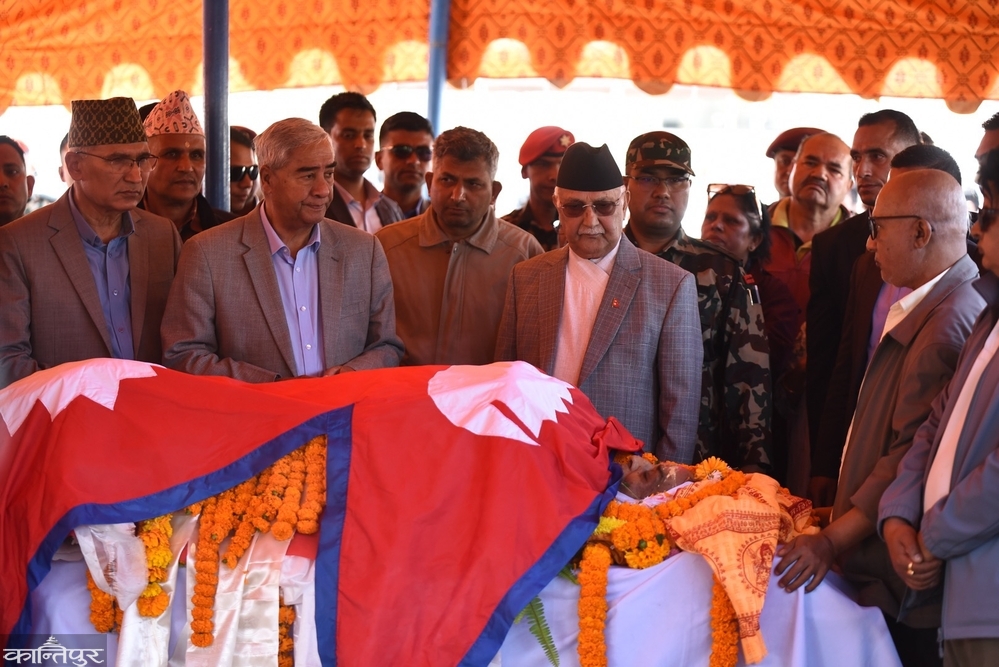 When a funeral is held with national honours, it is customary for a squad under the command of the police or an armed police inspector to give a 'mourning salute', although the government has conducted the funeral with a salute from a military unit. While former speaker Dhungana himself was living a simple life without taking government facilities. He was opposing the misuse of state resources under the guise of power and strength. Professor of Political Science Krishna Pokharel says that although former speaker Dhungana was given a condolence salute and a public holiday as a contribution to the nation in the past, the government's failure to take a timely decision has increased the negative response. The decision made by the government out of respect seemed to be an insult. It would have been better if they had given a holiday on Tuesday or if they had decided on Sunday. The work of the government was not consistent," he said.
Pokharel says that there is a problem with the fact that public holidays are made predictable by making standards and making decisions by the Council of Ministers in a special way. Dhungana has been honored for his role in the development of Nepal's parliamentary democracy, human rights and peacekeeping. However, when making such decisions, it was seen that the government should make decisions on time. The credit that the government tried to take became counterproductive, he says.
Former Secretary Jaimukund Khanal said that it is natural to give a condolence salute in honor of a former special official who contributed to the national life, but in the case of Dhungana, the matter of giving a condolence leave before the funeral is a little inconsistent. Such leave is given to mourn the deceased person. As Dhungana's funeral will take place on Monday, it would have been better if we had taken a day off on Tuesday," said Khanal. "When we decided to take a day off on Monday morning, the work schedule of a person who had already gone to work was also damaged and it was also affected financially."
Professor Pokharel says that the government should exercise discretion while giving leave and honors and should also consider the feelings of the people. "When the government decided to give leave to express respect in 'Kusamay', the kind of impact it had on the service users and employees was productive," he said.
2080 On the death of Sita Dahal, the wife of the then Prime Minister Pushpa Kamal Dahal, the Cabinet decided to bury her with national honours. Accordingly, a military detachment including army officers gave a condolence salute. When Ram Raja Prasad Singh, who had fought for the Republic during the Panchayat period, died on 27 August 2069, the government conducted his funeral with state honors with a military salute of 13 guns. The decision to award the honor was made by Baburam Bhattarai's cabinet. Singh was the presidential candidate on behalf of the Maoists in the first Constituent Assembly. The funeral of the then tourism minister Ravindra Adhikari, who died in a helicopter accident on February 15, 2075, was also held with state honours.
The government was criticized around 2066 when it was decided to funeral with state honors only for the death of the prime minister after 2047 according to the criteria made by the government. Former Panchayat Prime Minister Kirtinidhi Bista used to express his displeasure with the government's decision and say to his close friends, "After my death, I will have a funeral without making a fuss". Bista passed away on October 25, 2074, within a few hours the family cremated at Pashupati Aryaghat.
On 31st July 2070, the funeral of former Prime Minister Marichmansingh Shrestha was also held without official honors. The government had decided to pay 'national honour' and send a squad of police to salute him instead of state honours. However, the family and well-wishers who went to Malami boycotted the police salute.
It is mentioned in the criteria issued by the government itself in March 2066 that the decision on the death of incumbent and ex-officers, 'what kind of mourning honor should be given to the person of which position'. In the said standard, it is mentioned that in case of the death of the sitting President, Vice President, Prime Minister, Chief Justice and Speaker of the Assembly, 21 guns will be given to the President, 19 guns to the Vice President and Prime Minister and 17 guns to the Chief Justice and Speaker of the Assembly.
It is mentioned that the former president will be buried with a 15-gun military salute, the former vice-president and the former prime minister since 2047 Baisakh 1 with a 13-gun salute. If an army unit gives a salute with a cannon, it will be a state honor. According to the current standards, the state honor will be given only to the top 6 highly specialized positions including the current vice president, then the former president and vice president and the prime minister since 2047. However, this standard has not been followed by the recent decision of the government,' says an official of the Ministry of Home Affairs.
'Government should reduce holidays by giving importance to service users'
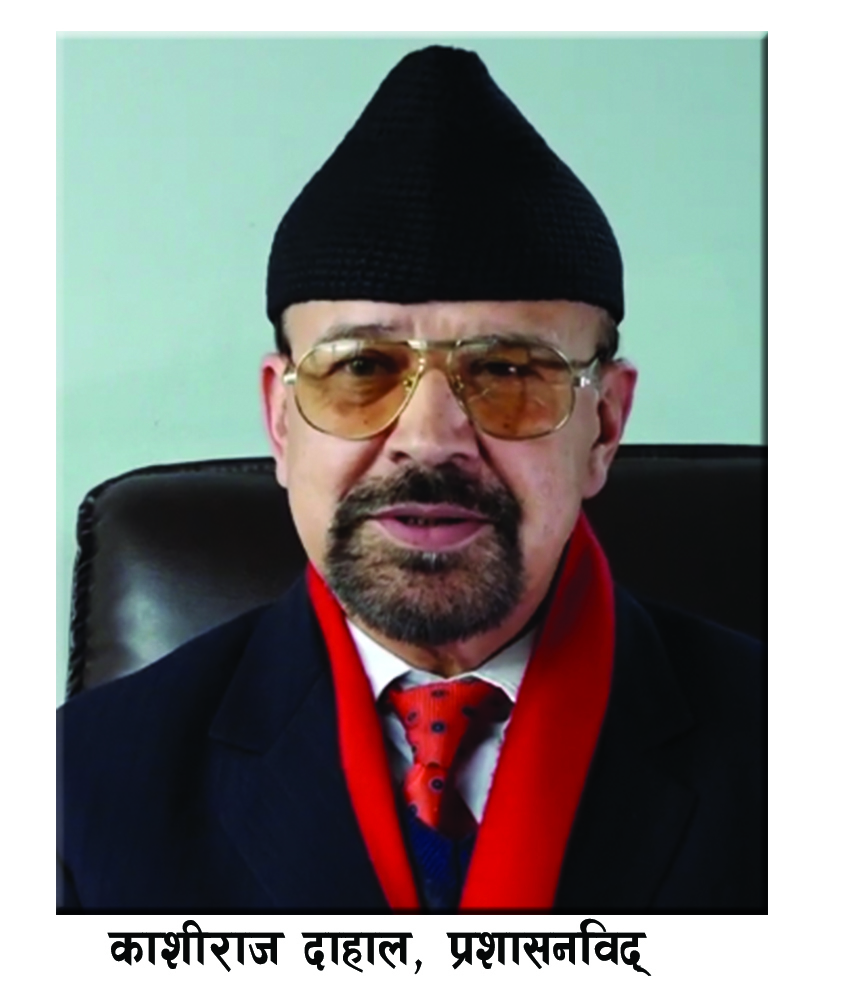
The government decided to give a holiday on Monday to mourn the death of former Speaker Damannath Dhungana. By the time the cabinet decided, the employees had reached the office, the customers had sat in the queue, the students had reached the school. How do you see not announcing the mourning period for his death yesterday afternoon?
It is fitting that the holiday was given in honor of the personality. It is appropriate to give a holiday in memory of his contribution. But after reaching the staff office, some of them have already appeared, all of them have felt that something is wrong because they have reached the customer office. If the Ministry of Home Affairs had announced the holiday on Sunday itself, the message of its dignity and dignity would have been known. Monday's incident showed that the government could not make a decision at the right time.
What are the provisions regarding what kind of honor and leave are given in the death of which person? Or is it not possible to make a predictable arrangement regarding this by making a law? Even if the
law is not made, the government can make a standard that the death of these people in public office will be honored in this way. After the law is passed, if it needs to be amended, it has to be brought to the parliament and the process is long. So it is right when the Cabinet makes a standard.
In that, the state gives respect to such people and the government should also have the right to increase or decrease it at the appropriate time.
s are sometimes people who have made significant contributions to national life. Let's assume for a moment, if a young person climbs the mountain and dies on the way back, the government can give leave if it is not written in the standards. If a player wins the World Cup, he can give a public holiday, if there is no such provision, then there should be a provision that can be added. If standards are made, the rule of law can be easily promoted.
The government currently declares such holidays based on which legal basis?
The executive vested in the government is to declare a holiday by using inherent powers. It is mentioned in the constitution that the Council of Ministers has the right to conduct and direct the general administration, and because it has inherent authority to conduct the daily administration, the Council of Ministers makes decisions using that.
Nepal is also a country that gives many holidays. Is public holiday not administratively and financially harmful to the country?
In the administration reform report, I suggested that many vacations should be cut for the president. It is beneficial because the government will save fuel and other expenses due to holidays. But the state should look from the customer's point of view. Some people have already bought tickets to get services from the state. How much to go out, some need to get recommendations from different levels immediately. In this case, holidays are a problem.
Nepal is also a country that gives many holidays. Work should be done for 8 hours. We didn't have any work at that time either. It is only present. We must work in a way that produces results. It is not good for the employees to be too confused during work time with chatter, tea party, lunch. He must have worked during office hours. The law itself says that government service, civil service employees should work 24 hours a day. But leave tends to be used as a right. We should go on the principle that leave is not a right, but a privilege.
What do you think of the style shown by the government when it gave leave on the death of Dhungana? What should be done to prevent such incidents from happening again in the future?
The government could not make a decision on time. There are so many channels of information flow, they should be used. People who have to go to the office from far away will not have to go to the office if they are to be respected and informed in a timely manner. The customer will also not suffer. Learning from today's incident, the government should issue timely decisions and notifications in the coming days. Next, it is necessary to create criteria for what kind of people the government will honor.