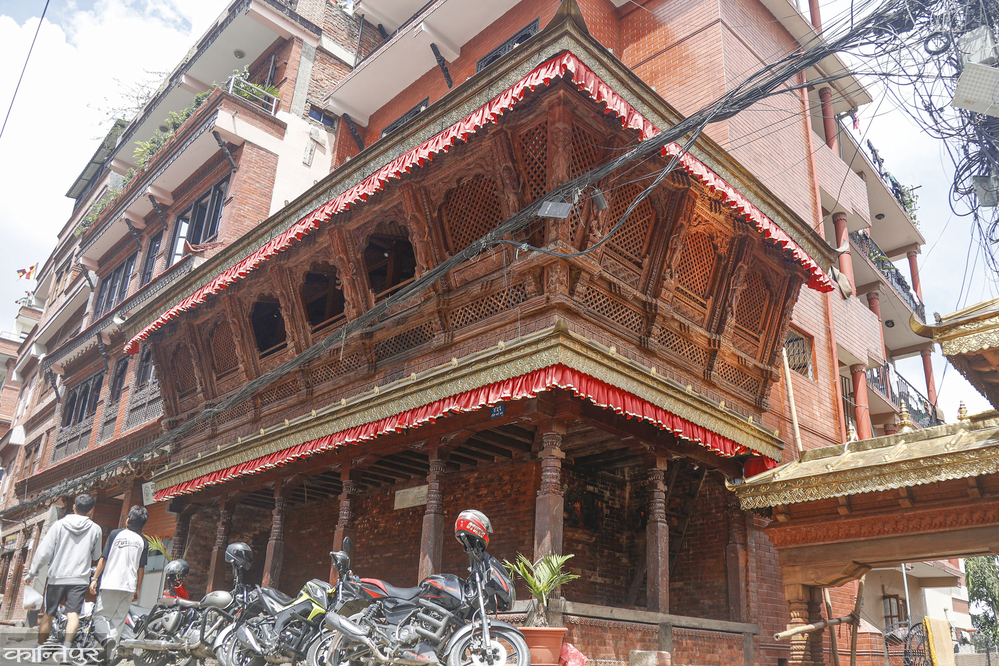
A falha costs 30 to 35 lakhs
We use Google Cloud Translation Services. Google requires we provide the following disclaimer relating to use of this service:
This service may contain translations powered by Google. Google disclaims all warranties related to the translations, expressed or implied, including any warranties of accuracy, reliability, and any implied warranties of merchantability, fitness for a particular purpose, and noninfringement.
45-year-old Kamal Bahadur Magar of Sindhupalchok was sitting on the bus stop near Ratnapark. He came to Kathmandu just five days ago to visit his relatives who are being treated at Veer Hospital.
Kamal returned to Kathmandu many times. Veer visited the hospital many times. Each time he was fed up with the haphazard urbanization of Kathmandu. Hard to find a place to stay for a while. Dust and smoke are the same. But when he comes to Kathmandu this time, Kamal is shocked to see the attractive falchas made in Ratnapark and other places.
'What a nice place to stay, where can I go in the sun like Tantlapur in the afternoon? "I am sitting here feeling cold," he said. Kamal says that passengers like him are very comfortable because of Falcha. In Falcha, which is becoming a
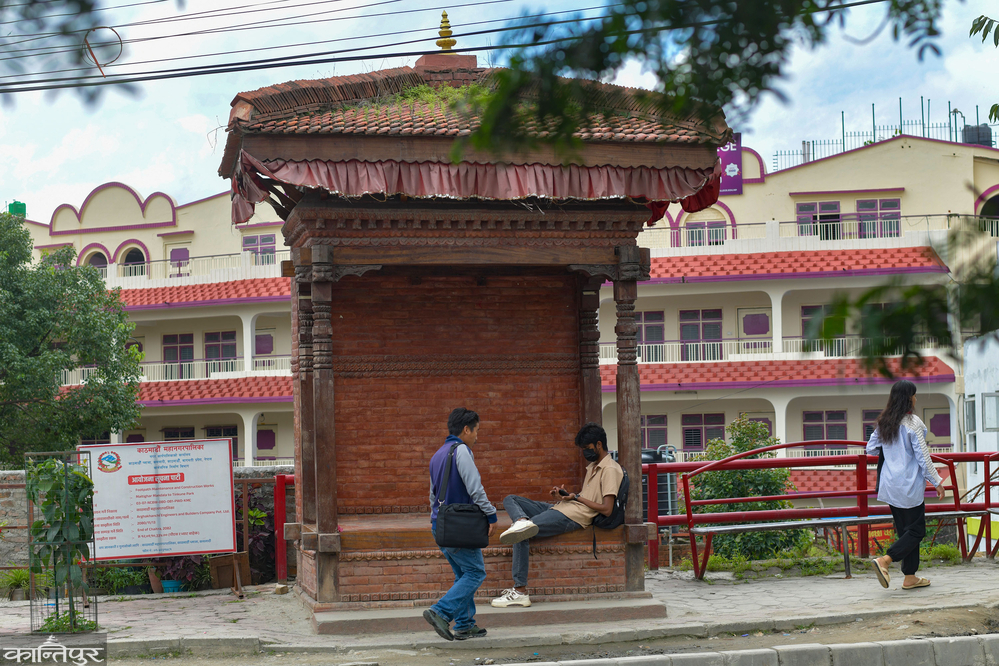
, people have been sitting down or bringing their own shoes to relieve their fatigue. Ved Bahadur Timalsina was one of the passengers waiting for the bus with an umbrella in hand. He said that among the new changes in the city, Falcha reflects the original style and the city looks attractive. 66-year-old Ved Bahadur Falcha feels nostalgic. "Seeing this, it reminded me of the old houses and temples of our time," he said.
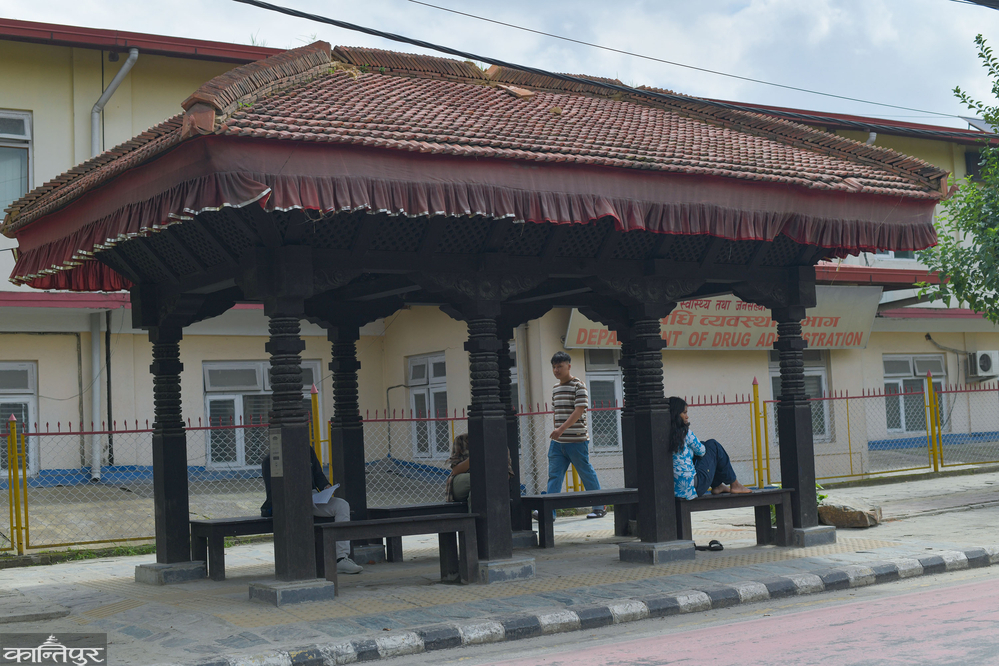
He says that other local levels should also make similar facilities. "It would be good for everyone if there was a place where art and culture can be reflected in every place and where you can relax," he says.
The attractive falchas created by the metropolis have attracted the hearts of the youth as well. Savina Tamang, a class 12 student, was sitting on the couch and using her mobile phone. She was very happy that she didn't have to bask in the hot sun while waiting for the bus. At first, we had to wait for the bus, sometimes in the hot sun and sometimes in the rain. How difficult it was, what a joy it is now,' she said, 'even if the car comes late, it doesn't matter.'
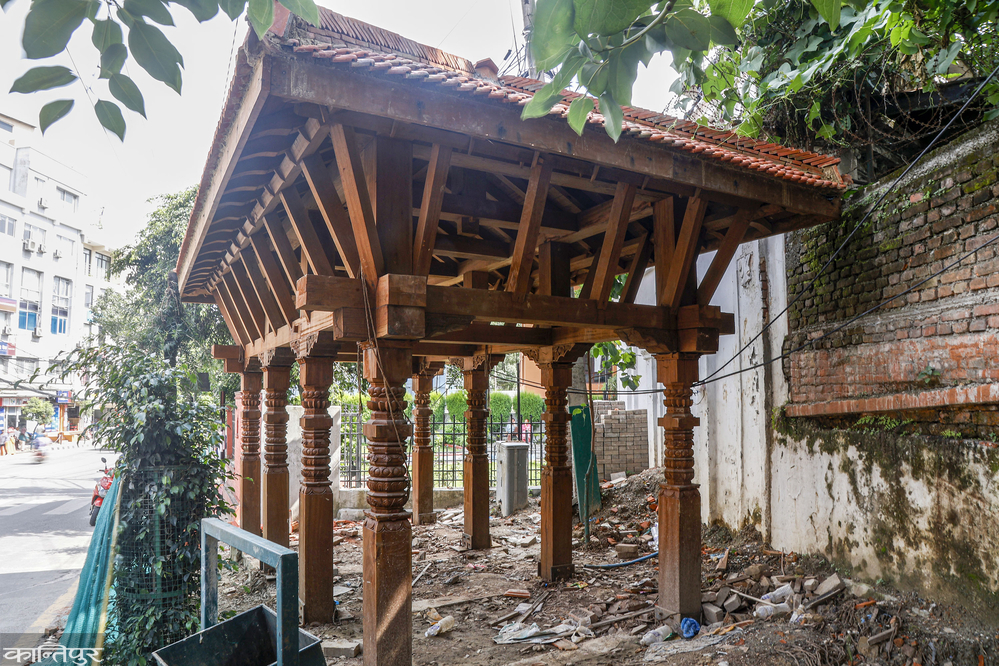
Similarly, as soon as it rained, 45-year-old Bhimrani Ghale said that even though she had no money, she had to go to a restaurant on the pretext of drinking tea. She said that she has been living in Kathmandu for the past 20 years and said that it was a big relief because of Falcha. "Until now, I have never seen such a comfortable and good place to live," she said, "It is being built, how much better it will be after it is built." At first, there was tension about where to go after it rained. Now that it is done, it will be very easy.'
According to cultural experts, the falchas are connected with tradition and culture. With urbanization, these falchas gradually disappeared. Whether they are young or senior citizen, they spend the day by gathering in Falcha. In the old settlements of Kathmandu Valley, Dafa Bhajankirtan is also performed along with Basibiyanlo in Falcha. Not only such a collective decision, in some places religious Jatra festival as well as astrologers also observe Sait.
Kathmandu Metropolitan City has recently intensified the construction and reconstruction of traditional falchas from the bus stand to the inner areas of the city with the aim of promoting the original heritage and culture. The Metropolitan Corporation has planned to construct falchas in 50 different locations. According to Rabindra Rizal, senior engineer of Kathmandu metropolis, the cost is determined by looking at the length and space of the wood. According to him, the cost of one bus stop is around 30 to 35 lakhs.
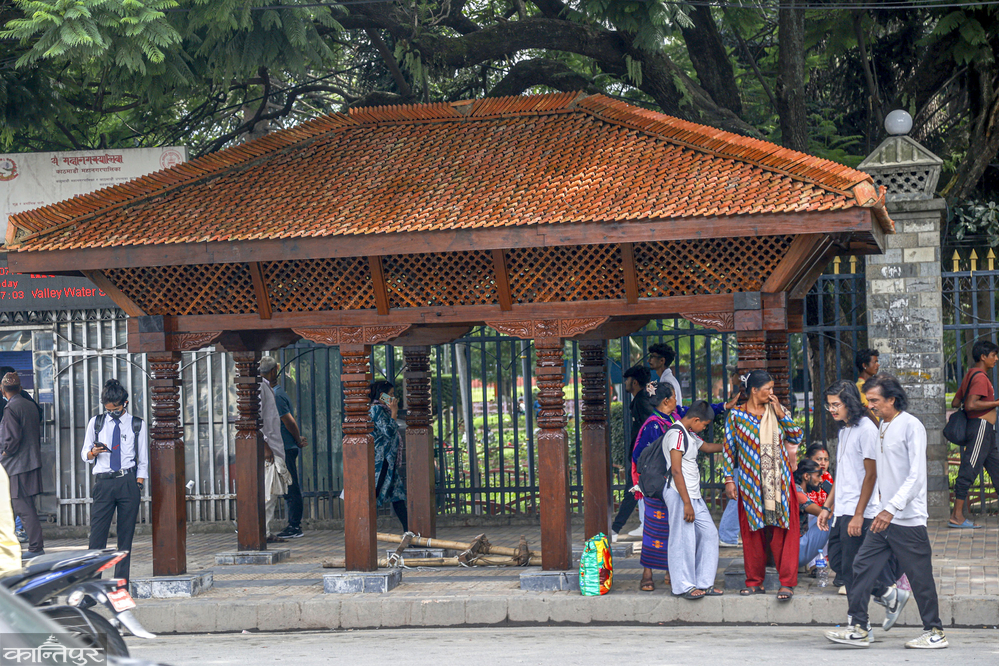
Rizal says that Falcha was built to make passengers feel comfortable, reflecting the old traditional construction art. "Falcha's design is good as it reflects old art and tradition, is environmentally friendly and comfortable for passengers, other passengers can come and go from the middle without disturbing the road, disabled-friendly, and can sit on the left and right," he said. Rizal informed that construction has already started in 25 places and construction work will start soon in some places. He also informed that about 8 crore rupees have been spent for the construction of falcha so far. "Demands have come from many wards, we are building them in convenient and suitable places," he said.
Falchas built under the plan of cultural heritage tourism Mahanagara Gaurav are being constructed in various places of Kathmandu Metropolitan City. Kalanki 2, Babarmahal 1, Baneshwar 2, Civil Hospital Chheu 2, Tinkune 2, Koteshwar 3, Balkumari 1, Sinamangal 1, Airport 1, Chabahil 3, Basundhara 1, Vishalnagar 1, Baluwatar 1, Ratnapark 1, National Assembly Hall 1, in front of NAC, 2 locations are being constructed by the metropolis and various wards.
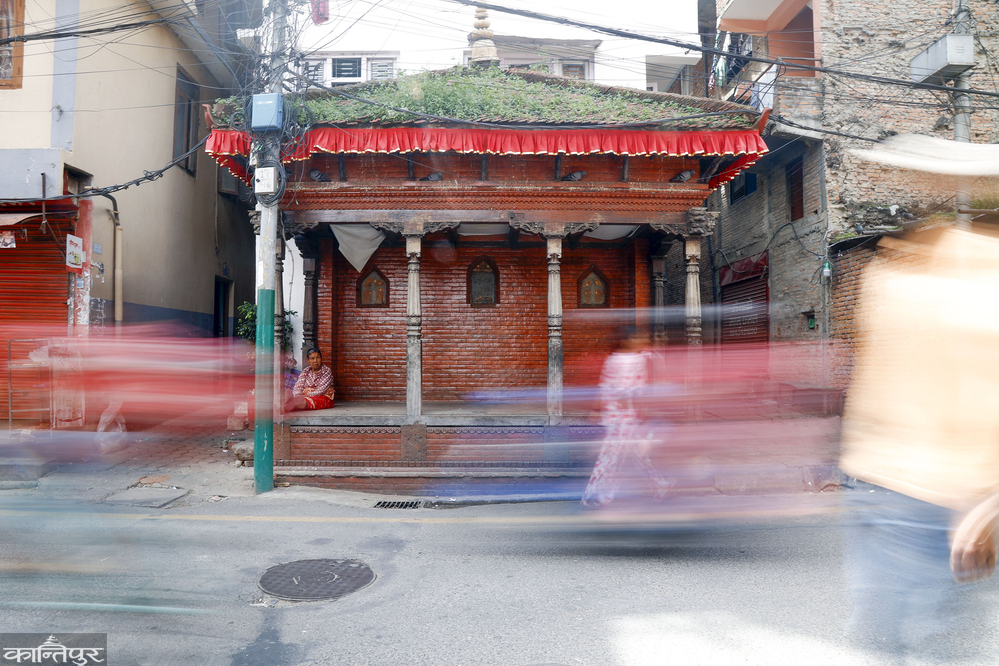
The metropolis had taken a policy to convert bus stops into traditional style bus stops from the financial year 2079/80. In the previous financial year 2079/80, the budget was allocated only 1 crore rupees to build 50 falchas.
Dinesh Maharjan, Ward Chairman of Ward No. 4 Baluwatar of Kathmandu Metropolitan City, has stated that the falcha has been constructed with the aim of making it easy for the commuters who are on the road to rest. "It was built for the convenience of passengers, it has also worked to protect art and culture," he said. Depending on the location, the size of the wood, the quality, and the wood, it will cost from cheap to expensive. Some will cost 15 to 17 lakhs and some will cost 22 to 25 or more," he said. He has said that construction work has been carried out in different places.
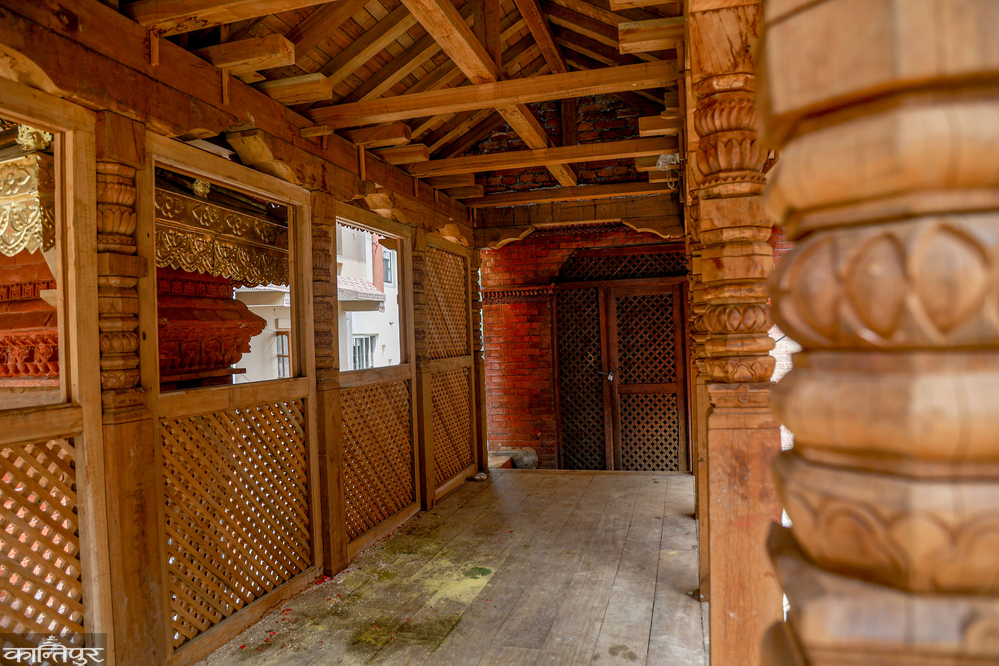
Similarly, according to Kumari Rai, head of the heritage and tourism department of the metropolis, the metropolitan corporation is doing this work with the aim of rebuilding the heritage. She says, "We are going to build the bus stop falcha in a way that reflects traditional skill and original style. Kathmandu Metropolitan City has been reviving skills and styles under the aim of preserving culture and rebuilding heritages. Falcha plays a big role in encouraging the new generation, says Kumari. I think it is very good because the new generation will have the knowledge of old art, culture, revival of traditional style and disability friendly. We have taken the fact that everyone likes Falcha in a positive way.'