We use Google Cloud Translation Services. Google requires we provide the following disclaimer relating to use of this service:
This service may contain translations powered by Google. Google disclaims all warranties related to the translations, expressed or implied, including any warranties of accuracy, reliability, and any implied warranties of merchantability, fitness for a particular purpose, and noninfringement.
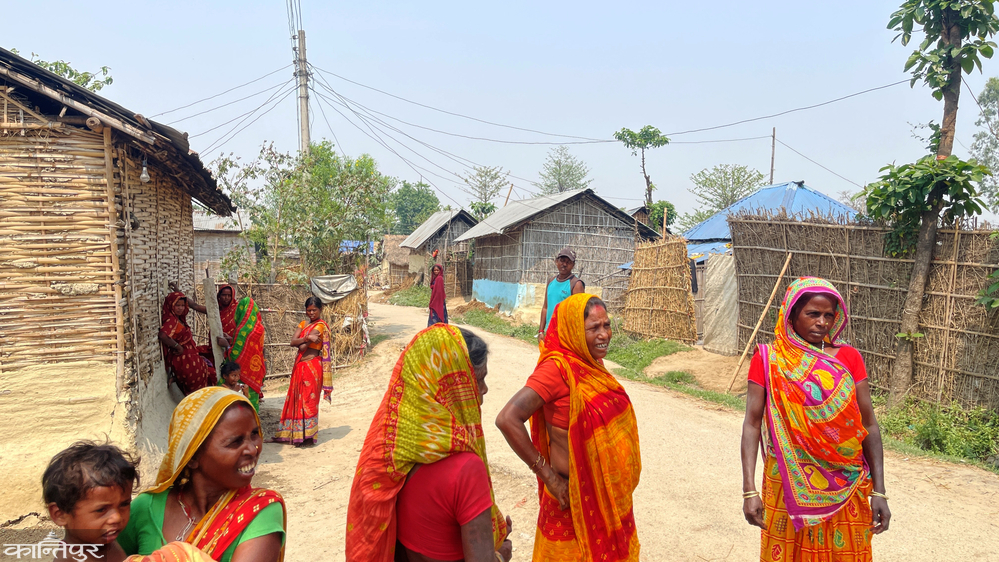
There are 90 families living in Chinnamasta rural municipality-5 Sada (Musahar) settlement of Saptari. The population is more than four hundred. You will be surprised, from drinking water to washing hands, bathing and washing dishes, they are relying on the same tubewell.
'One morning we have to stand in line to wash our hands and fill water,' 38-year-old Somindradevi Sada said, 'Who understands the problem of people like us? The Dalit community of the entire settlement has to depend on this one tube well.' It is not difficult to fill water and wash the dishes, but it is a problem to take a bath, she laments. "Otherwise, it is fine, but it is very difficult to take a bath," she said. "Before that, there were 3 tubewells in the settlement, but the water was not red due to excessive iron, there is no iron in this tubewell," said 40-year-old Neman Sada.
When there is only one tubewell, bathing becomes more difficult, he said. "If you wait to take a shower, it will be 10 o'clock, it will be difficult to get work if you are late," he said, "I don't even remember the last time I took a shower."
There is no tube well or toilet in the school
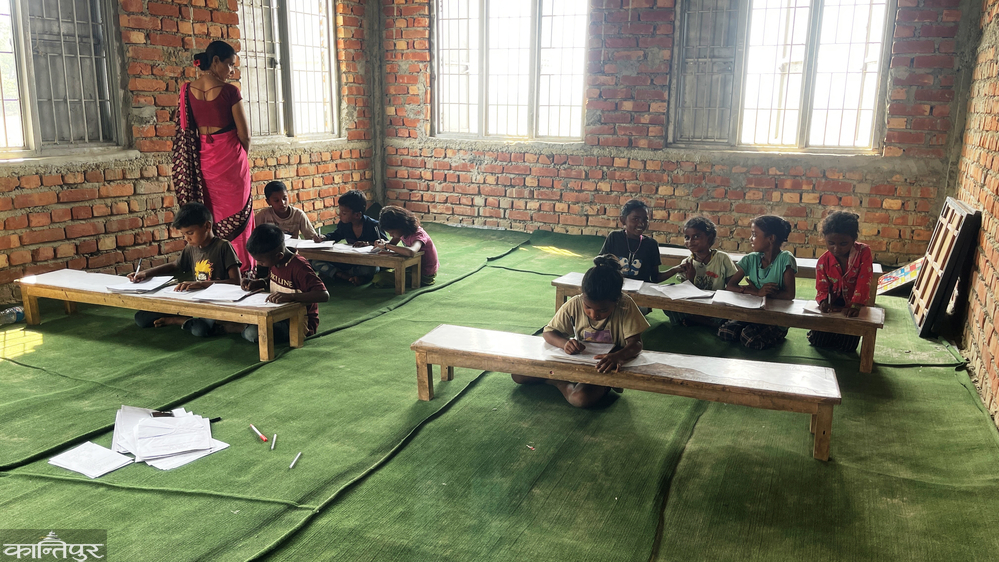
There is a separate Dalit National Primary School for the children of the slum. There are 54 male and 68 female students in the school, which teaches from early childhood to class 4, and 122 children. There is neither a tube well nor a toilet in that school, which has multi-classrooms (child development to 4th grade) in two rooms.
"Earlier, we were teaching from the old building, there are only two rooms," said Indira Thakur, the principal of the school. "Nowadays, children go to the old building to drink water and use the toilet," she said.
The school, which was established by collecting donations from local residents in 2061, has two child development teachers, one teacher and one office assistant, along with the principal.
Vidyananda Chowdhury, chairman of the rural municipality, said that tube wells will be installed in the village soon. "There was no information about the lack of tube wells in Dalit settlements, tube wells will be installed soon," he told Kantipur.