Establishment of organic fertilizer industry by cooperatives with the help of rural municipality, sale to farmers at subsidized rates
We use Google Cloud Translation Services. Google requires we provide the following disclaimer relating to use of this service:
This service may contain translations powered by Google. Google disclaims all warranties related to the translations, expressed or implied, including any warranties of accuracy, reliability, and any implied warranties of merchantability, fitness for a particular purpose, and noninfringement.
Jaleshwar multi-purpose cooperative organization Kusumkhola, located in Ribdikot Rural Municipality of Palpa, has started production and sales from Ribdikot Fertilizer Industry. Ribdikot rural municipality, farmers affiliated to cooperatives and cooperatives have opened a organic fertilizer factory according to the concept of public-private partnership.
After the report that the acidity of the soil is increasing due to the increase in the use of chemical fertilizers in the fields, organic fertilizers have been produced in partnership with cooperatives and farmers. There is a fertilizer industry in Ribdikot rural municipality-5, Nayatol. Ribdikot-based Jaleshwar Multi-Purpose Cooperative Society has managed it . The land of Jaleshwar Temple has been leased and the infrastructure has been built. The price of fertilizer has been fixed at Rs 25 per kg. On the occasion of the inauguration, the co-operative has informed that it was sold cheaply at 5 rupees per kilo. The organic fertilizer factory was inaugurated by Tularam Gharti (Basant), the Speaker of the Lumbini Provincial Assembly and the elected member of the Provincial Assembly from the same area.
He said that Ribdikot rural municipality had included in the policy and program of opening organic fertilizer factory in the previous financial year and this year the Lumbini state government has also emphasized on the same issue . "The ability to produce at least 500 and at most 1,000 kilos per day is good in rural areas," he said, "The policy of Lumbini Province and the initiative of Ribdikot Rural Municipality have been seen to be practical." He said that the people have started the practical practice of using organic fertilizers.
Rural Municipality Chairman Narayan Bahadur Karki said that the plan to open a organic fertilizer factory was made to address the complaints that farmers are not producing according to their daily efforts while farming. "We have cooperated with the cooperative to address the complaints that the production in the fields is decreasing during cultivation," he said, "even if it is a small investment now, it can be expanded later."
It was estimated that 45 lakhs would be spent during the establishment of the cooperative. The cooperative has leased three plantations of land for the factory. The cooperative plans to have a factory on one plantation and animal husbandry and agriculture on the remaining land. Shiv Kunwar, president of the cooperative, said that the rural municipality has given 19 million subsidy to the cooperative twice.
Soil and Fertilizer Testing Laboratory Khajura Banke conducted tests in Palpa's Ribdikot and found that the soil was acidic and alkaline in some places. Yama Bahadur Darlami, an expert in organic fertilizer production, said that since the quality of the soil is deteriorating due to the increasing use of chemical fertilizers and pesticides in agricultural crops, every municipality can open small factories like this. He said that the fertilizer produced in such factories will help in improving the quality of the soil when the fertility of the soil is reduced and the production is also affected.
Named as Amritbuti organic fertilizer, it contains forest grass, black pepper and mountain weeds. In addition, expert Darlami informed that bonemeal, Pinna, Biobacteria, Pseudomonas, Trichoderma, Seaweed, Calcium, Gobar and Press mud are used in organic fertilizers. It contains nitrogen 1 percent, phosphorus 0.5 percent, potash 1 percent, moisture 25 percent, pH 7 percent. It can be used for a maximum of two years from the date of manufacture and packing.
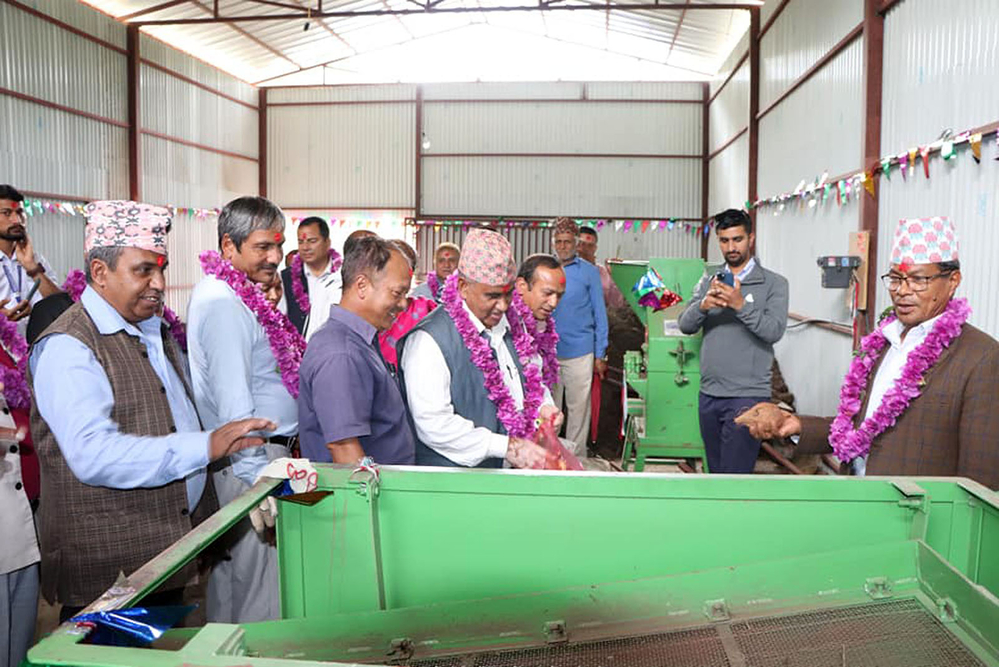 President of Lumbini Province Turaram Gharti inaugurating the fertilizer industry. Photo: Madhav Aryal/Kantipur
Farmer Goma Thapa of Kusumkhola said that due to excessive use of chemical fertilizers, weeds have stopped growing in some parts of the hilly district. Commercial vegetables and fruits are cultivated in Palungmainadi, Kusumkhola, Thimure, Khasyuli etc. of Ribdikot Rural Municipality. But the soil quality of Ribdikot has deteriorated a lot in the past few years, said Pragya Lamtange, head of the agriculture branch. "During the soil testing in the past years, it was seen that the quality of the chemical fertilizers was deteriorating as a result," she said. It also helps in production by improving the quality of the soil.'
As the production is decreasing, some farms in the village have stopped farming. The production is decreasing as the cultivation is decreasing. In some places, the problem of no farming at all has increased. She said that while testing the soil for the reason, the fertility was found to be low. According to agronomists, the pH value of cultivable soil in hilly areas should be 8, but it is only 4.5 in most places.
The rural municipality has tested the soil of almost all the wards based on the complaints of the farmers that the fertility of the soil has decreased. Was disappointed not knowing the soil test and treatment. After running the soil testing camp in some of the municipalities here, the farmers have finally come to know what kind of soil to grow which crop. Leela Bahadur Karki, Executive Director of Rural Economic Development Association Reda, said that the agricultural project has been conducted in collaboration with the rural municipality to prevent the soil from dying, to prevent the increase in acidity and to increase the use of organic fertilizers.
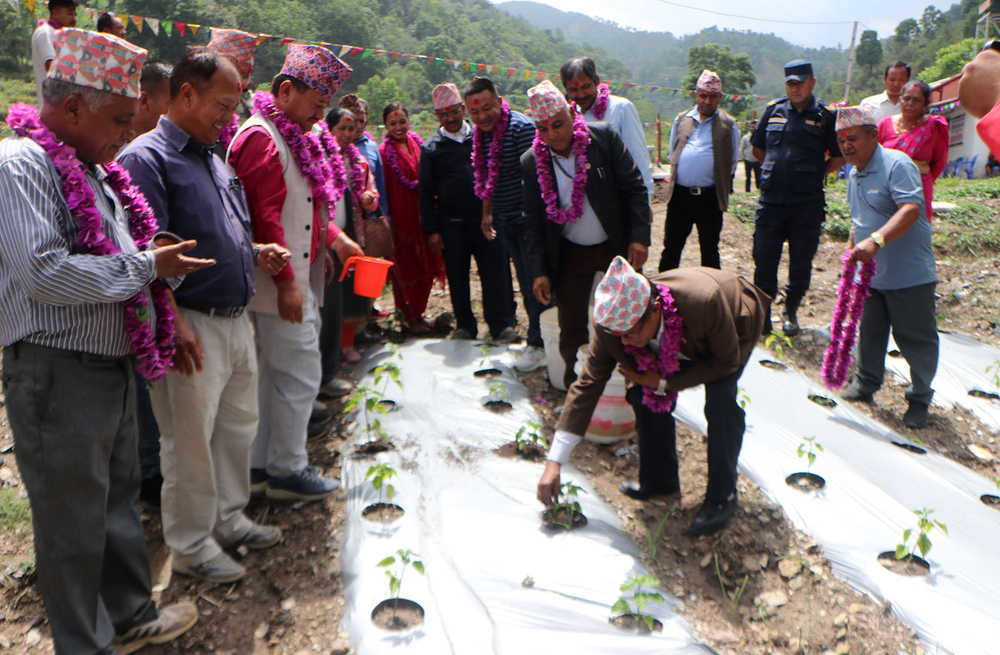
Experts suggest to produce compost and organic fertilizers that can be prepared at home. "Considering this, it was decided to operate the organic fertilizer factory," said Kanta Adhikari, Vice President of Ribdikot Rural Municipality, "Don't take subsidy now and close it later." The grant should provide facilities to the farmers for a long period of time.' She said that the fertilizer factory should become a supporter to increase all kinds of agricultural production throughout the municipality, to make the barren lands green. According to agricultural experts, the health condition of people is also deteriorating due to excessive use of chemical fertilizers.
If the pH of the soil is less than 6.5, it is acidic, if it is up to 7.5, it is medium and if it is above it, it is alkaline. It was found that nitrogen, phosphorus and potash were also very low along with the pH value when the farmers were using chemical fertilizers and pesticides indiscriminately. It has been seen that the soil quality is deteriorating in most of the places. Maniprasad Khanal, the chief administrative officer of the rural municipality, said that the construction of a fertilizer factory within the municipality under the campaign 'I will build my ribdikot' will help to increase agricultural production and improve the quality of soil in the future. He said that he believes that the partnership with
cooperative will operate sustainably. In recent years, the problem of growing agricultural crops has increased as the amount of chemical fertilizers is not available in the market. There is a problem of not getting both chemical and biological fertilizers on time. Manager of the cooperative, Narayan Bahadur Lamtange, said that organic fertilizers will help to avoid the shortage of fertilizers for commercial farmers. Lamtange, who is also the former ward president, said that although the identity of Ribdikot is agriculture, the decline in production is due to soil deterioration.
Akbare chilli, orange, ginger, turmeric, vegetables are produced in Ribdikot. The annual production of Akbare chillies is 50 million, oranges are 70 million, and vegetables are more than 20 million. He said that the organic fertilizer factory will increase production in this area and local people will get jobs. "There is a situation where 7/8 people get employment every day," he said. He said that it is planned to invest 51 percent cooperatives and 49 percent public for its sustainable operation. Krishna Kunwar, Secretary of Jaleshwar Cooperative, said that in addition to cattle dung, local raw materials such as local weeds, fallen leaves, green grass and apples have been used in the fertilizer factory. Nearly 700 families are involved in commercial agriculture in the rural municipality. He has been doing farming as a normal livelihood. After the organic fertilizer factory, the rural municipality plans to make one thousand more families do agriculture commercially.
The former chairman of the rural municipality, Narayan Bahadur GC, said that due to migration in the villages recently, there is a lack of cattle manure. He said that although the organic fertilizer factory can only distribute to the farmers in Ribdikot rural municipality, the quality of the soil will improve and the production will increase. Fertilizer has been produced from the factory according to the standards of the government's 2078 organic and bacterial fertilizer guidelines. According to the guidelines, for the management of organic fertilizers and bacterial fertilizers at the local level, there will be a deputy chief or deputy coordinator, chief administrative officer and chief member secretary of the agriculture branch.
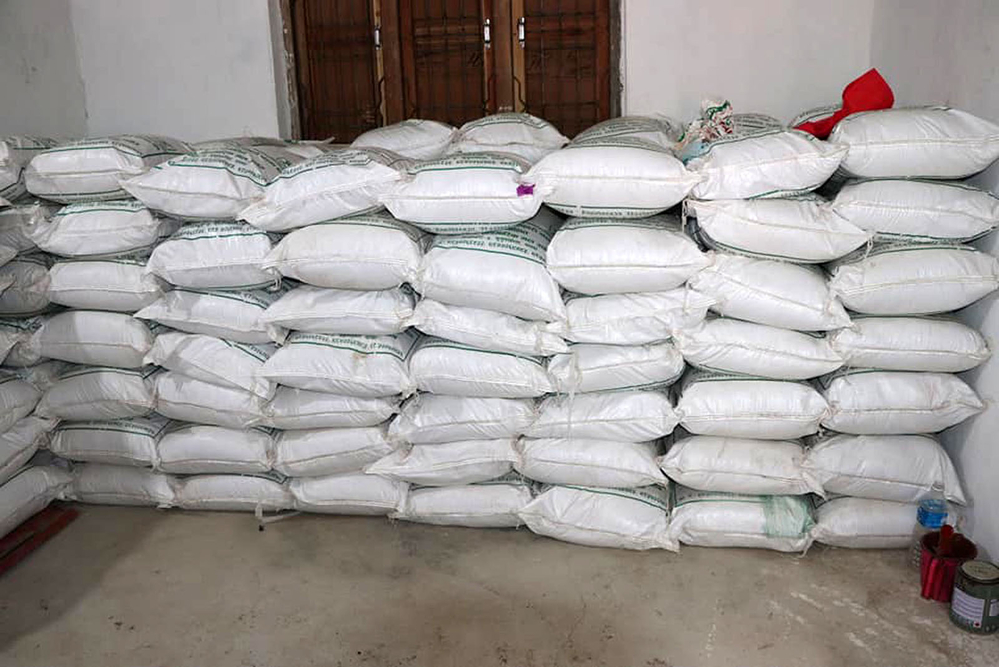
Organic fertilizers stopped being produced in the warehouse
Farmers who grow commercial vegetables in the village have stopped producing organic pesticides and fertilizers at home. They are increasing the use of chemical fertilizers and deadly pesticides available in the market . Previously organic pesticides and fertilizers were used in places like Somadi, Muzung, Chhahara, Deurali, Telgha, Masyam, Madanpokhara, Telgha, Masyam, Bhairavasthan, Khasyuli, Bandipokhara, Chirtungdhara, Pokharathok, Kaseni, Rupse, Chappani, where commercial vegetables and fruits are cultivated.
Now the farmers have stopped rearing cattle and buffaloes . As a result, the use of dung manure has decreased. Farmers rearing cattle in the village now use trailers and mini-trailers for plowing, said leading farmer Khim Prasad Pokharel, due to which the use of dung manure has decreased. Acidity and alkalinity in the soil have increased. According to the farmers, excessive use of pesticides has increased in the vegetables produced in most places of the district. Pesticides have not been tested. Which is used even when it cannot be used for human health.
The use of pesticides and chemical fertilizers has increased in vegetables produced in almost all villages. In the past, local organizations and in some cases, the Agricultural Development Office used to collect the necessary materials for biological pesticides at home. All those campaigns have been stopped after 2074. Farmers have increased the use of chemical fertilizers and pesticides on vegetables. According to farmer Humansingh Karki, in order to improve the quality of the soil, it should be established like an organic fertilizer industry at home.
He suggests that 40 types of herbs and wild plants such as bitter gourd, neem, vanmara, cisno, and bucaino should be decomposed in the urine of cattle and humans to make organic pesticides . The organic pesticide prepared from the mixture of plants found in the village is effective for cabbage, chillies and vegetables . Man Bahadur Thapa, a leading farmer, said that home-made pesticides and fertilizers should also be used as panchos. He said that information should be given about the effects of chemical fertilizers and pesticides on human health and the use of organic fertilizers and pesticides. He suggested that the use of chemical pesticides and fertilizers should be reduced. He said that the local level should help by digging pits to make organic fertilizers at home, placing drums to prepare pesticides and making tanks to collect urine.

