He would remain engrossed in the sounds of tabla-harmonium and hymns echoing in the temples, falchas and dhalas, and would translate those melodies into poetry. He would keep writing the same stories - history and myths, embellishing them with the rhythm of Nepali language. The Kumari of Basantapur, the smile of the royal princess of Itumbahal were the raw materials of his essays.
We use Google Cloud Translation Services. Google requires we provide the following disclaimer relating to use of this service:
This service may contain translations powered by Google. Google disclaims all warranties related to the translations, expressed or implied, including any warranties of accuracy, reliability, and any implied warranties of merchantability, fitness for a particular purpose, and noninfringement.
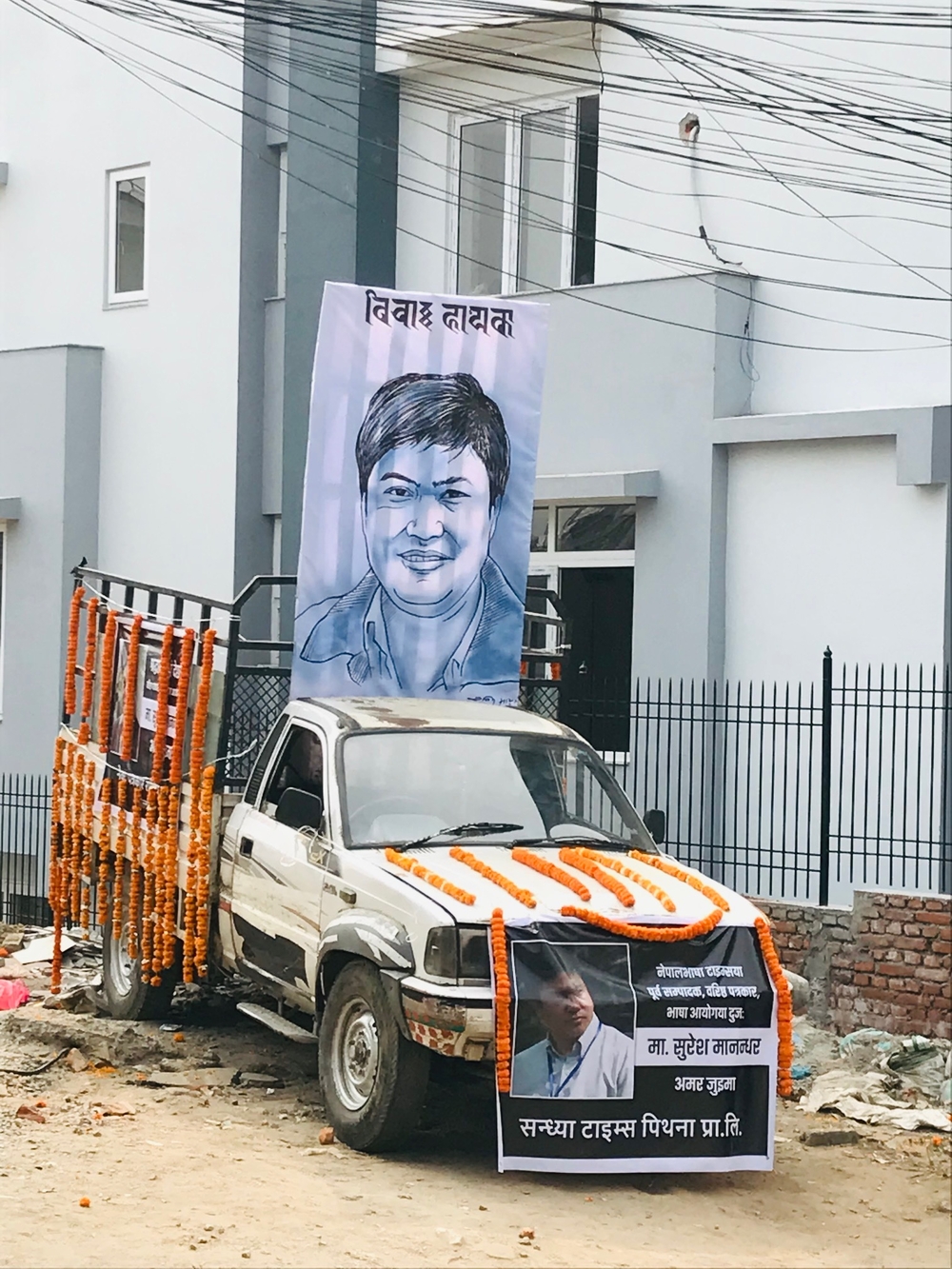
A vehicle was parked on the Bijeshwari Uphill. Which was itself in mourning.
The vehicle, decorated with a garland of centipede flowers, was taking part in the last journey of a poet, a relentless warrior of the language movement and a journalist. As soon as he saw it, poet Binod Bikram KC said in a sad voice, ‘Now who is the clock tower asking for time?’ Overtaking him, young anthropologist Bishnu Adhikari sighed, ‘What about the clock tower, who is the Nepal Language Movement asking for time?’
Suresh Kiran (59) was sleeping soundly in the courtyard of the Mankakhal. His eyes were wide open. The eyes of many, including writer Rajendra Maharjan, cartoonist Rabin Sayami...
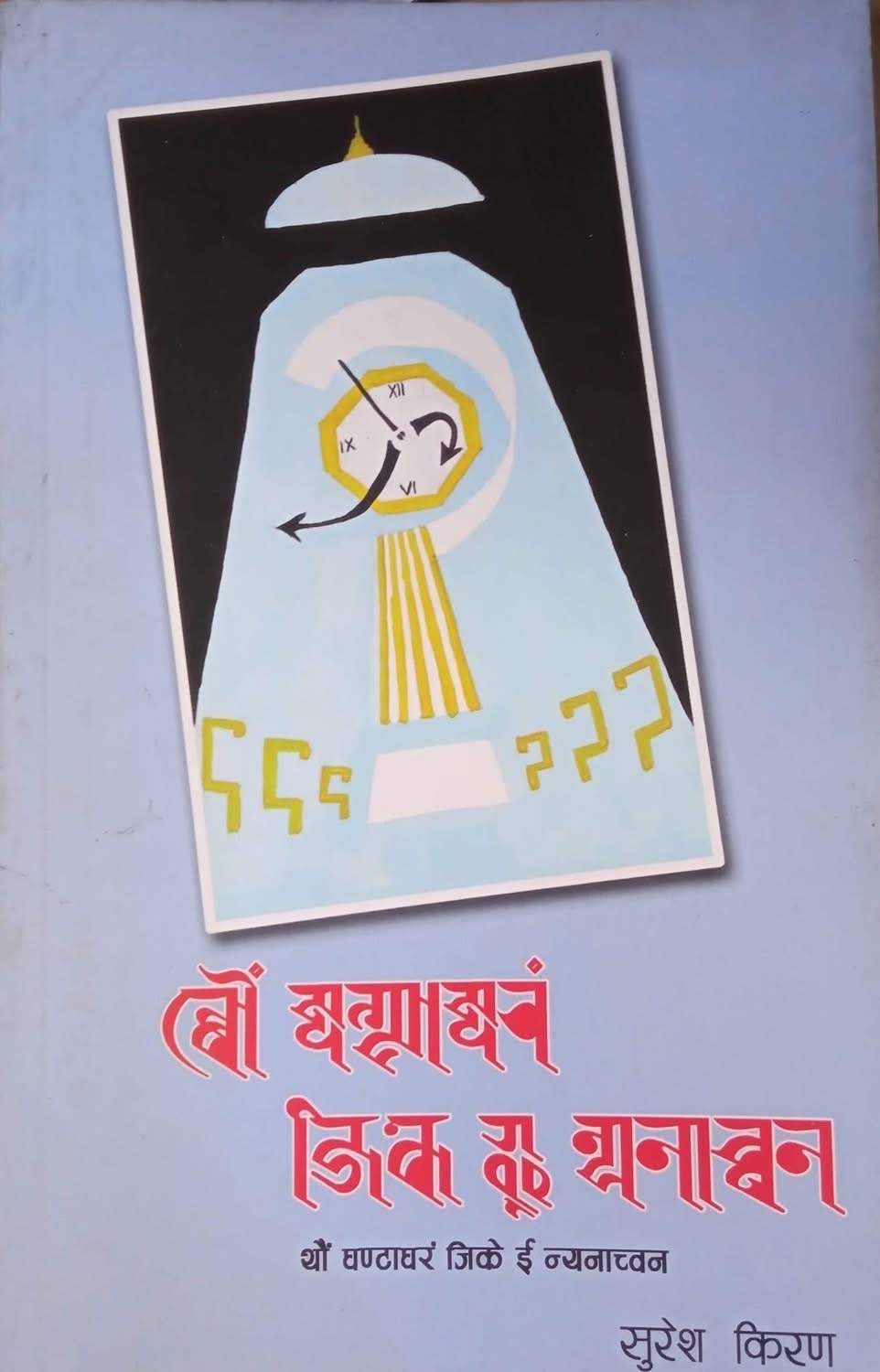
Suresh Kiran wrote a lot of poems, but only one of his poetry collections has been published in Nepali, ‘Thaun Ghantagharam Jike E Nyanachwan’ (Today the clock tower is asking me the time). This effective title will always remind the Brahmin poet today—who will the clock tower ask the time from now?
In reality, Suresh Kiran was a decent cultural activist, a tireless fighter of the Nepali language movement. He was alive, in many personalities—editor of the Nepali language daily ‘Sandhya Times’, founding editor of ‘Nepal Bhasha Times’, satirist, poet, honorable member of the Language Commission, member of the Academic Council of the Nepal Bhasha Academy, and editor of dozens of books.
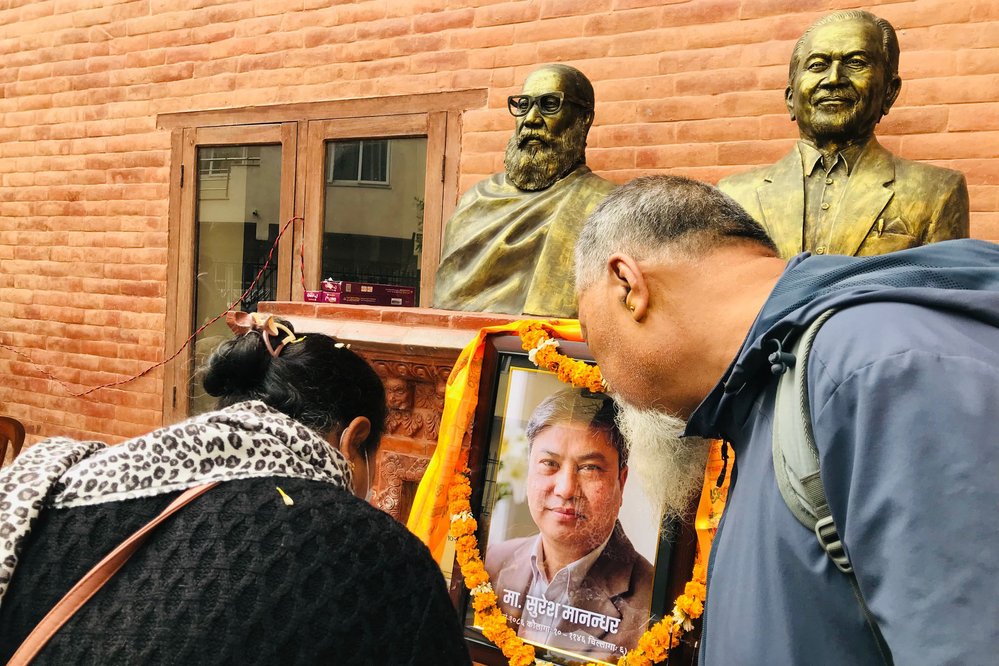
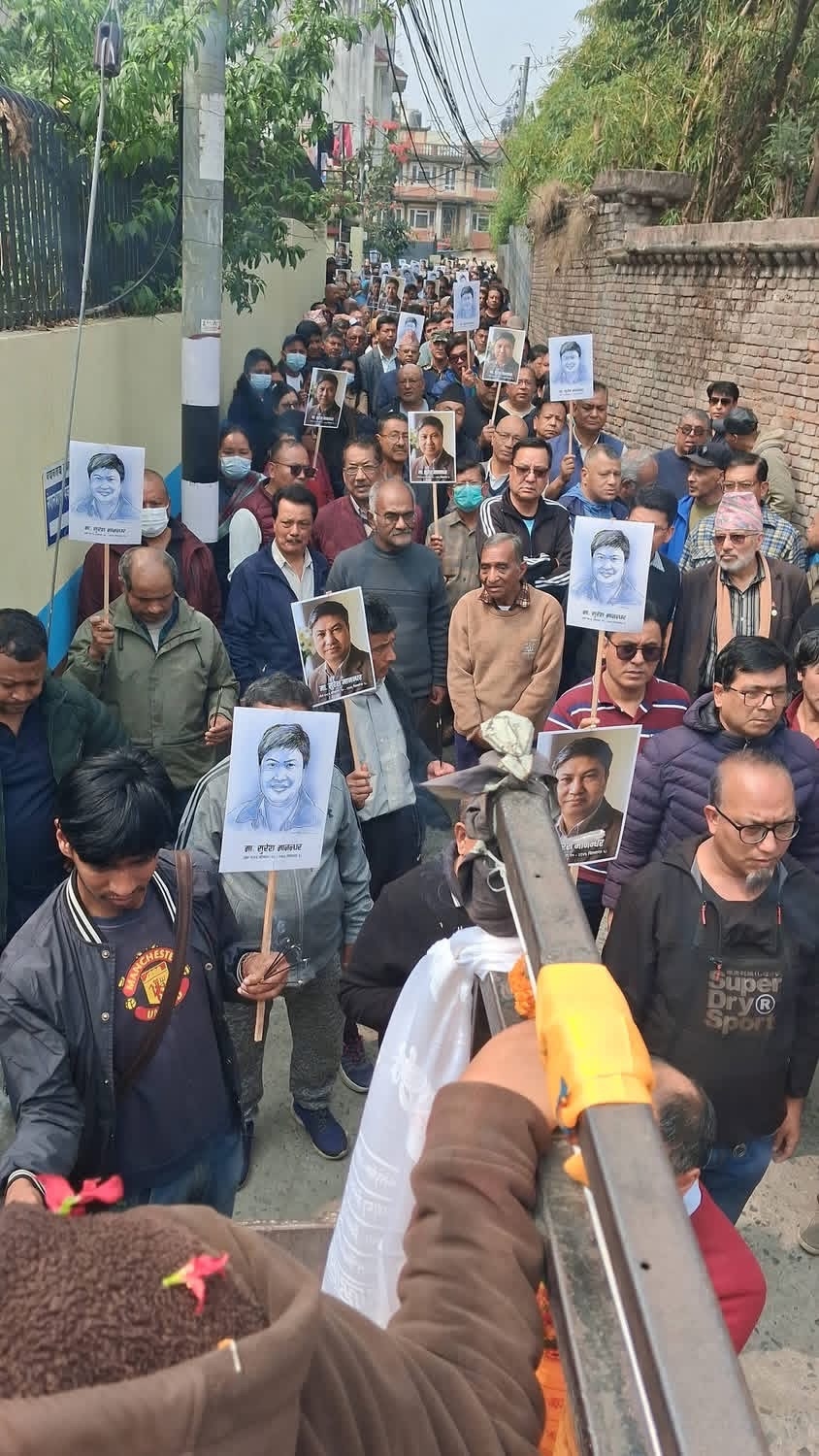
On Monday (25 Falgun), he passed away due to a heart attack ! His body was taken to the ghat at Indrayani in Kathmandu via Bijeshwari, Dhalko, Kshetrapati, Tyag, Bangemudha, Janavah, Naradevi and was cremated. And now, the entire Nepali literature, journalism and Nepal language movement have suffered a deep loss. However, the height of Suresh Kiran's poetry, the sharpness of satire, his deep affection for Nepal Mandal civilization and his mastery of multilingual writing will always be alive in Nepali literature.
He is not a talented poet limited to Nepali language only, he has written equally magnificent satire and essays on contemporary issues in Nepali language. For example, dozens of his brilliant essays on culture, history and Kathmandu civilization published in Kantipur Daily's 'Koseli' are being preserved in the archive. Those essays are an artistic sociological window into Nepali society. Suresh was always interested in discussing Nepal Mandal, its history and the people who lived there in the present and their cultural identity in a special way.
Suresh Kiran (Manandhar), who started his journalism with the Nepal Bhasa weekly magazine 'Inap', was the editor of the Nepal Bhasa 'Sandhya Times' daily and 'Nepal Bhasa Times' - that was a very meaningful time he spent on the language movement. Suresh, who also worked as a journalist in the 'Vishvbhumi' daily, 'Jana Aastha' weekly, was also active in the editorial board of the 'Apsara' film magazine, 'Koshalvaham Chinakhan Swalapau', and the 'Thaybhu' newspaper published by the Nepal Pragya Pratishthan.
Suresh Kiran is a very big name in the promotion of Nepal Bhasa literature. Suresh's biography on his beloved human rights leader Padmaratna Tuladhar has been published - 'Padmaratna Tuladhar'. Suresh's other published book on the culture of Nepal Mandal is - 'Indrajatra/Yanya' in collaboration with Dr. Ajayakranti Shakya and Sandhya Vajracharya.
000
Once upon a time, Suresh Kiran would perform his journalistic duties even by changing his disguise. For example, the turbulent days of 2046 BS were a fertile time for his journalism. During those days of mass movement, he had interviewed Commander, 'Iron Man' Ganeshman Singh, who was admitted to Bir Hospital for treatment, amidst tight police cordons. He used to tell me about Suresh reaching the hospital bed in a medical uniform to conduct that interview. Suresh, engrossed in the memories of those days, would occasionally get amnesiacs remembering the old times he had walked through.
Suresh Kiran knew the alleyways of every street in Kathmandu city. I used to be amazed by his street knowledge. He had told me one day with sincerity and courage, ‘If I may say so, I would be a street expert. I know every street in Kathmandu. He also knows me. I am talking to the streets.’ Yes, the streets will feel Suresh’s pain for an eternity.
When we trace the path of life that Suresh Kiran walked, we reach the end. That street tells the story of Suresh’s exciting and colorful world to his tearful sorrow. He used to tell me about that street. After my long-standing persuasion, Suresh had written a long memoir-essay on that street inhabited by junkies and hippies—‘Freak Street Nostalgia,’ which had awakened from his oblivion. 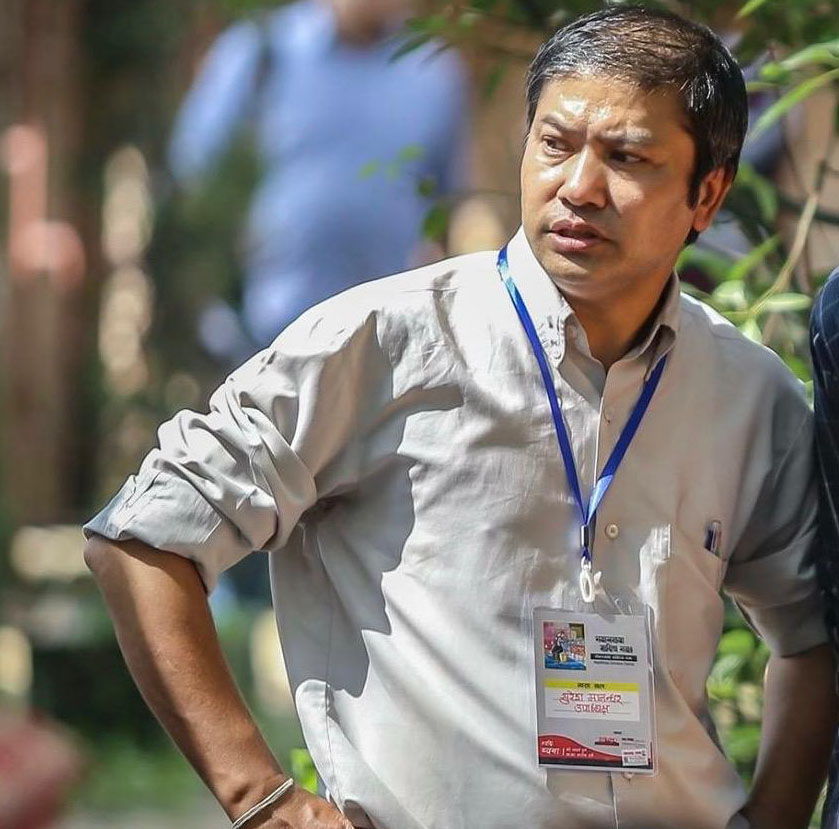
That was the same street, where Suresh’s childhood and teenage golden times had been saddened. And, it was the same street, which had ended his young brother’s happiness. Let’s take a quick stroll to that dark street, where Suresh as a teenager would be found laughing and running.
In fact, Freak Street was—an anonymous street in Nepal Mandal that suddenly became world-famous, where Suresh grew up. Suresh used to be swept away by the memories of hippieism in the 1960s and 70s, ‘Jhvachhe’s hakupatasi was forcibly removed and ‘Freak Street’ miniskirt was put on’ – hippieism. Suresh himself had experienced hippieism. His ancestral home was – old New Road. After selling the house in New Road and moving around many places, he ran a small hotel in Ombahal Tole in the early 1970s. Suresh grew up seeing the modernity entering the Basantapur area where tourists kept coming and going. He used to be engrossed in the imagination of another world with the stories and myths of Malla palaces, monasteries and living goddesses. While walking towards Thamel, he would suddenly say, ‘Deepakji, even when I knew about this beautiful Thamel, the fox would howl.’ And he would tell a black and white story about hippieism, that is, about Jhwachhen being a place filled with marijuana smoke. His story was reinforced by the fact that at that time, hashish was more prevalent than marijuana among the intoxicants prevalent in Jhwachhen. ‘What it was like was like black tar, the black powder that came out after rubbing the top of the marijuana plant with two palms.’ Such hashish could be bought in falafels all over Jhwachhen. That wide street between Jhwachhen and Basantapur was a hashish market. In most places, signboards were hung saying ‘Here is Hashish’, just as they said ‘Tea is available’. ‘Hotel Eden’ was a huge hashish den.’ That restaurant served hashish tea, coffee and various other dishes,’ he said.’
But, Suresh was left with a wound from that beloved hippie alley that left him with a lifelong addiction. Over time, after marijuana, ‘smack’, white sugar and brown sugar found their way into hashish. Suresh’s memory was always floating – Hotel Eden, which used to provide free white sugar to some young people who were addicted to hashish. When the young people fell into addiction like a deep well, they were then used to sell smack.
One of the boys was Suresh's uncle Surendra Manandhar, who was inextricably entangled in the drug network that was planned in Jhwachhe. He gradually developed a dangerous addiction to hashish-mixed cigarettes and smack.
In 'Freak Street Nostalgia', Suresh writes, 'After my brother became addicted, things started disappearing from the house - my mother's worship items, brass plates, sukundas, saris. And, the house had turned into hell.... My brother used to fight for money, he even sold the English dictionary I needed for my studies to quench his addiction.'
Now Suresh's Maldaju could not survive without injections, his pulse was throbbing....and, one day he was found dead in his own room.
This was Suresh's tragic death. In 'Freak Street Nostalgia', Suresh's revolutionary conclusion on the hippie era that many have 'glamorized' with a very pink veil was, 'The hippieism we experienced was not only the mania of freedom described in the book. There was not only Ginsberg's poetry, there was not only the anger against the Vietnam War, there was also the cold chill of family and social disintegration, there was the dark path of death.'
Behind the face of the smooth and bright Suresh Kiran, there was probably a lingering disappointment. And, in the memory of that disappointment was his brother, who had traveled a long journey to Nepal, exhausted by the stress and frustration of his dream ending, and had been lured by the so-called ‘freedom’ of hippies.
Many years ago, while lyricist Bhupendra Khadka and I were traveling to Jhonchhe, Suresh Kiran was entering Jhonchhe nostalgia. He had said, ‘I keep getting that old wound.’
Suresh was writing a book on that dark story of Jhonchhe Gali – under the constant pressure of Bhupendra and me. Just a few weeks ago, he had said, ‘I have written 60 percent, it will be finished soon.’ But alas, that book plan will remain incomplete forever.
000
On days of heavy rain or cold winds or hot sun, I have stood with Suresh Kiran in the Malla palace of Basantapur-Dabli in Kathmandu and looked at the house where the living Devi Kumari lives. At every meeting, he would tell the legends and stories of the city like a good storyteller. It seemed that those stories would always resonate in his soul. He had narrated the story of the Newa girl ‘Rajmati’ from the song Itumbahal, who was dressed in a hakupatasi, wore a long strip of vermilion on her forehead, wore red lipstick on her thin lips, and had a gunkeshari flower tied in her hair, sitting in the old brick courtyard there. After reading his story, I felt that Rajmati was alive like in the song – ‘Rajmati Kumati/Come to me with a smile/Hey Baba Rajmaticha/If you don’t give me Rajmati, I will go to Kashi, father/Bring me Rajmaticha’.
Suresh used to say, ‘Rajmati was a living character. Rajmati lived in a place called Tahnani in Itumbahal.’ In the song, the poet who wrote the story of Rajmati shows his love by saying that he will marry her and if he cannot get married, he will go to Kashi.’
Suresh has a wonderful essay on Rajmati – Hey Rajmati! He writes, ‘In the song, Rajmati is extremely beautiful and graceful. Her eyes are full of eyelashes, her hair is curly, and there are two kothi on her face. Looking at her beauty, it seems that she is the daughter of Sakvami (Sankhule). She wears a jewel called Bijakali. But, unfortunately! She was forcibly married because of a Chandal Lami. The marriage also took place in a house where there was not even a window. Despite the marriage, her husband died while she was still alive. The birth of Rajmati is a curse!’
Suresh had said, ‘This song depicts the social and cultural framework prevalent in the then Kathmandu society. The songs not only tell stories, but also history.’
In this way, Suresh would immerse himself in the stories of people-khayaks who came and went in Newa myths and legends – making them come alive, revealing their secrets. He would tell stories from the bull of Asan to the Jatra of Handigaun. He knew the graph of the business of his grandfather and grandmother, the two-century-old shop of Asan, where ‘salt and gold’ were sold. And, he knew – the throng of Asan after Indra Jatra and the black and white time-cycle of people from Tokha, Sankhu, Thimi, Bhaktapur, Kirtipur, Lalitpur coming to Asan to buy oil, ghee, cumin, pepper, salt, sugar.
Suresh used to tell legends from New Road, Pako, Kasthamandap, Raja Gunakamdev to Akash Bhairav (Ajudyah) of Indrachowk, ‘There was once a pond in Indrachowk – Kalmochan Pokhari.’ It was believed that whoever bathes in the pond during the Gunla festival and sees the Janabahahdyah (White Machhindranath) with him, does not have to go to Yamalok after death, but directly gets a place in the blissful world. One day, the god Indra himself came to bathe in the Kalmochan pond and the place was named 'Indrachok'...' After narrating the story, he would also discuss the legend. And, during Indrajatra, he would discuss lost cultures like 'Daboo Pyakham', a full-length play that was staged all night in the dabilis of the toles of Kathmandu. He has written, 'The loss of Daaboo Pyakham is as sad as the closure of a major cultural industry in Kathmandu.'
Suresh Mukhagra used to tell stories from the Ranas building gravel roads on New Road after suspecting that horses would slip and fall if they rode on the pitch, to the shop that rented motorcycles near New Road Peepalbot or the shop that rented bicycles with a single footrest in Bhotahiti.
इन्द्रचोकबाट हनुमानढोकातिर पस्ने लामो मखनटोल गल्लीमा ३० को दशकमा देखाइने भिडियो–फिल्मको साक्षी थिए– सुरेश । उबेला ३६ इन्चीवाला एक टेलिभिजनको मूल्य १ लाख ३० हजार पर्थ्यो, डेकको ३७ हजार । काठमाडौंको भित्री सहरमै जग्गा आनाको १ लाख पनि पर्दैनथ्यो । काठमाडौंको ताहाचलमा एकजनाले ३६ इन्चको टेलिभिजनसँग तीन आना जग्गा साटेको कथा सुनाउँदा सुरेश किरण मस्त हाँसेका थिए । मेरै करकापमा उनले मखनटोलको त्यो भिडियो–फिल्मको कहानी लेखेका छन् ।
‘मखनटोलकी मैयाँ’ शीर्षकमा सुरेश लेख्छन्, ‘हामी मखनको कुनै कोठे टाकिजमा फिल्म हेर्थ्यौं । फिल्म प्रदर्शन गरिने सानो कोठा गजबको हुन्थ्यो– भुइँमा खुइलिएको, छेउ–कुना फाटेको, मैलो, पुरानो सुकुल ओछ्याइएको । कोठैभरि पसिनाको अमिलो र मोजाको नमीठो गन्ध फैलिएको हुन्थ्यो । गन्हाउने अँध्यारो कोठा ! त्यसमाथि दर्शकको मुखबाट बुङ्बुङती उडिरहेको चुरोटको धूवाँ ! अनि कहिलेकाहीँ पेट खलास नभएका कुनै दर्शकले आनन्दले फुस्स छाडेको मन्द पादको गन्ध ! फिल्म हेर्नैका लागि सारा दर्शक साढे दुई घण्टासम्म शान्त भएर यी सबै सहन्थे ।’
इतिहासकार कमलप्रकाश मल्लले भनेझैं सुरेशका लागि काठमाडौं ‘एक विसंगत सहर’ थियो— महामञ्जुश्रीको खड्गको डोब देखाएर बाँचिरहेको ‘चिसो एष्ट्रे’ ‘काष्ठमण्डप’ विशिष्ट र रहस्यले भरिएकै अनि ‘भौतिक–पराभौतिक’ थियो । नेपालमण्डलका पुराना गल्ली र मन्दिरहरूमा बजिरहेका घन्टको कथा, मन्दिरहरूछेउ साँझदेखि गुन्जिने तबला–हार्मोनियम र भजनका स्वरले उनी मग्न रहन्थे— ती धुनलाई कवितामा उतार्थे । तिनै कथा उनी लेखिरहन्थे— इतिहास र मिथ नेपालभाषाको लयमा सजाएर । वसन्तपुरको कुमारी, इतुम्बहालको राजमतीको मुस्कान उनका निबन्धका कच्चापदार्थ थिए ।
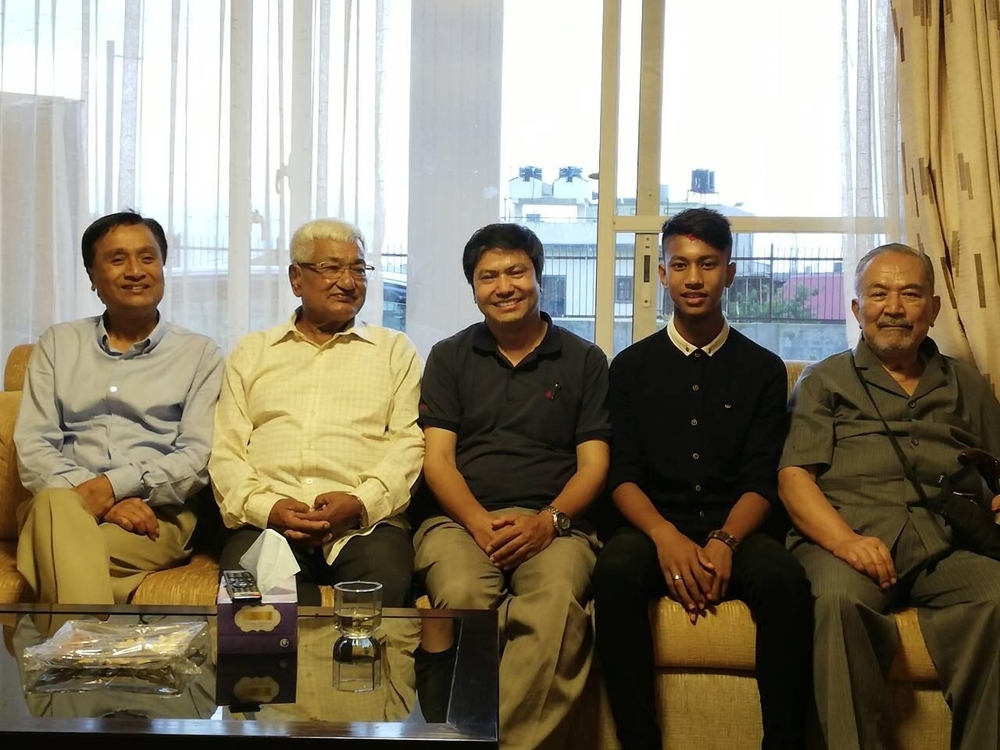
सुरेश किरण मेरा लागि थिए, नेवाः संस्कृति, काठमाडौं र यहाँका गल्ली–गल्लीसँग जोडिएका विषयहरूको आधिकारिक व्याख्याता ।
काठमाडौंका 'कोर एरिया'माथि ससन्दर्भ व्याख्यान दिन सक्थे उनी । जस्तो, सहरका एक–एक गल्लीको नालीबेली थाहा थियो, सुरेशलाई । म चमत्कृत हुन्थेँ, उनको गल्ली–ज्ञान देखेर । उनले मलाई एक दिन सकाव्यिकता र सहाँसो भनेका थिए, ‘दीपकजी, भन्न मिल्छ भने मलाई गल्लीविद् भने हुन्छ । काठमाडौंका एक–एक गल्लीलाई म चिन्छु । तिनले पनि मलाई चिन्छन् । म गल्लीहरूसँग बात मारिरहेको हुन्छु ।’
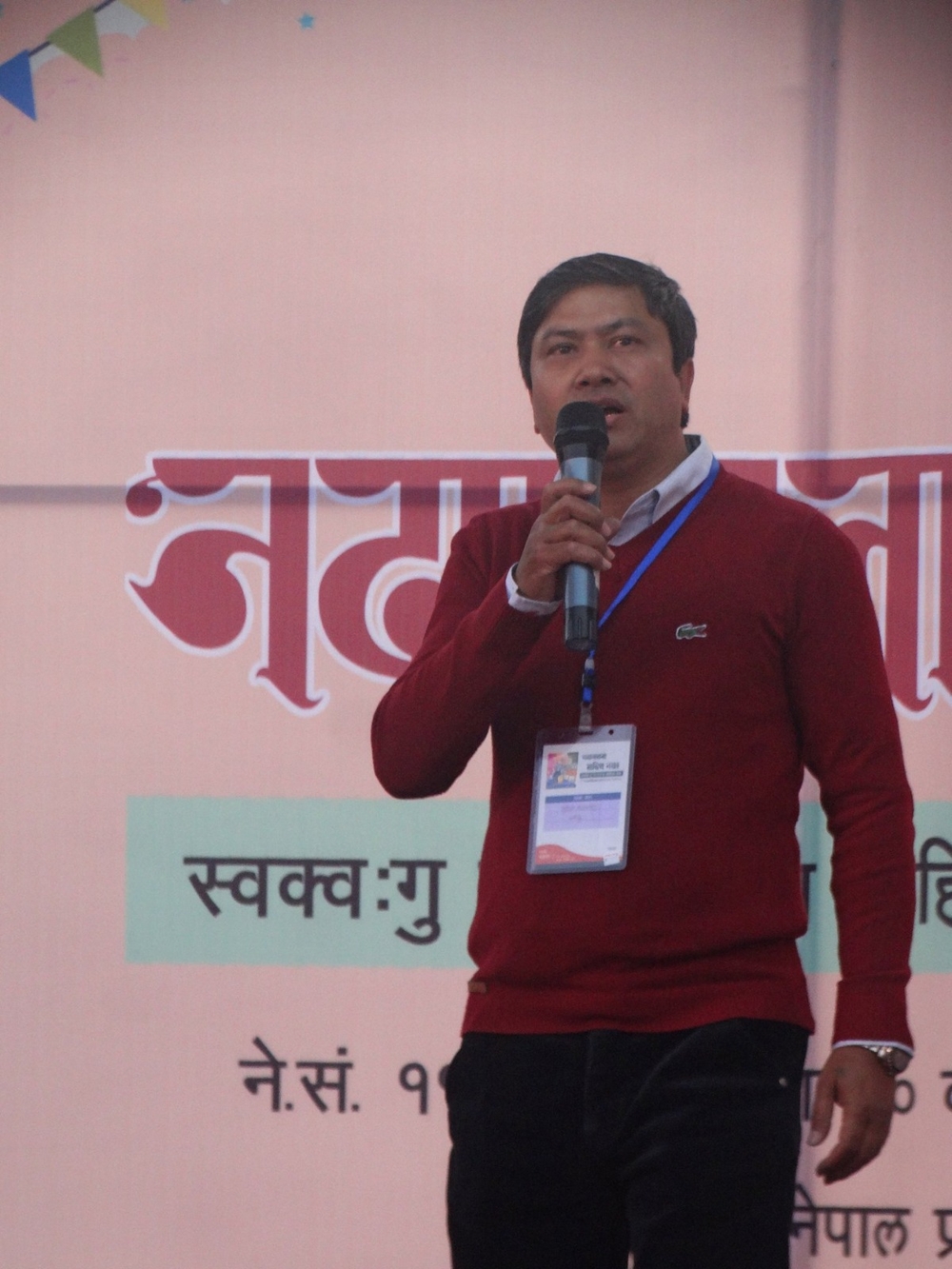
००० हो, गल्लीहरूलाई एक जुगसम्म सुरेशको न्यास्रो लाग्ने छ ।
नेपालभाषाको एक शब्द छ– ‘थःछेँ’ । यसको अर्थ रोचक मात्रै होइन, व्यापक र गहिरो पनि छ । यसको ठ्याक्कै नेपाली अनुवाद हुन्छ– ‘आफ्नो घर’ ! खासमा यो शब्दलाई ‘माइती’ को अर्थमा प्रयोग गरिन्छ, तर ‘माइती’ ले त्यो पूर्ण अर्थ, बिम्ब र भाव बोक्न सक्दैन, जुन ‘थःछेँ’ ले बोक्छ । बिहेपछि श्रीमान्को घर पुगेकी छोरीको माइती नेवार परिवारमा ‘थःछेँ’ नै हुन्छ— अर्थात् ‘आफ्नो घर’ नै हुन्छ ।
यो शब्दले केवल ठाउँलाई होइन– पहिचान, सम्बन्ध र आत्मीयताको गहिरो तह समेट्छ, जसरी छोरीले जन्मघरलाई सधैं ‘आफ्नो’ नै ठानिरहन्छिन्, चाहे उनी जति नै दुर पुगेकी होउन् । नेपालभाषाका तपस्वी कवि सुरेश किरण ‘थःछेँ’ शीर्षकको उनको कवितामाथि कसैले विमर्श गर्दा अत्यन्तै खुसी हुन्थे । उनको अनुहार उज्यालोले चम्किन्थ्यो । भन्थे, ‘आफूले जाने–बुझेको शब्दलाई ठ्याक्कै खास अर्थमा लेख्न पाउनु नै मातृभाषामा लेख्नुको सुखानुभूति हो ।’ र, उनको कविता ‘थःछेँ’ ले नेवार समाजमा महिलाको भूमिका, अधिकार र तिनलाई गरिने व्यवहारको सुदूर अतीतको कथा मात्रै होइन, आजको पनि प्रतिबिम्ब बोक्छ । त्यो कविता हो– एक मौन विद्रोह र आत्मसम्मानको स्वर । त्यो लामो कविताको एक अंश नेपाली अनुवाद यस्तो छ–
आमा ! मलाई अन्माएर पठाउँदा/तिमीले दिएको गाग्री लिएर गएँ/
आफन्त र धेरै सामग्री लिएर गएँ/लिएर नगएको केही थियो भने/
बस्, मैले ‘आफू’ लिएर गइनँ/घरमै छुटेछ, मेरो त्यो ‘आफू’/
थाहा छैन मेरा सबै ‘आफू’ बाँकी रहेकाले पो/त्यो घर मेरो ‘आफ्नो घर (थःछेँ)’ भएको हो कि !
कवि अभय श्रेष्ठको कविता–किताब ‘लहना र तीर’ को विमोचनमा वक्ता रहेका सुरेशले भनेका थिए, ‘नेपालभाषा साहित्यको कुनै एक विधाले नेपाली भाषाको ‘मूलधार’ लाई सिधै टक्कर दिन सक्छ भने त्यो कविता नै हो ।’ तर, नेपालभाषामै कवितामा मग्न सुरेशको अनुहारमा केही चिन्ताका रेखा पनि पोतिएका थिए । भेटमा वा सार्वजनिक विमर्शमा उनी चिन्तित सुनिन्थे, ‘नेपालभाषाको कविता नेपाली साहित्यमा कहाँनेर छ ? सिद्धिचरण श्रेष्ठ र दुर्गालाल श्रेष्ठजस्ता कविले उचाइमा पुर्याएको नेपालभाषाको काव्य नवपुस्ताले कहाँ पुर्यायो ?’
०००
सुरेश थिए– एक आलोचनात्मक विवेकले सिर्जना गर्ने असाध्यै गम्भीर कवि । सुरेशका कविता र व्यंग्यको प्रशंसक हुन्– लेखक–सम्पादक राजेन्द्र महर्जन । सुरेश उनका असल साथी पनि थिए– ‘आँखामा राख्दा पनि नबिझाउने’ भलाद्मी मानिस अनि न्यायप्रति प्रतिबद्धता भएका साहित्यकार । राजेन्द्रको आँखामा सुरेश अत्यन्तै मार्मिक हास्यव्यंग्य रचना गर्ने व्यंग्यकार र प्रहसन लेखक ‘सुकि’ हुन् र नेपालभाषाका प्रतिबद्ध सम्पादक पनि ।
‘इनाप साप्ताहिकका कम्पोजिटर र पत्रकारदेखि ‘विश्वभूमि’ र ‘सन्ध्या टाइम्स’ दैनिकका सम्पादकसँगै भाषा आयोगका सदस्यसम्मको उनको यात्रा बिर्सन सकिँदैन । नाम, दाम, पद, प्रतिष्ठा र प्रचारको वास्ता नगरीकन भाषिक समानताको अधिकार र सामाजिक न्यायप्रतिको प्रतिबद्धताका साथ लेखन–सम्पादन कर्ममा डुबेर लाग्नु नै उनको मूल चरित्र हो, जुन बिर्सनै मिल्दैन’, राजेन्द्र भन्छन्, ‘सास रोकिए पनि उनको हँसिलो अनुहार, मित्रतापूर्ण व्यवहार, कोमल व्यक्तित्व सबै न्यायप्रेमीको मनमस्तिष्कमा बास बसेको छ । देह अन्त भए पनि उनका अनेक साहित्यिक सिर्जना तथा भाषा समानता र सामाजिक न्यायप्रतिको जुनून नष्ट हुँदैनन् ।’
संस्कृतिविद् मल्ल के. सुन्दरका आँखामा ती दिन ओहोरदोहोर गरिरहन्छन्, जतिबेला उनी ‘इनाप’ का सम्पादक थिए । त्यो ०४० सालतिरको कुरा हो, उनको सम्पादनमा निस्किने नेपालभाषा साप्ताहिक ‘इनाप’ का लागि उनले आफ्नै घरमा एउटा छापाखाना राखेका थिए । त्यसका लागि दक्ष कम्पोजिटरको खोजीमा उनका मित्रहरुले ल्याइदिएका थिए– दीपक शाक्यलाई, जो कम्पोजमा अत्यन्तै दक्ष थिए । उनका सहयोगी थिए, बालापनका मित्र पूर्ण, जो प्रेसका लागि आवश्यक अन्य काम गर्थे । तीन/चार महिनापछि उही दीपकले एकजना मानिस ल्याए ‘इनाप’ कार्यालयमा– दुब्लो, पातलो, कलिलो र हेर्दैमा अवोध । दीपकले धेरै अनुनयविनय गरे, मल्ल के. सुन्दरलाई फकाए– त्यस केटोलाई पनि प्रेसको कुनै काममा अल्झाइदिन । तर, त्यतिखेर प्रेसका लागि कुनै नयाँ मान्छे आवश्यकै थिएन, फेरि आर्थिक बोझ बढ्ने कुराले पनि त्यो सम्भव थिएन । दीपकले नै उनलाई सुझाए– पारिश्रमिक दिनुपर्दैन, केवल पे्रसमा आएर कम्पोजको काम सिक्नेछ ।
तर ती सोझा, लजालु केटा दिनहुँ ‘इनाप’ आउन थाले, जो चुपचाप आउँथे, एक कुनामा बसेर केही सिक्थे र साँझ चुपचाप घर फिर्थे । एक महिना पनि नबित्दै त्यो केटोले कम्पोजिङमा क्रान्ति नै गरे, शुद्धाशुद्धि पनि त्यतिकै राम्रो ।
त्यसपछि उनलाई पनि पारिश्रमिक पाउने गरी प्रेसको काममा भर्ती गरियो । लगनशीलता र मेहनतबाट उनी एक निपुण र सिद्धहस्त कम्पोजिटर बने । उनी पढ्दै पनि थिए, प्रवेशिका पछि क्याम्पस कक्षामा भर्ना भए । एक दिन उनले आफूले लेखेको सानो लेख लिएर मल्ल के. सुन्दरलाई देखाए, यद्यपि केही बोलेनन् । मल्ल के. सुन्दरले त्यो रचना पढे, लगत्तै ‘इनाप’ पत्रिकामा प्रकाशन गरे । पत्रिकामा एउटा स्तम्भ थियो– ससाना नानीहरुका लागि ‘हे जक मस्त दँदँ’ (हेर नानीहरु जाग जाग) । त्यो नै उनले लेखेको पहिलो प्रकाशित रचना थियो । त्यसपछि मल्लले हौस्याए, उनले लेखिरहे । अब उनी एक कम्पोजिटर मात्रै रहेनन्, लेख लेख्ने नवोदित सर्जक पनि बने ।
फत्तेबहादुर सिंहको सम्पादनमा प्रकाशन हुने ‘नेपालभाषा पत्रिका’ दैनिक उनको देहावसानपछि पद्मरत्न तुलाधरले जिम्मा लिएका थिए । तर, त्यो पनि बन्द भयो । ‘इनाप’ साप्ताहिकका सम्पादन सहयोगीमध्ये एक अशोक श्रेष्ठको सक्रियतामा ‘विश्वभूमि’ दैनिक ‘इनाप’ कै सह–प्रकाशनमा छाप्न थालियो । त्यसैक्रममा ती कलिला, लजालु कम्पोजिटरलाई न्युज रिपोर्टिङ जिम्मा लगाइयो । ती नवोदित सर्जक र न्युज रिपोर्टर थिए– सुरेश मानन्धर, जो पछि कवि–अवतारमा उत्रेपछि ‘किरण’ उपनामले लेख्न थाले ।
‘०४६ सालको जन–आन्दोलनको समाचार संकलनका क्रममा डाक्टरको सेतो अप्रोन लगाएर संकटकाल र कर्फ्युको त्यस अवस्थामा पनि साहसपूर्वक वीर अस्तपाल छिरेर जननायक गणेशमान सिंहसँग अन्तर्वार्ता लिने उनको व्यवसायिक आँट स्मरणीय रह्यो । इनापकै पहलमा नियमित आयोजना हुने कवि सम्मेलन उनका लागि सिर्जना प्रस्तुत गर्ने सहज माध्यम बन्यो,’ मल्ल के. सुन्दर भन्छन्, ‘उनका काव्य रचना त्यहाँबाटै माझिन थाल्यो । त्यही लजालु केटा कम्पोजको खुड्किलो पार गर्दै इनापको सह–प्रकाशन दैनिक पत्रिकाका लागि कालान्तरमा प्रमुख सम्पादकको जिम्मा लिर्ने व्यक्ति भइदिए ।’
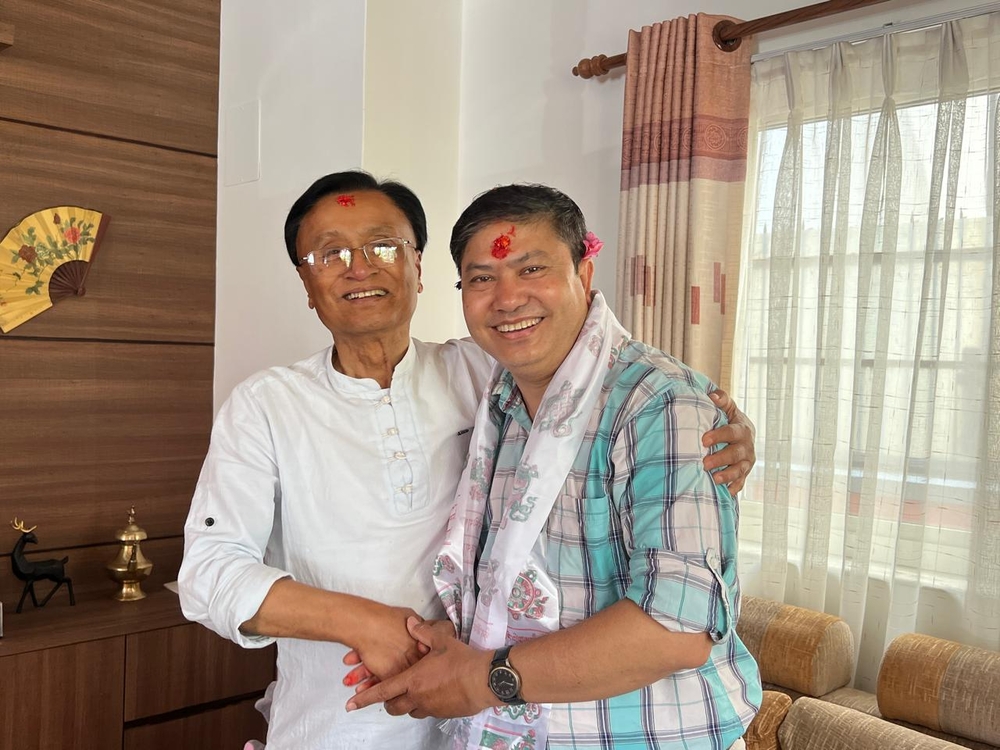
नेपालभाषा वाङ्मयको उत्तरआधुनिक काव्यविधामा प्रतिनिधि कवि र भाषा अभियन्ता हुन्– सुरेश किरण । ‘भाषा आन्दोलनका एक अभियन्ता, आज भाषा आयोगका माननीय सदस्य जसका जीवनका चार दशकभन्दा बढी समय मेरै घरदैलोमा बिते । त्यहीँ हुर्के, त्यहीँकै हावापानीमा उनका जीवनका उकालो ओराली बिते । सुरेशलाई धेरैले धेरै कोणबाट सम्झना गर्लान्, तर मेरा लागि उनी एक प्रिय साख्खे परिवारजन,’ मल्ल के. सुन्दर भन्छन् ।
०००
सहर र संस्कृतिमाथि विमर्श गरिबस्ने सुरेश किरणका विचारमा उनी जन्मिएको यो काठमाडौं सहर एउटा मायावी नगर थियो । ‘यो सहरमा एकपटक छिरेपछि निस्कन गार्हो हुन्छ,’ सुरेशले लेखेका छन्, ‘सायद त्यही भएर हो– गोर्खाली राजा पृथ्वीनारायण शाहले काठमाडौं जितेर यसलाई गोर्खा राज्यमा विलय गर्नुको सट्टा आफैं गोर्खा छोडेर काठमाडौंमा राज गर्न आए । गोर्खाली राजाले जितेको कारणले राजधानी त गोर्खा हुनुपर्ने थियो, तर भइदियो काठमाडौं । गोर्खाले काठमाडौं जितेको होइन, काठमाडौंले गोर्खा जितेको हो । वास्तवमा पृथ्वीनारायण शाहले राजधानी बनाएको कारणले काठमाडौं विकसित भएको होइन । बरु काठमाडौं उतिखेरै विकसित भइसकेका कारण पृथ्वीनारायण शाहले यसलाई राजधानी बनाएका हुन् ।’
देवीदेवतामाथि पनि सुरेश किरणको टिप्पणी हुन्थ्यो– काठमाडौंप्रति आकर्षित भएरै उनीहरू काठमाडौंमा बास बस्न लोभिन्छन्, त्यसैले त काठमाडौंमा मन्दिरै मन्दिर छ । काठमाडौंमा हिँड्दा यदि बाटोमा कहीँ ठोक्किए याद गर्नुपर्छ– त्यो पक्कै कुनै देवताको मन्दिर हुन सक्छ ।
सुरेश काठमाडौंका कुनै चर्चित चोक, टोल वा किंवदन्तीबारे मात्रै होइन, ससाना गल्लीमा बसोबास गर्ने ‘देवीदेवता’, मान्छे, नेवाः पर्व, चौरासी व्यञ्जन र संस्कृतिमाथि माथि पनि धाराप्रवाह कथा सुनाउन सक्थे । जस्तो चौरासी व्यञ्जनको चौरासी नेवाः मेनुको नाम, तिनका विशेषता र पाक–कलामाथि व्याख्या गर्दै उनले मसँग भनेका थिए, ‘नेवाः भोजन र संस्कृतिमा चौरासी व्यञ्जनको थाली स्वादको शिखर हो, नेपाली भान्सामा विरलै झुल्किने, तर स्मृतिका पत्रहरूमा बास बसिरहने !’
सुरेश किरण मेरा लागि थिए, नेवाः संस्कृति, काठमाडौं र यहाँका गल्ली–गल्लीसँग जोडिएका विषयहरूको आधिकारिक व्याख्याता । उनीसँगको संगत मेरो सिकाइको पाठशाला थियो । त्यसमाथि, एक दाइबाट पाउने बेहिसाब प्रेम मैले उनीबाट पाएको थिएँ ।
दुई महिनाअघि एक भेटमा मैले उनलाई भनेको थिएँ, ‘दाइ, म तपाईंको लामो प्रोफाइल लेख्न चाहन्छु ।’ उनले त्यतिबेला भनेका शब्द अहिले मेरो मथिंगलमा ओहोरदोहोर गरिरहेका छन् ।
उनले भनेका थिए, ‘पख्नुस् न, हतार के छ र ?’
अन्तिम बिदाइमा खादा अर्पण गर्दैगर्दा म मनमनै उनीसँग अन्तिम गुनासो गरिरहेको थिएँ, ‘आफूले चाहिँ के साह्रो हतार गरेको नि... ?’
000
सुरेश किरणको कविता : एक टुक्रा रात
सुत्न जोसँग ओछ्यान छैन
ऊ आफूलाई चाहिनेजति जमिन ओछ्याएर सुत्न सक्छ
सुत्न जोसँग सिरक छैन
ऊ आफ्नो नापअनुसारको आकाश ओढेर सुत्न सक्छ
तर, सुत्न जोसँग रात छैन
थाहा छैन, ऊ कसरी सुत्न सक्छ ?
सुत्न कसैलाई आफ्नै ओछ्यान चाहिन्छ
कसैलाई आफ्नै तकिया त कसैलाई आफ्नै कोठा
तर, म कसैको पनि ओछ्यानमा सुत्न सक्छु
कसैको पनि कोठामा सुत्न सक्छु
सुत्न मलाई आफ्नै ओछ्यान चाहिँदैन
आफ्नै कोठा पनि चाहिँदैन
चाहिन्छ त बस आफ्नै रात चाहिन्छ
सुत्न मिल्ने एक ढिक्को रात
म अरूको रातमा आफू सुत्न सक्दिनँ
अरूको रात खोसेर आफू निदाउन सक्दिनँ
हो, चोरहरू राति आउने गर्छन्
तर, उसले सम्पूर्ण घर चोरे पनि
हाम्रो सम्पूर्ण रात चोर्न सक्दैन
हो, मलाई थाहा छ
राति आउने चोरभन्दा
रात चोर्ने चोर खतरनाक हुन्छन्
म दिउँसै आएर तिम्रो तकियामुनि
जतन गरी राखिएको रात चोरेर लान सक्दिनँ
म चोरीको रातमा सुत्न सक्दिनँ
त्यसैले जहाँ गए पनि
म आफ्नो भागको एक टुक्रा रात
सधैं गोजीमै हालेर हिँडिरहेको हुन्छु ।

