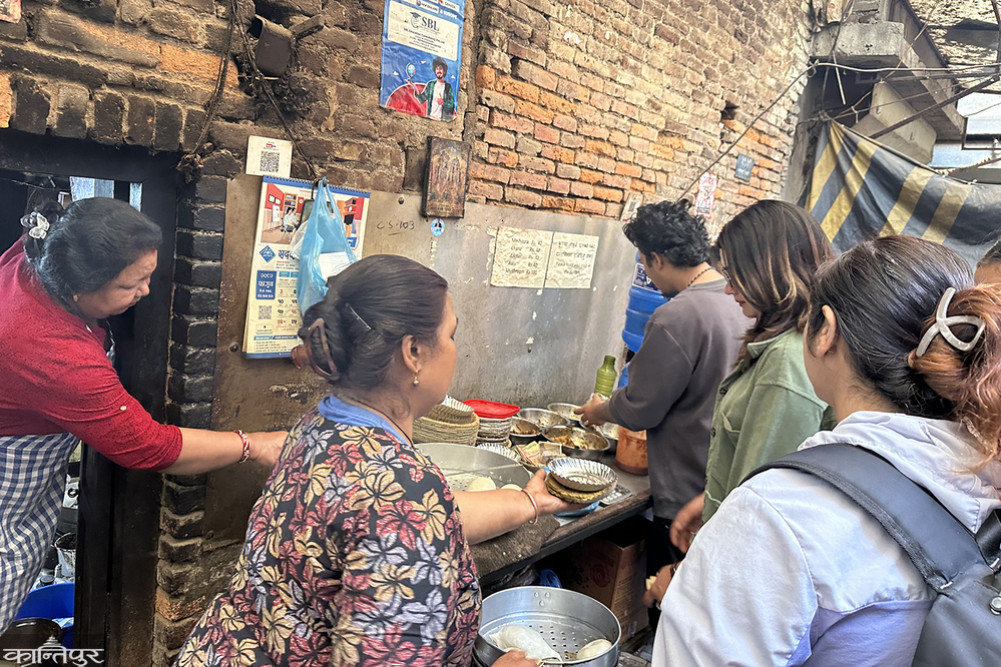
Chandradevi, who employs five people at her Yomari shop, says: ”Youth in the country don't have to sit around thinking there is nothing to do. You can move forward using the skills you know.”
We use Google Cloud Translation Services. Google requires we provide the following disclaimer relating to use of this service:
This service may contain translations powered by Google. Google disclaims all warranties related to the translations, expressed or implied, including any warranties of accuracy, reliability, and any implied warranties of merchantability, fitness for a particular purpose, and noninfringement.
‘I had to work all month and wait for my salary. No matter how much I did for someone else, I couldn’t do it. I was fed up. I would rather do my own small business than do other people’s work. I started my own business, no matter what,’ says Chandradevi Dangol.
Chandradevi’s kitchen has been serving the same taste for 16 years in the narrow chowk of Chokhachhen Gali near Indrachok, the commercial center of Kathmandu. Chandradevi not only cooks delicious dishes, she also promotes local dishes. Chandradevi has been selling dishes like Yomari and Bara at home. She has now also employed 5 people.
Chandradevi’s Yomari Shop
Born and raised in Kathmandu, Chandradevi was an expert in handicrafts. She worked in a company for more than a decade as a craftswoman. But after a while, she began to wish she could do something for herself. ‘Instead of doing other people’s work, I wish I could do some profession or business myself. I felt like I would live doing other people’s work,’ she said. With that thought in mind, she quit her job.
Chandradevi felt that Newari traditions, culture, and traditional foods were slowly disappearing. She decided to open a traditional snack shop to keep the culture alive and inform the new generation about it. She said, ‘It felt bad to see our own Newari food disappearing. Not only my children. I thought all Nepalis should know about Yomari.’
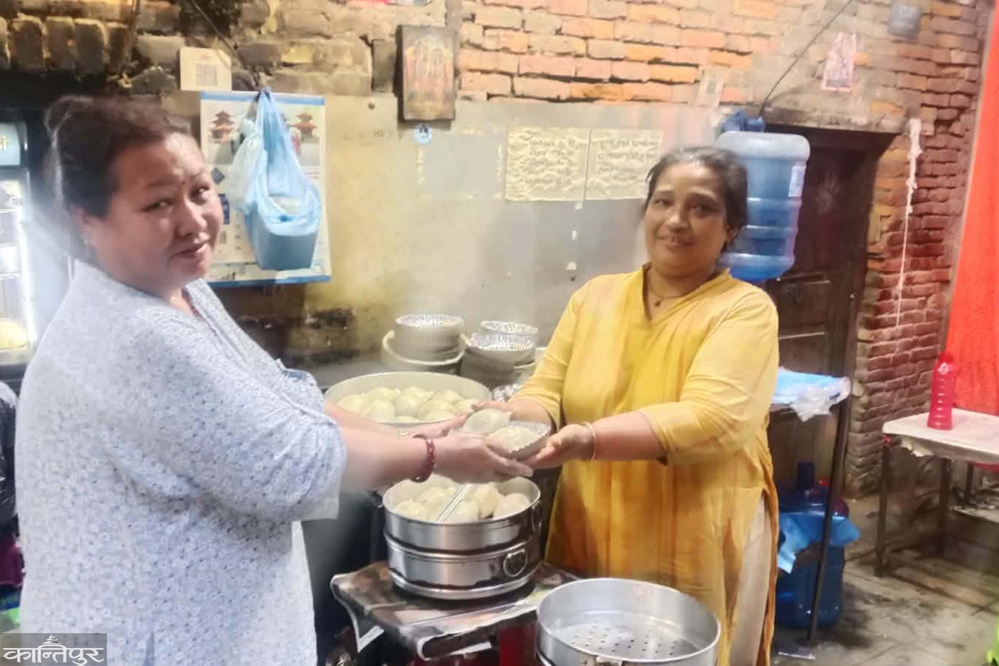
Although she saw bara, roti, and vegetables being cooked in the streets of New Road, she had never seen Yomari being cooked. ‘Other shops around my house were already selling bara and potatoes,’ she said, ‘but no one was selling yomari. Rather than competing by selling the same food, I would give customers a different taste. I started cooking and selling yomari with the idea that others would also know about yomari.’
In the early days, Chandradevi cooked and sold yomari alone. Gradually, people started to know about the yomari she cooked and sold. ‘People started to know about the yomari we cook, and many people liked it. After that, I didn’t think I made a mistake by quitting my job. I never looked back,’ she said, ‘In the early days, many customers would come to see how yomari tasted. That made me very happy,’ she said. The money she earned made it very easy for her to educate her children and manage her household expenses. ‘In the early days, I was very happy when I could afford to pay for my household expenses and educate my children with the money I earned,’ she said. Chandradevi’s own family helps in this shop, which opens at 12 am. ‘Nothing can be done alone. There is a huge crowd of people. My children, sister, and I work as a team of four,’ she said. Now, according to the ‘demand’ of the customers, dishes such as khuwa yomari, chaku yomari, andanda bara, plain bara, masyoura choila, and aloo are cooked in her kitchen. Customers even return when they don’t get their turn. ‘We never sell stale food. Instead, we make less. That’s why they come looking for us,’ she said. ‘We make it fresh and hot in front of them.’ That’s probably why.’
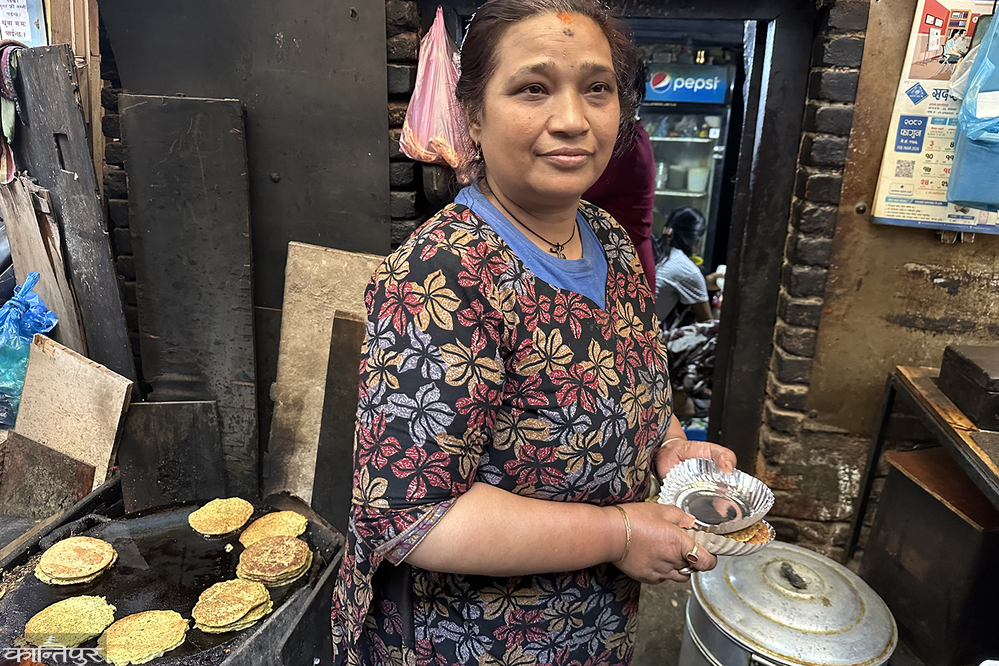
Chandradevi says that she saves more than 2500 rupees a day by cutting expenses. Despite the rising prices in the market, Chandradevi says that she has not increased the prices. Her shop's menu is: Khuwa/Chaku Yomari for 70 rupees, Egg Bara for 75 rupees and Plain Bara for 35 rupees. Her shop's customers range from students to foreign tourists.
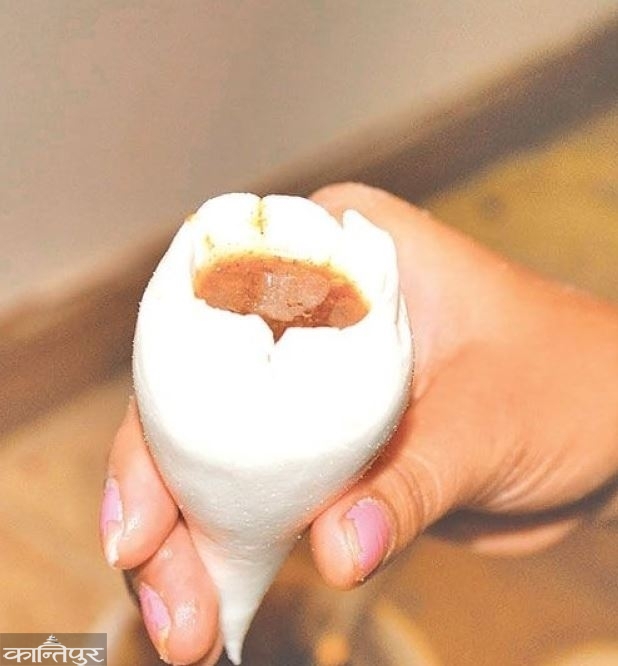 In Chokhachhen Gali, other people besides Chandradevi are now selling Yomari. 'I am very happy to see Yomari shops opening in various places,' she said. 'I am happy to see people working and struggling in their own country.'
Chandradevi wants her children to continue this work in the future. 'If they work, they will not have to go abroad.' She said.
She wants the youth to work in their own country. ‘Youth should not sit around saying there is no work in their own country, they can move forward using the skills they know,’ she said.
For Chandradevi, who lost her husband to a common fever a few years ago, this shop is the main source of income and raising her children. It is through hard work and struggle that Chandradevi has continued her work till now.
Yomari is also a special dish associated with Newari culture. There is a special festival associated with this dish - Yamari Punhi. This festival is celebrated every year on the day of Mangsir Shukla Purnima (Dhanya Purnima).
BBC Master Chef finalist Santosh Sah also took
Yomari to the world stage. He reached the final round with a top 6 place after tasting the original Newari dish Yomari in the semi-final round.