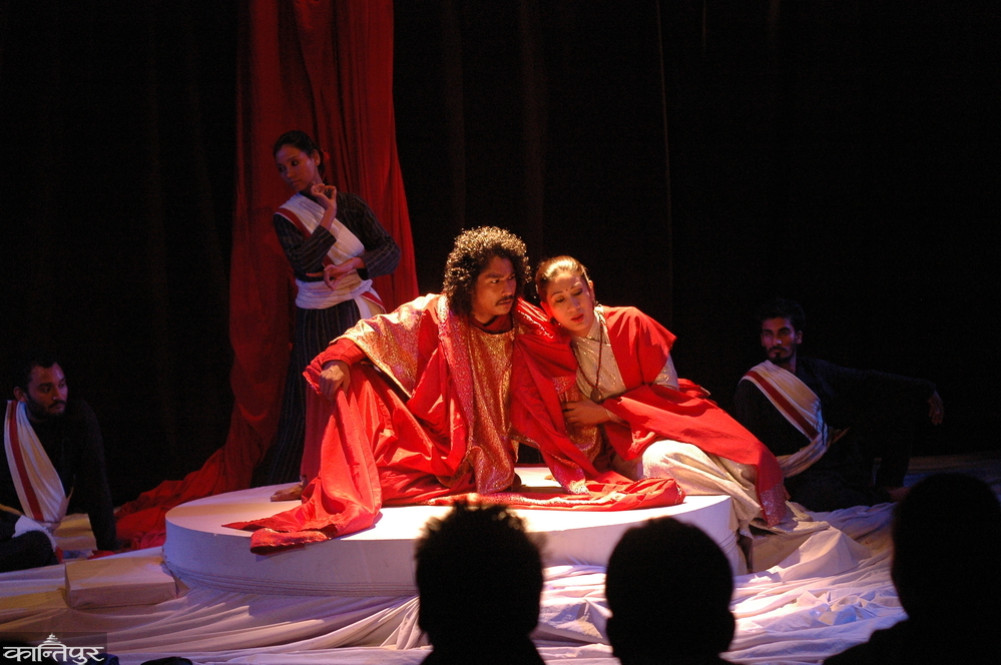
After entering the highway through a narrow alley, the theater is beloved in the current public landscape due to the dedicated seeker, his passion, and the enthusiastic audience.
We use Google Cloud Translation Services. Google requires we provide the following disclaimer relating to use of this service:
This service may contain translations powered by Google. Google disclaims all warranties related to the translations, expressed or implied, including any warranties of accuracy, reliability, and any implied warranties of merchantability, fitness for a particular purpose, and noninfringement.
The sultry evenings of 2066 Pus would creep along like a python. With the setting sun, the branches of the Gulmohar trees around the National School of Drama (NSD) in Delhi would turn a crimson red.
I was interviewing Irrfan Khan, who gave a different taste and style to cinema and acting, in a similar twilight, who was a 'pass out' of the same drama school. Khan was engrossed in his memories that evening in his memories.
While his film 'Billu Barber' was being screened in the city's cinemas, Irrfan suddenly entered NSD saying, 'Let's watch a play'. NSD was bustling - with the twinkling of many lights, dozens of actors and photos of plays hung in the building. While acting in plays for a long time, some aspirations, some dreams were traveling with him.
For him, acting was 'self-acceptance'. 'Keeping up with plays and being busy with acting were such things that awakened my dying dreams,' he said, basking in the fire on a festive evening, floating in the memories of his own dead and living dreams. Irfan, in his own way, was discussing the economic stress, sorrow and social identity of the people who were chanting the mantra of life in the play. While recounting the hazy memories of the NSD who had passed through the beautiful daily life of his time, Irfan gave an effective ‘statement’, ‘There is sorrow in the play. And, only those who have immense affection can do the play. The play is nothing but affection and nothing else.’
Let’s discuss that sorrow after 16 years when Irfan, who has already left the great stage, said, ‘There is sorrow in the play and the play is nothing else but affection.’ There is a character in the one-act play ‘The Swan Song’ by writer Anton Chekhov. The one-act play
The sorrow of making a living by doing plays is written. Chekhov’s character Vasily Svetlovodov (68) is a popular playwright. One evening after staging a play, he falls asleep on the stage. His assistant Nikita Ivanich asks him to go home. Svetlovodoff says, ‘I have given my whole life to drama. I have no home. No family. I am completely alone. I am like the wind blowing in lonely fields. After I die, no one will remember me tomorrow. I belong to no one. No one needs me. No one loves me.’ Nikita tells him, ‘Sir! The audience loves you.’
Svetlovodoff’s response is, ‘Where are the audience who love me now? They are sleeping soundly at home. They have deliberately forgotten an old artist like me from here.’
That was it— the story of Russian society at a time when drama had not become a solid profession. Even 121 years after Chekhov left the world, the life, sorrow and destiny of his character Svetlovodoff and the Nepali playwright are not that different. Our beloved playwright continues to chant – drama, drama... despite all the stress, inconvenience, hardship and deprivation in his theatrical journey. And, as Irfan said, drama is just a passion for Nepali playwrights amidst sorrows.
...
Even in this capitalist era, when drama became commercial, its art and beauty spread, where artistic sense, patience, emotion and feeling always have a special meaning.
 In the theater, where the characters are given a spotlight, the audience sees a reflection of their own lives. In each plot of the acting playwright, they see the picture of their own lives moving. Therefore, the drama passes by their lives. The playwright, who is engaged in dialogue and acting, who does not care about the world – he is simply living the flavors of life – beauty, heroism, compassion, humor, anger, horror, wonderful, horrible and peaceful! These flavors are the reality of our world – where transience, emotions, thrills, tears, joy, boredom, regret are communicated.
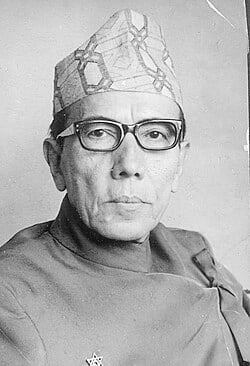
Playwright Balkrishna Sama used to say, ‘Rasas are tasted by the senses. Taste is experienced by the tongue, sight by the eyes, hearing by the ears, smell by the nose, and touch by the skin. The mind is considered the center of all the above-mentioned rasas. It is this mind that generates emotions and emotions are the result of rasas. Just as people are satisfied by eating sweet dishes and tasting various flavors, similarly, the audience sitting in the auditorium and watching the performances presented by the actors on the stage savors the rasas and becomes filled with emotions.’
Mahamuni Bharata’s ‘Natyasastra’ is considered the first book of the poetry-sastra tradition, whose 18th chapter says, ‘The world is a laboratory of drama, ghosts, etc., are all of eight types.’
000
The stage is dark and the light is not shining on the floor. When we follow the classical stories of ancient playwrights, we realize that wonderful events kept happening in that narrow alley of the stage. Eventually, the special fragrance of that alley spread all over the world. And now the stage has entered the highway. That cycle of audience, acting and appreciative art has continued since ancient times. The drama genre is the most beloved in the current public landscape due to the loyal seekers of drama, their passion and enthusiastic audience.
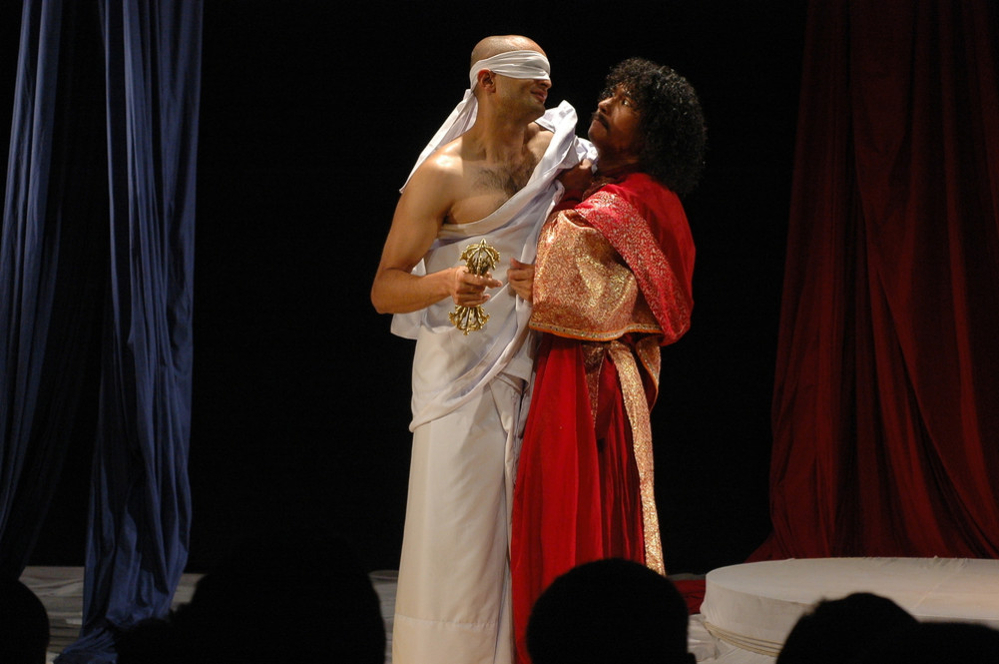
The ‘passion’ of playwrights is why drama is the most successful genre to date. Why? Because, the most famous writer/playwright in the world is – William Shakespeare. And, he is – neither the past nor the future. The ‘charm’ and discussion of the characters he brought to life on the stage – Hamlet, Macbeth, Romeo-Juliet – are equally vivid today – after 6 centuries – even globally.
The history of Nepali drama is actually a pleasant journey from the Patangini and Dabli of the elite court to the public theater. It traveled a long journey in the court auditoriums and Dabli during the Lichchhawi, Malla, Shah and Rana periods. And, much later, it reached the public. In the opinion of professor and playwright Abhi Subedi, Kathmandu's theater is the overall name of multifaceted artistic consciousness and experimentation. 'Kantipur's theater has multiple forms - it is audible, visible, lyrical, easy and rebellious,' says Subedi, 'Theater is a ritual, whose art has fragrance.'
...
The journey of Nepali theater is becoming professional. Our plays are on a world tour. Pavitra Khadka's journey from Ramechhap to Kathmandu was not decided with the idea of 'I will do drama'. What to do? Where to go? There was no dream. ‘But, drama has helped me find that dreams are dreams, desires are desires. It has established my own identity.’
Recently, she went to Europe to stage the play ‘Lost and Found’ written/directed by Ghimire Yubaraj – on a 40-day journey. Therefore, drama has become an ‘opportunity for her to experience life and gain experience’. For example, while staging this play in 9 cities in three European countries, she wondered – how did the seeds planted by that bus roof journey in Ramechhap reach here?
Today, there are 12 theaters in the city of Mayanagari, Kathmandu. Many theaters are closing down on this bumpy road, and new ones are opening up. It seems that this is the golden age of Nepali drama. Now, drama in the city is not just art, but a plot of people’s culture. In Kantipur, the audience watches dramas of their own choice and understands life.
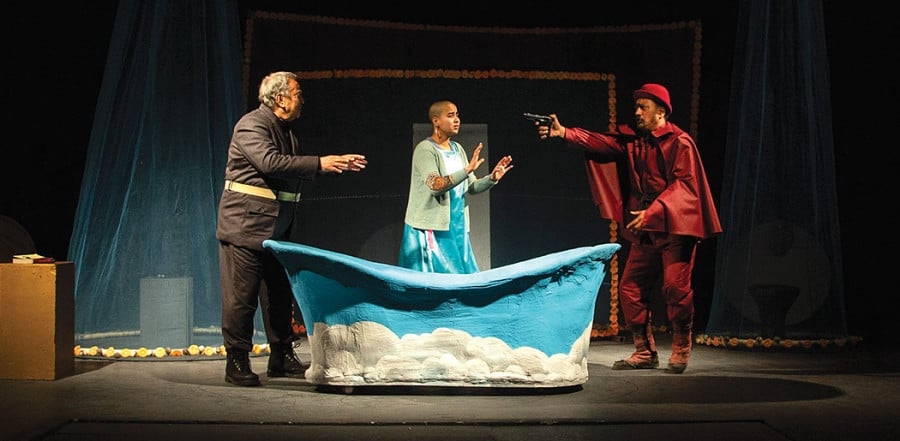
There is an atmosphere of drama in the city, but there are not as many playwrights as Khoja. Despite this lack, there are Abhi Subedi, Kumar Nagarkoti, and Ghimire Yuvaraj, who are still writing plays, whose plays keep the city moving. Otherwise, we would have had to rely on foreign plays. Nagarkoti's plays 'Coma: A Political Sex', 'Bath-Tub', and 'Transit' staged at Shilpi Theater created a different and grand atmosphere in Kantipur. 'Fakir' Nagarkoti, who was walking thoughtfully in the Tantric alley of the play, had said during the staging of 'Bath-Tub', 'I became a poet when I felt like writing poetry. I became a storyteller with the love of stories. I became a novelist with the attraction of an illicit relationship with novels. The initiator of the play and the primitive love of solitude made me a playwright.'
Until a decade ago, 'Kantipur' was made dramatic or kept the art of this city alive - Aarohan Gurukul. Drama addict Sunil Pokharel keeps saying – Drama is in my blood. As much as Sunil loves drama, he is always open to the pain or frustration of doing drama. And, the culmination of Sunil’s drama is – Arohan Gurukul, witness to the most special events that happened in his life.
Gurukul was a new and beautiful island located on the slopes of Baneshwor. There was drama, its ‘flora and fauna’. Its ‘ecology’ was different, it was artistic. And, there was – full of a unique sweetness.
Sunil Pokharel & Company’s Gurukul made three contributions to Nepali theatre. One – It gave birth to a completely new battalion of theatre artists. Two – It prepared a generation that would watch drama and take an interest in drama. And, three – It introduced Nepali audiences to the vast dimensions of drama by organizing an international drama festival. The opportunity to see the magnificent performances of theater artists from many countries in Kathmandu was a godsend for Nepali audiences.
At that time, a regular audience of plays staged at Gurukul was poet and writer Binod Bikram KC, who watched the plays as often as possible. On the first day of Magh, during tea and chat, he was reminiscing about Gurukul, “I still remember the poetic discourse that Sunil Dai would give about the discipline that the audience should follow before the play starts. Standing in the spotlight, he would say – watching a play in itself is joining an artistic tradition. If you make noise or eat something or do something like that, it will hurt the spirit of the play. You can laugh, you can cry, but you cannot do side talk.”
Among those involved in creative work, Binod respects the most, but he respects the playwright. ‘Whenever I meet a theatre artist who devotes all his time and energy to a ‘passion’ for an art or genre, I bow down with such emotion,’ he says, ‘If we talk about what drama has gained from the government or the power, the power is so corrupt that it has nothing to do with the art of theatre.’
Along with Gurukul, wonderful plays were/are staged in Kathmandu by various theatre groups including Sarvaman Theatre, Actors Studio, Shilpi Theatre, Mandala Theatre, which were/are the soul of the city.
....
Now let us take a quick look at the history of Nepali theatre, let us enter the era of that black and white image of theatre.
Kathmandu, with its diverse castes, arts, cultures, religions and customs, is the highest museum of theatre and architecture. The pages of history say – the history of theater art during the Lichchhawi and Malla periods is vast. The book ‘Kantipurko Rangmancha’ by playwright Prachanda Malla says, ‘It is understood that many works were composed in various aspects of literature during the reign of King Jayasthiti Malla. It is mentioned in the Gopal Vansavali that ‘Balramayan Natak’ was performed during his time. The play ‘Raghavananda’ was performed during the coronation of Yuvaraj Dharma Malla. Although the playwright Jayaprakash Malla wrote ‘Ratneshwar Prajaya’ staged at that time as a play, it is dialogue-free and songs are used from beginning to end.’
Even during the Shah and Rana periods, rulers used to be enchanted by dance, songs and plays in their palaces. Artists used to perform plays in Hindi-Urdu. Famous playwrights of the 1989 Salta period were – Ratnadas Prakash, Bekhanarayan Maharjan (Bekhacha), Jawaharlal Kapali, Bijuli Prasad Karmacharya, Tulsidas, and Kisanman. Pushpalal Shrestha played the role of Makhna in the play ‘Sahanshila Sushila’ by playwright Bhimanidhi Tiwari in 1997 BS.
Bekhanarayan Maharjan (Bekhacha), who was practicing drama in the Kantipur form of theater art, in the double or court-theater, has said about the drama performances of that time, ‘While acting in the plays of that time, the actors used to move around on the stage in an unnatural manner, jump, act excessively, speak in a high voice, present light-hearted humor unrelated to the play, not pay attention to character portrayal, and use very flashy costumes, which could affect the essence of the play . ...No matter how it was staged, it contributed to the development of the play . We performed like this for a long time .’ (Kantipurko Rangmanch, Prachanda Malla) .
However, now time has moved on a long time . Today's theater artists seriously explore life, dreams, and society in drama.
Dramas were staged in special areas of land called dabuli (dabuli or dabu), which were built by the Newas for various purposes. There are separate dabulis in the palaces of the three cities of the Kathmandu Valley, where royal ceremonies such as coronations were performed. Gradually, folk dramas began to be staged in these dabulis, where classical dances were also performed. Dramatist Somnath Khanal's working paper 'The Importance of Ancient Dabulis in the Folk Drama of the Kathmandu Valley: A Study' tells the importance and story of the dabulis of the valley. He writes, 'Nepali drama got a chance to develop when the dabulis built for the purpose of religious and courtly rituals became available for theatrical activities.'
....
When discussing modern Nepali drama, the name and work of Balkrishna Sama is established in a special category. Considered by some as the ‘Nepali Shakespeare’ and by many as the ‘Emperor of Drama’, this playwright, poet, storyteller, essayist, actor, painter, photographer and army colonel has a bright aura in the Nepali literary world.
‘Sam’s plays have taken our literature to a higher level’ – says writer/critic Taranath Sharma. In ‘Sajha Samolachana’, published under the editorship of Krishna Chandra Singh Pradhan, Sharma writes, ‘The numerous plays of Bhimanidhi Tiwari, which are full of the pitiful tales of the oppressed society, and the shocking plays of Rudraraj Pandey and Hriday Chandra Singh Pradhan, who are even below him in rank, have been ignored, from which we can learn that Nepali drama has shrunk. In the early period of Nepali drama, no other successful playwright was born except Sam. Sam is shining as a lone, but very bright star.’
Critic Ishwar Baral has called Balkrishna Sama ‘the legendary figure of Nepali literature’. In his opinion, Sama’s ‘Mutuko Byatha’, first published in 1986, was a groundbreaking work of modern Nepali literature. Sama’s ‘Dhruv’, ‘Prahlad’, ‘Mukunda-Indira’ and Gopal Prasad Rimal’s plays ‘Masaan’ and ‘Yo Prem’, written in the Ibsenian tradition, gave Nepali drama a height. Govinda Bahadur Malla’s ‘Gothale’s’ ‘Chyatiyeko Purda’, ‘Bhusko Ago’, ‘Bhoko Ghar’, Vijay Malla’s ‘Kohi Kin Barbad Hos’ etc. have written stories of the development and sorrow of Nepali society.
The story of the popularity of Man Bahadur Mukhiya's 'Ani Deurali Runchh' and Madhav Ghimire's lyrical drama 'Malati-Mangale', staged during the Panchayat period, is inscribed in golden letters in the history of Nepali literature. Satya Mohan Joshi and Prachanda Malla gave Nepali theater a modern form. The contribution of many playwrights to the social realist stream or experimental drama menu has changed the form and beauty of Nepali literature.
The nameless theater group was born during the banned days of the Panchayat (18 Chaitra 2038) under the leadership of playwright Ashesh Malla. The group continued to stage street plays in the light of democracy - in the courtyards, fields, roads and squares. At that time, when freedom of speech was taken away, 'censors' were applied to plays. ‘How many times did the police beat me up while I was doing a play on Trivima,’ Ashesh reminisces, ‘those days were very difficult.’ After the advent of democracy in 2046, street plays were stopped. Ashesh feels that they need to be revived again. In this way, plays continued to be a bridge of light for democracy and social awareness for a long time.
....
Now let’s take a look at the current Nepali plays that have reached theaters from the stage and the palace. What are the main ideals of the ‘content’ of the plays being staged in theaters? Are they somehow confused about the goal? Where are we in the world drama landscape?
In the opinion of director Anup Baral, the current Nepali theater is in a period of transition. How can we say that on the one hand, we want to talk about the burning issues of society, and on the other hand, we are concerned about retaining the audience. That is why some plays have deep ideas but unclear directions! Sometimes the presentation is strong, but the spirit is weak! ‘I don’t view this situation only negatively. Being confused is also a stage of discovery, but the danger is that if we stop asking ourselves the question ‘Why are we doing drama?’, theater becomes just an event, not an experience,’ says Anup. ‘The basic ideal of theater is always the same – an encounter with the inner truth of a person! If that is lost, drama becomes hollow even if it looks beautiful.’
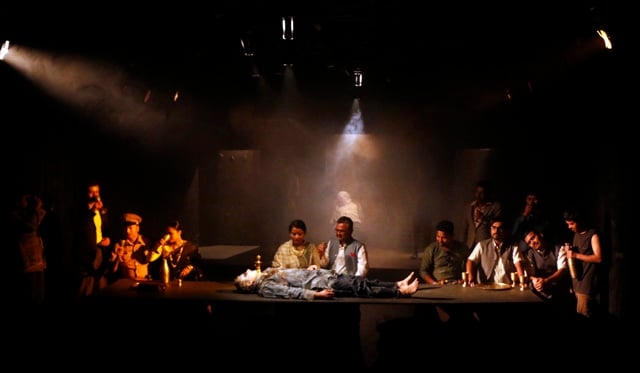
Baral thinks – Nepal is still on the periphery of the world drama map, not at the center. ‘But the good thing is that we are not invisible. We have a deep tradition – folk, rituals, belief systems, along with a contemporary consciousness that is growing with us.’
He feels – the pain of importing foreign drama will continue until we consider drama writing a serious practice and directors-theaters are not ready to take risks in writing new Nepali. He is optimistic about the next generation of drama. ‘The next generation has energy, courage, and questions. But there is also a concern - they want quick results, this generation loves practice, considers failure as a teacher and remains honest with their body, voice and consciousness, then the future of Nepali theater is bright.'
Director Ghimire Yubaraj feels that the content of the plays being staged in theaters now is mainly cultural and political. 'That is the voice of oppression in some way or another,' he says, 'From a critical point of view, modern style, coexistence with technology is the main face of Nepali theater, but numerically, there is a greater plurality of cultural plays. However, as the number of people who have studied theater outside has increased, there has been an increase in diversity in lessons and staging in Nepali theater.'
Yubaraj is grateful to the generation of theater before him. 'The generation before me brought Nepali theater to us with great difficulty. Most of my generation is in cinema. The generation after me has taken over the stage.' He is deeply saddened by the 'death of art criticism in the media'.
In the opinion of Dr. Shiva Rijal, author of the book 'Theater in Nepal: Resources, Tools and Creation' and a PhD in drama, Nepal's stage art needs to be interpreted in the changing social, political and ideological environment.
....
Theater is actually a 'space' of discomfort, where there are long stories of suffering and tension. Now theater dreamers must become more imaginative and artistic. Theater is a window to a new dimension, where ideas and crafts should be churned out. Only after new stories of diversity and social contradictions are read in the journey that began from the cradle, will theater reach the peak of a different and unique beauty.