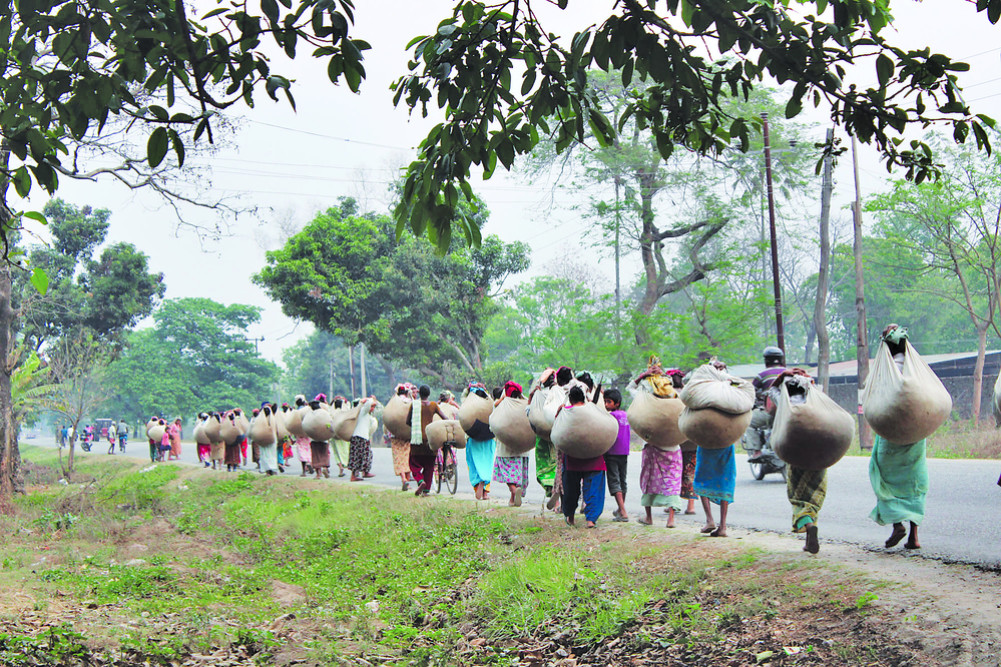
When Ilam tea reaches across the border, its identity changes, it is no longer Nepali tea. It suddenly transforms into Darjeeling tea. This is where the sadness of Nepali tea begins. The production is Nepali, the sweat of Nepali workers, but the brand is someone else's.
We use Google Cloud Translation Services. Google requires we provide the following disclaimer relating to use of this service:
This service may contain translations powered by Google. Google disclaims all warranties related to the translations, expressed or implied, including any warranties of accuracy, reliability, and any implied warranties of merchantability, fitness for a particular purpose, and noninfringement.
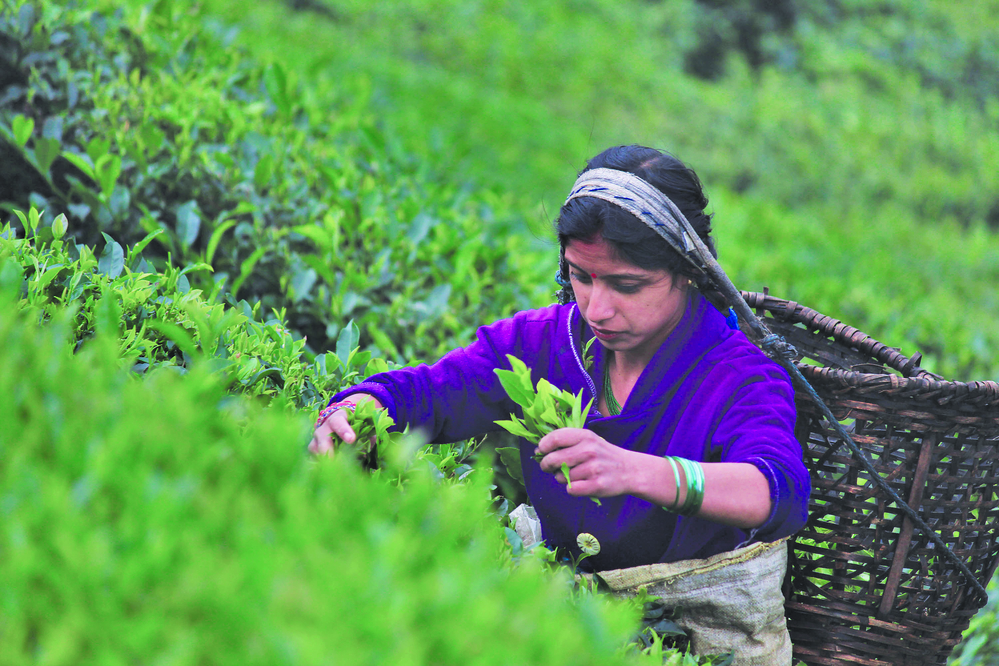
The morning fog is slowly lifting from the tea plantations of Suryodaya Municipality-10, Kanyam. The hands of the workers who are picking two leaves and one stalk are not stopping. The leaves reach the factory within a few hours and are processed. After bagging, the tea is exported to India through the eastern border, Kakadbhitta.
When Ilam tea crosses the border, its identity changes, it is no longer Nepali tea. It suddenly transforms into Darjeeling tea. This is where the tragedy of Nepali tea begins. The production is Nepali, the sweat of Nepali workers, but the brand is someone else's. Darjeeling tea is not just an ordinary agricultural product. It is a global power mixed with history, brand and politics.
In the 1850s, the British rulers started cultivating tea in the Darjeeling region of West Bengal, India. The combination of mountainous altitude, cold weather, fog and soil gave the tea produced there a unique taste and aroma. Due to that characteristic, Darjeeling tea was called 'tea champagne' in the world market.
In 2004, the Indian government registered Darjeeling tea as a 'Geographical Indication (GI).' This means that tea produced outside the Darjeeling region cannot be sold under the name 'Darjeeling'. This system was made to protect the identity of Darjeeling. But in practice, this GI brand has become a commercial and political weapon against Nepali tea.
The taste of tea produced in Ilam, which is connected to Darjeeling by a river, Panchthar, which is connected to Sikkim, and Dhankuta, is similar to Darjeeling. The hilly geography, altitude, soil, and climate are all similar to Darjeeling. Tea expert and entrepreneur Uday Kumar Chapagain says, ‘It is difficult to distinguish the taste of Nepali orthodox tea and Darjeeling tea during blind tasting.’ But the problem is not one of taste. It is one of brand and market control.
Darjeeling does not produce enough tea as it used to. But Darjeeling is popular all over the world. The demand is also increasing. How can that demand be met? Indian traders started importing Nepali tea to maintain the popularity of the Darjeeling brand along with meeting the demand in the world market. Nepali tea with a climate similar to Darjeeling and a similar taste was transformed into the Darjeeling brand. Nepali tea is being exported to the third country under the Darjeeling brand, Nepali businessmen claim.
Fluctuations in exports
According to the National Tea and Coffee Development Board, tea is currently being cultivated in 16,920 hectares of land in 28 districts of Nepal. Although Nepal's tea production has been gradually increasing in the last seven fiscal years, exports have been stable and fluctuating. According to government data, although the tea cultivation area and production are increasing, the expected income has not been achieved as the export market is mainly limited to India.
In the fiscal year 2075/76, 25.2 million kg of tea was produced, but in 2079/80, production increased to 26.4 million kg. In the fiscal year 2080/81, production increased further to 26.9 million kg.
Exports are not stable in proportion to production growth. In 2075/76, 15 million kg of tea was exported, but it decreased to 11.1 million kg in 2076/77. After that, exports reached 16.5 million kg in 2079/80, but decreased again to 13.9 million kg in 2080/81.
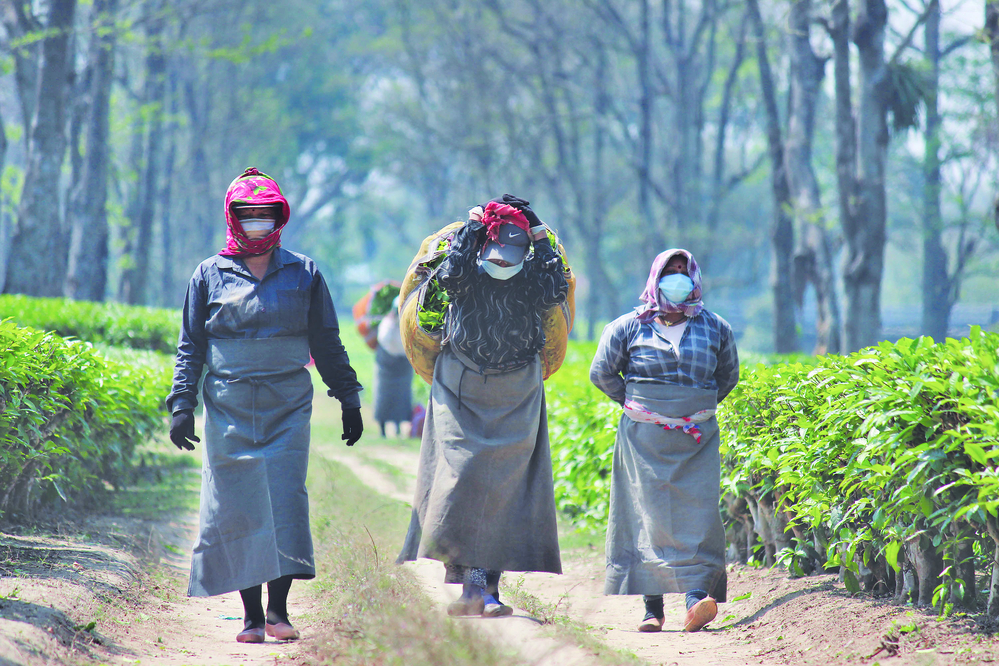
Although the export volume has been fluctuating, the price seems to have gradually increased. In 2075/76, tea exports worth Rs 3.2 billion reached Rs 3.93 billion in 2079/80. Till Chaitra of the current fiscal year 2081/82, 13 million kg of tea exports have earned Rs 3.57 billion.
According to trade experts, this price increase is due to international demand and price of orthodox tea rather than quantity. However, since a large part of the exports are still sent to India in raw form, the real benefit to Nepal is limited.
India dependence: convenience or trap?
Data shows that more than 90 percent of Nepal's total tea exports are exported to India. Only 10 percent is consumed domestically. According to the Mechi Customs Office, tea worth about Rs 4 to 5 billion is exported to India annually.
According to the Tea and Coffee Development Board, while 343,000 kg of tea was imported in 2075/76, imports have decreased to 44,000 kg in 2080/81. The import value has also decreased from Rs 117.7 million to Rs 37.8 million. ‘Nepali tea is gradually replacing imports,’ says Indra Adhikari, an employee of the board, ‘This indicates that Nepal is gradually becoming self-sufficient in domestic consumption.’
According to the board, the tea cultivation area does not seem to be stable. The tea cultivation area, which was spread over 28,732 hectares in 2075/76, had decreased to 16,901 hectares in 2076/77. It has since expanded to 20,760 hectares in 2080/81. According to experts, the farming sector has not been stable due to labor shortage, investment problems and market uncertainty.
Tea and Coffee Development Board officials say that branding of domestic products and expansion of third country markets are necessary to increase both production and exports. They conclude that both farmers and industry will not get the expected benefits unless the India-centric trade structure is changed. If tea can be packaged and branded in Nepal and exported to markets like China, Europe, and the US, the income could double or triple.
According to the Nepal-India Trade Treaty, agricultural products exported from Nepal to India are not subject to taxes and quantitative restrictions cannot be imposed. This initially gave Nepali tea an easy market. However, this ease gradually became a trap. ‘India is the largest buyer of Nepali tea. That is why it has also become a price setter and is now trying to become a controller,’ says Suresh Mittal, former president of the Tea Producers Association, Jhapa. Today, Nepal is selling tea to India for about Rs 535 per kg. Businessmen say that the same tea is being packaged in India and sold in Europe, America, and the Middle East for Rs 3,000 to 5,000 per kg.
Darjeeling's pressure reaches the Indian Parliament
The Bengal government has been raising questions about the quality of Nepali tea from the past, using various media outlets. ‘There is a misleading propaganda going on all over India that Nepali tea is of poor quality and inedible, this is a serious matter,’ says entrepreneur Chapagain, ‘The Nepalese government does not seem serious about the tea trade.’
In 2019, the then MP Shanta Chhetri raised the issue in the West Bengal Rajya Sabha to immediately stop the import of Nepali tea, saying that it was of poor quality. Before that, in 2017, the Darjeeling Tea Association had also met the then Indian President Pranab Mukherjee and submitted a memorandum to stop the import of Nepali tea.
In recent years, tea growers in Darjeeling have been openly increasing pressure against Nepali tea. Point 171 of the report prepared by the ‘Department Related Standing Committee on Commerce’ under the Indian Rajya Sabha recommended imposing a quantitative restriction or ‘anti-dumping duty’ on Nepali tea. The report claimed that Nepali tea was ‘poor in quality’ and ‘extremely cheap’, causing damage to the Indian tea industry. If this proposal becomes law, Nepali tea will lose its main international market.
Aditya Parajuli, president of the Nepal Tea Producers Association, Jhapa, accused some Indian businessmen of trying to create unnecessary confusion about Nepali tea and tarnish its quality. ‘Nepali tea is exported only after being tested at the Central Food Laboratory in India,’ he said, ‘Our tea is not inedible, but India’s own tea has a pesticide problem.’
On the one hand, the Indian government has been banning Nepali tea on various pretexts. On the other hand, some businessmen seem to be trying to convert Nepali tea into the Darjeeling brand. Tea entrepreneurs say that the accusation that Nepali tea is of poor quality is more of an excuse than a fact. The real problem is that Nepali tea is cheap. Cheap does not mean it is bad. However, cheap tea has challenged Darjeeling producers in the market.
Darjeeling’s production costs are high. Their market has shrunk when Nepali tea is cheap. Therefore, the import of Nepali tea has been repeatedly obstructed by raising the issue of ‘quality’. What is even more ironic is that some branded teas sold in the Nepali market are produced in Nepal, packed in India and then imported back here. The reason is clear: India has a large packaging industry, easy export process and strong branding. Tea industry workers say that this has weakened the value, identity and self-esteem of Nepali tea.
Chinese market potential If India tightens import restrictions, more than 150 tea industries will be affected. More than 26,000 farmers and more than 80,000 workers will be affected. Tea farmer Poonam Rai of Ilam says, ‘They earned by selling our tea in the name of Darjeeling. Now, where will we go if the market is closed?’
With India’s obstruction, Nepal has started looking for an alternative market. China is seen as the main possibility for that. Nepal has recently sent samples of 16 types of ‘black tea’ to China. Gorkha Tea Estate in Ilam, which has been exporting ‘Sundarpani’ brand tea to more than a dozen European countries, exported tea worth more than Rs 20 million to China last year.
The potential price of Nepali tea in the Chinese market is estimated to be Rs 3,500 to 4,000 per kg. With the opening of the Chinese market, Nepali tea may emerge from the shadow of the Darjeeling brand for the first time. Tea expert Prithvi Bikram Rai says, ‘The problem is not with production, but with policy, brand and diplomatic weaknesses.’
The shadow of the Darjeeling brand has overshadowed Nepali tea for years. But the shadow is not always permanent. If the right policy, firm diplomacy and farmer-centric thinking are adopted, Nepali tea can create its own identity. Because the green leaves are Nepali, the sweat is the sweat of Nepali workers. Now the brand should also be Nepali. So that it can be recognized worldwide.