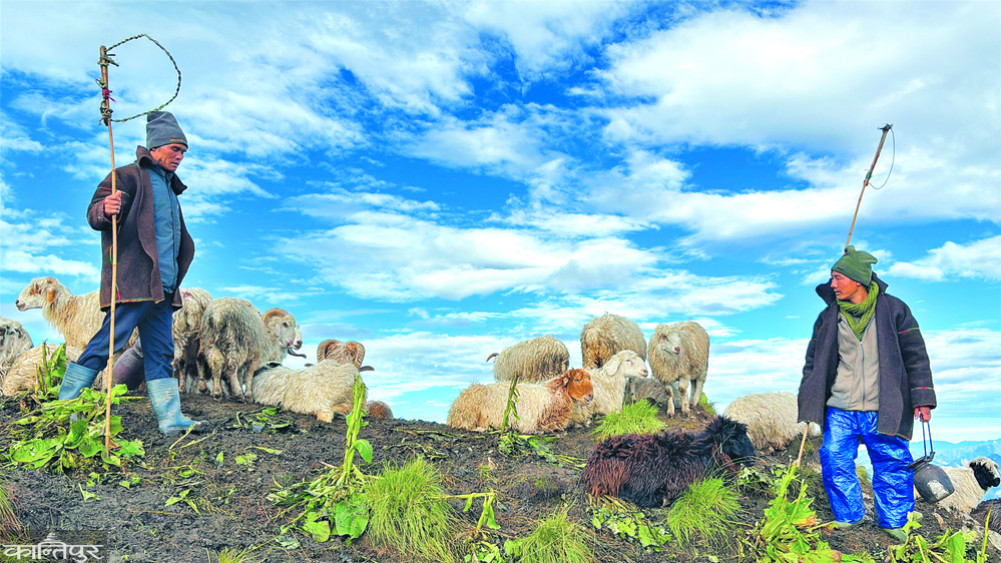
The babbling of the river, the chirping of birds. The sigh of the wind hitting the safflowers, and the hustle and bustle of people. What is heard here is like music, what is seen here is like a painter's canvas.
We use Google Cloud Translation Services. Google requires we provide the following disclaimer relating to use of this service:
This service may contain translations powered by Google. Google disclaims all warranties related to the translations, expressed or implied, including any warranties of accuracy, reliability, and any implied warranties of merchantability, fitness for a particular purpose, and noninfringement.
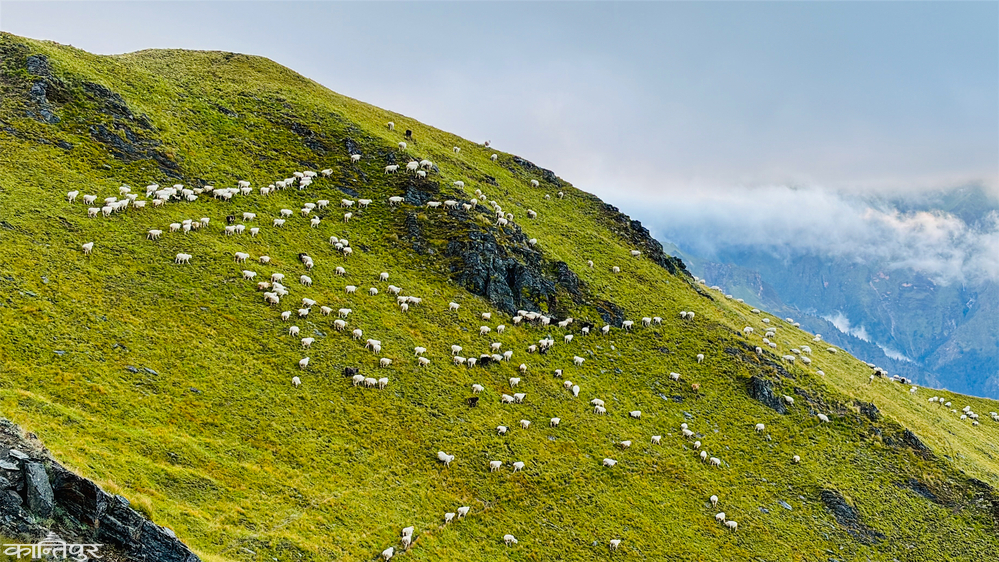
A wide valley surrounded by high mountains on all sides and the Uttar Ganga River flowing through the middle of this valley. Sometimes dense forests, sometimes beautiful human settlements. Covered in a blanket of fog in the monsoons and colored in green with various forest flowers, in winter, it becomes synonymous with charm with a turban of snow. The gurgling of the river, the chirping of birds. The sigh of the wind hitting the sedges, the hustle and bustle of people. What is heard here is like music, what is seen here is like a painter's canvas. It can hardly be described, it can hardly be captured in a scene, this is Dhorpatan.
This national park, which is the only hunting reserve in Nepal, was established in 2044 BS. Spread over a total area of 1,325 square kilometers, this reserve covers some areas of Rukumpur, Baglung and Myagdi districts. Hunters come here to hunt their prey and tourists come to immerse themselves in the immense beauty of nature. Those who come here know very well the natural uniqueness of Dhorpatan.
000
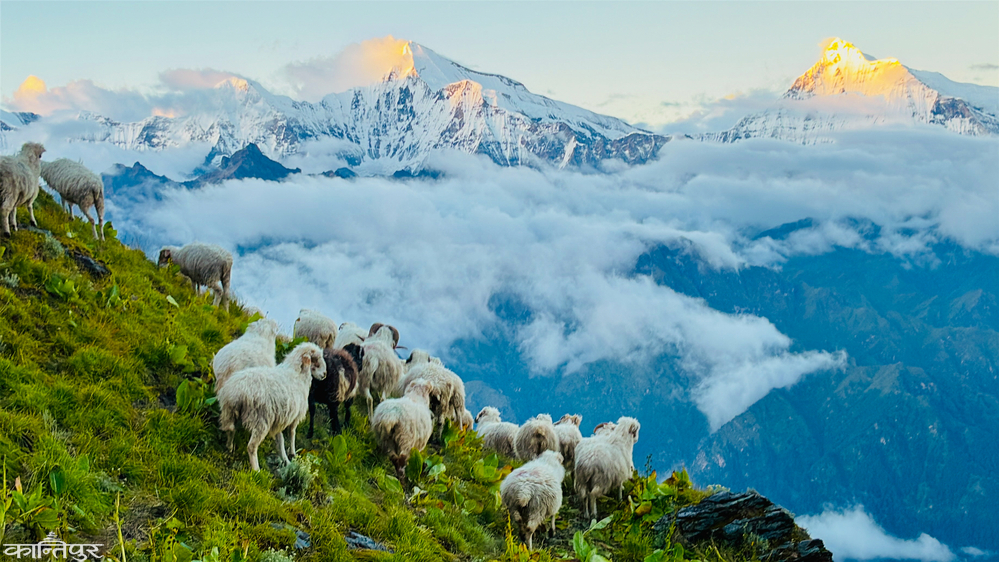
Most of the 7 blocks designated by the reserve for hunting wild animals in this high-mountainous and mountainous region are in Rukumpur. The entire territory of Dule, Sundaha, Seng, Dogadi and Ghusdung falls in Rukum, while the remaining two, Falgune and Surtibang, also fall in Baglung and Rukumpur, half of which are in Rukumpur. Therefore, the beauty of Dhorpatan is many times more beautiful than the beauty of Dhorpatan Valley and its surroundings, says Thikasai Gharti, ward chairman of Puthauttarganga Rural Municipality-5, which is located in the eastern part of Rukum.
Stories and myths of people
Local senior citizen Jung Bahadur Adai remembers that Dhorpatan Valley used to be a resting place for shepherds from Bobang and Adhikari Chaur in Baglung when they were going to Buki with their livestock. ‘And after 55-56 BS, people slowly started building sheds and some houses here. As you can see, Dhorpatan became a village.’ Adai adds, ‘Even after building a ghargoth, since it rains in winter, we used to stay here for eight months from Falgun to Asoj and leave the responsibility of the ghargoth watchman for the remaining four months and go to the aul (village). Now that too has been stopped. Now, we, the same two hundred households, stay here for twelve months. The cost of buying food has come down and ration water is also brought to the house by car, so it feels comfortable to live here.’
In addition, senior citizens like Adai are amazed by the development, changes and recent movement of people in the Dhorpatan area. ‘In so many years, not only time has passed, many things have changed. We have survived and seen so many changes,’ he says.
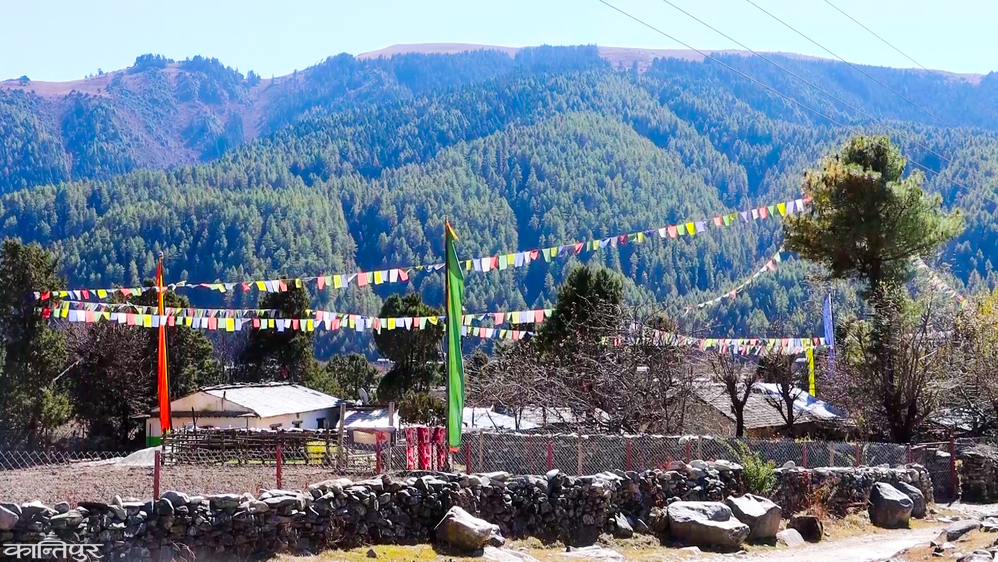
Those who visit Dhorpatan, which is the main residence of various tribes, Dalits and Kshatriya communities, mostly come to enjoy the natural heritage. Since people who have migrated from different parts of Baglung live here, there is also diversity in the customs and culture here.
Recalling that until about five years ago, only devotees from Baglung and surrounding districts used to visit the Dhorbarah temple here to celebrate the fair held during Janai Purnima, another local senior citizen, Dhan Bahadur Adai, is also amazed by the number of people visiting here recently. According to the statistics of the Dhorpatan Game Reserve Office, Baglung, a total of 15,553 tourists, including 106 foreigners and 15,467 domestic tourists, visited in the fiscal year 2080/81. In the fiscal year 2081/82, the number increased to 225 foreigners and 23,467 domestic tourists, a total of 23,692 tourists. A total of 6,285 tourists have visited Dhorpatan until Shrawan and Bhadra of the current fiscal year. If we look at the previous statistics, it is seen that the number of tourists visiting Dhorpatan has been increasing for the past five years.
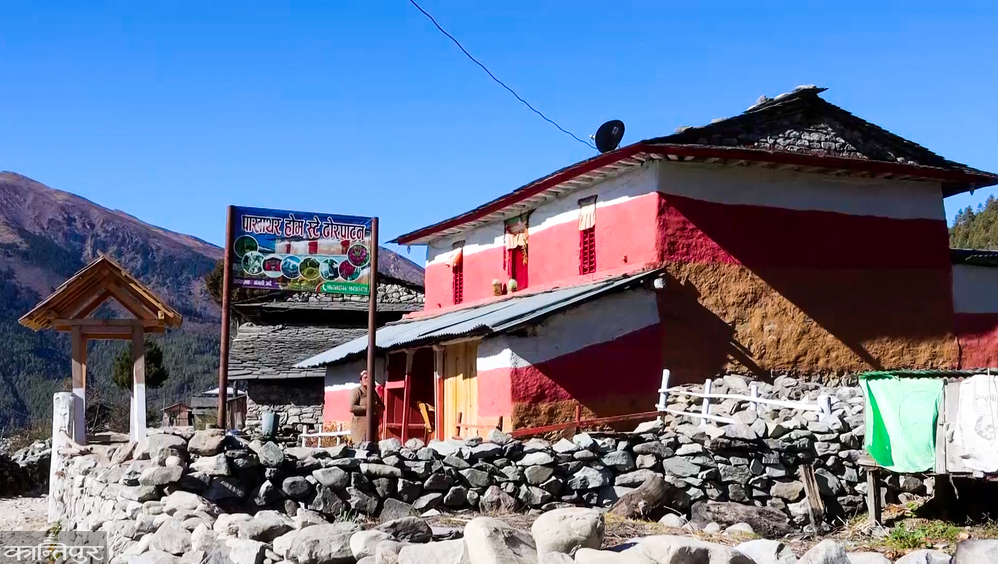
Conservation Officer of the Reserve Office, Pashupati Adhikari, said that this data is only for those who come through the Deurali check post in Dhorpatan and that many tourists also enter the game reserve from other parts, especially from Rukumpur, but there is no record of them. ‘The area of the reserve is large and the work of setting up check posts at all entry points and maintaining the necessary data has not been done.’ He said,
‘Although tourists visiting Dhorpatan are amazed by the natural beauty here, they complain that the road and hotel-accommodation conditions leading there are not satisfactory. Ajay Thapa, who returned from Pokhara to Dhorpatan, commented that the road and public transport leading from Burtibang to Dhorpatan are not good. ‘After reaching Burtibang via the mid-hill highway, one has to travel for about 3 to 4 hours on a rough road,’ he said, ‘Neither the road is good, nor is public transport safe. The beauty of Dhorpatan makes one forget the pain of the journey. But the road leading to any destination must be good and safe. It is sad that the stakeholders are not interested in this.'
Nagendra Prasad Bhusal, who had reached Dhorpatan from Butwal, recalls that he had reached Dhorpatan by walking from Burtibang 15 years ago, saying, 'It was the same time then, and even when I reached Dhorpatan by walking, it was crowded. Even when I reached this time, I did not get the facilities I wanted, but it is much easier and more developed than then.' In this regard, tourism worker and blogger Sirjana Sijju said that since the number of people visiting Dhorpatan is increasing day by day, the road leading here should be improved and a clear plan/table should be made about where, how and why to visit after coming. She said, 'When they come to visit, they need a guide to take them around and there should be an environment that suits their interests.'
Stating that not all tourists come only to see nature, she says that since some come to see the life of the people, some to enjoy the customs and culture, and some to study and research, arrangements should be made accordingly. Sijju adds, ‘For this, we had to work in partnership with local citizens, the state government, and everyone who is responsible for tourism. Where will it be just by counting the people who come and giving them rice and lentils? It is important to see whether the purpose of the tourists has been fulfilled or not. In addition, an environment should be created that will make the tourists who come once come again.’
Sijju also emphasized that the park office should be flexible and proactive in understanding the overall tourism potential of the area and working for its development. She also suggested that the hotels/homestays here should increase their facilities.
The number of hotels and homestays in the Dhorpatan Valley is increasing every year. So far, local hotelier Jeevan Pun said that there are about 35 hotels/homestays here. ‘The number of tourists visiting is increasing every year. Along with this, their expectations are also increasing. But our investment is not enough,' he says, 'We are paying attention to the demands of customers, their safety and comfort as much as possible, but it is not enough. For this, it is necessary to increase investment and work by eliminating unhealthy competition between businessmen.' Stating that there are hotels/homestays in the Dhorpatan Valley that can accommodate 5 to 700 people at a time, businessman Pun has said that he is working to develop and expand them according to the market demand and customer wishes.
How many days does it take to reach? How much does it cost?
The easiest and only route to reach Dhorpatan is from Kathmandu-Pokhara and west to Burtibang in Baglung on a paved road and then a 3 to 4-hour unpaved road. For those who want to walk, after about a day's trek, you can reach Dhorpatan from the east from Beni Bazaar in Myagdi via Gurjakhani and Jaljala and from the west from Taksera in Rukumpur via Niseldhor. Also, one can trek for about 2 days from the north and descend to Dhorpatan from Falgune Dhuri via Hukam, Pelma, Thakur.
Although work is underway to connect Taksera and Niseldhor and Gurjakhani and Jaljala with Dhorpatan through a road network, it has not gained the desired momentum. If the construction of these roads is completed, the journey to this region will be more convenient, faster and more exciting.
It does not cost much to visit this area. Since the expenses depend on how the tourist comes, it will cost an average of 1500 to 2000 per day to stay in Dhorpatan for 3 to 4 days, said Ramita Pun Magar, a local and tourism worker from Baglung. ‘After reaching Burtibang from Pokhara-Kathmandu or any other place, the minimum cost of a 4-5-day package including public transport and hotel/homestay will be 8,000 to 10,000 rupees,’ Ramita added, ‘Even if I spend a lot here, there is no place to do it. It is more about the interest and vitality to reach Dhorpatan than spending.’
What is the suitable season?
Dhorpatan can be visited throughout the year. But the beauty here is especially amazing during the rainy season. Vlogger Sijju says that this issue depends on the interests and desires of the tourist. ‘The weather is good from the second week of Asad to the end of Asoj for those who like the beauty of flowers and greenery in Buki-Patans, while the winter season is suitable for those who want to see snow, and the spring season is suitable for those who want to enjoy the paluwa,’ she said. ‘Anyway, the beauty varies according to the season, so whenever you visit here, your mind is refreshed.’
Saying that Dhorpatan itself is like a base camp, Sijju suggested visiting the Dhorpatan Valley and the surrounding villages and places like Niseldhor, Chentung, Khaltakhulti and Jaljala in about 3 to 4 days from here. ‘Also, if it is rainy season, you can climb up to Buki and enjoy Garpacheda, Tikadhara and Falgune. This may take an additional two days.’
The trek from Dhorpatan, especially towards Rukumpur, can be very exciting. You can also reach Dolpa from here by passing through the beautiful Buki Patans east of Rukum. But for this, you should proceed with detailed information about the journey and the weather conditions.
Wildlife and hunting statistics of Dhorpatan
According to the information on the website of the Ministry of Forests and Environment, National Parks and Wildlife Conservation Department, Government of Nepal, 23 types of mammals and 164 types of birds are found in this park. The main animals are the narwhal, the narwhal, the narwhal and the Himalayan bear, while birds such as the narwhal, the narwhal and the narwhal, which are on the list of rare and protected birds, are also found here.
The National Parks and Wildlife Department counts and monitors the hunted wild animals, determines the annual quota, and organizes hunting on a competitive basis. Every year, hunting is carried out here in two seasons, namely Chaitra and Baisakh and Asoj and Kartik. According to the statistics of the Dhorpatan Hunting Reserve Office, Baglung, 27 hunting tourists have arrived in the fiscal year 2081/82. From which the reserve has collected a total revenue of Rs 27.56 million 400. According to the legal provisions that only foreign tourists are allowed to hunt, hunting tourists from countries including America, Spain, Mexico and Australia had reached Dhorpatan this year.
The first season of the current fiscal year (Asoj-Kartik) is currently underway. Although it is said that hunting tourists have come from various countries this year too, it will take time to come up with the data, said the park's conservation officer Pashupati Adhikari.
000
Dhorpatan can definitely be a wonderful destination for tourists who are enjoying Pokhara and Manang-Mustang and its surroundings for sightseeing. For this, the government should not make any excuses about the promotion of this place and the necessary development and expansion. Although it is natural for the park office to focus on poachers as it is a hunting reserve, tourism worker Ramita Pun Magar emphasizes that the office must now prioritize its activities for tourists visiting the area. She says that for this, it is necessary to work together with all stakeholders.