My formative years of growing up were spent not in face-to-face meetings and conversations with Ba, but in exchange of letters. Remembering the pages of those letters full of love, knowledge, curiosity, and suggestions, it seems - I learned life from the letter, I got to know the Father in the letter, I found the Father in the letter.
We use Google Cloud Translation Services. Google requires we provide the following disclaimer relating to use of this service:
This service may contain translations powered by Google. Google disclaims all warranties related to the translations, expressed or implied, including any warranties of accuracy, reliability, and any implied warranties of merchantability, fitness for a particular purpose, and noninfringement.
He used to take my little hands and walk me to the United Janam Morcha office in Bangemudha and the press in Itumbaha. That is my earliest memory with my father. I very reluctantly accepted the request of the editor of 'Koseli' to write a little past memoirs and a little present about Ba in the special issue of 'Ba'. I sat down to write, but this is a very good job. When writing about political topics, the brain is more active, but when writing about personal life, many emotions remain active. As I write, the tonsils in the throat are painful.
When I was young, I often had tonsillitis. In 1993, when I was 7 years old, I went to the UK with my mother. At that time, Ba had written in a letter that 'the tonsils have stopped hurting now'. An ongoing series of correspondence between Ba and me began that year. "If I am your daughter, write me a letter" I have also threatened. I have written in another letter that ``especially mother made me write like that''.
Over time, my formative years of growing up were spent more in letters than in face-to-face meetings and conversations with my father. As I am turning the pages of those letters full of love, knowledge, curiosity and suggestions, I feel like - I learned life from the letter, I got to know Ba in the letter, I found Ba in the letter.
I don't remember spending much time at home with my father, who has been in full-time politics since before I was born. Busy in street agitations, think tanks, magazine publishing, party program nationwide rush, Ba was rarely at home. Even when I stayed indoors, I used to see faces hidden in political meetings and pages of books or newspapers. When I say 'ba...ba', I remember saying 'mma...mma'.
Even before the civil war, Ba was semi-underground, but for me it was like a full underground. He was rarely available even when he was in front of me. If I get quality availability anywhere, I get it in a letter. Other than that the memory is dim. Quoting childhood memories is a bit complicated. Which events or moments are retained by the brain and which are erased? It is not under your control. In an age where technology reminds us of birthdays and photos from years ago through 'notifications', spontaneous spontaneous memories seem dear and sacrosanct. That said, often having a deep emotional impact—whether positive or negative—sensory experiences (eg, a sensation, a sound, a touch) trigger a vivid and emotional memory.
In my childhood, my father gave me affectionate hugs, the photos are a witness. However, what I remember 'viscerally' is the touch and sound of my father slapping me on the cheek after some abuse I had spoken to my mother on the bed in the upper room of the Dhansar house in Gorkha when I was probably 5-6 years old. I remember crying and being very upset at that time.
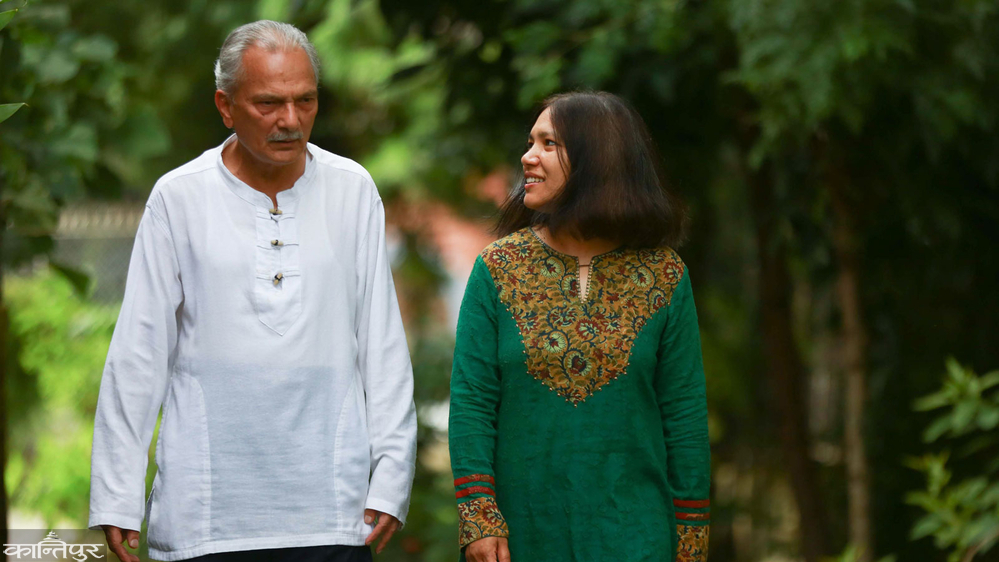
Even today, if I eat a half-ripe cauliflower, that day remains in my memory - before the civil war started in 2051, I went to the Gorkha palace holding hands with my father, ate an orange and had a meal at a hotel in the market. It mingles with the taste and smell of semi-raw cauliflower – a reminder of the last romantic outing as pure husband and daughter. After that, both my parents left me with relatives in Koteshwar and went underground. Meetings now started through letters. I met only my own father in rare encounters. He was not limited to Baa, his political identity began to blend with the obligatory 'Baa' identity, gradually becoming Habi. To break the story, others knew Ba as a political leader before the People's War. I also knew a little bit that 'he is a leader', but what does it mean to be a leader? I did not understand. I remember reading a biographical story of Lenin as a children's book, I remember calling a photograph of Marx a 'photo of a fool'. Perhaps it seemed that being a leader meant being like them. However, my friend has a different understanding. Maybe that's what the common people understood at that time. It is almost the same today. Around the year 2052, my friend Palistha used to dance happily saying 'Mera piya ghar aya au Ram ji' in every class break in Buddhanagar school.
Everyone said how well she danced exactly like Madhuri Dixit. I didn't really care about the song, I didn't even see how Madhuri danced. Instead of 'I don't know such popular songs and dances,' she asked, 'Does your house have cable channels?' I said, "No, no." "There is no cable in the leader's house," she said. I was shocked. What are other leaders like? And what kind of leader is my father? Or could not be? I remember being confused.
Gradually, through letters, I also began to understand what kind of character and purposeful leader he is. Over time, I got the chance to observe his leadership first hand, working closely together, attending meetings. Since the creation of New Shakti Party, I have been able to feel it more closely. Some other time I will write about some fixed and changing characteristics of my father Baburam Bhattarai as a leader. Today I want to honor and remember him as 'Baa'.
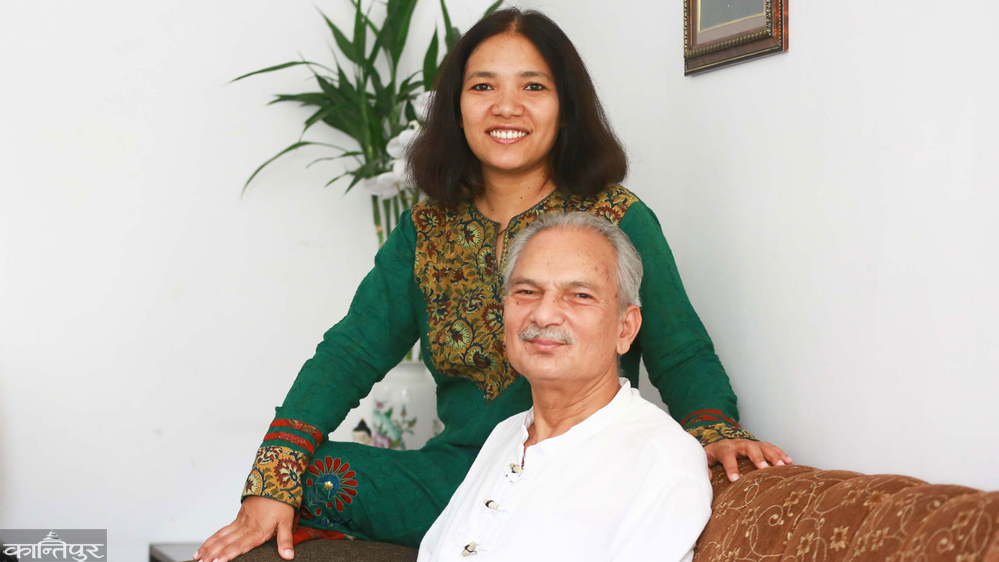
A person who planned to remain as an ascetic politician without marrying, must not have thought that he would later marry for love and become the father of a child. However, life keeps adding surprises. Bal believes that he has provided as much paternalism as he could within the limits determined by political circumstances and personal temperament. And, in those times and circumstances that could not be physically available, he made letters a dynamic tool.
Father and mother raised me with great sensitivity through letters. During the 10-Year People's War, from the age of 10 until I was 20, the letters that started with 'Dear Daughter' gradually became addressed as 'My Dearest Young Lady'. Matters became serious. He never took me lightly and jokingly. She behaved like a mature young lady, capable of independent thinking. That's why I don't like being teased by anyone (especially a man). I think that 'my own scholars did not show paternalistic behavior towards me'.
Our small family consisting of father, mother and I could not stay together except for one day. Ba on one side, mother's workspace on the other. Sometimes I stayed with a strange Nepali family and sometimes in a hostel. A few days a year when I was on vacation and when we had a coincidence we used to stay together in Gorakhpur, Faridabad, Allahabad, Delhi, Rolpa. Things were never normal. Most of the days were serious, tense, filled with silence and busyness. I'm a little introverted, Ba is more introverted. You are like a mother, if it wasn't like that, our family would not be like a family.
That's why, I remember Ba telling me in his letters that he should learn more from his mother than himself, 'The most important quality of your mother is the spirit of struggle against the exploitation and oppression of women. As the biggest oppressed group in our society are women who cover half of the sky, there can be no liberation of the society and the country without their liberation.'
Bama has a clear self-evaluation of what she can and cannot do and has full faith in her mother's parenting. That's why he himself and I were constantly insisting that mother should be given special respect in his letters. I naturally began to accept the fact that they are not only my parents, but the parents of thousands and millions. Moreover, the news of the martyrdom of Suresh Wagle uncle and the sisters whom I met directly made me feel that at least my parents are still alive today. I was thinking - thousands of children are left without parents, compared to them I am very 'privileged', I am getting letters. And, even till today, I am guided by the moral compass that I should use the benefits that I have received for the overall social welfare.
Ba was and still is - a bookworm, hungry for knowledge. I found his habit to be very imitative and covetous – he used to read all kinds of reading materials and told me the same. He has this habit till today. He emphasized that one should read not only books based on one ideology, but also materials written from diverse and opposite angles. No matter how busy he is, I find him studying old and new books. "My wealth is these books," says Ba.
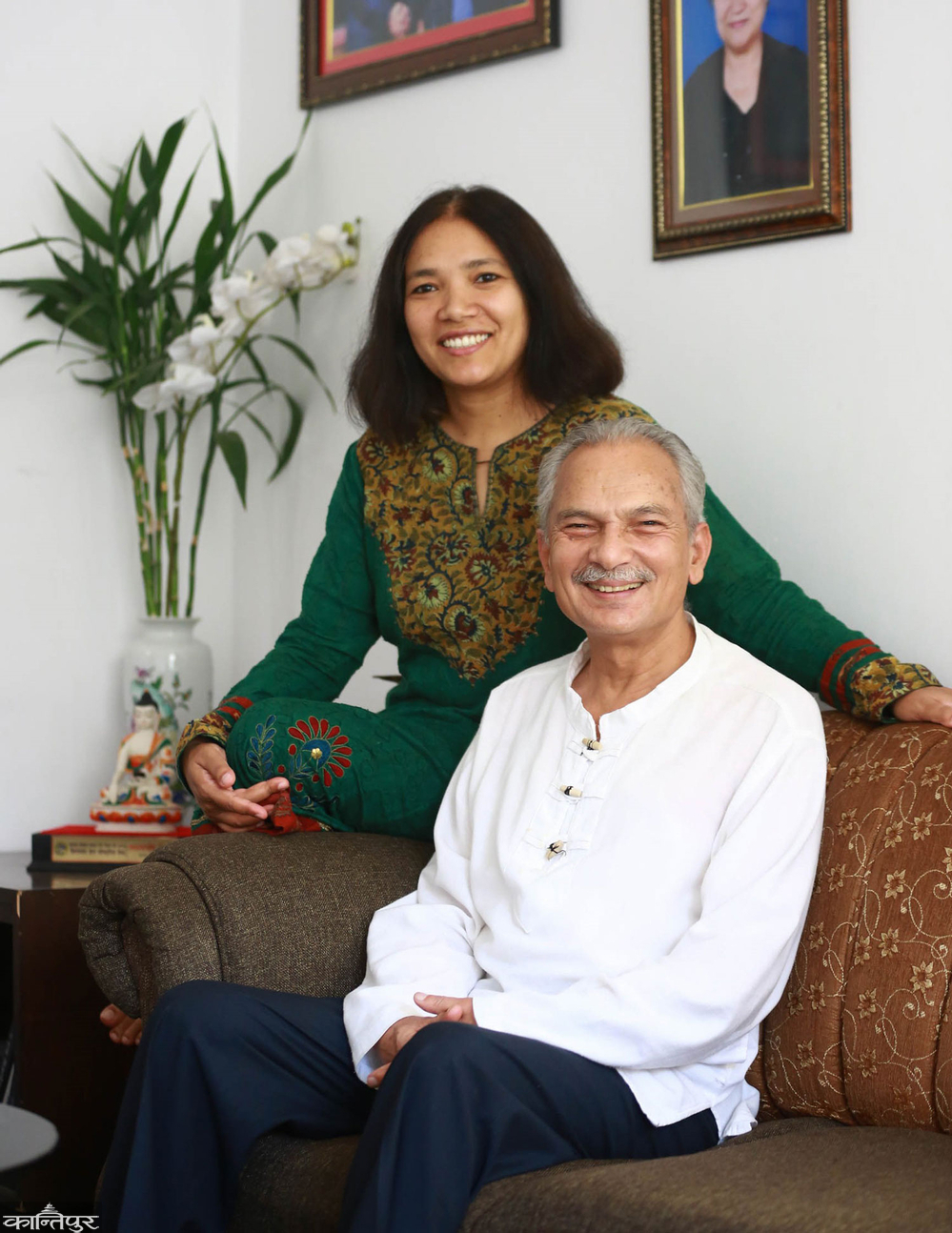
I learned at a young age to read, understand and be inspired by women leaders such as Marx, Lenin, Mao, Che Guevara, Gramsci, but also Jenny Marx, Clara Zetkin, Rosa Luxemburg, Nadezhda Krupskaya, Alexandra Kolontai, Yang Kai Hui, Chiang Ching. Why are some rich and poor? What should be the purpose of politics? What is socialism-communism? What is patriarchy?
Why are there ideological differences between leaders? What is unity-struggle-transformation? And why and how do they appear not only in politics but also in family relationships? I received that dose from other letters. He encouraged me to read not only politics, economics, sociology, but also literature, self-help books, newspaper clippings about food, and movie reviews.
In the age of cutthroat competition, by consuming market-centered tailored education/knowledge, in all those letters, there is an effort to guide me on how one can be oriented towards their social, cultural, economic, political and psychological all-round development, as opposed to finding, selling or increasing their value in the market. Even letters written on ordinary paper are building a strong foundation that will last a lifetime. I don't say all the strength or knowledge that you need to handle yourself in the days of various ups and downs - shortages - confusion, but I find a wonderful clue in his words.
Since 1964, I have been close to my father and mother, but we have not lived together in the same house except for a few months in Baluwatar and Sanepa residence when he was the Prime Minister. Times, circumstances and politics have changed so quickly that recalling the past feels like a few hours of film. Now we live 3-4 minutes away in Tokha. It was the first time he had been so close to Ba, for so long. Most of the things in life may be through letters, we don't even have the experience of living together, the conversation between father and daughter is still not that open, it is often focused on politics.
His fatherhood is quite different from the traditional father role from a sociological point of view, extraordinary. But, Baa will be Baa. He still hasn't stopped sending letters. Sometimes a very short handwritten letter arrives, "If there is any problem, tell me without hesitation." I have collected the last letter at home. Sometimes I get emotional watching it.
A few months ago, a book about the effect of absent/unavailable fathers (absent fathers) on daughters was found on the table. At the same time, I smiled and my eyes filled with tears. Now, when I become a strong supporter of my father, my father is still trying to be a good father!
When I was a candidate in the 2079 election, some people called me and women like me who came from a political family and decided to be active in politics as 'Papaki Pari' on social media.
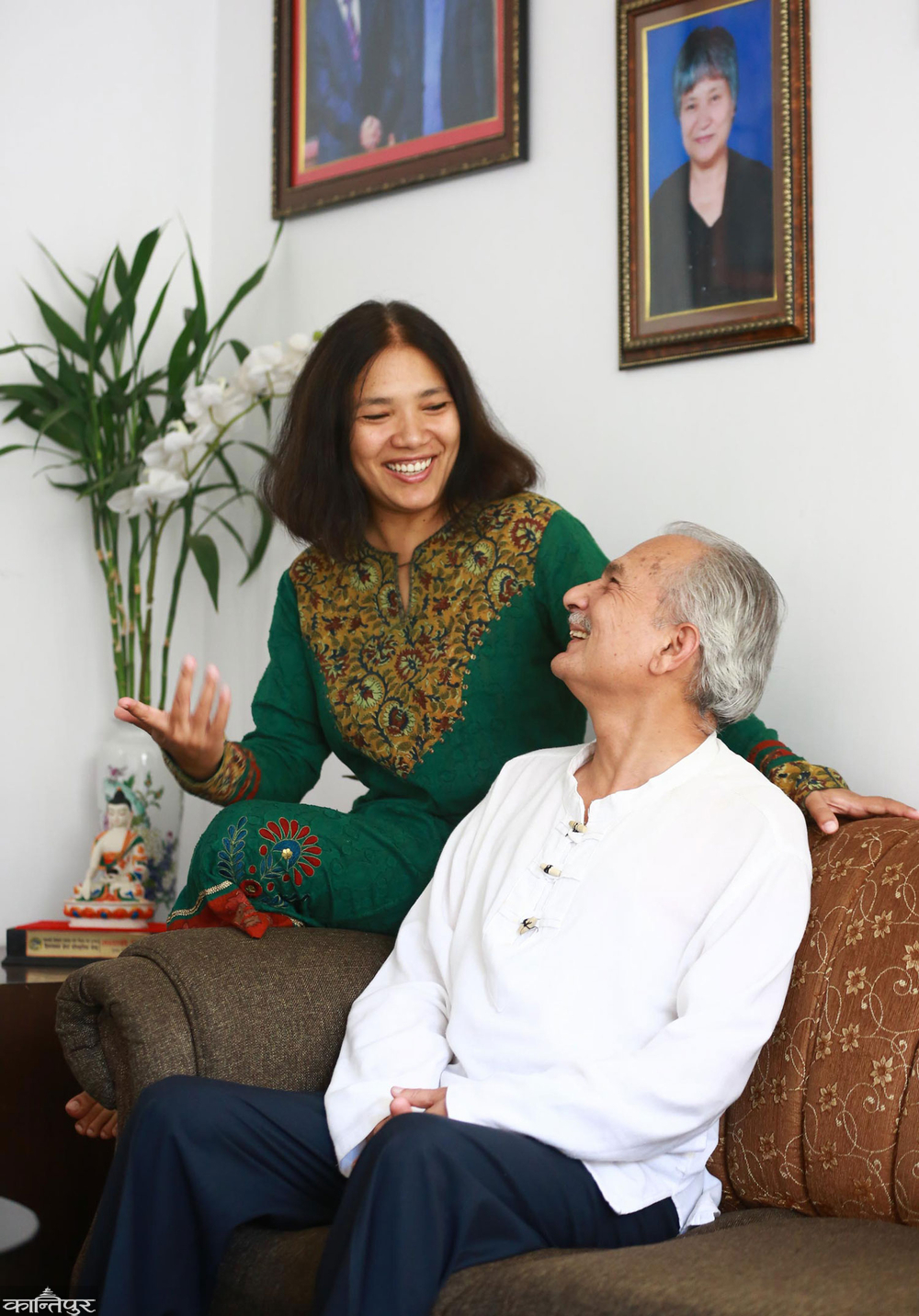
Inspite of all the suffering and struggle, the rejection of the act of discouraging the people who are working hard to support the good campaign by taking inspiration from the life, deeds and efforts of continuous transformation of the parents who are engaged in politics is only possible through their own work. However, today I wanted to say this - all daughters are precious angels. May all daughters become bako pari! How many families have their angel wings unfurled by hatred/violence or excessive love. Let all the daughters get - not to pluck wings, but like Baburam, who helps to build self-sufficient feathers that can fill their own flight!

