How was a 6-year-old deaf girl forcibly put in a car and sent to Kathmandu? Why was the family forced to broadcast a 'missing girl notice'? The story of struggle and success of Urmila Choudhary, who lived in Kamalari for more than a decade:
We use Google Cloud Translation Services. Google requires we provide the following disclaimer relating to use of this service:
This service may contain translations powered by Google. Google disclaims all warranties related to the translations, expressed or implied, including any warranties of accuracy, reliability, and any implied warranties of merchantability, fitness for a particular purpose, and noninfringement.
I was excited to wear a new frock and slippers. She was walking behind, holding her brother's hand, holding her brother's hand, holding her brother's hand, holding her brother's hand, with a dream as colorful as a fullbutte frock, a dream as new as a new shoe. How happy this 6-year-old girl must have been when she took a car from her village Manpur in Dang to Ghorahi for the first time!
There was a wedding feast at the landlord's house where his elder sister Kamalari lived. After getting delicious food at the wedding, she forgot about it. When it was time to say goodbye to Janti, the brother wanted to send him along with the bride! He didn't even know where he was going. She didn't want to let go of her brother's hand. After the car started, he was forcibly taken along with the bride. She was crying even harder saying 'Ekli Nai Jaim', but who can be fooled!
brother returned to Manpur . With tears welling up in her empty eyes, she started with the bride's team, towards Kathmandu.
In particular, he was brought to Kathmandu under the condition of being taught. But she couldn't go to school, nor go anywhere, have fun.
'I didn't get to go home for a festival . They kept giving false assurances that they would be able to go to Magh," Urmila Choudhary, the same naive girl, was telling her bitter past on a rainy day in June, "Life was very horrible. I had nothing under me . I couldn't ask even when I was hungry. That kamalari life seemed to me like a bird in a cage.'
When she came to know that she was sent as a dowry to kamalari, darkness surrounded her . What could this ignorant girl of 6-7 years do! He doesn't even want to remember being scolded and poured hot water when he didn't know how to work in the beginning.
"From waking up at 3 in the morning, I had to water the garden, sweep, wash clothes, cook food, wash the dishes, wash the car, massage oil, make the bed," she says, "Krishnaraj Sarvahari's children's story is 'Sukhli', I feel like I am the character in it." That is why he understood that Tharu were born as slaves for others. "I didn't get a chance to look at my community." In our society, people have made such comments that if you read, write, and understand the society, what will you get? Work hard.'
Independence after 12 years
He was brought along with the bride, the Samakhusi of Kathmandu. After spending about 7 years there, he was sent to Jawalakhel in Lalitpur, where the bride's uncle's house was. There she spent 5 more years .
Thus, she was completely without contact with her family members for 12 years . The parents broadcast on the local FM - Urmila's missing information!
One day in the evening, Urmila was massaging the body of the same Phupu with oil. The time after the people's movement of 2062/63 . She saw the news on TV about 'free commlary'. The Tharus from Kanchanpur, Kailali, Bardia, Banke, Dang and other districts came and demonstrated in Three Corners of Kathmandu against the Kamaiya system. While secretly looking at the TV, she saw her own brother wearing a burqa. Teary eyes did not move away from the TV screen .
After seeing her brother, where did Urmila's heart think without seeing him? She started thinking of many ways to get free from the bond. Dhipi decided to meet her brother anyway but the 'owner' resisted her.
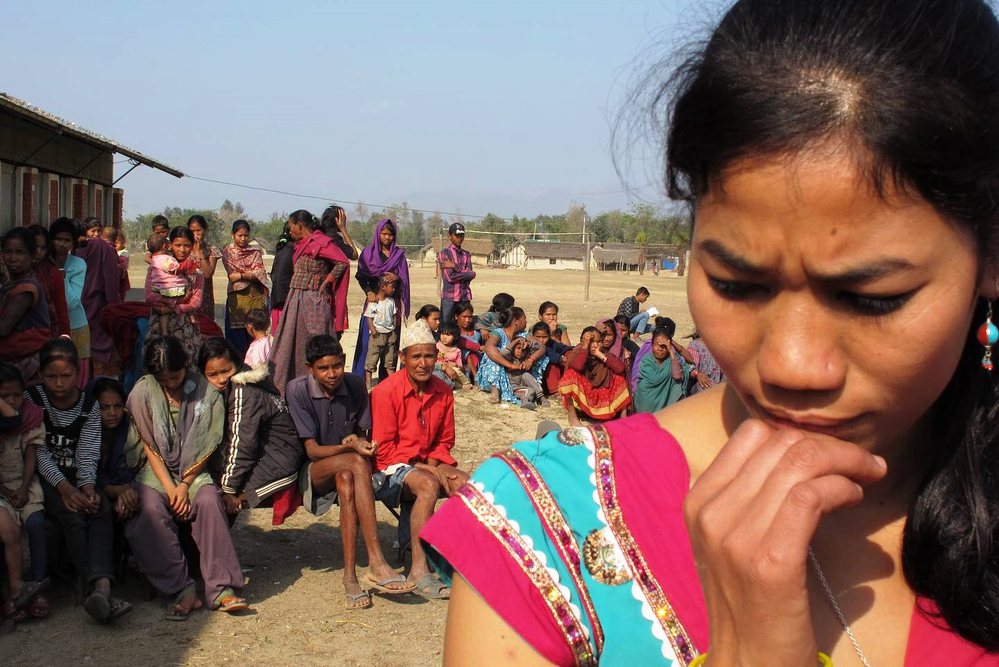
She threatened to commit suicide inside the house if she did not allow her to meet her brother. Then one day the driver put him in a private car and took him to three corner .
Urmila was shocked to meet her brother after a 'jug', the brother became speechless. She asked for her brother's phone number, but she didn't have it . Wrote down the phone number of the village secretary. Urmila was sent back to Jawalakhel. Later she secretly contacted . A few days later, my brother came to pick me up.
She had already planned to return to Dang with her brother. She wanted to leave the bitter chapter of her life as a hostage for years in this house in Jawalakhel. She wanted freedom from injustice, tyranny and oppression. As the consciousness has increased in him, he had the courage to break this bond.
For Urmila, who walked away telling her housemate that she would come back again, that day became like 'Independence Day' . That was the day of independence - 1st of January 2063 .
Urmila could barely eat dhikri and khariya after liberation. She was able to celebrate Magh with her family. The new year of the Tharus was similar to the custom of sending Kamalari on the occasion of Magha and renewing it for the next year . Generally, because land tenure is for one year, Kamalari was also sent for one year only. If the same zamindar's land was not available, he had to give his daughter to another zamindar and get the land . The celebration of this matter was done in Magh festival.
Cycle of Exploitation
When kamalari practice was confined within the Tharu community, everyone was treated equally in the Tharu household. The daughter of the family used to go to the landlord's house. To learn some work. He worked hard all day, ate dinner there in the evening, just like the owners. He used to eat rice in the same plate, he lived in the same berry . If there is mad, only mad, if there is salt and pepper, they would eat it with salt and pepper. If there is water, water is drunk. In the evening, it was customary to return to their home and sleep.
When urbanization started, the kamalari practice also spread to the cities . With the process of bringing the village to the city, that tradition has now started to be exploited . Tharu daughters were given a load of old clothes twice a year . "In the cold of January, the employers used to send old clothes to her mother," says Urmila, "I grew up seeing such incidents in my own village." At one time 8-9 people used to return to Kamalari . I wanted to see what he came up with.'
exploits were not limited to this. 'Andhiya' and 'Bataiya' system came . In Andhia, three parts belonged to the zamindar and one part to the adherwa (who cultivated the zamindar's crops in Andhia). It was not enough to eat. In this way, the Tharus were forced to send their daughters to Kamalari .
The landlord used to say, 'I will give you the land, but you must send your daughter to my house.' Debt He used to force me to send my daughter even if I didn't pay. If they asked for 5000, it would have turned into 50000. And even if he lived in Kamalari for generations, he could not get a loan of five thousand . This cycle of exploitation would never end,' said Urmila seriously.
him Remember, earlier when someone was a Kamaiya, Kamalari, there was a custom of giving 'chheunti' (land) in the village . When his father was working, he also got "Chhenti" . They used to say that you have children, we will give you dihua (turn). The same Dihua is called Chheanti in Tharu language . He used to say that he planted whatever he wanted at that end. "Government employees were given the entire land for their work," she said.
Landlords used to choose only young children for Kamalari . While growing up, perhaps thinking that Chet would come to her senses, she would say to her parents, 'When your daughter grows up, take her home and get married.' Send another daughter .' Urmila says that the same cycle is also applied to her, 'My sister used to live in Kamalari. Later I had to stay . But the house loan was not finished.'
Some maids were sexually abused in the owner's house, some became pregnant, some were made to disappear and some were killed to hide the crime of sexual abuse. When he remembers the incident of the master raping Kamalari and hanging him from the fan, his body becomes numb. She reached the spot herself. Two Kamalari girls died in this way in Lamhi. How much Became a virgin mother . It has not yet been properly investigated. Some workers have been disappeared from their place of work,' says Urmila.
According to Mukt Kamalari Vikas Manch, 12 Kamalari in West Terai, 6 in Banke, 5 in Dang and 4 in Bardia are missing.
Mukti Andolan
A bridge was built on the Rapti River. Urmila used to reach Lamhi and Ghorahi chanting slogans of liberation movement. She did not know how to read but the slogans written in pamphlets were read out by others. That's what she remembers. His activism attracted the attention of many.
Urmila got a desire to read later. She joined the school at the age of 17. Since she was the oldest in the class, at first he was shocked to see her as a teacher . Seeing him go to school, many people teased him in the village. But she didn't care. Instead, she started participating in every school activity.
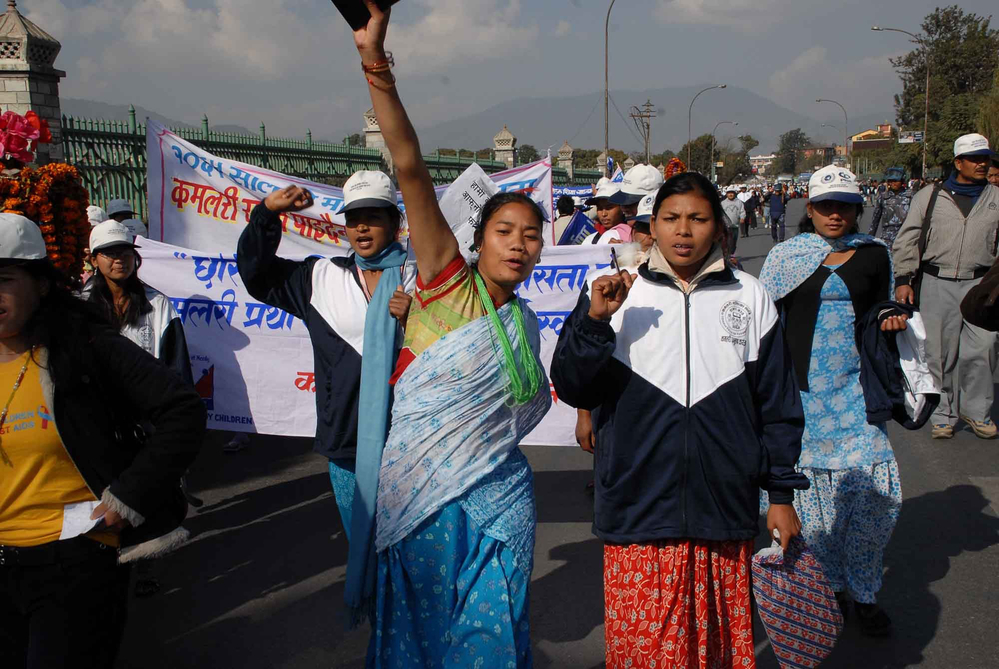
As she is good at leadership, she gradually became a 'group leader'. In 2065, she was elected as the district president of Mukt Kamalari Vikas Manch after contesting the elections. She performed a street play during the liberation movement. Having forgotten her mother tongue while living in Kamalari, she gradually learned Tharu language as well. She is still remembered for rescuing Kamalari by performing street plays and raiding buses.
'When I was in the movement, I felt like I was in a chain . I have been freed from the house where I live but I am not free from my mind,' Urmila says, 'My younger sisters are Kamalari from Dang to Kailali . If one of my voices becomes a little spark for change, then why not protest?'' During the
protest, some of his friends used to say that today they will go to the forest, pick corn, plant seeds, and carry home. But she managed the house and continued the movement. He felt that if we do not protest at this time, this exploitation will continue in a traditional manner.
At that time, doctors, masters, and lawyers used to be all housekeepers . He remembers having three in someone's house. "During the movement, we used to have a lot of fights when we went to the CDO office. They used to say - they have given you food, so why do you have a headache?' she said.
'Kamalari Mukti movement was big but it was not so highlighted as a caste movement . As much history as should have been created has not been created. But after the movement, it became not only a national but also an international issue,' she says with a long sigh, 'What the Nepalese government is looking at when human rights are violated has been recognized internationally. But the rights activists here did not say anything.'
In 2070, there was a Kamalari movement in front of the Singha Darbar. Their demand was - those who were brutally killed, expose the criminals . Educate Kamalari. Search for the missing. She can never forget the incident of burning and killing a kamalari in a knife in Patan. It was said that the Kamalari girl burnt herself to hide the incident. I visited the police-administration in Jawalakhel for a week for investigation, but no complaint was filed,' she says .
Where did she go in the struggle of the liberation movement? She pitched a tent and sat in Ratnapark's Shantiwatika. Pashupati's Dharamshala was a refuge. For five days, she was involved in this movement. There was also a city movement saying that the government is not listening. "It rained a lot at that time, but we didn't stop protesting," she said enthusiastically. Despite this, nothing was heard.'
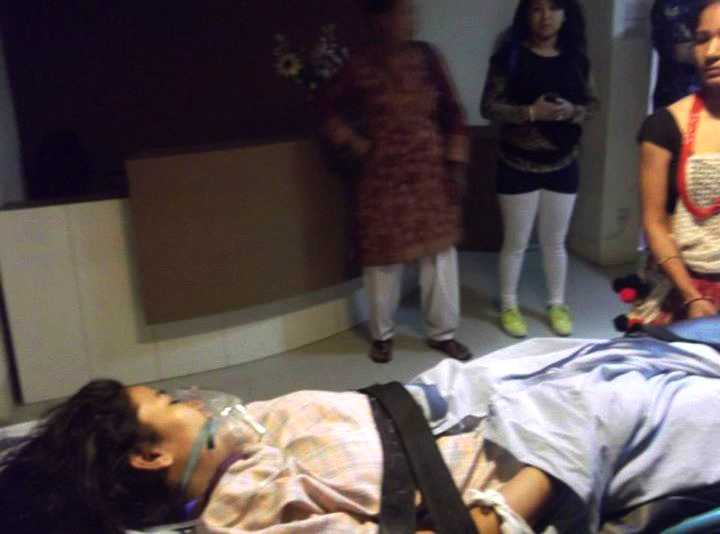
Urmila and her friends did not lose heart . As they tried to enter the Singha Darbar, the batons and boots of the police started raining on them . He hit Goda with a stick. The boot hit . The bones of many friends' hands were also broken . There is also a video on YouTube . Looking at it now, it seems like a scene from a South Indian film,' she describes that struggle, 'I was born in Sumla. If there were women policemen, they would not have been beaten so much. The man was a policeman . All women who protest.' After the
was dispersed, the injured were taken to the hospital. "Attacked me in the beginning . My phone was tapped as Leader Urmila. Sitaram Chaudhary brother carried me to the hospital . He is an eyewitness of this movement . He didn't let go of the person carrying him . He kept beating me till I passed out,' she recounts.
Urmila : A Freedom Fighter
On 13 June 2070, the government announced the liberation of Kamalari. After the liberation of Kamalari, Urmila's profile was printed in a Norwegian newspaper with a photo of her working in a brick kiln in the village. After that, many foreigners became interested in him . Foreigners started visiting him at home. And Germany's Susan Gluth made a documentary called 'My Memory is My Power' with Urmila as the main character. Gluth has depicted Urmila's journey and struggle in a vivid way. Urmila says, 'Past is my strength . My parents also came from the village to watch this documentary.' The
documentary won the first prize at the Kimf Film Festival held in Kathmandu in 2017. It also won the Best Documentary Award at the Nepal-America International Film Festival. It has also won various awards in London, Germany and Poland.
Not only the documentary made on Urmila, Urmila herself has received various prestigious international awards . A book has been published about him in German. She went to Germany in 2011 to release the book. 50,000 rupees received from the same book was given to the free Kamalari Bikash Manch.
In 2011, she got an opportunity to speak about Kamalari custom as a representative of Nepal in a program involving 45 countries in Norway. In 2012, the Tight Foundation of America honored her with the 'Women Have Two Wings Award'. She has made a separate fund on the stage and invested the 10 lakh rupees she received in the award for the empowerment of women. In 2012, on the occasion of International Girl's Day, she had the opportunity to go to New York as a 'Global Girl Ambassador', where she gave a speech about the situation of Nepali girls.
In 2013, she was awarded the 'Global Youth Courage for Education Award' by the British government. In 2016, she received 'Human Right Award' and 'Freedom Fighter Award' from Germany. In 2018, she received the 'Freedom from Fair Award' from the Roosbell Foundation in the Netherlands. This award was given to him by former King William Alexander and Queen Beatrix of the Netherlands .
She was honored with 'Youth Courage Award 2071' from Tribhuvannagar Jaycees in Ghorahi, Dang.
The US government honored him with the 'Global Anti-Racism Champion Award 2024'. The award was handed over by the then US Secretary of State Antony Blinken at a special ceremony held in America. Urmila became the only person in Asia to receive this award, which was received by 6 people in the world.
This award has been given to him for his leadership in getting the right to freedom of speech in Nepal. His father is about to receive an international award in the hospital After receiving the news, Urmila did not get to share her happiness with her father. She lost her father Phulpat on August 17th.
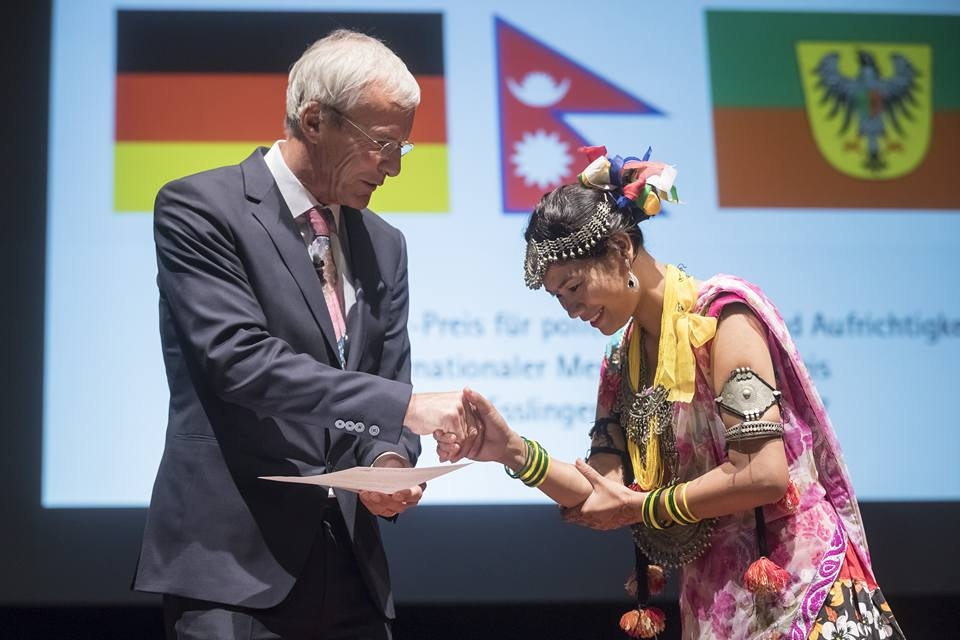
She has recently been listed among the 50 most influential women in Online News. Urmila says that a certain amount of financial support received from such awards and prizes is being supported in the field of free education. "These awards have given me more encouragement to work for the empowerment of the underprivileged, marginalized people and the children of my community," she says.

