The forest is dear - to the 'king of the forest'. But how long will Deepak, Zika, Surman and Naveen's desire to read continue to die? Do you leave it in the jungle where even the sun bends down, or do you pull the light of consciousness towards the source?
We use Google Cloud Translation Services. Google requires we provide the following disclaimer relating to use of this service:
This service may contain translations powered by Google. Google disclaims all warranties related to the translations, expressed or implied, including any warranties of accuracy, reliability, and any implied warranties of merchantability, fitness for a particular purpose, and noninfringement.
Jungle - the rhythm of life is different. Sometimes the forest is beautiful, sometimes dull. Route Jika Shahi of Karnali Surkhet thinks - the forest is a little bright, very dark and deserted! She says, 'Manan is different, it is wild.' That means the forest is difficult, but also fun!
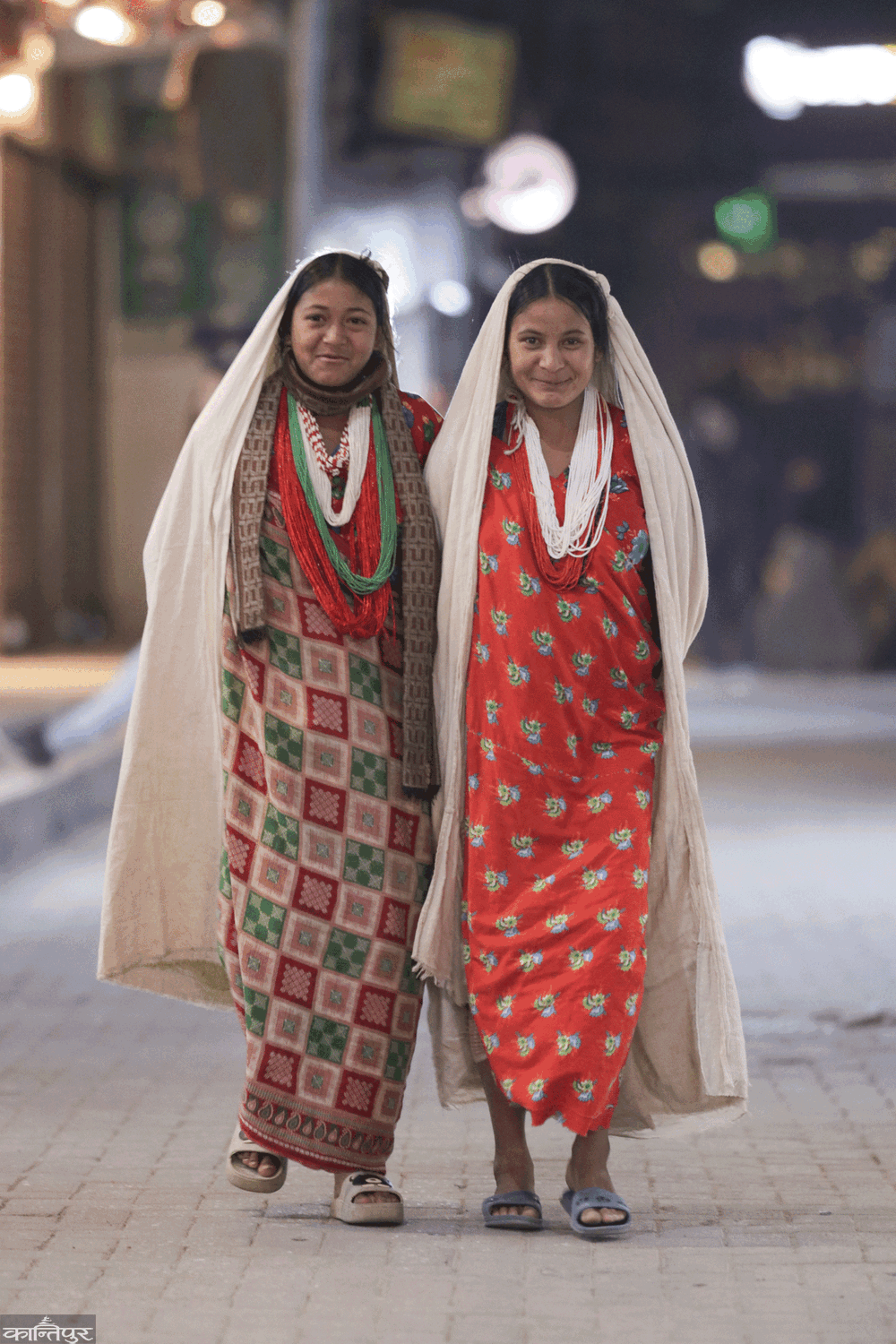
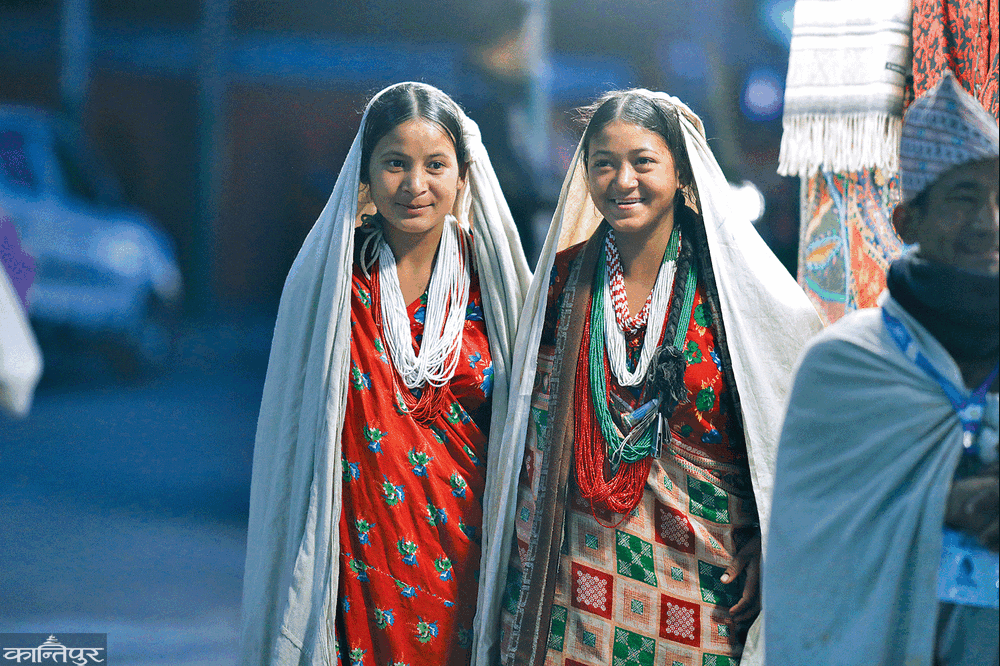
Surkhet's 'Maanan and Bachhar' have arrived from the forest to the throng of Kathmandu city, some bright-eyed. When the temperature of the city is dropping very low, they flock to the narrow streets in their rout clothes.
Living in a different color from their own world, the many collages seen in the colorful and vibrant city have brought joy to those eyes. Those eyes are the book, where his ancestors and sad (maybe even happy) lives are recorded.
We 'Khabrilal' are walking towards the dark (even bright) streets of the city to listen to the happiness-sorrow, happiness-unhappiness, hope-disappointment and life-story of those route-brothers.
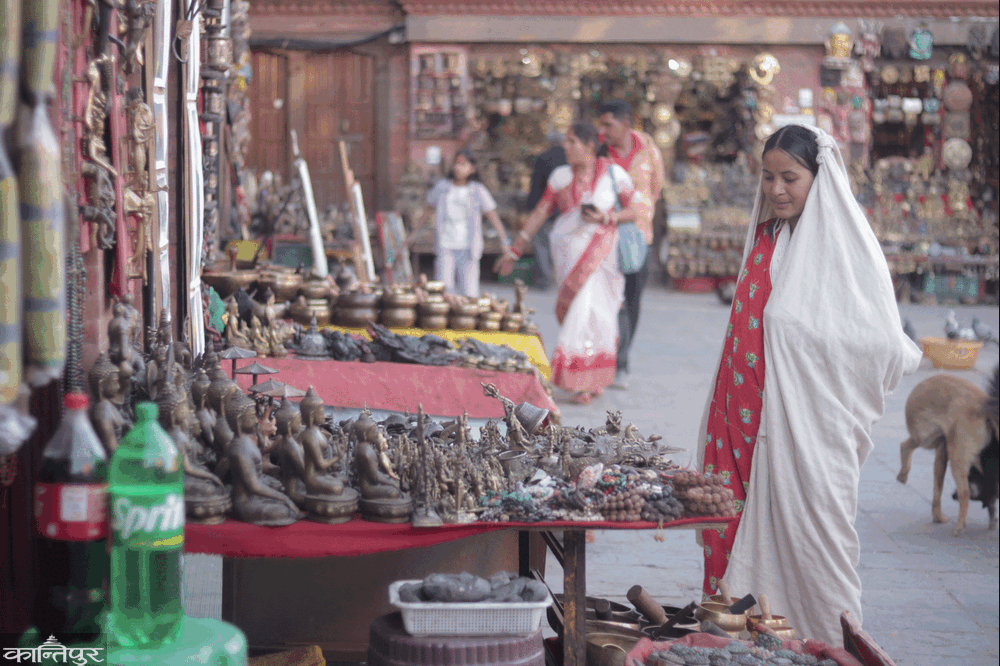
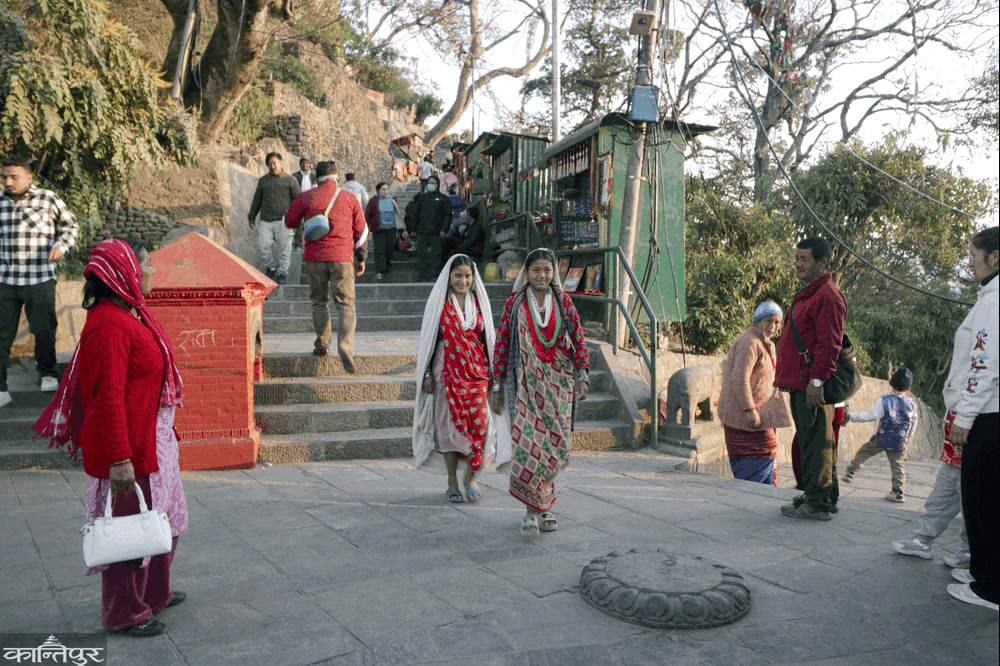
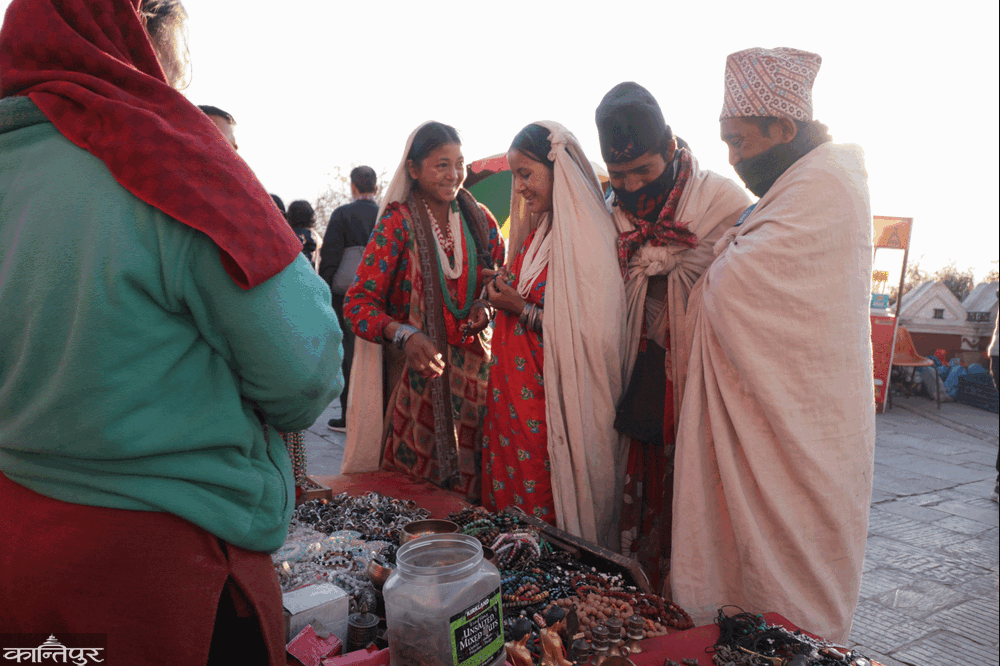
Can there be a roof that hides the longing of the soul or not - the city? Deepak Shahi sat down on the side of the road of Swayambhu Muntir where the dust was reigning and looked at the scene before him - the noise of vehicles! The sounds and sounds of mics calling to buy stuff! Sahuji and customers busy buying and selling antique goods! And people running somewhere with the fear, struggle and desire of an uncertain life!
In the days when the dusty bark of Tumwalo was crawling around Kathmandu city, the routes- Deepak Shahi (25), Naveen Shahi (18), Zika Shahi (18), Surman Shahi (18). They were followed by photographer Pawan Thapa, narrator Shailendra Adhikari and interpreter Bani Lal Bahadur Khatri who came with them from Surkhet to Kathmandu.
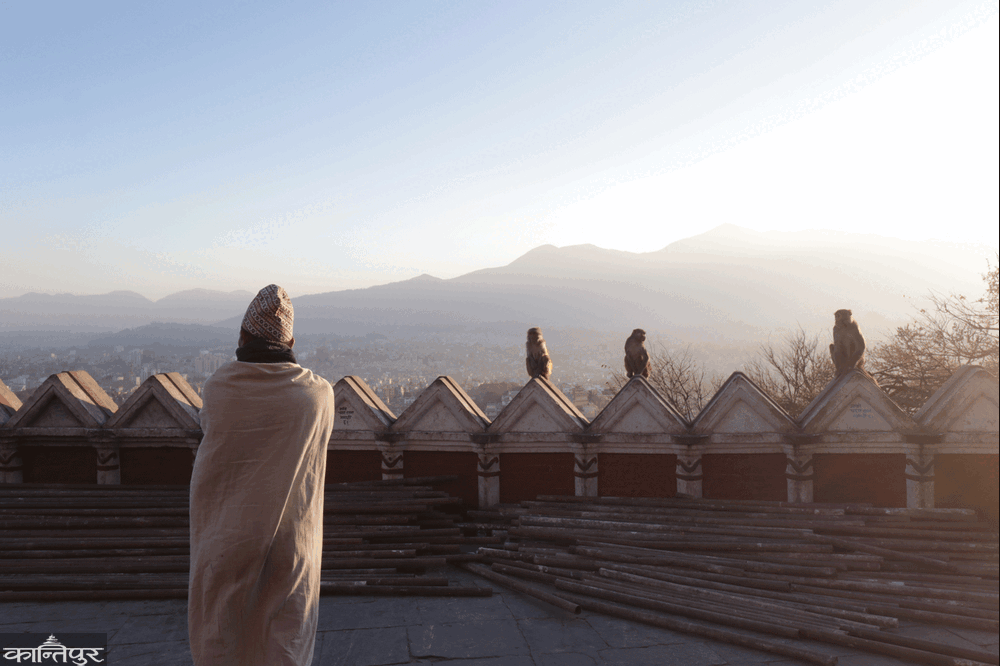
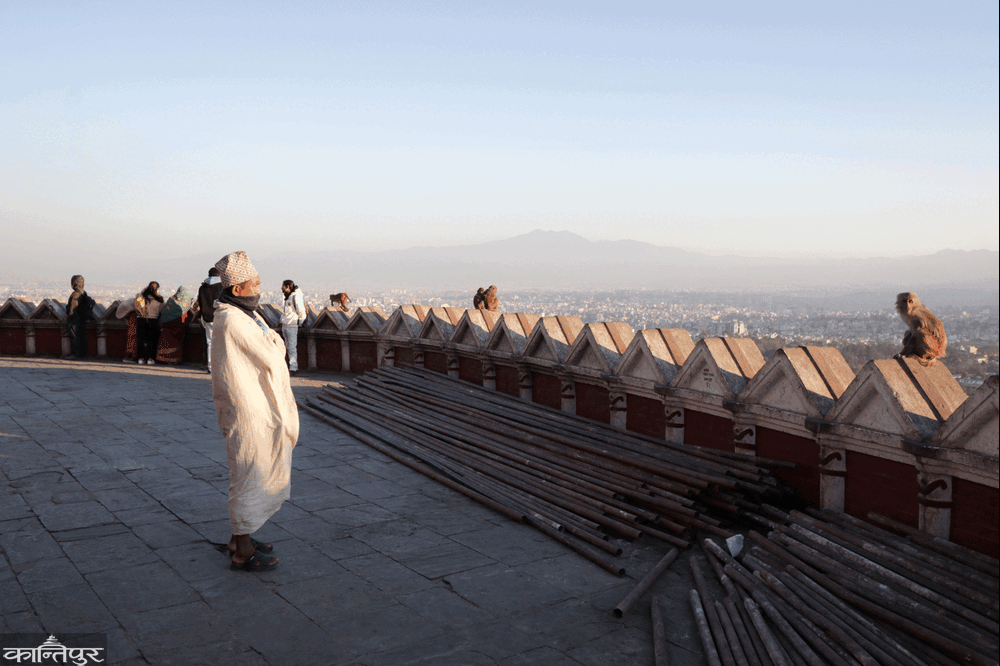
On the day of Magh, when the sky was continuously clouded, he saw this city - from Thamel, from Swayambhu hill, from the airport, from Koteshwar bridge.... After seeing the monkey 'jumping' on the silent trees whose leaves have started to fall silently, the Routes, who were suffering from the gnats of their forest, became a little wiser.
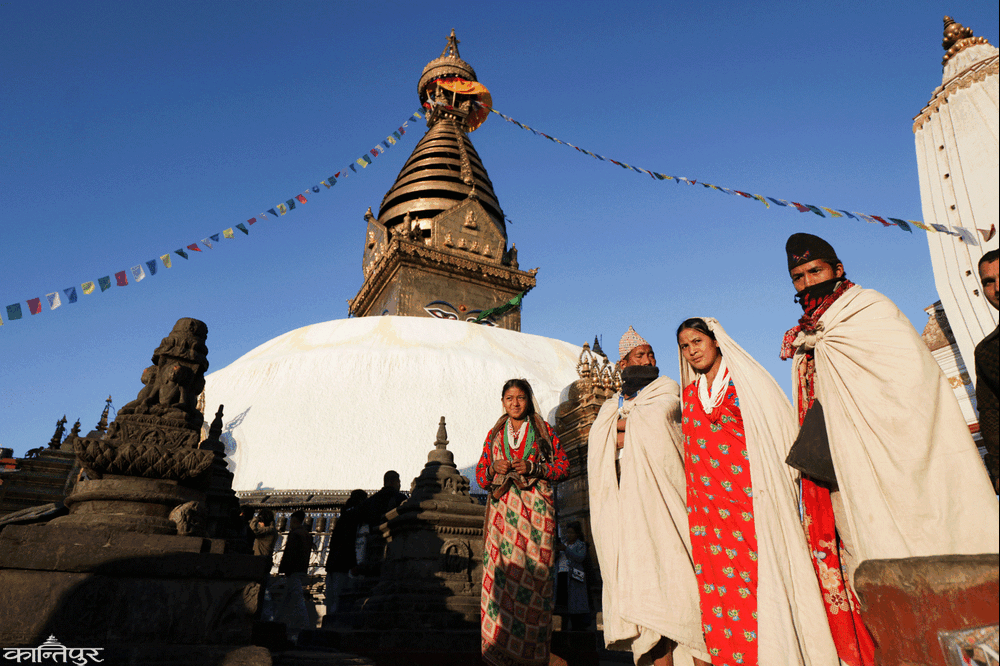
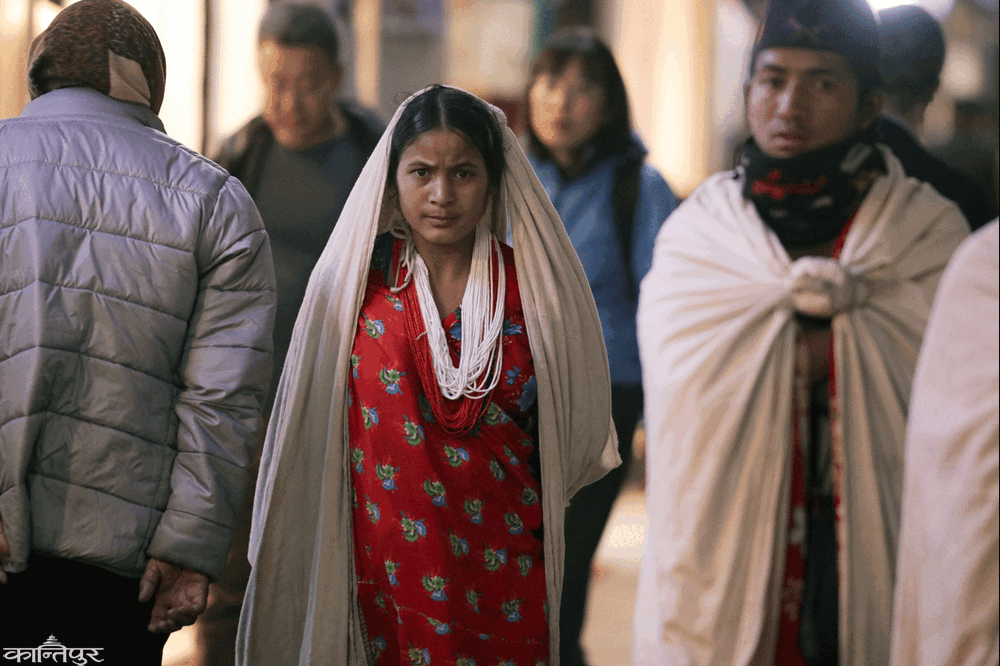
The memory of his 'greatest' life in Raithana probably made him convulse. And, on the memory journey, they were engrossed in the memory of the forest and the riverside. Seeing the cold winter wind of Swayambhu, golden-headed anis walking with garlands in hand, people standing bald and glaring at each other, he felt himself to be a 'strange person' in the crowd of the city.
They were actually 'strange people' who suddenly came to the noise of this gray concrete from the solitude of the green forest of nature. Poet Prakash Thamsuhang had already written a poem addressing Raute who had entered the city - 'Green planet man' -
A thousand times dirtier than your clothes/Dressed in a black imported blanket
This sleeping city/The intervention of your bare feet has shaken badly The land/The city woke up in terror
The city was shocked/The city dwellers were surprised
Whose terrible footsteps are these?/See how our earth is shaken?
This building, tower, shopping mall/This tower, the clock tower, the lion's palace
Why is it shaking like this?/Which planet's life is coming here?
Tired of many questions / The city stood in thought...!
Even in the hustle and bustle of the 'thoughtful city', the life of Swayambhu is in its own rhythm - the routes. The Routes were finding their own rhythm in the maze of Swayambhu, a mixture of the vibrancy of Buddhist philosophy and modern life. They came to this city in empty clothes.
He was looking meditatively at the boys wearing Bob Marley t-shirts, slung over their shoulders with guitars, and smoking cigarettes in their hands towards Swayambhu Hill.
After spending the beautiful days of life in Surkhet, Pawan Thapa, who was following the camera lens and came to Kathmandu by 'night bus', casually asked him on the shoulder - which is more fun between the forest of Surkhet and the streets of Kathmandu? Raute-brother Deepak Shahi, who recently entered the 'Swapnanagari', did not think of any answer.
The footsteps, ghumti, quinetto, mode, roads of the time he walked are equally dear to Deepak. That was Quineta - his soul search and inner journey! You could read the eyes of the city-dwelling roadies - they are surrounded by wonder and curiosity and are - cheerful.
A person's life and character are not formed by their own will, they are formed by the environment in which they grow up. Like, the nature, thinking process of the Routes from Surkhet to Kathmandu is shaped by the forest where they were born and brought up, the solitude and quiet river that flows beside them. The Routes never do the three things that ordinary people do – they don't live in one place, they don't farm and they don't get formal education. These 'jobs' are also 'not done' by the lifestyle they grew up with.
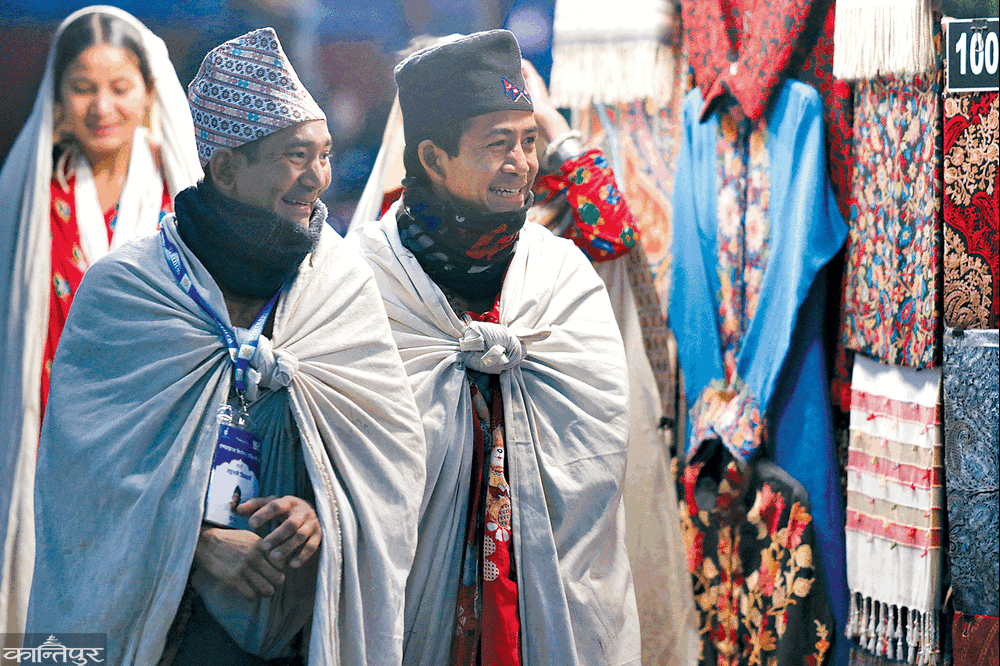
routes speak only in a very stilted, stilted manner. She doesn't talk much, she listens to others. We 'civilized' people talk a lot - we shout, we only raise our voices and we don't listen to anyone. Deepak said, looking at the never-before-seen goods for sale in the roadside shops and the people shouting 'Sell-Sell-Sell', 'Talking too much and chewing too much rice is boring.'
At the same time, waves of uplifting emotions come and go in people. Not all of those ideas can materialize. Thoughts, feelings, lack affect the flow of people's lives. The secluded world where the Deepak Shahis grew up has created a life-philosophy of 'not talking much'.
...
The four routes that arrived in Kathmandu are Bolakkad and Rause - Deepak, the son of route head Bir Bahadur Shahi. He has deep knowledge of route folk life, culture. These routed youths arrived in the capital in mid-January to tell their stories and woes. As soon as they got on the stage of the third literary festival of the Himalayan White House College, there was a sudden silence in the crowd of about two thousand students-spectators.
Along with Deepak, Naveen, Zika and Surman were also on the stage. Deepak has been to Kathmandu 10-12 times. "I have been on a plane, a boat, a bus," Deepak said, "The most fun is going to be on the plane, but the window is clear." I was not afraid even when I climbed it for the first time.'' Deepak is enjoying this trip to Kathmandu in the cold. They arrived at Surkhet Bus Park in the evening from Girighat in Surkhet and from there by night bus.
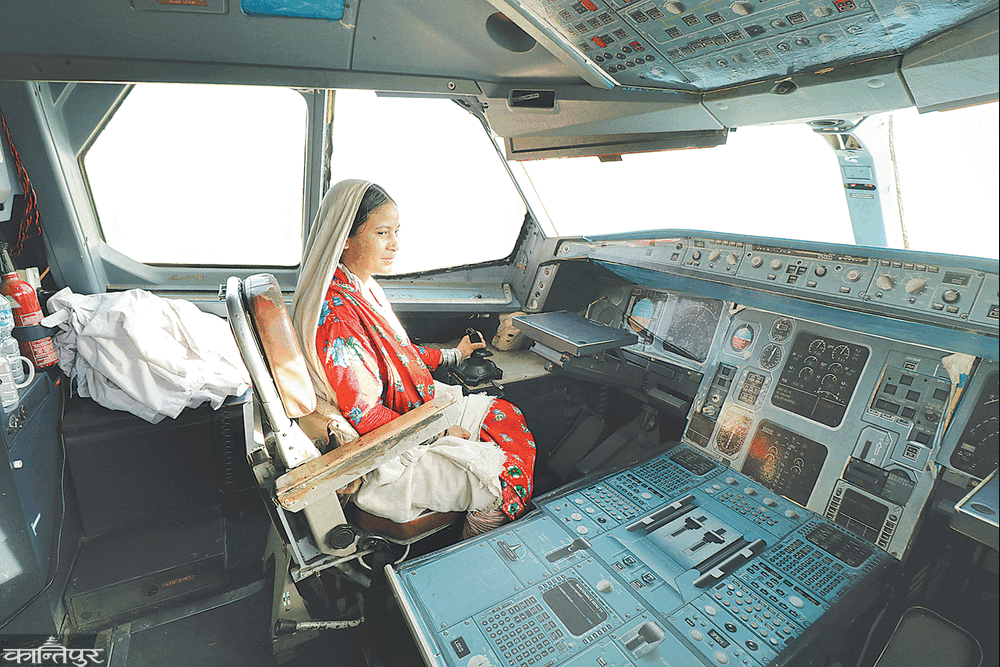
Wandering around the city, observing the behavior of the people here was a strange story - for these four 'strange people'. They approached the international airport with the desire to see the plane up close. And enjoyed riding in the plane kept in the museum.
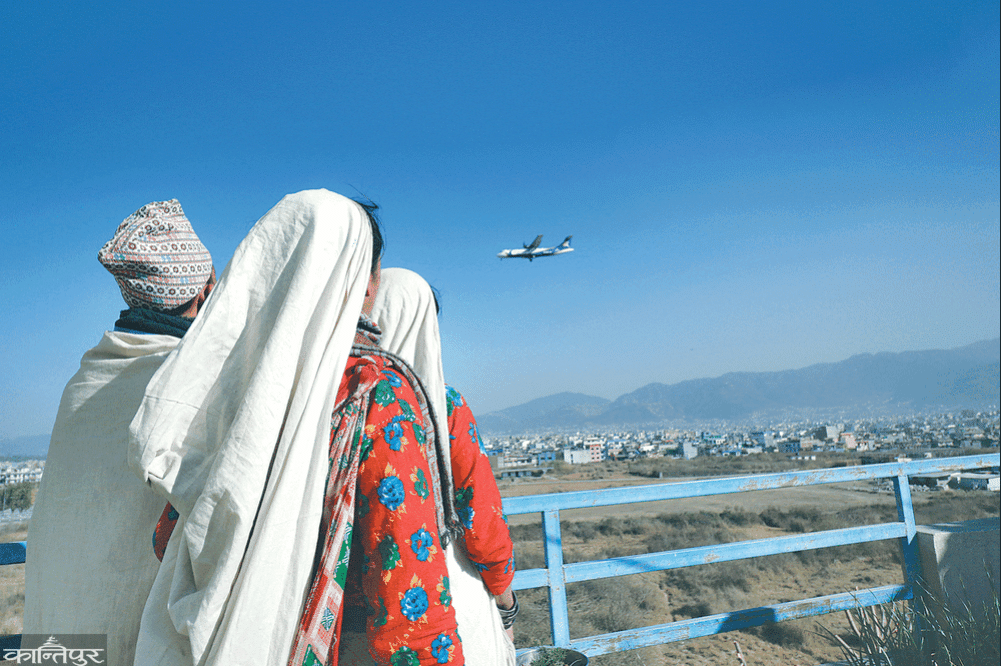
Swayambhu-Danda kept looking at the stormy Kathmandu. Atyas Mane after seeing the Skyscraper Castle. In the main town he saw houses piled on top of each other, walked sniffing past piles of garbage. As they were reaching Koteshwar, a large international airliner landed at the airport. Naveen was excited, surprised and looking at the sky with mysterious eyes said, 'Amma! What a big plane! Our entire people (Route) will probably stick to this.'
Swayambhu got their first sight while climbing, on top of the 'Raithane' monkeys there. What do they say about the 'crankcrete forest' seen from the hill after climbing the ladder? As she thought, she became more interested in the monkey scurrying around. "The monkey here is smarter than our forest," said Deepak, "How did it run after taking food from people's hands!"
The main parts of the city - New Road, Thamel, Basantpur, swaying their eyes were often drawn to the tall palaces, advertising floating electric-boards, poles ringing wires and the ruler's salik. He did not pay much attention to the activities of the people of the city, to the neatly decorated cosmetic products in the clean showcases of the shops. The city was not new to Deepak, Naveen, Zika and Surman kept talking slowly looking at the tall bungalows, 'How tall are the houses here! It's hard to know how many floors!' And they counted the floors of the house by clicking their tongues - 1, 2, 3, 4... 8...!
Even when gossiping a little, Deepak used to twist and turn his hands. There was a lump on his left palm - why? Did this happen by working with wood? Laughing, he said, 'No, no. This happened when they got hold of the bus seat when they came to Kathmandu.'
...
Living a wandering life, they reach Achham-Doti-Dandeldhura in the west, Dangdeukhuri in the east, Rukum-Janjarkot-Kalikot in the north and Surkhet in the south.
The Routes, who are now in total number of 137, used to live on the banks of Bheri. Fearing that the small children would be swept away by the river, they migrated to a forest near Birendranagar, the capital of Karnali state. They moved to this forest from their previous residence 4 months ago. It is a tradition in the Raute community to stay in one place for 4-5 months and then move to another place. If someone dies in your camp, it is a ritual obligation to move the settlement immediately. Route Mukhiya Main Bahadur Shahi said, "That's why we can't settle down permanently and leaving home as soon as a person dies is due to tradition. All of us wish that we do not have to walk like this in the next life (Kantipur, 23 Pus. 068).'
Route's property is a force, an ax and an odan! They only have these three things when they migrate. They do the woodwork, but they don't have a bed to sleep on. Life is simple, no fuss, no lust for wealth. Even in the city, the remnants of Chhaupadi remain, and the Routes do not menstruate.
'In the new place, there is only forest, there is also square,' says Deepak, 'We are happy. It takes about one and a half hours to reach Surkhet from the forest.' But, the Routes love that world, that's where they find 'happiness'. These tribals have no fear even of wild animals. Also, the camp of the route is not far from the settlement.
can happen in the forest - deer, wild boar, wild boar etc. However, those animals are not on their prey-menu. Since ancient times their favorite food is Red Monkey and Guna. Raute people say to the people of the village - Ghoral-Rattal is your part, Guna and Bandar are our part! There is a folk belief of Raute – you should not show your prey to the world. That is why they do not show the meat to others from the time they go hunting, until it is killed and brought back, and even after it is cut up and eaten. Deepak said, ``When outsiders see it, the gods are angry,'' said Deepak.
How is monkey hunting done? It is also said that the monkeys hunt with mantras or the monkeys themselves fall from the tree after being stuck with the mantras. They go out into the forest in groups of 50-60 people, in search of prey. Sometimes you just go to kill monkeys. We don't kill by throwing a spear, we have to put a net on the ground! "Most of them have up to 9," Deepak elaborated, "when they don't fall into the trap, they have to return empty." They prepare to eat only after dividing the small and big prey equally. "You should give it to those who don't know, if you give it to everyone, they will also be happy," says Deepak. He says that now the practice of killing monkeys is slowly decreasing. "There is very little when it comes to my time. "Maybe he will stop killing monkeys in the time of his grandson," he says. In
vegetables, they mostly prefer radish. They don't plant vegetables, they never do agriculture. Our women ask for vegetables from the village and bring them. Deepak, who does not put oil on vegetables, also eats it mixed with mula leaves and gana.
Route's major festivals are Maghi and Dasain. Naveen says, "Girlfriends also vaccinate each other. One goat's leg should be immunized." In Magh, we make our own cell too.''
...
Until recently, there was only one headman in Routes – Man Bahadur Shahi, who served as headman for almost six decades. Gradually, that tradition was broken and the Rautes made three chiefs from 2069 onwards - different chiefs of Raskoti, Kalyal and Somvanshi surnames. Suryanarayan Shahi led Raskoti, Bir Bahadur Shahi led Kalyal and Dil Bahadur Shahi led Somvanshi. Traveling with us to Kathmandu is Deepak Shahi Kalyal, son of Veer Bahadur. There are 6 people in their family. Rautes marry only with different castes of their own community.
All routed meetings have the practice of electing a leader. There is a custom of handing over the 'Mukhiya' to the son of the Mukhiya. However, the woman has not yet become the head of the route, why? In Deepak's understanding, "since the ancestors, women did not become chiefs without speaking and understanding Nepali." Now he speaks Nepali slowly. In the city-market, they are shy and silent. They are just tourists who come to the city.'
route-leader's responsibilities are extensive. Like, if there is a problem in the community, finding a way to solve it, asking the government for ration-water-clothes, taking charge of the goods and distributing them equally.
'Asti 3 people went and brought from the Ministry of Social Development - 40 tents, 100 quintals of rice, khorsani, salt and 2 sacks of cloth. One day I had to share it," Deepak said. In the camp, work is done as directed by the chief. Committed to labor, Raute keeps doing something. You have to do your own work. The head says 'work'. The work of making pirka, honey, koshi - bringing grains to the village, sometimes giving money and bringing rice, grinding it and eating it,' says Deepak.
They make wooden goods and take them to the village for sale and return with grains. Not everyone gives cash for giving goods, they go to the market and buy clothes with some money given. "I didn't go naked. We buy clothes, if we sell 4-5 items, we get 2,2500,' Naveen said this time, 'The work of making wooden utensils is less now.'
Their real skill is making wooden items, but for that they have to cut trees. The law does not allow the cutting of any tree. Deepak asks the Forest Committee and says that they cut a few trees. "We only cut 4-5, if we cut too many, we will face the law," he says. The main source of livelihood is hunting. However, after hunting and scavenging, making and selling wooden items, bartering and collecting clothes, salt and food is another habit.
Whether it's living in the forest or going through the city or attending an event, most of the routes are in white clothes. That is their original costume. Women wear not only kora but also cholo and lungi. Everyone does not have a necklace around their neck, they have a ball in their hand.
Naveen likes to wear pants and shorts and carry a mobile phone. However, they have not had that 'opportunity' yet. "Some people wear T-shirts and full-sleeved clothes," he says, "Now we all wear plain clothes." We like to wear pants-shorts, we like to use mobile phones, but the thinking of the old leaders should be changed. And only young people like us bring change.'
These 4 Raute-bandhus watching the city are an example, which says- the perception is changing in the new generation of Raute. They don't speak loudly, they say slowly - the former chiefs are old-fashioned. A wave of change is slowly flooding them with light. Because once upon a time, the world of Routes was only a forest, nowadays they go not only to the town but also to the city.
A team of health workers continues to reach the route camp, to understand the health situation. After examination, they also give medicine. Earlier, we did not go to the hospital, now wherever we go, doctors come," says Deepak.
These young people want to study and go to school. But, for the leaders - reading is a sin! Yes, the new generation is committing the same sin, secretly. The new generations of route are slowly learning to write letters. Like, Deepak and Naveen wrote their names in our diary, in their own style. However, they have a big fear - of the chief. Zika and Surman also want to go to school, but they can't say it openly. Because they are afraid of committing a 'sin'. They say, "The chief won't let him go, so what should we do?"
It is Deepak who says, "If it wasn't my father's time, everyone would know the alphabet in my time. If you read it, you will know it, it will change."
Not only Deepak, Naveen, Zika and Surman, but most of the new generation have a longing to know the alphabet. However, teachers including Lal Bahadur Khatri are teaching him to write letters on occasion in a secluded forest beyond the Raute settlement, without crossing the walls of the Mukhiya's prohibition. "Now 20-22 people are studying where their parents don't see them," said teacher Khatri, "Most of them are boys, the number of girls is 2/4." Why is this community deprived of citizenship? Now if you give citizenship, you will take it, now nobody has it. If the chief says he wants it, he will get it. Because the chief didn't want to take it, says Deepak. He understands that if you get citizenship, you can get allowance and vote.
Federal government has been giving allowance of 3000 per person, after Karnali state government added 2000, they have been receiving 5000 per month. The
is widely heard in the city market – Lately, there has been an increase in dependence on the routes and they are addicted to alcohol. In this question, Deepak's claim was that we have stopped drinking outside now. It is said that poison has been added to the wine outside, what has been added, what has been added, how do you know? The government has reminded us that it eats up the liver and dies quickly,' he says, 'we sometimes make it ourselves at home - wheat, barley, millet, corn, rice are also made into alcohol.' His loved ones are also in the forest. Even in the cold, we stayed in the forest, in the corner of the forest! It's not because it's cold, it's a habit," says Deepak. "The government says to stay at home, but don't stay at home, it makes you feel dizzy." However, Naveen has stopped loving the forest as before. He is surrounded by a strange, just strange feeling when he sees the movement of people in the city, new clothes, big houses. They say, 'Where is the forest, where is the city!' The continuity of human civilization is based on fear, faith and distrust. Perhaps because of this 'truth', the flow of civilization is rough.
Researcher Johann Reinhardt says that there is no other race in Asia except the Route in the wild. Why did the Routes stay in the forest when the world was practicing the grandeur of modernity? How are they tricked? Some studies say that they entered the forest and were afraid to come out from the fear of being chased or killed by the enemy in the battle or were chased in the battle. Gauri Bahadur Karki writes in the book 'Dosandhka Route', "There is no strong basis to believe that they are fugitive soldiers, retreating soldiers or soldiers who lost their way in the forest."
The debate continues in the city – will Raute choose the slum or the forest? In this question, "Routes have their own authority over their lives," says anthropologist Suresh Dhakal. Why are the Rautes living in the forest? It requires their own explanation. One should not sit outside and think about the development of routes, one should understand their world-view and interpretation.'
According to this anthropologist, the transformation or change of culture happens only after coming into contact with other cultures. A special culture of Routes was created as they were separated from other cultures for a long time. Now he is slowly mixing with the outside culture. "One can learn and know only by mixing two cultures," says Dhakal, "People produce a special society only after living in a certain environment or ecological environment." Those who live in a different production relationship have built a different society. Looking from a different place, it looks like Raute is living in the jungle, but they are the king of the jungle.' Do you leave it in the jungle where even the sun bends down, or do you pull the light of consciousness towards the source? Pre-existing beliefs and values changed. Aesthetics or cultural norms underwent extensive changes after the republic, but the lives of the Rautes did not change.
"Let's not let our lives be the same anymore," Naveen was saying while looking at the plane that left the runway of the international airport and started flying towards the open sky, "We will not change until the thinking of our elders changes."