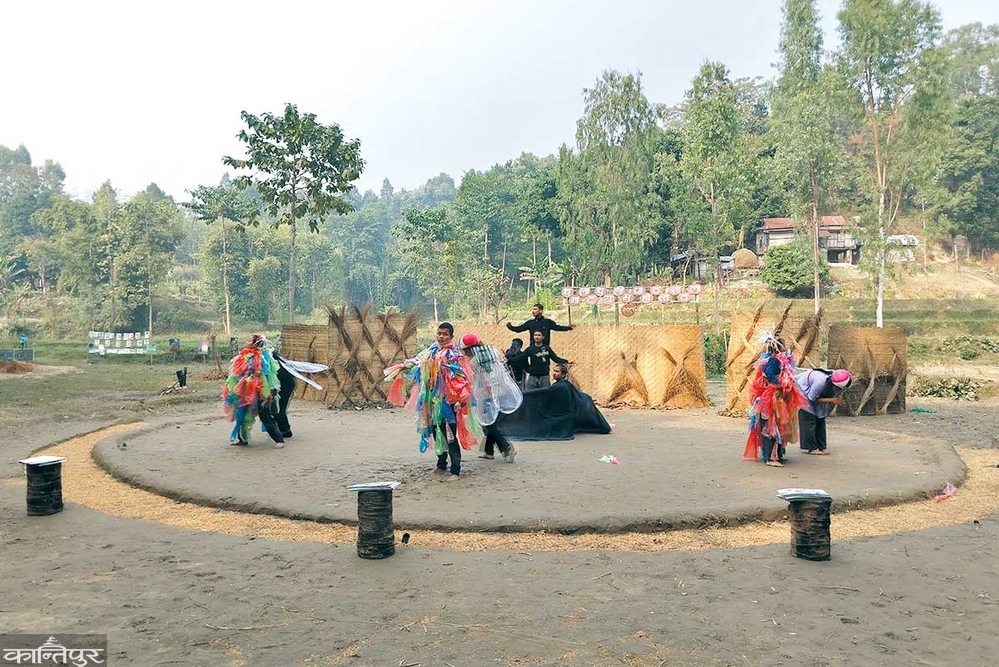
Chulachuli Theater, opened a decade and a half ago in Ilam Chulachuli, has organized a drama festival by using forests, fields and ponds as a stage to explain the importance of nature.
We use Google Cloud Translation Services. Google requires we provide the following disclaimer relating to use of this service:
This service may contain translations powered by Google. Google disclaims all warranties related to the translations, expressed or implied, including any warranties of accuracy, reliability, and any implied warranties of merchantability, fitness for a particular purpose, and noninfringement.
With the increasing influence of modernity in the staging of Nepali dramas, one theater after another opened and started operating in Kathmandu. Kathmandu could not stop the youth's interest in professional theater. The groups that are doing artistic work through drama in different parts of the country tried to show the drama by creating a kind of 'space' with their resources, means and abilities.
In the Nepali theater world, not only the opening of theaters, but also the relocation, inactivity and closure of enterprises for various reasons.
Chulachuli Theater, which is looking at all these activities of the Nepali theater in a neutral sense, looks a little different in its recent style regarding 'space'. Chulachuli Theater, which was opened about a decade and a half ago in the southern border village of Chulachuli in Ilam district, has been organizing important events like drama festivals by using natural places like forests, fields and ponds as theaters to explain the importance of nature and environment. Chulachuli Pathshala Theater Festival, which is being organized especially for school-level children, is now being attracted by the latest practice of organizing the theater festival in an open natural area near the settlement instead of in a closed auditorium.
In the 3rd Chulachuli Pathshala Natya Mahotsav held recently at Shiv Orak Millan Pokhari Tourism Area of Chulachuli Rural Municipality, a group of students not only from Ilam, Jhapa and Morang but also from Makwanpur staged a play related to environmental protection. The two-day theater festival organized with the slogan 'Nature and Art with the Stage' included cultural tableaus, open exhibitions, theater workshops and panel discussions, along with the staging of eight plays.
The open stage that the organizing group spent about a month in the local forest for all these activities was of special importance. A platform made of soil and a parafit made of bamboo around which the audience can sit in the field in the border area of the forest that is connected to the settlement and Goreto road! It was thought that this effort of Chulachuli Theater was showing a new way to the pain of not having a theater in most places outside Kathmandu. Apart from the stage and the auditorium, the paintings, artifacts and Mundhumi Sanskar materials placed in different places of the forest made it not just a drama festival but a comprehensive natural-cultural ritual.
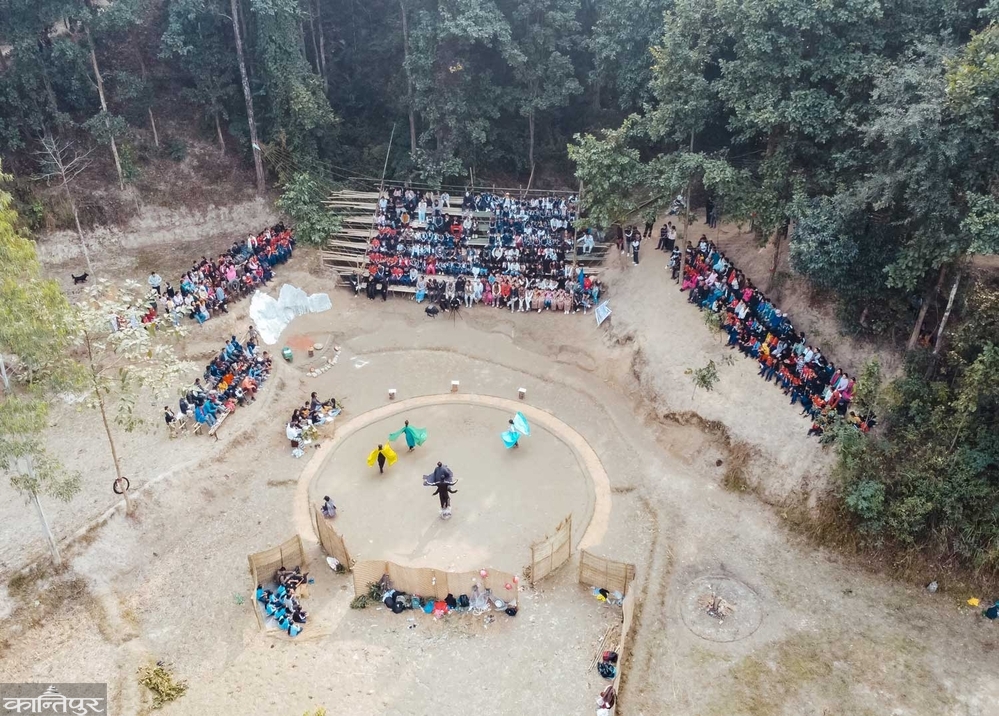
Chulachuli Theatre, which has been doing theater activities with the slogan 'Searching for Rural Beauty in Globalization', has started organizing the Pathshala Theater Festival in the forest since the second edition. The members of Chulachuli Theater, which was working as an office and practice place in the vacant forest office building during the conflict, suffered for a long time due to the lack of a suitable stage to show the play.
The Chulachuli Theater, which has also experimented with the modern theatrical stage called 'Black Box' by hanging curtains on a stage made of cots, has a long list of challenges faced while making 'Black Box' due to lack of resources. Chetan Angthupo, coordinator of the festival, says, "While searching for possibilities amidst the challenges, we have come up with a way to take the drama to nature".
Pathshala Natya Mahotsav was organized in the forest inspired by the theater festival called 'Under the Sal Tree' held in Goalpara, Assam state of India.
"The festival has been taken to the fields and forests so that the students can touch the soil and while touching the soil, they are aware of environmental problems," says Angthupo, "Knowing the soil means knowing your culture." If students learn to love the soil, they also love their culture. It is also easy to convey a positive message to the family and society through students.'
As Chetan said, the parents, teachers, public representatives and staff who were present to watch the drama were written, directed and acted by students from different schools on the theme of why it is important to save the environment. In a panel discussion held to discuss the impact of creativity in education, local education workers and public representatives all praised the style and message of the play. The scope of the
discussion stretched to the development of reading culture through the digital impact on education. Rudra Prabhat, the headmaster of the local community school, understood the role that students can play in the transformation of the society and complained that the local administration and parents did not support him when he engaged the students in activities like drama. On the second day, a panel discussion involving color workers covered topics ranging from exploring the aesthetics of Nepali theater to theater education.
In the panel discussion on the second day, which started with the Mukkumlung movement going on in the east, there was a voice that should be resisted from the stage because the activities affecting the environment and culture are being done in the name of development. Similarly, director Anil Subba, who made a splash in Kathmandu by making a play titled 'Mukkumalung', also indicated that the actors who are not satisfied with the resistance from the stage can go to the field.
Apart from students from Chulachuli and surrounding schools, the two-day festival saw a significant presence of art lovers from the local community and neighboring districts. The atmosphere of the festival, built to reflect Raithane culture, was made interesting by the local materials used in the festival. The creative use of local products and materials such as bamboo, wood, paper rope, clay, and apples used for decoration at the festival site was seen from the small snack and sweet shops that were opened to give the impression of a fair in rural areas. The garlands worn by the guests at the
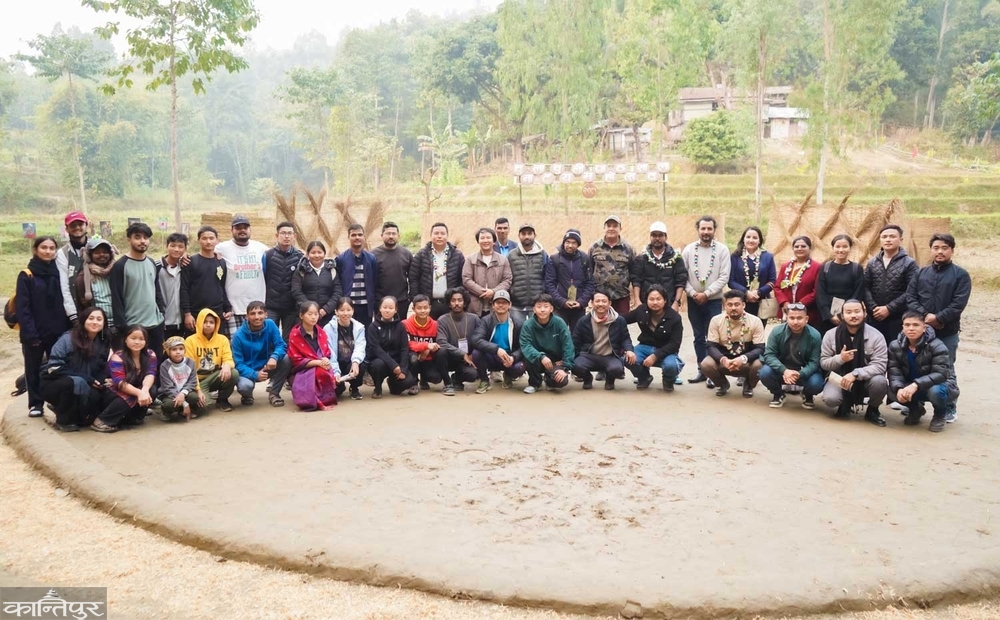
festival were of a special kind. Garlands made using materials such as maize khosta and khoya, simal gudi and totla leaves in the design of naugedi worn by women of various communities in the east became so popular that a politician from Damak decided to use this garland instead of food in his program. At the request of the
organizer, a local woman made the garland. "The program we did could/couldn't make a big impact, but I think it's a good thing to be able to connect with the skills and business of the local community," festival coordinator Chetan Angthupo said while sounding satisfied. It seemed that plastic could not be replaced in love signs and water bottles. Another commendable aspect of the festival, which was completed by the organizers of Chulachuli Rural Municipality and the Ministry of Social Development of the state government, was the collaboration with local organizations and stakeholders. About one and a half dozen local organizations and media were partnered in the festival, which was organized in collaboration with Chetna Theater in Elam, Kadam Theater in the neighboring district and a theater in Nepal staging the play 'Mukkumalung' in Kathmandu.
'We are definitely here', the director of Kadam Theater Damak Sijan Dahal expressed his happiness that he could cooperate with the festival through manpower and resources even though he could not help in any other way. done If we consider this 'small' collaboration between environment and theater organized by Chulachuli Theater to be the beginning, as this year of Bikram Samvat approaches, some important international theater festivals are being prepared in Nepal. These theater festivals, which are mainly centered in Kathmandu, range from the Nepal-India Rang Mahotsav starting this week to the 3rd Nepal International Theater Festival starting in the first week of March.
Artistic debate on social and political issues is not a new topic in Nepali drama. The level of the debate is a different matter, but the awareness that 'drama is not just entertainment' can be felt in both the new generation of actors and audiences attracted to the theater. Apart from the professional dramas being staged in Kathmandu, if we look at such theatrical activities happening all over the country, it is clear that both the audience and the actors have a sense of responsibility towards theater work and social transformation.
Through socio-political issues such as class exploitation, caste and gender discrimination, corruption and civil liberties, theater has started to connect with the environment and Raithane culture. It can be expected that the original identity sought by Nepali drama and theater will be found here and there.