Shyam Benegal (1934-2024) is the pioneer of parallel film in Hindi cinema. He was a unique director in the world of cinema. He believed that film is not a world outside of reality. He used to say that cinema should play a role in social change. He left forever after 10 days of celebrating his 90th birthday. However, his films are vivid, reminiscent of Benegal.
We use Google Cloud Translation Services. Google requires we provide the following disclaimer relating to use of this service:
This service may contain translations powered by Google. Google disclaims all warranties related to the translations, expressed or implied, including any warranties of accuracy, reliability, and any implied warranties of merchantability, fitness for a particular purpose, and noninfringement.
Shyam Benegal celebrated his 90th birthday last December 14, amid small celebrations. In a conversation with PTI, Benegal said, 'Now I am working on two-three projects.' Even though he was more than 9 decades old, he was active in film work. Last year alone, he made a biopic 'Mujib: The Making of Nation' based on the life story of Sheikh Mujibur Rahman.
Benegal left us 10 days after celebrating his 90th birthday. However, his films will always remind him.
Benegal's father Sridhar Benegal was a professional photographer. He was famous for his portraits. At that time he had a 16 mm camera. As soon as he had free time, he used to take videos of his children. Benegal had 10 children in his family. Everyone in the family got a chance to be captured by Sridhar's camera in turn. Every evening after dinner, the family sat together and enjoyed watching each other's scenes. It was this environment that made Shyam Benegal a famous film director.
At the age of 12, Benegal was allowed by his father to use a camera to take pictures/videos. At the same time, Shyam took a video of the brothers and sisters gathered during the summer vacation. The first video he made was that, he named it, 'Chuttion Mein Mauj Maja.'
was his house, near the cantonment in Hyderabad, where English films were shown every week. He was always able to watch movies because of his friendship with the projector operator. Shyam Benegal used to say, 'It is natural for me to become a filmmaker, but no one in my family thought that I would enter the film industry. If I had told anyone about my desire to become a film director, they would have called me crazy.''The issue of making a film in Hyderabad, which has nothing to do with cinema, was considered very illegitimate. Benegal, who said that he will make his first film at the age of 20, made his first feature film at the age of 39.
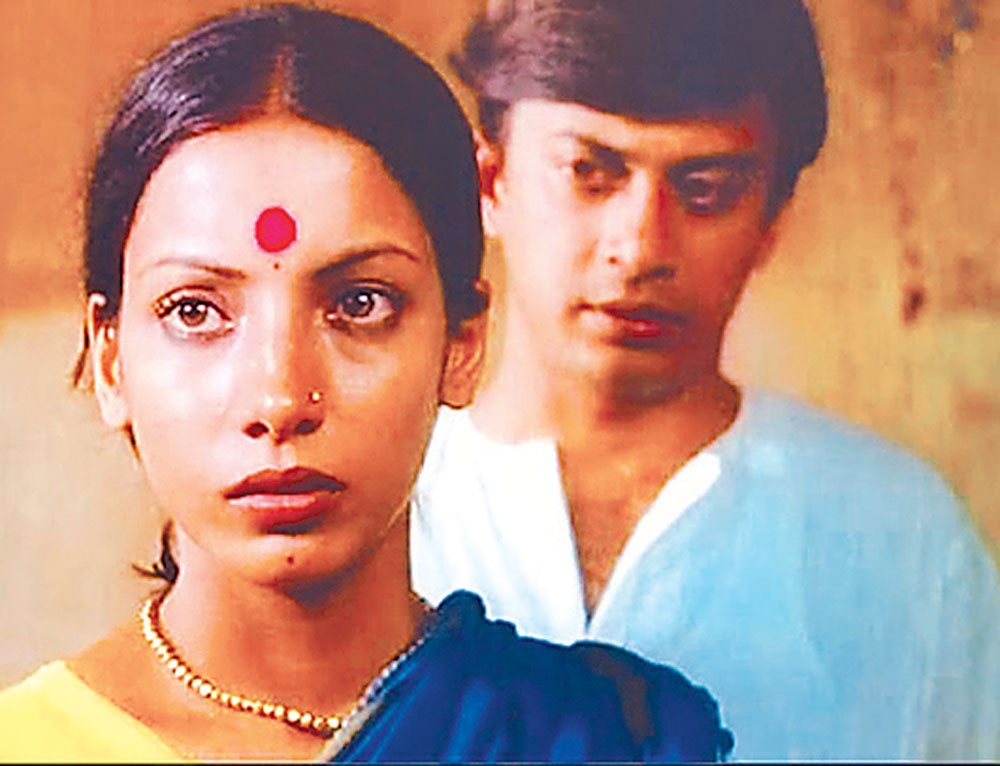 Ankur (1974)
Benegal completed his Masters in Economics from Osmania University, Hyderabad. He also taught on campus for a while, but he still didn't like it. Then he moved to his dream city – Bombay. Guru Dutt, who was a relative, had already established himself in the film industry. However, Guru, who has established himself as an actor and director, suggested that Shyam could not continue as an assistant director. Shyam started making commercials. Advertising made him proficient in film ideation, script writing, casting, shooting, editing, recording and mixing. Within a few years, he created almost 200 advertisements.
Only 14 years after reaching Bombay, he made a feature film. By that time he had made about 800 commercials and 30 documentaries. Initially he worked as a copywriter. As soon as I finished my MA, I started working. I came to Bombay after I did not find much moving work in Hyderabad. I got a job in an advertising agency. As a copywriter, I used to get Rs 175 a month,” he said in an interview with Anuradha Dingwane Needham in 2018. After some time he worked at the famous Lintas agency. Three years later, he became head of the film department at another agency.
He was a supporter of the progressive line in Indian politics from the beginning. He believed that cinema should somehow play a role in social change. He grew up in the feudal state of Hyderabad. That is why he was able to closely observe the peasant movement and the communist movement. His films, 'Ankur' (1974) and 'Nishant', were made around the Telangana movement.
(1975). Being from a politically-socially conscious family, he had a passion for it from an early age. Therefore, he often prepares the first draft of the screenplay himself. He was very educated. In an interview, he says, "I met everything, read everything - novels, history, memoirs." He got into cinema inspired by cinema stars like Satyajit Ray and Ritwik Ghatak.
The pioneer of parallel cinema
Mrinal Sen is credited with starting parallel cinema in Hindi. Sen's 'Bhuvan Som' (1969) is considered the beginning of Hindi parallel cinema. However, Shyam Benegal himself did the work of widening its scope. Critic and journalist Kripashankar Choubey says, "In the history of Bengali films, the release of 'Pather Pachali' in 1955 was a revolutionary event, it gave a new birth to Bengali cinema."
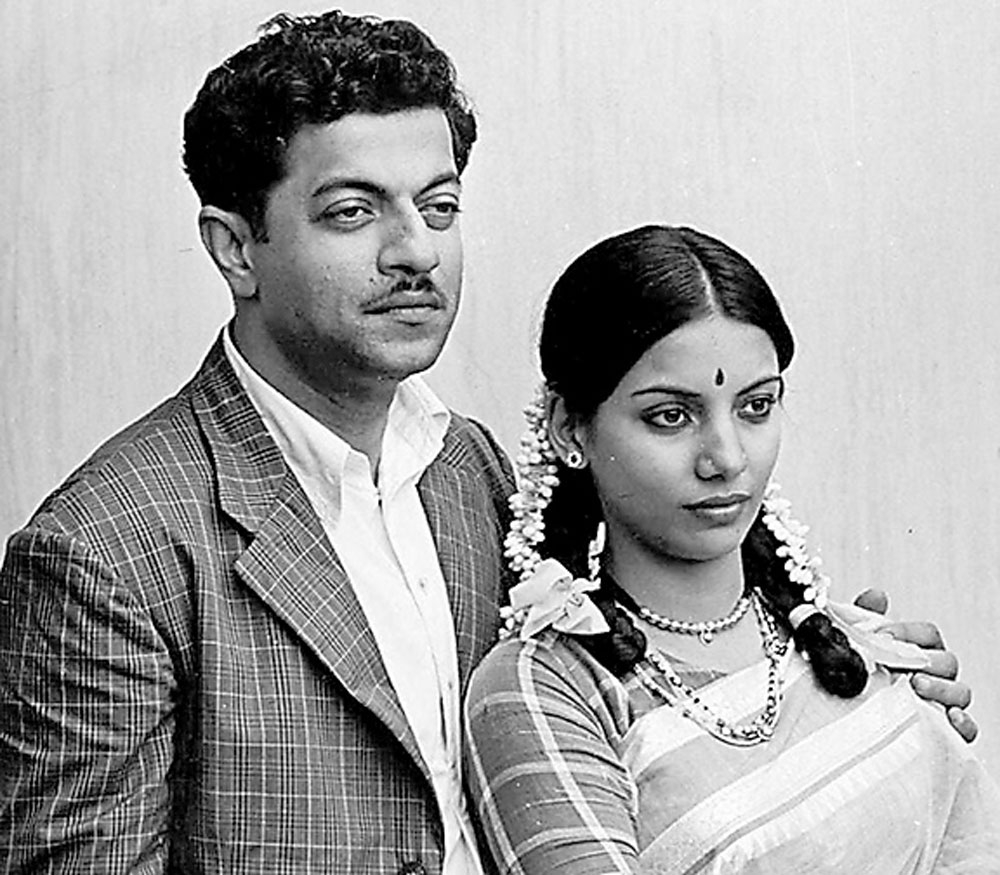 Nishant (1975)
Similarly, the release of 'Bhuvan Som' in 1969 is also a revolutionary event for Hindi cinema. It gave birth to the New Cinema in Hindi.'' In the 1970s, Benegal introduced a different flavor in the world of Indian cinema. Benegal is synonymous with parallel cinema, different from the popular films of the time, focused on commercial success. It was a time when films like 'Sholay' and 'Jai Santoshi Maa' were making waves.
At that time, making a different kind of cinema was a challenging task. There was Amitabh Bachchan, who was established as the 'Young Angry Man'. People thought that Amitabh had a magic wand, which could 'magic' every problem. In 1973 it became 'Zanjeer' starring Amitabh, in 1974 'Ankur'. 'Ankur' has become a standard of resistance cinema against the feudal system.
Revolution's 'Ankur'
While studying in college, the story of 'Ankur' was in Shyam Benegal's mind, which is also a story about his village. The movie is the story of people who earn their living by running a cottage industry. Like Shyam Benegal's first film, this is also the first film of many actors. Shabana Azmi made her debut with this film. Between the mansion and the hut is the story of 'Ankur', the story of those who live and eat. If you look at it from a Marxist point of view, the film shows the economic-social differences.
Lakshmi (Shabana Azmi) asks for work for her husband Kishtaiya (Sadhu Mehar) with the landlord's son Surya (Anant Nag) and says, 'Bachara bekara hai, government. He used to work as a potter. Used to make very good pots... But since the union government came, everyone was using aluminum pots. Kumhara toh bhukhe mar rahi sarkar.' Due to the policies of the British, the cottage industries collapsed. The dependent community was desperate for livelihood.
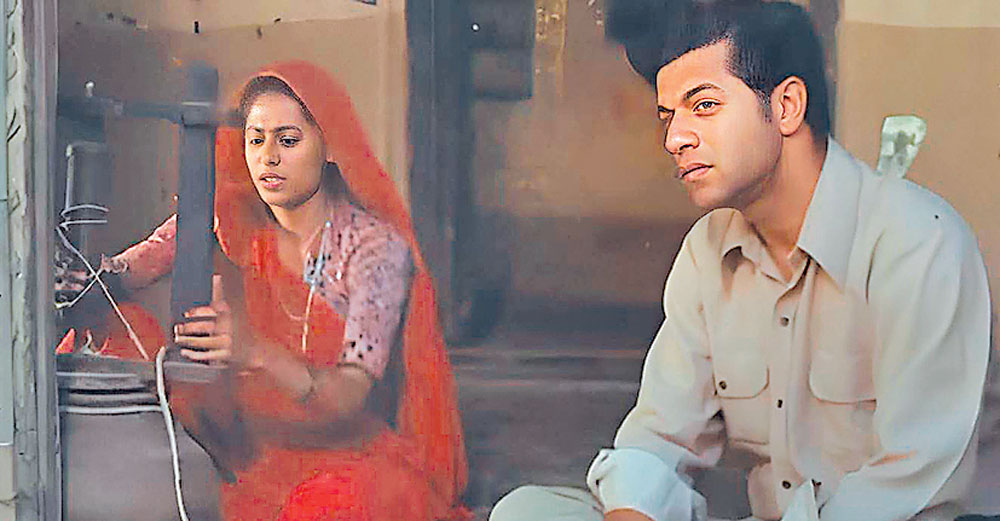 Manthan (1976)
Although Surya was married, his wife Saru was young. So he likes Lakshmi. Lakshmi lives in Surya's haveli while Kishtaiya runs away from home. Helps with cleaning and cooking. At the same time, she also gets pregnant from the sun. Surya pressures her to have an abortion, but she refuses. She replies, 'You don't have to take care of me, baby.' But Surya says that he will be ignorant about it. Kishtaiya, who fled the village after being beaten up by Surya on the charge of theft, returns. He is happy that Lakshmi is pregnant, says he will go to Chote Sarkar (Surya) to ask for work. But, Lakshmi Don't go
. He goes towards the mansion with a stick. Surya gets scared after seeing Kishtaiya with the stick. Even though he realizes his mistake, he does not speak out. As soon as Kishtaiya enters the courtyard, he begins to whip. After seeing Lakshmi beating Nirghat, Dojia comes to the mansion staggered. He says, 'Ye kam magne aya tha, phir kyon mara?' Lakshmi is not limited to that, she also takes down the land pride of Surya.
You will be a big man from your home. Hum Tere Koke Ghulam Nahi Hai. Ab se tera kama nahi hona, tera paisa nahi hona. Tera kuch nahi hona. Sab apne murde ke saath le ja tu,' he says in southern Hindi love. (Benegal's specialty is also making films by including local language, culture and song-music.)
Sheikh Chand, a policeman, sees Kishtaiya being beaten, but looks on indifferently. Even a small child sees Kishtaiya being beaten by the sun. That is the same child, Kishtaiya stole the juice of the toddy and applied it to Surya. However, today he gets angry when he sees Kishtaiya being beaten up by accident. The final scene of the film is very powerful. Finally, the child picks up a stone and breaks the glass windows of Surya's mansion. It also reflects director Shyam Benegal's view that there should be resistance against feudalism and landlordism.
The first film 'Ankur' made Benegal famous. It received three National Awards in 1975, and was also nominated for the Golden Bear Award at the 24th Berlin International Film Festival.
' Nishant' the light behind
is Shyam Benegal's second film - 'Nishant'. It has a story of rural exploitation within the zamindari system. How does abuse of power haunt society? The film tells that story. Nishant is also a scene-description of the struggle between the ruling class and the common people. Girish Karnad, Shabana Azmi, Nasruddin Shah, Amrish Puri and others are strong in the film. According to Shyam Benegal himself, this film is based on a true incident.
This is the story of Pochampally village, 25 km from Hyderabad. The film shows the atrocities committed by the landlord brothers on the villagers and the struggle of the villagers. As shown in the film, the landlord brothers used to grab the land of the villagers. He would even pick up any woman he liked and take her to the mansion. Amrish Puri is playing the role of the big landlord of the village in the film. The brothers call her 'Anna'. Puri's performance in the role of
Anna is outstanding. With his big eyes, tight body and conversational style, he looks like a real landlord. Anna's brothers are played by Anant Nag, Mohan Agashe and Nasruddin Shah. Nag Anjaiah, Agashe Prasad and Shah Vishwam are playing the role. This is the first film of Nasruddin, a celebrity of cinema.
Anna's brothers not only collect the grain of the villagers but also the women. Meanwhile, Sushila (Shabana Azmi), the wife of the schoolmaster (Girish Karnad), who has just been transferred to the village school, is kidnapped. Despite being married, Vishwam loves Sushila. He is kidnapped at the instigation of his brothers. Although Anna will have the first bhog of the woman who brought the haveli, she does not touch Sushila because of her special love for Vishwam. However, Prasad and Anjaiya repeatedly rape Sushila. Vishwam's heart melts seeing Sushila's condition after the rape.
Not only that, he feels inferiority complex and resorts to alcohol. The schoolmaster, the police, the court, and the newspaper run everywhere to free Sushila from abduction, but the zamindars are so powerful that no one in the village dares to take her complaint, register a case and print the news. In the end, the schoolmaster succeeds in making the villagers agitate against the injustice and tyranny of the landlord by persuading the priest of the temple.
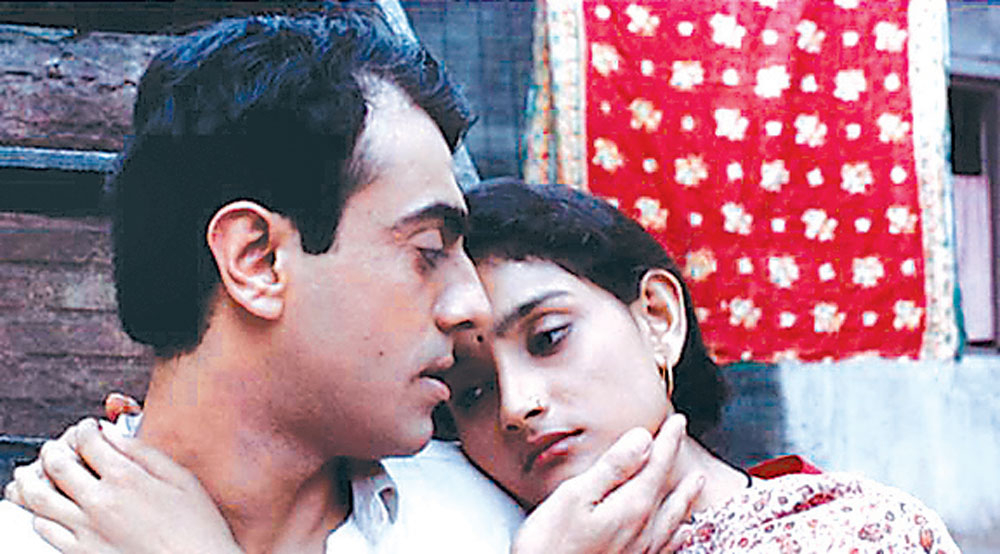 Sooraj Ka Satwaan Ghoda (1992)
Pramod Kumar Varnawal writes in 'Shyam Benegal Aur Samantar Cinema', 'Benegal has raised many questions about religion and society through 'Nishant'.'' They steal the jewels of the temple to pay for the money they lost in gambling. 'Nishant' is also a satire on showing hollow pomp in the name of religion.
5 lakh farmers ' Manthan'
'Manthan' is Shyam Benegal's 'masterpiece'. 'Manthan' is the success story of farmers' movement, especially dairy cooperatives. A co-operative campaign led by Varghese Kurian in Ananda, Gujarat achieved exemplary success. Kurian is known as 'Father of White Revolution'. Although milk was the main product of the farmers, there was a lack of market. Farmers benefited as the Kurians adopted a cooperative model. Farmers sold milk through the Gujarat Cooperative Milk Marketing Association and became independent.
The success of that farmer's cooperative model is today famous all over the world as Amul Dairy. Amul Dairy is run by thousands of farmers, which is also the largest dairy in Asia. The same dairy that started with a small effort today turns billions in annual turnover. In the year 2023/24, Amul had a turnover of 12,800 crores. This success was made into a feature film by Varghese Kurian and Benegal. Benegal had already made a documentary about Amul. Kurien and Benegal agreed to make a feature film to take Amul's success to the villages. What is more interesting is that 'Manthan' is a film made by collecting 2/2 rupees from 5 lakh farmers.
In this sense, 'Manthan' is a farmers' film. There have been accusations that big budget films in India are made with illegal money. In 2012, Cobra Post and CNN IBN conducted a sting operation on this. In Bollywood, underworld dons Dawood Ibrahim and Abu Salem, among others, were revealed to have invested in blockbuster films. It is a rare example of Benegal taking money from farmers to make a film. Varnwal says that the farmers have adopted this film. They say, 'Manthan is the only such film in India, where not only the means but also the means are sacred.' To watch this film, farmers traveled from village to village on tractors and trucks to reach the movie theater.
The song 'Mero Gaon Ka Naam Kathiyabad/Doodh Ki Nadiya Bahe Ja...' in the end of that film was also helpful in increasing Amul's identity. The film exposes the government's slowness and chaotic bureaucracy, which is also a hindrance to development. In the opening scene of the film, Dr. came to establish a cooperative in the village. Those who are in a beautiful ravity and the sea are coming on Time. 'Huge the people were,' The man's answer was too much to go right. "This time laughing, the Supper, says, 'This dialogue of Mounton' has struck by a seriously for governance. & NBSP;
' SUGE SUGE "Life Philosophy is a specific literature in Sightness Sentences. Other films are constructed, based on novels, stories, autobiography and biography. In some cases, the film may not be judged the work. Cheering Literary Lite lovediction is also called 'Failing Right'. She wrote the script of 'mill workers' in 1934. Premanda money had arrived in Bombay for writing that script. He was payable for 8,000 of Senatan. The amount was very large at
. However, lovers himself were not satisfied with the film script. Kechard suggested not to shed the film, Author, wrote, said that you respect myself, 'If you respect me, see that you see that you have a respective movie. Debt was tested here, used here. Now I am Rajha. Then I swear, negotiating, not stealing. '
Benam has made a film on the various works of India. In terms, "the seventh movies of the sun. 'Anyox, published in 1952, has converted Benmar in the cinema. 'The seventh horse of the sun'; characters are Menic Mullah (Rujite Mullah).
he has guided the story of the film final. He tells them to be different failed loved ones. The novelist Bharati and the director Benagal has presented life through 'the chariot of the sun's chariot'. Regarding the role in the novel, he describes the following-middle-middle class today. '
is presented the reason for the crispy conflict and love fail. The film chief of the film chiefs chief (Rajeshwari Secretary), Lili (Plavi) and the Sunday (Nina's Gupta) has represented by Lilig, intellectual and workers society. They try to challenge social causing. It has addressed financial-economic environment even though film love relationships. Love is not the case.
& NBSP; Monthical Mullah says, 'Love is not mysterious and highly private emotion, it is based on the economic system. Class struggle is this basis. The 'Dairy Prasha says that Dinijha, Dinijha is obstacles of love and marriage, says that the dowry is considered an obstacle of love and marriage. One dialog in the film is relevant, "he does not have a dowry to day with his father. '
is the most powerful means of literature. Even so, the novel, stories, poetry, is more than than to reach a lot of time, so its scope is widespread. The phossions have had a lot to be sensitive to the directors, manufacturers, even if the Cineism has a direct impact on society. In this regard, the victims of 'Mahabrata' and dialogue 'coommy Raja, said,' The enlightened class of society is missing day and falling day by day. When - when the precious people have paid attention to the film level. 'Sacrifice ",' Mohan Joshi is a worthwhile, meaningful film The votes of made formed. Raja 'Juni', 'Sali' and some of the Middle Akbar Anthony, "Schheduri, 'Schharab Annni' considers important social documents in literature. Shyam Benner is different in this sense that he brings the social-realistic tip and bring them to the film. As politically raised in a vouratic family, the equitable democratic life on earth's dream, secular life-free attendance is bener. & Nbsp;
'
, a search'
Benak Benac Benac Benac Bened to a semicircle series, 'India, a search'. The 52 hours of the long, there was Benala Director from the beginning of the beginning of the series. On the justice manner, he was a fair manner that is based on the books, in Benague. About 500 artists have been acting on this series. The word 'Lifetime amviet' is 'Lifetime Achievoma' in the formation of a year and a year after a year. is going on to tell a one-sided stories in the name of history. Leaders and leaders of Army leaders, the leaders of Army, are engrossed to completely dust. In this regard, Benagal said in the interview with an interview with her, she is said, 'Modern India cannot imagine modern India. Nehs is the first prime minister of India. History cannot be deleted. Her a five-year plan is the base of India's development. '
was a special location
-BREAK-BREAK-BREAK-BREAK-BREAK-BREAK Change only as the victim suffered. However, Shyam Benagal also showed the woman's character as a resistant force of the patternity. Not only a human being depicted. The women's characters and the sluggish ', the women and the "role' of women are a vivid example.
says he says, 'Female women had not been identified. Their power that could surround the oppression did not take away. I looked at them more than as a victim.
traditionally is the world and the world outside the house. Women were limited to the houses in the house and the outer world was of men. Benagala says, 'Selection to women based on the autobiography of Marathi film, Wadker's Ekkist, I, I', made a 'role' movie. The woman'sistological approach has been made in the basis of personal experience. & Nbsp; Benegrades', India-Muslim relations and Hindri-Muslim relations are centered. & Nbsp;
Benam's film is not possible in the same article. Many books have been written about his film, there are hundreds of the need. Shyam Benagra, Shyam Benagra, Snegal Sependor ', Same Pilosafer': Film Benestra, Same Pilosafer ': The Film Benagela': The Film Benagela ': The Films of Shyam Benagal' can be special content to those who are interested in Benagal. & Nbsp; • Do you want Shayam Batia a few months ago, 'I have never thought.' Shortly after the interview, Benague died shortly. However, he will continue to remember the price of parallel film in Indian cycro areas.
& Nbsp;


