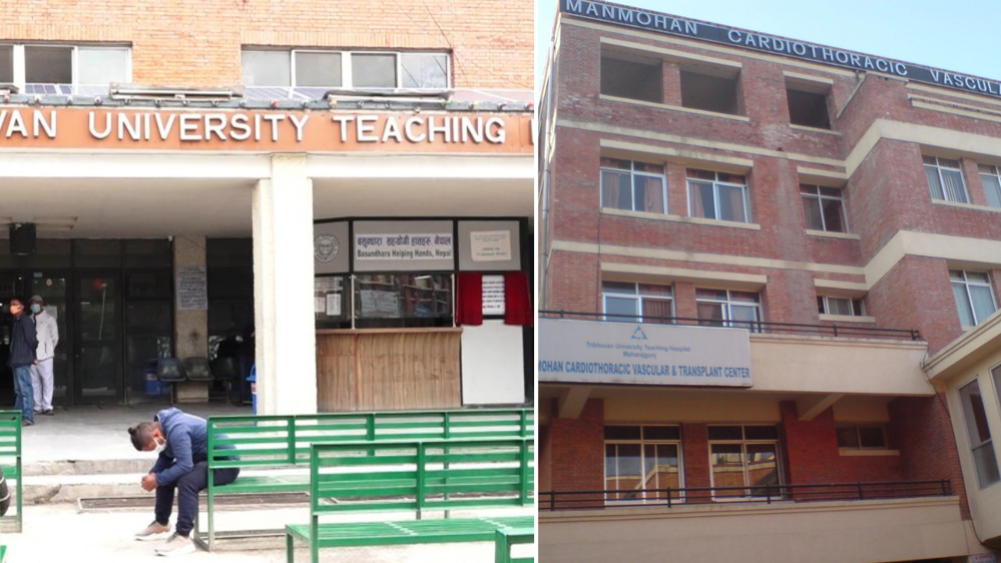
After the government health insurance program, which had been suspended since last Magh, resumed full operation from Thursday, thousands of patients coming for treatment from across the country will receive relief.
We use Google Cloud Translation Services. Google requires we provide the following disclaimer relating to use of this service:
This service may contain translations powered by Google. Google disclaims all warranties related to the translations, expressed or implied, including any warranties of accuracy, reliability, and any implied warranties of merchantability, fitness for a particular purpose, and noninfringement.
Tribhuvan University Teaching Hospital and Manmohan Cardiothoracic Vascular and Transplant Center have resumed services under the government health insurance program, which had been suspended since last Magh, as of Thursday. With this, thousands of patients from across the country who seek treatment at these hospitals will benefit.
Many hospitals across the country, including TU and Manmohan, had suspended services, citing the government’s failure to reimburse long-standing treatment claims. When services were halted, thousands of underprivileged citizens who came to these hospitals for treatment were deprived of health services. Patients with serious conditions were forced to wander in search of free services under insurance at other hospitals, pay fees at the same hospitals, or return home carrying their illnesses without receiving treatment.
"We have learned that Tribhuvan University Teaching Hospital and Manmohan Cardiothoracic Vascular and Transplant Center have resumed inpatient services under the health insurance program," said Bikesh Malla, Information Officer at the Health Insurance Board. "Many were affected when these two hospitals suspended health insurance services."
We have reviewed the service fees and have already paid all outstanding reimbursement amounts due up to Magh of this year. These hospitals had already resumed outpatient services and have now also brought inpatient services back into operation. -Bikesh Malla, Information Officer, Health Insurance BoardThe Teaching Hospital administration had been complaining that the Board approved only 50 percent of the insurance claims submitted and had not reviewed the service fees. "We have reviewed the service fees and have already paid all outstanding reimbursement amounts due up to Magh of this year," Malla said. "These hospitals had already resumed outpatient services and have now also brought inpatient services back into operation."
Officials have stated that some hospitals outside the Valley have also resumed services under the health insurance program. However, some hospitals, including Shahid Gangalal National Heart Center, have resumed only outpatient services. These hospitals have said that it is not possible to provide services at the current rates set by the Health Insurance Board. "If we provide services at the rates set by the Health Insurance Board, we cannot operate the hospital or sustain the services," said Dr. Rabindra Bhakta Timila, Acting Executive Director of the hospital. "We have to run the hospital from our own resources. Providing services at the government-set rates puts us at a loss."
After services under the health insurance program were halted, the government faced widespread criticism from various quarters, and questions were raised in the Federal Parliament as well. Similarly, experts questioned the government’s commitment to the constitutional provision ensuring free basic health services for all.
According to Board officials, payments totaling Rs 25 billion in outstanding dues to hospitals up to Magh of this year have been made. In last fiscal year’s budget, the government allocated Rs 10 billion to operate the health insurance program and provided an additional Rs 15 billion to resume the suspended services.
Previously, in Magh, the Board reduced the outpatient service limit per person and family member from Rs 100,000 to Rs 25,000. Citing increasing financial burden, the Board also suspended outpatient services under the health insurance program at private hospitals in Baisakh.
Even government hospitals, including Bir Hospital, which operate with government grants, were providing only partial services under the health insurance program. Patients using insurance facilities at major hospitals were unable to access certain services, including surgeries.
Board officials have stated that the policy to resume inpatient services at private hospitals or to increase the outpatient service limit has not yet been changed.
The health insurance program is a priority initiative launched by the government to ensure access to health services for all citizens. Under this program, a family of up to five members pays a premium of Rs 3,500 and receives treatment facilities including medicines, tests, and consultations. One family member can use insurance benefits up to Rs 100,000 annually, or the same amount can be shared among the five family members. Families with more than five members can pay an additional Rs 700 per extra member to receive benefits worth an additional Rs 20,000 per person.
Individuals enrolled in the insurance can receive services from designated health institutions by presenting their identification card. The Health Insurance Board reimburses the expenses for services provided by the health institutions.
The government provides insurance benefits up to Rs 200,000 for patients with chronic diseases. According to Board officials, more than Rs 500 million was paid for chronic disease patients up to the last fiscal year.
The government also pays the insurance premiums for citizens in 26 districts below the poverty line, senior citizens over 70 years of age, families of people living with HIV, persons with disabilities, leprosy patients, and multi-drug resistant tuberculosis patients.
Currently, the government pays the premiums for about 55 percent of citizens enrolled in the health insurance program.