The root causes of most children ending up on the streets are family breakdown, domestic violence, poverty, and parental neglect. Some children run away because they can't bear the violence at home, while others are forced to take to the streets because they have to make a living.
We use Google Cloud Translation Services. Google requires we provide the following disclaimer relating to use of this service:
This service may contain translations powered by Google. Google disclaims all warranties related to the translations, expressed or implied, including any warranties of accuracy, reliability, and any implied warranties of merchantability, fitness for a particular purpose, and noninfringement.
Binay (name changed) from Dharan was getting fed up with the constant fights and unsafe environment at home. To some extent, he had to decide to leave home. He ended up on the streets at the age of eight.
While sleeping in the warm arms of his childhood friends, Binay's nights began to be spent on the cold floor and the streets. In the early days, the dark nights, hunger and strangers terrified him. Gradually, he met other street children like him and only then did he become a different world. 'After having friends, the streets began to feel fun,' remembers Binay.
They would roam around Bhanuchowk Bazaar, the bus park and the streets all day long. They would earn a few rupees by begging for money, carrying small items and collecting garbage. They would buy food with the money they earned. Gradually, that money started to be spent on addictions. Instead of paper and pen, Binay's hands started to have 'drendeite'.
Life on the streets had given him a sense of freedom. There was no one to stop or remind him. Being able to walk, sleep, and spend time with friends was a free life for him. However, this freedom was also pushing him towards risk, violence, and addiction. According to him, even though he had parents and a brother at home, he was distancing himself from his family due to indifference and discrimination. ‘After my mother died, my father remarried. My younger mother never loved me. She always beat me, made me work, and discriminated against me in studies. I went to a government boarding school with my brother,’ he recalls. ‘I also felt that I should have loved my brother the way he did. When it started causing me mental stress, I left home.’
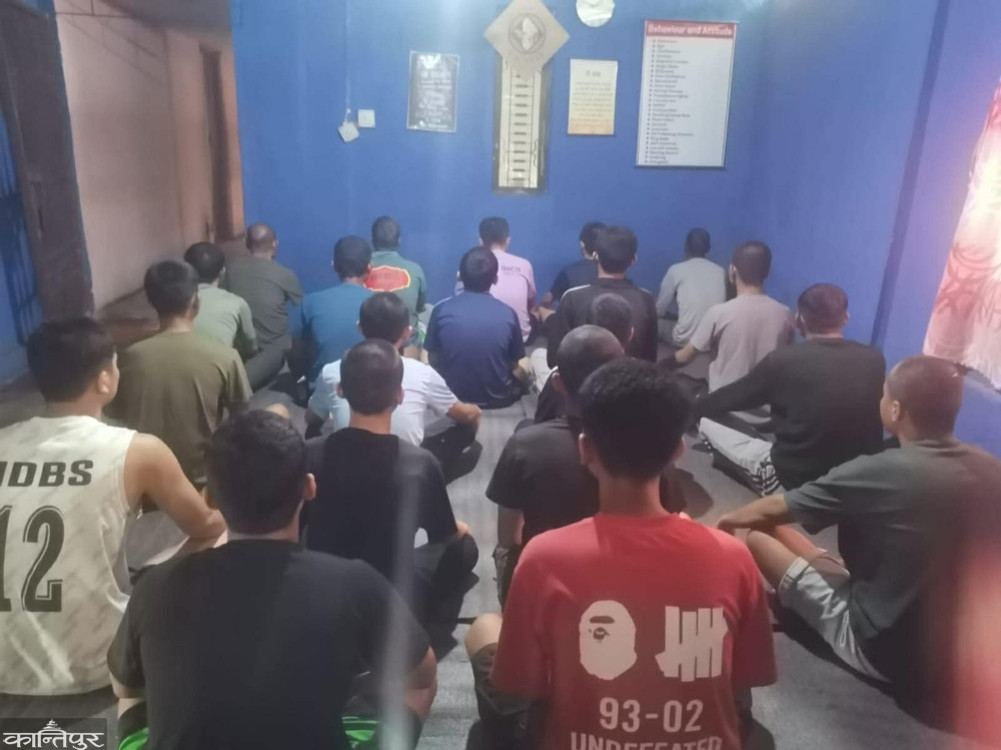
Vinay first visited Voice of Children in Itahari at the age of 9. The organization, which works for the protection and rehabilitation of street children, tried to rescue them from the streets and provide them with a safe environment. But he did not find life at the organization easy. ‘It felt like being imprisoned,’ he says.
He, who was used to the open environment of the street, found it difficult to accept the rules and discipline of the institution. Having to wake up on time, study, and stay on a regular schedule was a new experience for him. After spending a year in the institution and his behavior improved, he was sent home for rehabilitation. But within a few days, he was back on the streets. His behavior at home had not improved. Thus, he would often go from the institution to the house and back to the street.
Now, Binay is 20 years old. But not much has changed in his life. The journey of the street that began in childhood has not yet completely ended. He still makes a living on the street. He works by picking up plastic bottles that fall on the street. He also spends part of his income on drugs.
Like Binay, Roman Karki (name changed) was also forced to come to the street due to family disintegration and poverty. His father died during the Corona period. After his father's absence, the situation at home became even more difficult. His mother had to struggle a lot to run the family. After some time, she got married for the second time. A new family was formed, but new struggles began in Roman's life.
After his father's death and his mother's remarriage, he also took responsibility for his sister, who was 2 years younger than him, at home. There was also an elderly grandmother (Boju) at home. After he was able to make ends meet, he went out on the streets at the age of 11. He started begging for money from people he met on the road. He says that he initially earned 500 rupees a day. After he started going out on the streets while studying in class 5, he stopped going to school. After meeting friends like him, he also started enjoying the streets. According to him, he would buy 'dental light' for 100 rupees with his friends and sniff it all day long.
In the process, he reached the organization. The organization's staff rescued him from the street and took him to a safe place. There, he received regular food, clean clothes, and a safe bed for the first time in a long time. There were other friends living with him. They would exchange experiences. The organization tried to connect him with school. After some time, the organization coordinated with the family and sent him back home. He was excited to meet Boju and his sister. After returning home, he again fell into poverty and financial crisis. The organization used to provide school fees, clothes, paper, and pens. But due to the poor financial condition of the family, he ended up on the streets again.
He was rescued from the streets and taken back to the organization. Although he was well while he was there, his childhood was a struggle due to the lack of a stable environment at home. He still makes a living on the streets. Due to drug addiction, he sometimes picks up plastic bottles and sometimes works as a laborer to make ends meet.
Due to family breakdown, poverty, and lack of parental love, children like Binay and Roman end up on the streets and become addicted to drugs. Although various organizations rescue and rehabilitate such children, many of them return to the streets.
14-year-old Roshan (name changed) is in a similar situation. He now spends the night with his friends on the streets of Dharan. He spends his days cleaning cars, picking up plastic and bottles, and sleeps in the aisles of closed shops at night. When Roshan was 5, his parents separated. After his father remarried, he started living with his mother. He was placed in the care of his grandmother, and a few months later, his mother remarried. After some time, his grandmother also died. After that, he went to his relatives' house. There, he received more abuse and work than love. 'They didn't even give him proper food, they shouted a lot. Then I ran away and came to the streets,' he said.
Sometimes he had to go hungry, sometimes he had to beg for leftover food in a hotel. He has also seen a lot of abuse, beatings and drug abuse on the streets. A few months ago, he was rescued and placed under protection by an organization. There was food, accommodation and opportunities for education. But after some time, he returned to the streets. 'There were many rules there, you couldn't go outside the gate and your friends were also on the streets, so I ran away again,' he said.
In the second week of last Baisakh, a joint team of the Child Search and Rescue Coordination Center, local levels, police and the National Council for Child Rights conducted an on-site survey of street children in Kathmandu. As soon as they saw the vehicle with the number 104 in the Pashupati area, some children hid near the shops, some hid in the crowd, and some turned away from a distance. Some children refused to even speak when the team approached. According to a report prepared by the center based on a survey, 20 to 30 children were found begging in the Pashupati temple area every day.
A 14-year-old boy from Dhading was found begging in the Pashupati temple premises. The boy said that he had been abandoned by his mother when he was young and that he had been neglected after his father remarried. The boy, who said that he had come to Kathmandu with his friends because it was difficult to feed and clothe him at home, is currently under the protection of the center.
A 13-year-old boy from Makawanpur who was rescued from Bouddha Chuchepati had become a daily habit of begging on the streets, taking drugs, and spending the night on the streets. During interrogation by the center after the rescue, he said that his mother had abandoned him when he was young and that his father, who worked as a wage laborer, had not taken good care of him.
A 17-year-old girl who was rescued from the Swayambhu area and who is seeking a permanent home in Rolpa has also said that the reason she ended up on the streets was family disintegration. She said that her mother had remarried and her father did not care about her. After her rescue, she does not talk much. She gives short answers to questions asked, saying that she lives alone most of the time. She did not reveal when she started living on the streets.
A 15-year-old boy from Sindhuli had been collecting garbage on the streets for 3 years. He was rescued from Banepa in the second week of Baisakh. He said that his father drank alcohol, did not love him and constantly ignored him. He said that he ended up on the streets after feeling unsafe at home.
The situation of a 13-year-old boy from Sunsari who was rescued from the new bus park is similar. He ended up on the streets after his mother remarried. He had mixed up with a group of people who beg, steal and use drugs on the streets.
Center coordinator Santosh Adhikari says that children end up on the streets due to neglect by their parents, remarriage, stress and lack of affection in the family. 191 children were found in 15 places including Pashupati area, Gaushala, New Bus Park, Chabahil, Gwarko, Kumaripati. Some of them were without parents, while some were living with their families.
Adhikari said that most of the people were of Indian origin or non-Nepali citizens in the on-site survey. He said that the children without parents are being protected in child protection homes. Many did not want to reveal their real identity. “Many children ran away as soon as they saw us, and refused to talk even when we tried to meet them and talk to them. Some were found to be begging alone and some were found to be walking around with their families,” says Adhikari.
The survey report also mentions that there is a tendency to show fake recommendation letters from the local level and to collect money by showing documents stating that their financial situation is poor. There is also a tendency for some children to reach temples and public places in the Kathmandu Valley in groups and move elsewhere after a few days. The report suggests that children's identification, rescue, protection, rehabilitation, education, health treatment, counseling, skill development and family reunification should be carried out in an integrated manner.
According to the Special Protection Directive for Street Children 2082, temporary protection centers, socialization centers, service provider organizations and drug treatment and rehabilitation centers have been designated. In which there is a provision to obtain and mobilize resources for the services and improvement of children. There are standards to provide proper housing for children, from nutrition. However, since the temporary centers cannot be operated according to the standards, there is a challenge in management due to the lack of adequate budget and physical infrastructure to effectively manage street children, said Ram Bahadur Chand, Information Officer of the National Council for Child Rights.
According to him, the physical structure and management of the temporary protection service centers operated for street children are not completely under the control of the government. 'The physical structure of the institution is the same, work is being done on it. We have allocated some money through annual performance agreements, but that is not enough,' he said. 'In addition to the fixed budget for the nutrition, protection and improvement of children, we have also asked the organization to work based on its expertise.'
He says that some children under protection break walls, break gates or run away in secret. 'The main weakness seems to be the inability to understand the mental state of children rescued from the streets and keep them in the center,' he said. According to him, about 30 million rupees are currently being spent annually on the management of street children. At least 150 million rupees are required for effective management, rehabilitation and long-term improvement.
According to Leela Bhujel, an employee of Voice of Children, the main reason for most children reaching the streets is family breakdown, domestic violence, poverty and parental neglect. Some children run away because they cannot bear violence at home, while others are forced to make a living.
According to him, simply rescuing and keeping them in an institution will not solve the problem. She said, "To rehabilitate children, it is necessary to improve the family environment, psychosocial counseling, education, and long-term protection, otherwise they will return to the streets." Child rights activist Milan Darnal said that since children forced to come to the streets despite having guardians have the right to receive protection from the state, the three levels of government should think about management.