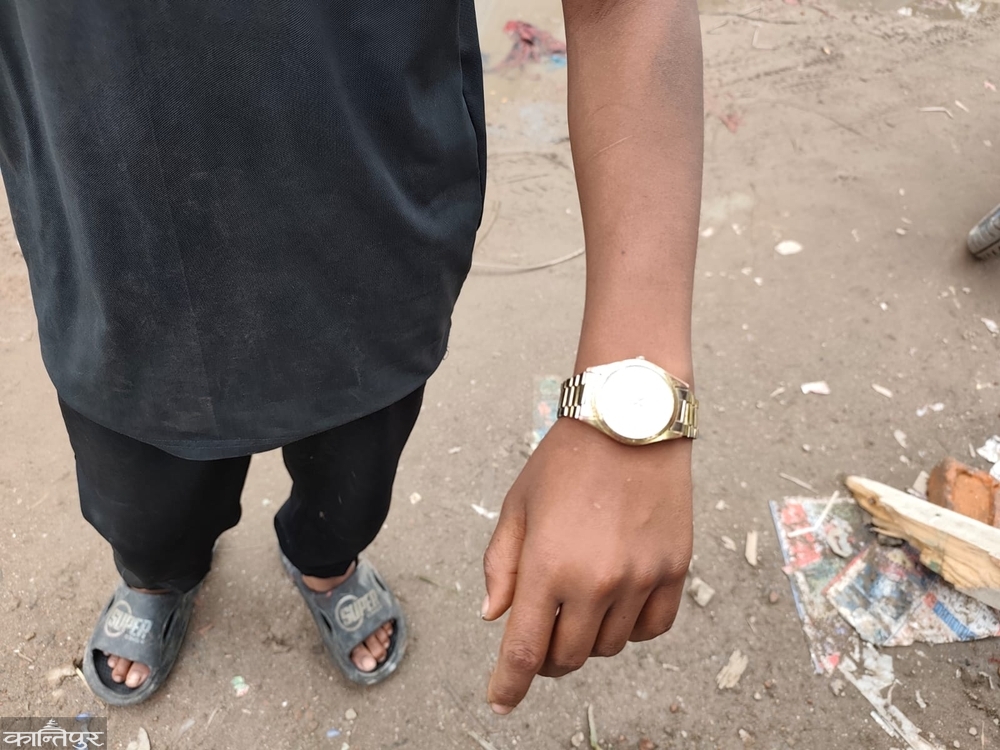
Suddenly, after the miking in the settlement, Saurabh and his friends gathered at one place. Sizan, a friend who studied together in the 4th grade, took off his watch and put it on him and said, ”We are not together anymore, if you remember, look at this sign.” Saurabh also took off his hat and put it on Sizan and said, ”You can keep this too.”
We use Google Cloud Translation Services. Google requires we provide the following disclaimer relating to use of this service:
This service may contain translations powered by Google. Google disclaims all warranties related to the translations, expressed or implied, including any warranties of accuracy, reliability, and any implied warranties of merchantability, fitness for a particular purpose, and noninfringement.
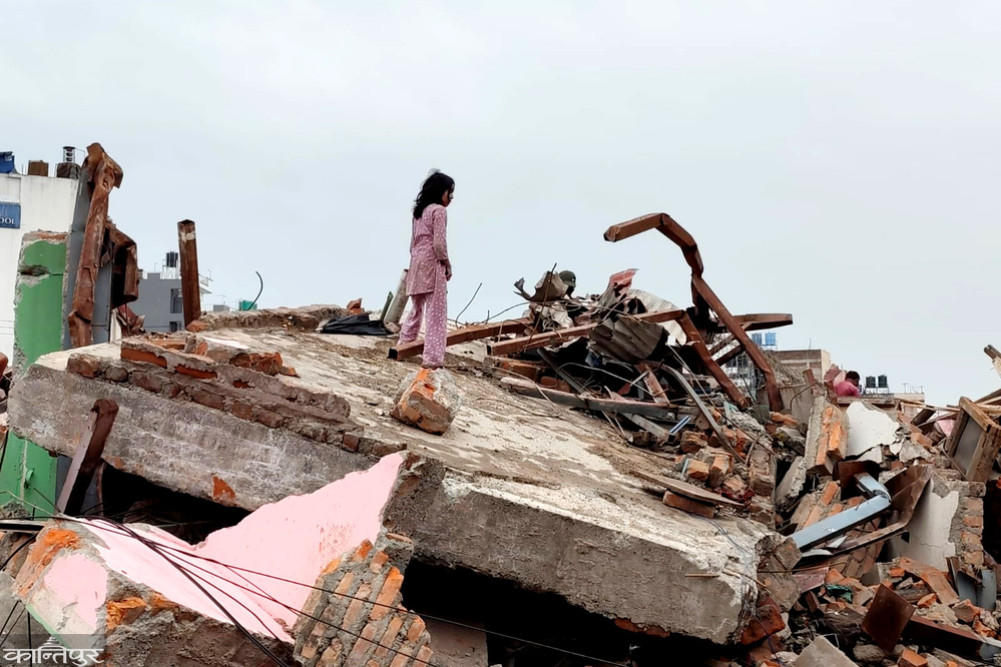
Last Saturday afternoon, a bulldozer entered and demolished the slum in Gairigaun. 12-year-old Saurabh Pariyar was wandering around in the same slum. It was raining heavily and a cold breeze was coming from the Bagmati. He was in a thin coat. A yellow watch was flashing on Saurabh's left hand. Saurabh told the story of the watch.
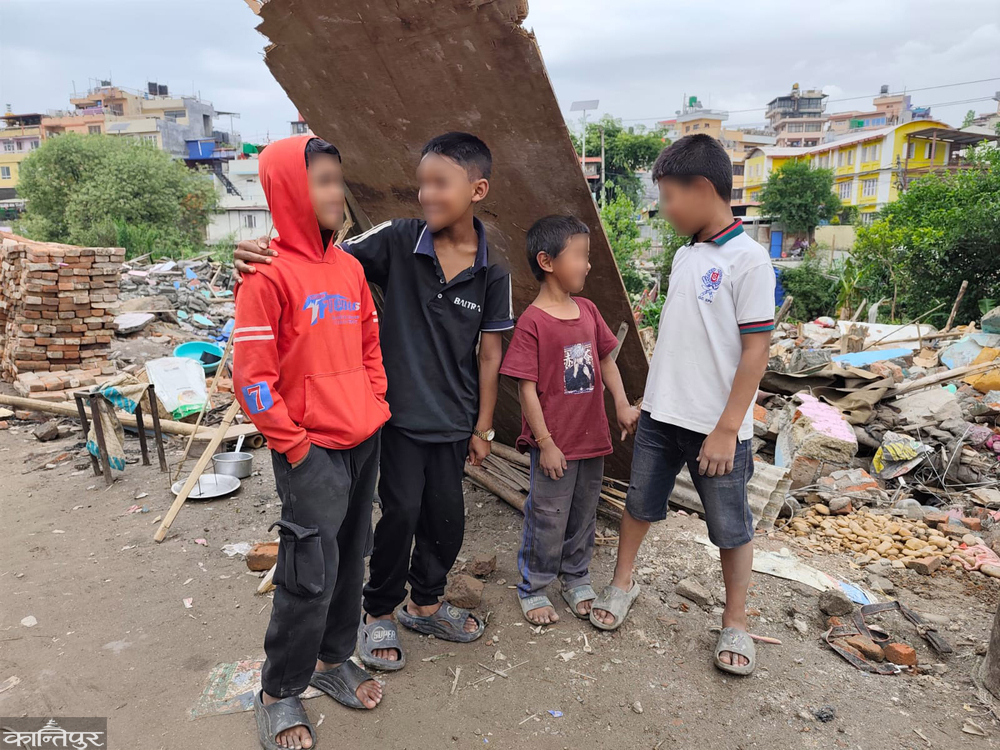
While they were playing on Saturday, suddenly there was a miking in the slum. Since the entire slum was going to be demolished, Saurabh and his friends gathered in one place. They shared their concerns that they would have to separate after the house was demolished. And at that moment, his friend Sizan, who had studied together in the 4th grade, took off his watch and put it on Saurabh and said, 'We will not be together anymore. If you remember, look at this sign.'
Saurabh's sign made his heart heavy. His eyes started watering. He also took off his hat and put it on Saurabh and said, 'You can keep this too.'
Anup then gave Saurabh a Pokemon card. Saurabh gave Anup his old watch. Hastip gave Anup a bag and a volleyball. He left the volleyball to his nephew. Prateek, who was standing with Saurabh, told Kantipur, ‘A friend has also given me a gold medal.’
When Kantipur asked, ‘Where did you learn that you should give it like this?’ Saurabh smiled. Then, shyly, he said, ‘I learned it myself.’
Saurabh does not know where those friends are. Saurabh is saddened by the memories of his friends who grew up together and went to school together. ‘When I look at this watch, I remember the season. I keep waiting for it to come,’ he said, smiling.
Saurabh is not only worried about losing his friends, but also has unanswered questions like when and where he will go to school.
Walking over the pieces of the destroyed house, Saurabh remembers last Saturday. He felt even more sad when he saw his mother and sisters crying as they watched the house collapse than when he saw it being destroyed.
Two days after the house he was born in collapsed, his parents found a room nearby. How could all the belongings fit in one room? His parents sold the belongings that didn't fit. He almost cried more than anything else when his beloved bicycle was sold. But he controlled himself. 'My father had said that he would buy me a bicycle after I passed,' Saurabh said. 'I passed a year ago. And my father bought me one.'
Saurabh's family has two sisters, his mother and him. His father sews thangkas in Boudha. Saurabh has also learned to sew thangkas like his father. 'I also like to use the thangka sewing machine,' he said.
Many children like Saurabh in the displaced settlement in Gairigaun have had unpleasant experiences. The topics they talk about have also changed. They talk about the uncertainty after the collapse of the settlement and occasionally mention Prime Minister Balendra Shah.
Some children from the displaced settlement were singing a song while wading in the Simsim water on Wednesday. The lyrics of the song were like this, ‘Jhaappai aaye Balen dai dozer lerhi...’
Dev Gurung, who sang this song, was also found in the displaced settlement on Thursday. He was cutting the iron of a ruined house with his friend Vishal Darnal.
‘Why did you cut this iron?’ we asked.
‘If you sell it, you will get money,’ they replied.
Vishal and Dev’s parents were removing iron and goods from the ruined land. Dev and Vishal were in their own tune, regardless of the Simsim water, as they were on Wednesday. We asked Dev about the song we had heard the previous day. ‘Ritesh taught us this. But he is not here now. Where he went, I don’t know,’ said Dev.
Suddenly, on Saturday, a dozer entered the settlement with uniformed policemen. The bulldozer took away their house. The books and papers were all gone. They heard their parents and elders talking, ‘All this was done by Balen.’
Vishal and Dev had heard their parents talk during the elections, ‘Balen builds the country.’ Just a few days ago, they asked their parents, ‘Why did Balen, who built the country, destroy our house?’
Dev has passed grade 2 and is now in grade 3. But he has not been able to step foot in the schoolyard this year. Even his friends who grew up together in the slum have left. ‘I would like to meet them. But where have they gone?’ Dev says in a childish voice.
Many relatives from the slum have moved away from him. ‘We are living there,’ Dev says, pointing to the narrow space with tarpaulins, ‘You can’t even sleep here. You can’t even eat properly.’
12-year-old Vishal has reached grade 5. Where will his next school be? His parents have not said yet. ‘I used to study at Navadurga Secondary Boarding School. Now I don’t know where to study,’ said Vishal, cutting iron. After his house collapsed, he had looked for a notebook but couldn’t find it.
9-year-old Vishwanath was watching his friends playing at Guhyeshwori School across the street. He used to study at the same school. ‘I barely made it to grade 5. I didn’t go to school because I was stressed because I couldn’t get a room,’ said Vishwanath, looking at the bricks being laid below, ‘Dad has no money, no work.’
When Vishwanath’s house collapsed, the toy remote control car and horse that his grandmother had bought him were lost. Vishal also lost his friends. ‘This is the only one. There will probably be no one else later,’ he said, looking at Prateek, who was sitting with him.
When Kantipur asked, ‘Where are you staying now?’ Bishwa pointed to the tarpaulin hanging on the wall and said, ‘There.’ Bishwa’s grandmother, sister and two younger sisters were sleeping inside the tarpaulin. ‘It rains here. We get wet. Yesterday, the wind blew away the chair,’ Bishwa said.
Later, his grandmother told Kantipur, ‘We have neither a place to live nor a place to eat. Our grandchildren are hungry.’
On Thursday afternoon, Bishwa ate stale food mixed with pickles. ‘Now, Baba will probably sell the bricks and give them 50 rupees. I will buy them with that money,’ he said, looking at the pile of bricks.
Bishwa’s family had also gone to register their names at the Dasharath Stadium. That day, they had returned here because they thought that even if they slept in the guest house, their belongings would get lost. ‘I don’t know where to go from here,’ said Bishwa in a sad tone.
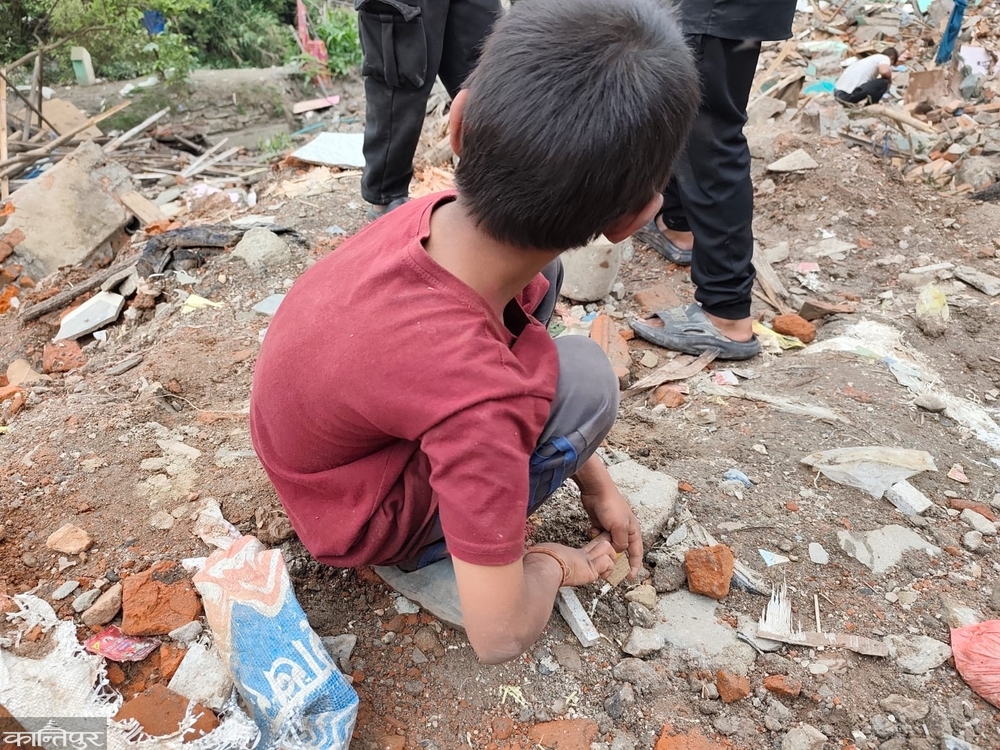
He wants to go to school as soon as possible. He wants to play with his friends. But that is limited to his desire. Bishwa doesn’t even have enough clothes. Whatever he had, he is buried in the rubble of his house. ‘It feels like the dozer is coming again. Even in my dreams, I saw the dozer come and demolish big houses. It would have been better if it hadn’t come now,’ said Bishwa with fear in his eyes.
12-year-old Dipisha, who looked desperate after the dozer entered the settlement on Saturday, was constantly picking up things in the rubble of the house on Wednesday and Thursday. Sometimes she would help her father move things and sometimes she would try to find a way to store things. Her father Shankar would look around. He couldn’t find a way to get his things out on the roads of the settlement that were jammed with cars and people.
They were staying in a relative’s room in Duwakot. ‘I used to study in Bhimsengola. I don’t know where to study now,’ said Dipisha. Dipisha's mother died of cancer a year ago. Even if she had a common cold, she was afraid that she might have contracted the same disease as her mother.
Dipisha knows that her father works in iron. She likes to help her father with his work.
Dipisha's friends are at school. They were also in the slum. But she doesn't know where they went. 'She came yesterday to meet a friend, Mayala. Now she will come tomorrow or the day after,' she said.
On the day her house collapsed, she went to sleep with her relatives. The next day, she came here and stayed with her neighbor's aunts. 'I won't be here from tomorrow. But I think I will remember this place,' she said, playing with a piece of brick she was carrying in her hand.
The mother of 9-year-old Prateek Tamang is worried about the change in her son's behavior. 'What has happened to the child's mind! He says that he did this and that. How can we explain it to him?' she said.
Prateek is now studying in grade 4. He used to study at Loila Secondary School. ‘I haven’t been able to bring my results because I don’t have money,’ his mother said, ‘The school principal called me. But when I didn’t have my home address, I couldn’t think of anything else.’ The boy had already brought the books he needed for the new class. Prateek wants to go to school and flip through that new book.
Prateek wanders around from time to time looking for his friend. ‘Royal was his best friend. He keeps looking for him every now and then to see if he’ll come back,’ his mother said.
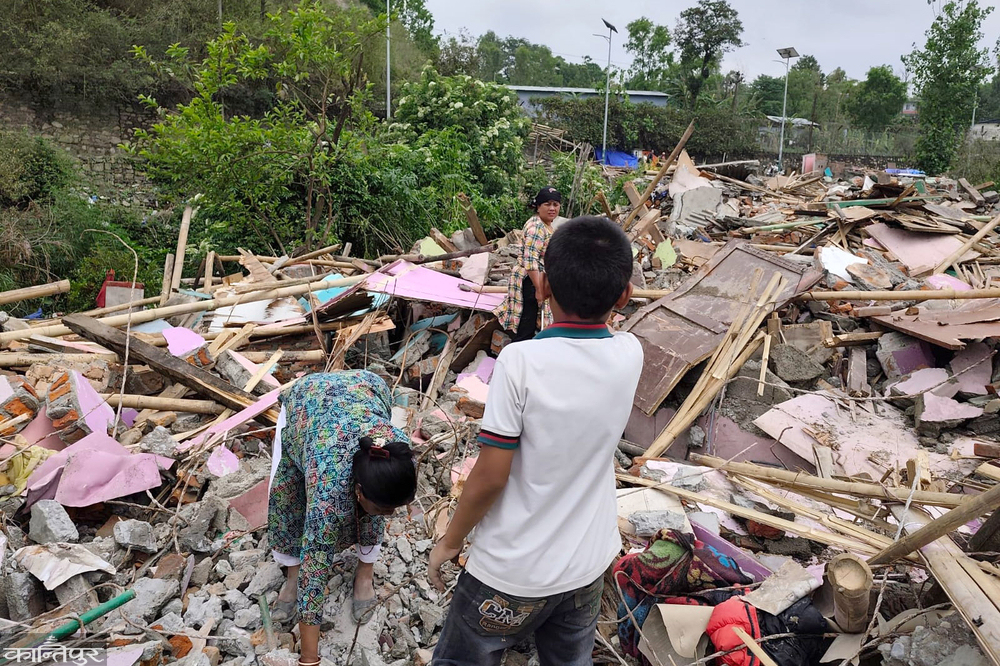
Prateek is now in grade 4. He used to study at Loila Secondary School. Now he has neither school nor home. ‘I haven’t been able to bring my results because I don’t have money,’ his mother said.
The teacher called me from school. But when he didn’t have his home address, he couldn’t think of anything else. The boy had already brought the books he needed for the new class. Pratik wants to go to school and study the new syllabus.
Pratik wanders around from time to time looking for his friend. ‘Royal was his best friend.’ His mother said.
The turmoil of the holding center
The government has kept many of the displaced people from Thapathali, Sinamangal and Manohara in the ‘holding center’ at the Radhaswamy Satsang Center in Kirtipur. Neither the parents have breathed a sigh of relief in the shelter, nor have the children found a child-friendly environment.
When he reached Kantipur on Wednesday, 12-year-old Mesak Limbu, who was sitting alone near the tent, hurriedly whispered to his mother. Then he ran away shyly.
‘It’s my father’s birthday today. That’s why my son didn’t tell him it’s my birthday too,’ Mesak’s mother said.
The mother, who celebrated her son's birthday every year, could not do it this year. 'It hurts my heart that I could not cut the cake. What do the children know, we have nothing,' Meshak's mother said in despair.
Meshak returned to the tent again. When his mother came, she brought a cricket bat. She told the pain of having to stay here even on her birthday, 'It used to be so much fun at home! We used to have fun cutting the cake with all our friends. Now it has become boring.'
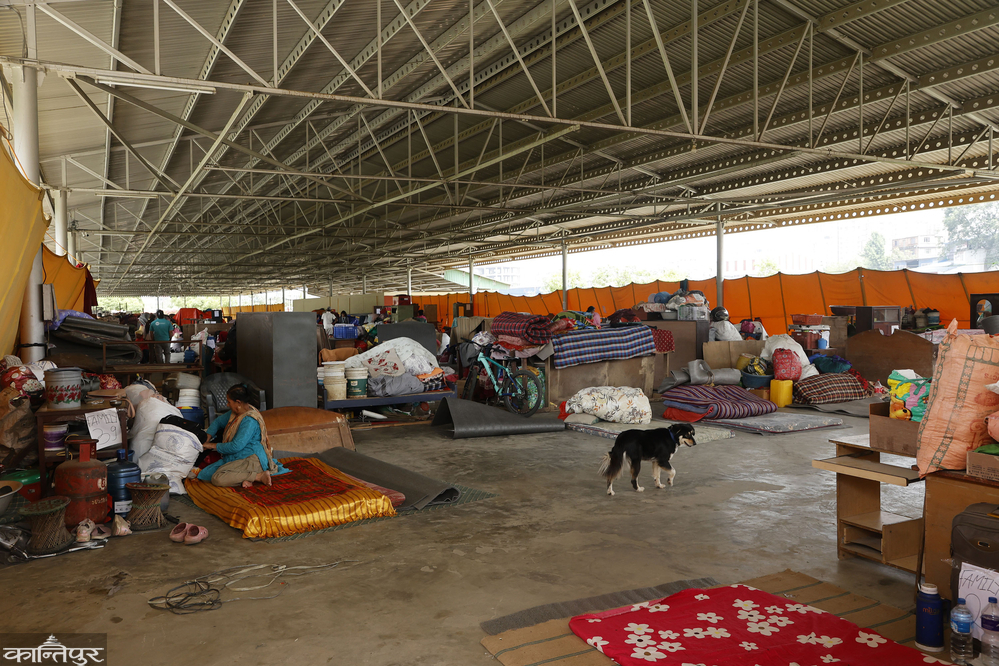
Meshak has not been able to go to school. His dream was being told by the bat he was holding in his hand. 'I dream of becoming a cricketer. I made this bat myself,' then he remembered his home. He remembered his friends along with his home. 'When I was at home, we used to play together with my friends. Now I play with my friends here,' he said.
14-year-old Anita Lama is staying with her family in a hotel in Naya Bus Park. Her house was in the slums of Thapathali. That house was demolished by a bulldozer. ‘People were screaming everywhere. The house collapsed as she looked,’ she recounted the horrific scene she saw with her own eyes.
Even while staying at the hotel, she has one concern, ‘How will I go to school now?’ She has just reached grade 8.
13-year-old Surya Mahato was playing with a friend he met at the ‘shelter house.’ He has reached grade 6 and also comes from a displaced family in Thapathali. He wants to see what happened to the collapsed house.
A boy studying in grade 5 is with his family at the guest house in Machhapokhari. He asks his aunt, ‘Why did you demolish our house, sister?’ The aunt has no answer. ‘I say the government demolished it, my father. Now they ask when our house will be built. I don’t have the answer to that either,’ she told us.
When Kantipur reached there on Sunday during its reporting, the boy’s grandmother was very worried, ‘He was studying well. Now, the education is not over.'
Children who have reached Kirtipur Holding Center, various guest houses and shelters are feeling the pain of being displaced and the loss of their childhood friends.
Seema Magar, who lives in a shelter in Gairigaun, has not been able to find a new shelter after her house collapsed. She said that this incident is affecting her 14-year-old daughter and 12-year-old son. 'I was confused while looking for a room. I have taken my parents and grandchildren with me. We have made a little space in the garage and slept. They keep asking me about my studies and the room. I have no answer,' she said.
Even though the children are suffering from deprivation and psychological impact, the Ministry of Women, Children and Senior Citizens is not serious. The government seems to be unaware of the children's missing out on their education. In such a situation, the ministry does not even have a plan for displaced children.
Although the main responsibility for children's education and school management lies with the local level, the ministry is responsible for the financial management of the rescue and protection of children in special circumstances or orphans, says Chakra Bahadur Budha, spokesperson for the ministry. "Through the National Child Rights Council under the ministry, we have been providing psychosocial counseling and other necessary services to children on a regular basis. We are providing services after identifying the needs of those in institutional care," he said. "In this current crisis, various federal and local government agencies are working on their own behalf, and we are also getting information about the problems based on government mechanisms and media reporting."
As he said, no program or plan has reached the targeted children. कान्तिपुरले रिपोर्टिङको अनुभवका आधारमा बालबालिकाको अवस्था र सरकारको अनुपस्थितिबारे सुनाउँदा प्रवक्ता बुढाले भने, ‘हामीले राहत र सहयोगका कार्य सुरु गरिसकेका छौं र बालबालिकाका लागि मन्त्रालयका तर्फबाट के–कस्ता थप कदम चाल्नुपर्ने हो, त्यसको अध्ययन गरेर हामी सम्बोधन गर्नेछौं ।’
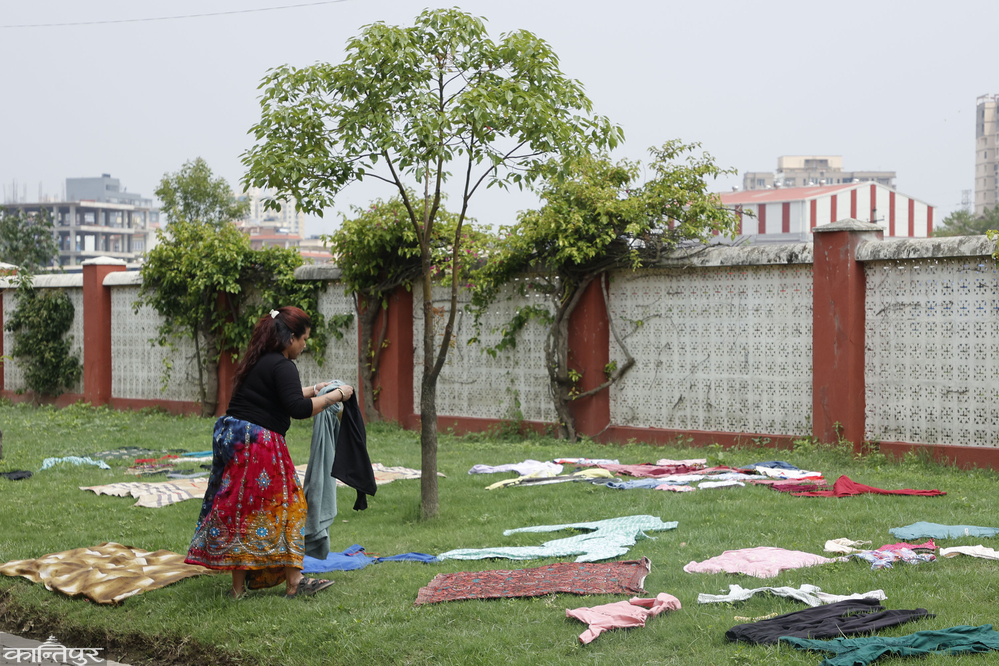
मनोपरामर्शदाता राम पुकारका अनुसार यस्तो अवस्थामा बालबालिकाको उमेरअनुसार मानसिक समस्याका लक्षण फरक–फरक हुन्छन् । साना शिशुहरूमा रुने, अत्तालिने र खान मन नगर्ने जस्ता समस्या देखिन्छन् । १० वर्षभन्दा माथिकाले कुरा बुझ्न सके पनि उनीहरूको बौद्धिक र शारीरिक विकासमा गरिबी, कुपोषण र प्रदूषित वातावरणले नकारात्मक असर पारेको हुन्छ । ‘यस्तो बेला अभिभावक आफैं आघातमा हुने भएकाले बालबालिकाले उचित सहारा पाउँदैनन् । जसले गर्दा किशोरकिशोरी कुलतमा फस्ने, आफूलाई हानि पुर्याउने वा आत्महत्याको जोखिमसमेत बढ्न सक्छ,’ उनी भन्छन् ।
यसको समाधानका लागि पहिले गाँस, बास, कपास, शिक्षा र स्वास्थ्यको पूर्ति हुनुपर्ने पुकार बताउँछन् । ‘बालबालिकालाई पुरानै दिनचर्यामा फर्काउन विद्यालय पठाउने वातावरण मिलाउनुपर्छ र विद्यालय जान नसक्ने अवस्थामा उनीहरूलाई घरभित्रै खेलिने खेलमा व्यस्त राख्नुपर्छ ताकि उनीहरूले एक्लो महसुस नगरून्,’ उनी थप्छन्, ‘दीर्घकालीन रूपमा अभिभावकको रोजगारी सुनिश्चित गर्दै बालबालिकाको मानसिक स्वास्थ्यको नियमित जाँच र स्क्रिनिङ गरेर मात्र उनीहरूलाई सक्षम नागरिक बनाउन सकिन्छ ।’