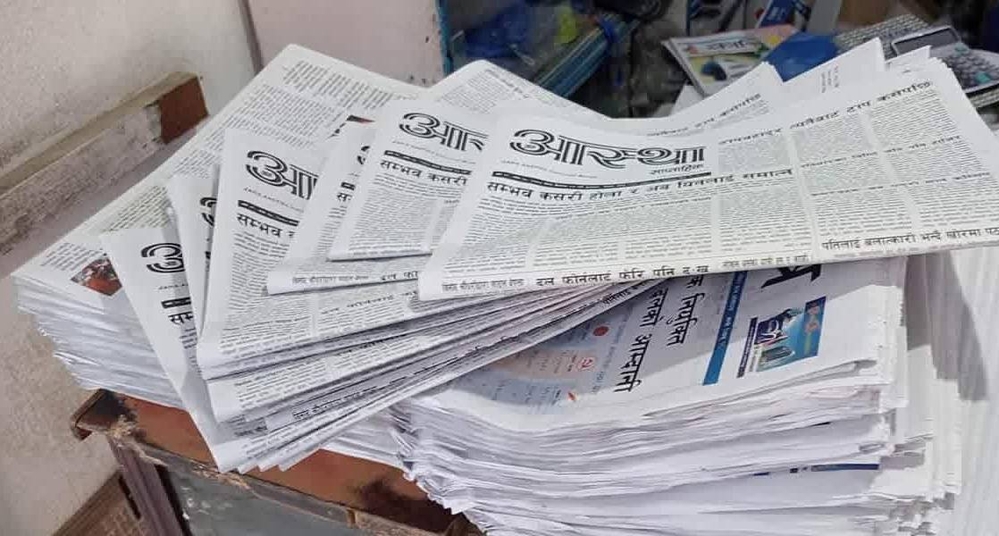
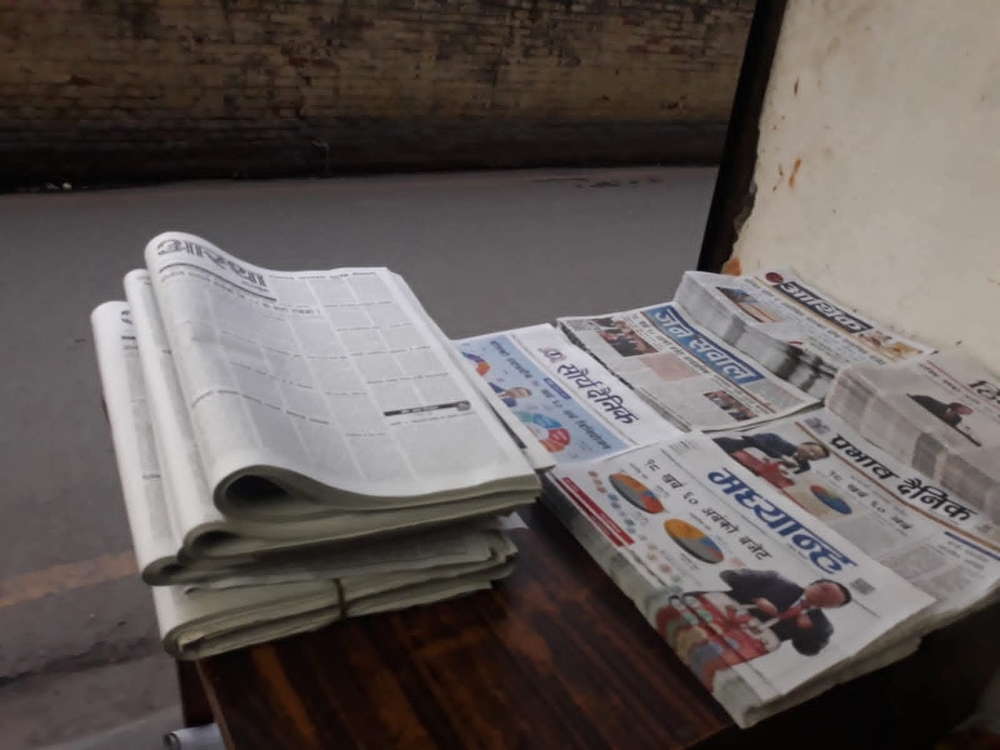
Jana Aastha, which was born as a rebellion from a party-affiliated mouthpiece, succeeded in establishing an identity for investigative and anonymous, i.e. source-based journalism from the very beginning. On the one hand, it has created an image of 'fearless investigative journalism', while on the other hand, it has also been accused of 'sensationalizing beyond the boundaries of journalism'.
We use Google Cloud Translation Services. Google requires we provide the following disclaimer relating to use of this service:
This service may contain translations powered by Google. Google disclaims all warranties related to the translations, expressed or implied, including any warranties of accuracy, reliability, and any implied warranties of merchantability, fitness for a particular purpose, and noninfringement.
After the report of the inquiry commission formed on the 'Gen-G movement' that the government tried to keep secret was made public, many questions and debates began about it. Along with this, 'Janaastha Weekly', which made the secret report public, also came into the news.
Despite the demand to make the report public from the streets and social media, in the background of the government's hesitation, Janastha has brought its old image of 'breaking secret information' and style of not being afraid of the government back into the debate by making it public. However, this practice of 'clashing with the government' is not the first for Janastha. Because the rise of this magazine was not normal, which was the product of an institutional rebellion. Let's understand, the 'back story' of Janastha.
At that time, when the dominance of the Panchayat and the new ray of multi-party politics were waiting, weekly magazines were considered the mainstream of the media world. Especially after the political changes of 2046 BS and before the emergence of large daily newspapers, weekly newspapers played the main role in informing Nepali society and politics.
The famous weekly at that time was 'Drishti'. Which was run as mission journalism. Its public identity was the mouthpiece of the then UML. At that time, 'Drishti' was printed weekly with a circulation of 49/50 thousand copies. Journalist Kishore Shrestha used to write in that weekly.
Despite being considered famous, a dispute arose between Shrestha's team and the then UML party leadership on issues such as journalist ownership in the news, freedom of writing, and imposing an editor from outside. In a public interview on the 'Nayapez' online portal, journalist Shrestha has revealed his confrontation with the then UML leader Bamdev Gautam.
In the interview, Shrestha mentioned the incident in which Gautam refused when Shrestha demanded that the newspaper be institutionalized and taken under his ownership. After listening to Gautam, Shrestha and his team left empty-handed. Apart from Shambhu Shrestha and Agnishikha, the publishers of 'Drishti', most of the management and editorial staff joined Jana Aastha with Kishor Shrestha. Among them were Khagendra Thapa Magar, Harish Phuyal, Bhikshu Ashwaghosh, etc. Kishor Shrestha says that Jana Aastha was born with the aim of doing independent and critical journalism outside the control of the party. The interesting thing was that since 'Drishti' was also going to be published on Wednesday, Jana Aastha also chose Wednesday as the publication day.
Then, after raising 10 thousand rupees each from some ward chairmen and friends of Kathmandu (Subhan Kumar Shrestha, Balkrishna Prajapati, Kalyan Bandhu Aryal, Dharmaratna Tuladhar, etc.), an office was set up in the Red Cross Building in Bagbazar with a total investment of 250 thousand rupees. Jana Aastha was started. 'At that time, except for the publisher who wrote in Drishti, everyone came to Janaastha,' says Shrestha.
It was released on March 8 (International Women's Day) on Falgun 24, 2008. Journalist Shrestha recalls that the main news (cover story) of the first issue at that time was about the government's 100-day review. It contained greetings from big leaders including Ganeshman Singh and Jhalanath Khanal.
According to journalist Sitaram Baral, who once worked at Janaastha, party-based beliefs were very dominant in weekly journalism at that time. Most weekly newspapers were affiliated with one or the other political party and they would publish news or analysis based on their party beliefs. 'The general trend at that time was that weekly newspapers were mainstream.
Party journalism was dominant in most of them. After the flood of daily newspapers, weeklies started giving more priority to views and analysis (views) than news, says journalist Baral. “When an event happened, dailies would report the news, while weekly newspapers would sit at a table and ‘punch’ or analyze someone according to their opinion. But we (at Janaastha) made factual news the main basis.”
The Durbar’s Destruction
Janaastha, which was born as a rebellion from a party-based mouthpiece, succeeded in making its mark in investigative and ‘source-based’ journalism from the very beginning. It took great risks to bring out sensitive information, especially from the Durbar, the Nepali Army, and the political power centers.
Weekly newspapers worked hard to bring out inside information from ‘closed’ and inaccessible agencies like the Durbar, the Army, the Intelligence Bureau, and the Police. Dissatisfied parties within those agencies used the weekly newspapers as a reliable medium to get their say. Baral says, ‘The weekly used to bring out such hidden and concealed information that was not accessible to anyone.’
The mysterious murder that was being tried to be hidden at that time is ‘Namita-Sunita murder case’ . BS. The mysterious murder and disappearance of Namita and Sunita Bhandari of Kathmandu and their relative Neera Parajuli, who were on a visit to Pokhara on 18th Jestha 2038, is considered one of the most gruesome and politically suppressed incidents in Nepal’s history.
On 24th Jestha, the bodies of Namita and Sunita, who were among those who had gone to visit Begnas Lake, were found on the banks of the Seti River after being raped and murdered, while the condition of Neera is still unknown. In this case, which is suspected to involve the then Panchayat regime and high-ranking officials of the royal court, it is alleged that the police investigation was influenced by the power center, the autopsy report was manipulated, and even the forest guard Chudamani Adhikari, who was said to be an eyewitness to the incident, was detained and disappeared.
Kishore Shrestha had exposed the incident through a 6-month long investigative reporting in the weekly 'Drishti' in 2048 BS, which he later presented in detail in a book titled 'Another Murder Suppressed After the Court Case'. 
Like in 'Drishti', Shrestha had also made public information from inside the court through his sources in Jana Aastha. In 2057 BS, Jana Aastha had also written about the murder of musician Prabin Gurung by being run over by a car driven by Paras, the nephew of the then King Birendra Shah, i.e. Gyanendra's son. After that incident, Jana Aastha played a role in collecting 500,000 signatures and delivering them to the palace.
Similarly, the Maoists attacked Mangalsen, the headquarters of Achham, killing 129 people on Saturday, Falgun 4, 2058 BS, at midnight. At that time, Shrestha published a news in the 'Jana Aastha' weekly on Falgun 8, 2058 BS, after it was found that the leaders of the ruling party in Kathmandu were busy with luxurious feasts and factional politics.
This news very aggressively exposed the insensitivity of the rulers who were feasting on 'sitan and bone' (churum-churum) in the capital while blood was flowing in Achham on the one hand, which caused a huge political stir at that time. Similarly, in 2059, the news of the murder of Maoist leader and journalist Krishna Sen in police custody was first made public by Jana Aastha under the title 'Krishna Sen: The Ashes of Pashupati'.
Arun Baral, who once worked for Jana Aastha and is now the editor-in-chief of 'JasNepal' online, recalls - 'During our time, news from the palace used to break every week. From the personal lives of members of the royal family to their innermost affairs, Jana Aastha has been facing threats at various times for making such palace information and confidential information public. 'The then Crown Prince Paras and Chief of Army Staff Prajwal Shamsher had directly threatened to 'shoot' or kill me,' Shrestha said. 'Prajwal Shamsher's son Prabhas Shamsher was looking for me carrying two pistols.'
Shrestha was arrested from his office on Magh 16 (Martyr's Day) for writing about the Achham incident. He also recounted the incident where a 21-member army team led by a colonel sat in the Jana Aastha office for three weeks after the royal move of Magh 19, 2006, and censored every word of the newspaper. Arun Baral was a witness at the time. 'When the Magh 19 incident happened, an army team had come and sat in the Jana Aastha office.' The team led by a general tried to control it by saying, 'This is allowed to be printed, that is not allowed,' Arun Baral recalls. 'When the army tried to ban the materials, editor Kishor Shrestha directly protested along with the army general. He did not waver even when the army threatened to take him away and other employees were afraid. Jana Aastha had printed cartoons and some critical content.'
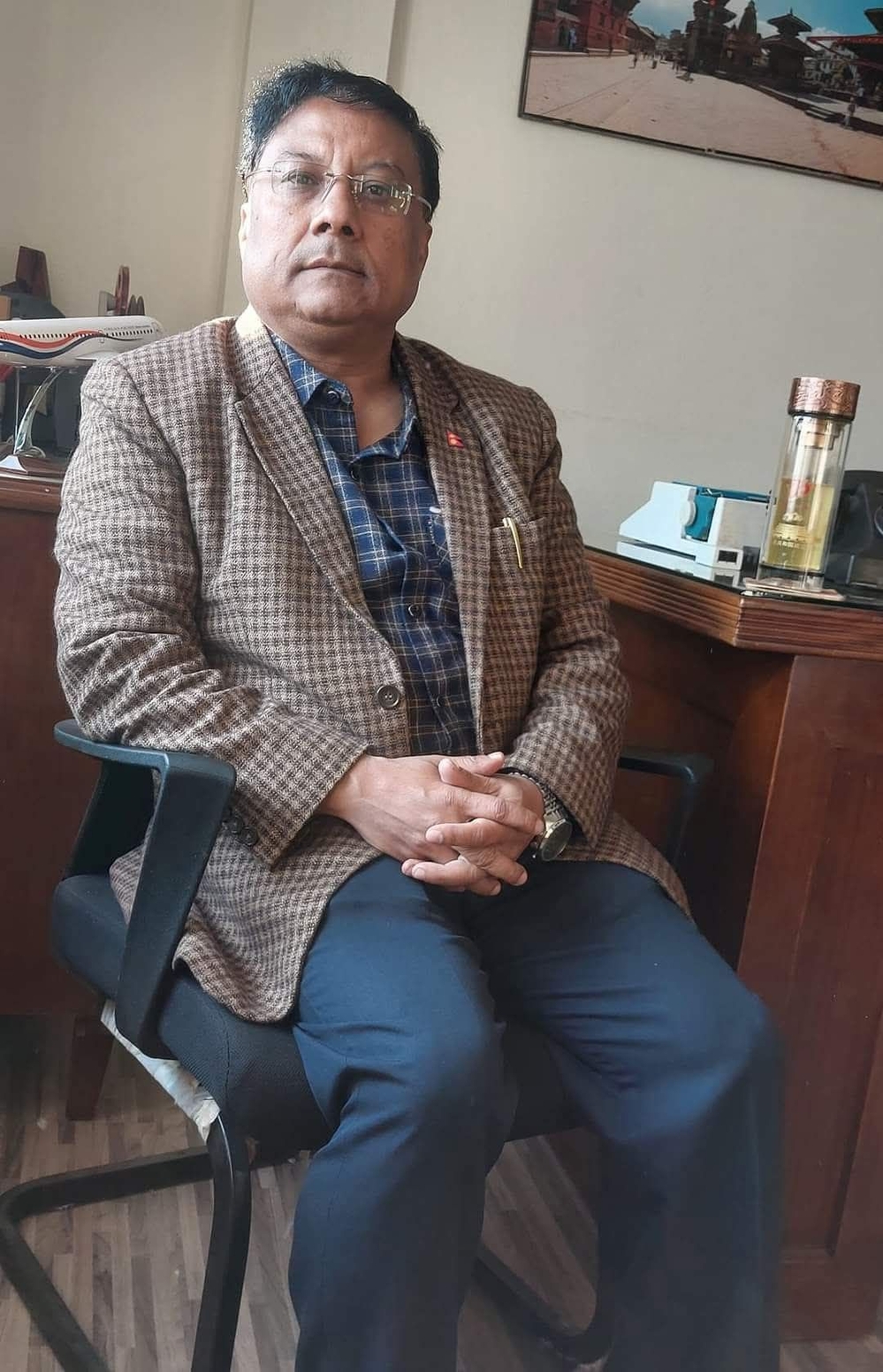
Even after the establishment of the republic, Janaastha has been fearlessly publishing many news items. Janaastha had also brought out facts about the alleged citizenship and passport of Rashtriya Swayamsevak Sangh (RSS) President Ravi Lamichhane. Editor Shrestha says that he was also accused on social media because of this news item. He said, ‘After writing that news item, there were very low-level comments on social media about my late mother.’
 ‘Sensation of crossing the border’
Janaastha and its leadership had to pay a high price for these revelations that made the state uncomfortable. Death threats from powerful people of the time, raids on offices, and increased military surveillance continued. However, Janaastha’s journey has not always been unchallenged. On the one hand, its image is that of ‘fearless investigative journalism’, while on the other hand, it is also accused of ‘sensation of crossing the border’. It seems .
One of the sensational incidents that crossed the boundaries of Jana Aastha's journalistic values is the suicide of artist Shrisha Karki . On Wednesday, Asoj 23, 2059, Jana Aastha Weekly published a story titled 'The Colorful Night of Film City' on its 'Front Page'. The material, written by Jana Aastha's journalist duo Bishwamani Subedi and Yadav Prasad Pandey, revealed the investigation into 'love affairs' etc. that were taking place in the Nepali film industry.
A half-naked photo of Karki was also published in that news. Karki committed suicide on the fourth day after this photo was published, i.e. on Asoj 27, 2059. Jana Aastha has been facing allegations for a long time that Karki committed suicide because of the same news.
This incident did not end there Both journalists who wrote the news were arrested in the first week of Magh 2059. ‘I think Yadavji was taken into custody at Singha Durbar on 2/3 Magh 2059 because of writing the news,’ Vishwamani Subedi told Kantipur, recalling that day. ‘It was said that a murder case would be filed, but after seven days of detention, the then Attorney General Sushil Pant decided to dismiss the case. And we were released.’
Jana Aastha has been criticized repeatedly because of this news. ‘I had to go underground for two years,’ Shrestha recalls, ‘but there is no evidence that the suicide was caused by that news. But I have been criticized repeatedly because of this.’ Shrestha has been defending the accusation by saying that the post-mortem report does not show that the news caused the death.
Journalist ‘Production Center’
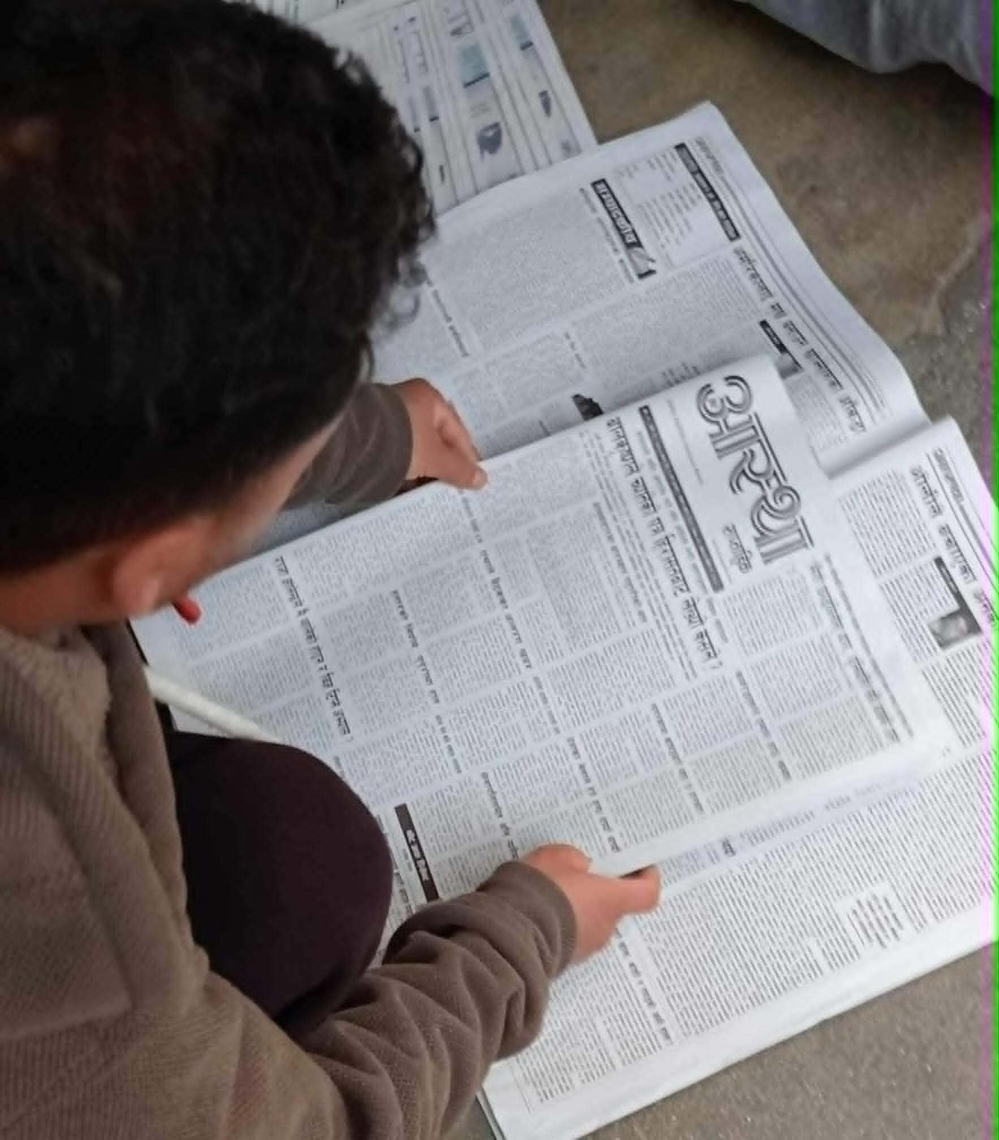
Despite praise and criticism, Jana Aastha has also produced many journalists. There was a large presence of ideological and intellectual figures in the initial journey of Janaastha. The involvement of the late Kamal Koirala, the late Ramesh Bikal, the late Prem Singh Dhami, the late Bhikshu Ashwaghosh and the late Suresh Manandhar is considered to have established it not only as a source of information, but also as an intellectual platform.
Similarly, personalities like Pradeep Nepal who were involved in politics and journalism further expanded its effectiveness. Their guidance and the aggressive news style of Janaastha always inspired journalists to reach the innermost level of facts. If we look at today's Nepali mainstream journalism, the presence of 'products' of Janaastha is seen in it.
The professional foundation of Sudhir Sharma, former editor-in-chief of Kantipur and Gunaraj Luitel, editor-in-chief of Nagarik Dainik, to Rajaram Gautam, former editor-in-chief of Annapurna Post, began here. एक समय अनलाइनखबरका सम्पादक रहेका अरुण बराल (हाल जसनेपालका प्रधानसम्पादक) र सीताराम बराल, मातृका पौडेल, परशुराम काफ्ले, सीताराम भट्टराई, चुडामणि भट्टराई, टीकाराम राई, विनोद ढुङ्गेल, माधव ढुङ्गेल जस्ता पत्रकार पनि जनआस्थाको 'स्कुलिङ'बाट पत्रकारितामा अघि बढेका हुन् ।
'भीडको मनोविज्ञान' र पुनः स्थापित बहस
यसरी विभिन्न आरोह र अवरोहबीच जनआस्था आज पनि बजारमा खोजिने पत्रिका हो । जहाँ लुकाउन खोजिएका र सनसनीखेज समाचार प्रकाशित हुन्छन् । अध्यक्ष श्रेष्ठका अनुसार जनआस्थामा हाल काठमाडौंमा मात्रै १९ जना पत्रकार कार्यरत छन् । तर समयसँगै चुनौतीका स्वरूपहरू फेरिएका छन् । श्रेष्ठको बुझाइमा, ‘पहिले सत्ता डराउँथ्यो, अहिले भीड हाबी छ ।’
सामाजिक सञ्जालले निर्माण गर्ने 'मोब साइकोलोजी' (भीडको मनोविज्ञान) ले कुनै एउटा घटनालाई आधार बनाएर व्यक्तिलाई स्थायी रूपमै दोषी करार गर्ने प्रवृत्तितर्फ उनको संकेत छ । पत्रकारिताको सबैभन्दा ठूलो पुँजी 'विश्वास' भएको र त्यसलाई स्रोत र पाठक दुवैमा जोगाउनुपर्ने उनी बताउँछन् ।
अहिले 'जेन-जी' आन्दोलनको प्रतिवेदन सार्वजनिक गरेर जनआस्थाले राज्यलाई पारदर्शी बनाउन सूचनाको हकको प्रयोग गर्दै आफूलाई पुनः स्थापित गर्न खोजेको देखिन्छ । जनआस्थाले यो सूचना आफ्नो स्रोतसँगको विश्वसनीयताका कारण प्राप्त गरेको श्रेष्ठको दाबी छ । तर, सँगसँगै स्रोतको विश्वसनीयता, सूचना सार्वजनिक गर्ने समय र त्यसले सिर्जना गर्ने राजनीतिक प्रभावबारे पुराना प्रश्नहरू पनि सतहमा आएका छन् ।

