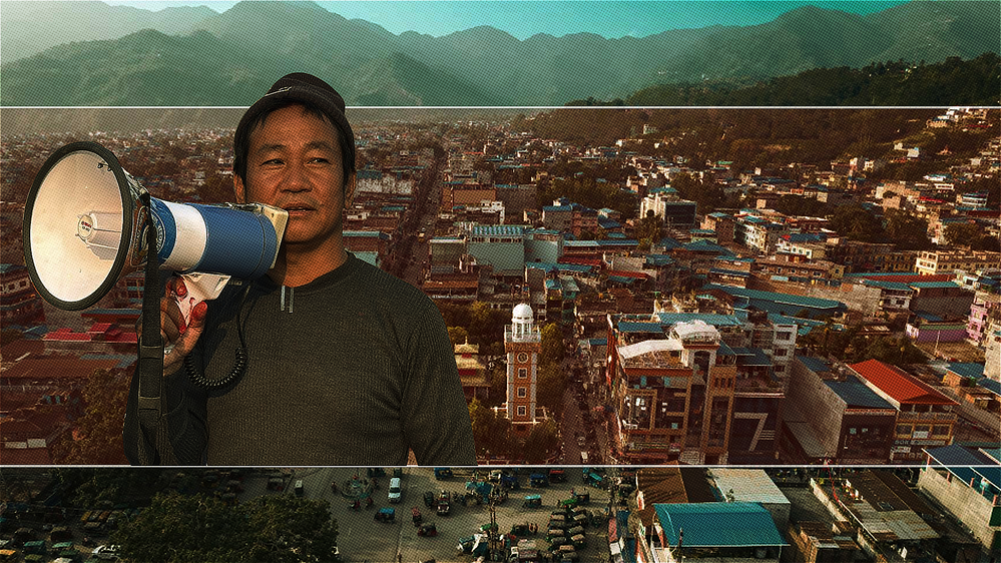
Harak Sampang, who rose to national politics from the position of mayor of Dharan Sub-metropolitan City, has taken the Shram Sanskriti Party to parliament, taking the trust and interest of the people to new heights.
We use Google Cloud Translation Services. Google requires we provide the following disclaimer relating to use of this service:
This service may contain translations powered by Google. Google disclaims all warranties related to the translations, expressed or implied, including any warranties of accuracy, reliability, and any implied warranties of merchantability, fitness for a particular purpose, and noninfringement.
The people not only approved a new face in the House of Representatives elections, but also a new party. It was not an easy task for the Shram Sanskriti Party, which was established just four months ago, to establish itself as a national party in the parliament in a short period of time. But the strong confidence of the party's 'Mio' Harkaraj Rai (Harka Sampang) won the hearts of the people. And the votes too.
Many estimate that this party, which brought 6 seats directly and proportionally, can be a strong opposition party. There are also expectations from Harka, who won from Sunsari-1 by a wide margin with 35,741 votes - 'He will be one of the MPs who will give a strong warning to the potential government led by Balendra Shah.'
One of the impressions he left when he was the head of Dharan Sub-metropolitan City is Shram Sanskriti.
Harka, who himself got involved in construction and carried stones, presented in an informal manner. He never made pure speeches like other politicians. Instead, he presented himself as a common man in his own way. He also reflected the common people in his clothing. The citizens liked this style and temperament.
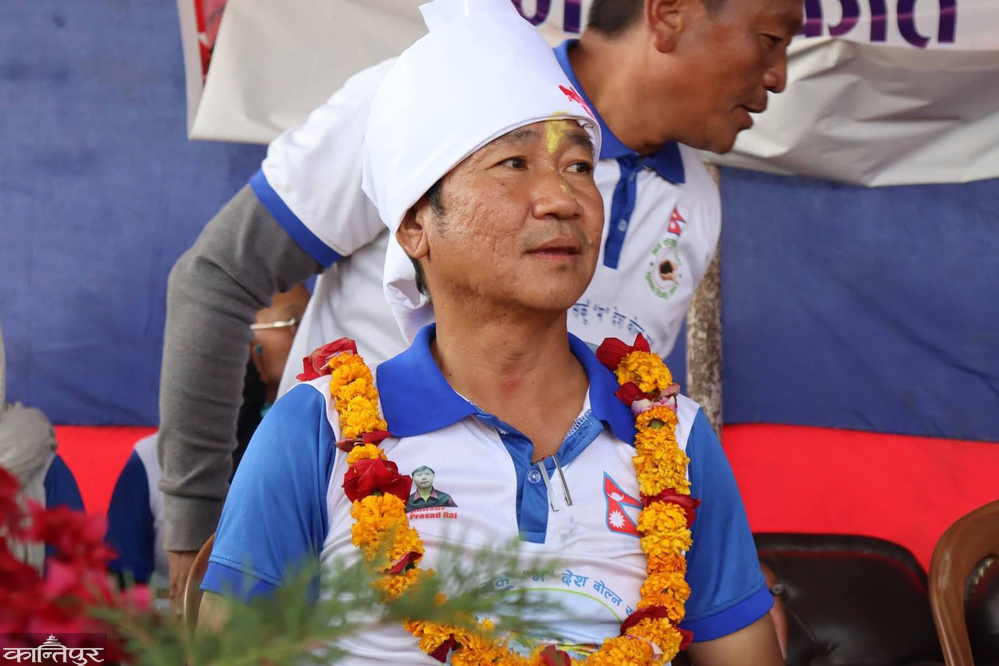
Will he present himself in the parliament in the same way? Curious speculations have started to appear from time to time. Moreover, considering the relationship between Hark and Balendra Shah, the people are eager to see him in the parliament.
Because his 'love and hate' relationship with Balendra is often discussed among the common people. When Balendra was the mayor of Kathmandu Metropolitan City, Hark was the mayor of Dharan Sub-metropolitan City.
In the 2079 BS local level elections, both of them had the election symbol - 'Lauro'. After being elected, the relationship between the two was initially cordial. But later Hark did not remain silent about Balendra's activities. He made strong comments on the eviction of squatters from the roadside without any alternative and the use of bulldozers in the squatter settlements.
Hark used to criticize Balendra through Facebook. Balendra used to reply with loving words. That trend continues even now. In response to Sampang's statement in Bhadau after the Gen-G movement, Balendra wrote, 'Dear Hark Sampang, no matter how much you abuse me, I will not stop loving you. It is one-sided, but my love is true.'
At the same time, Dharan Mayor Hark himself came to Kathmandu with the aspiration of leading the interim government. He used to claim, ‘I have come to take the leadership after the people called me.’
He tried to meet various influential people after the movement. He increased his activities from the streets to the army headquarters. After the resignation of the then Prime Minister KP Sharma Oli, names like Balendra, Sushila Karki and Kalyan Shrestha were in the news as possible candidates for the Prime Minister.
Finally, an interim government was formed under the leadership of former Chief Justice Sushila Karki. Hark did not succeed despite his many attempts. After the possibility of becoming the Prime Minister was eliminated, he started running for the federal minister post. That too was not possible. Apart from a few supporters, the trend of ‘Hark, Dharan Fark’ was going on on social media.
After the door of possibility was closed from all sides, he expressed his dissatisfaction with the formation of the government in frustration. He accused the government of being influenced by foreign powers. And returned to Dharan. On his way back, he made a stubborn decision – to open a party.
Without saying anything, he founded the Shram Sanskriti Party. Hark, who led the same party and formed a national party, is now coming to Kathmandu for another five years. But now he is not alone when he comes to Kathmandu. The people’s votes and the MPs of the party he won are with him. The slogan ‘Hark, Dharan Fark’ will not resonate like last time. Instead, he has the power to send the people of Sunsari to the parliament with confidence saying, 'Let's go to Kathmandu, Hark'. Therefore, he no longer has the option of returning to Dharan in disappointment.

000
Hark had applied for registration of the 'Shram Sanskriti Party' with the Election Commission on 12 Asoj. The party was officially registered on 16 Kartik. The party's election symbol became - soil between two hands.
He did not have a flag when registering the party. Questions were rained on him. His answer was, 'It is not appropriate to spend crores to make a flag when the poor cannot cover their naked bodies.' With the registration of the party, he put forward a political concept called 'Harkism'. According to Harkism, Harkism is not a foreign theory. It is a political thought based on labor, nature, culture and soil.
Yesterday, Hark, who was known only as the mayor of Dharan Sub-metropolitan City, has become more difficult to identify. He is now seen as a strong force in national politics.
000
If we follow Hark's political 'footprint', he has not come this far with a small struggle. In the early days, he would often stand alone on the streets with pamphlets criticizing the government. Dharan's drinking water problem was his main campaign. This campaign gradually made him popular at the local level.
In the 2076 BS by-election, he was the mayoral candidate in Dharan. But he received only 540 votes in the election. Congress candidate Tilak Rai had won by more than 26,000 votes. For many, that defeat was 'shameful'. For Hark, it was not the last.
Three years later, he became a candidate again in the local elections held in 2079 BS. He walked alone in the villages and streets with a microphone. He gave speeches in his own style. Even after becoming mayor, he did not change that style. He started a Shramdaan campaign to solve the drinking water problem. The scenes of walking with a pipe, digging it himself and getting the general public to participate in Shramdaan made him a different kind of leader.
Sometimes he would reach Singha Durbar carrying a crushed jug asking for water, sometimes he would announce that Saptakoshi water would be brought to Dharan through Shramdaan. After winning the hearts of the people, Hark did not have to look back.
After the elections, the Hark-led party has shown good influence in national politics. The National Independent Party will be the largest party numerically in parliament. The second will be the Congress, the third will be the UML, and the fourth will be the Nepali Communist Party.
Hark Sampang: From Dharan's street movement to the federal parliament
Hark-led Shram Sanskriti Party will be the fifth largest party. Although small in number, many have started to see Shram Sanskriti Party and Hark Sampang as strong opposition voices in terms of influence. His style of expression has also facilitated that assumption by the people. However, Hark himself seems to have to take many prudent steps in parliament.
The role he played at the local level was based on executive power. He could have made many decisions as a mayor. Now he is not allowed to exercise executive power in parliament. Even the arithmetic of parliament does not show the possibility of Hark becoming the ruling party.
There are complex aspects in parliament such as policy making, law making, parliamentary process and party coordination. How easy will Hark be able to make this? How will he be able to navigate the parliamentary process and complications? That remains to be seen. If he can convert his popularity into institutional politics, the political prospects of the Shram Sanskriti Party are likely to expand further. If that does not happen, more challenges will be added to his and the party's future. What form will his politics, which started in the streets of Dharan, take when it reaches the Parliament House? There are many questions, including trust, about Hark, who is facing a new test. How those questions will unfold, remains to be seen.