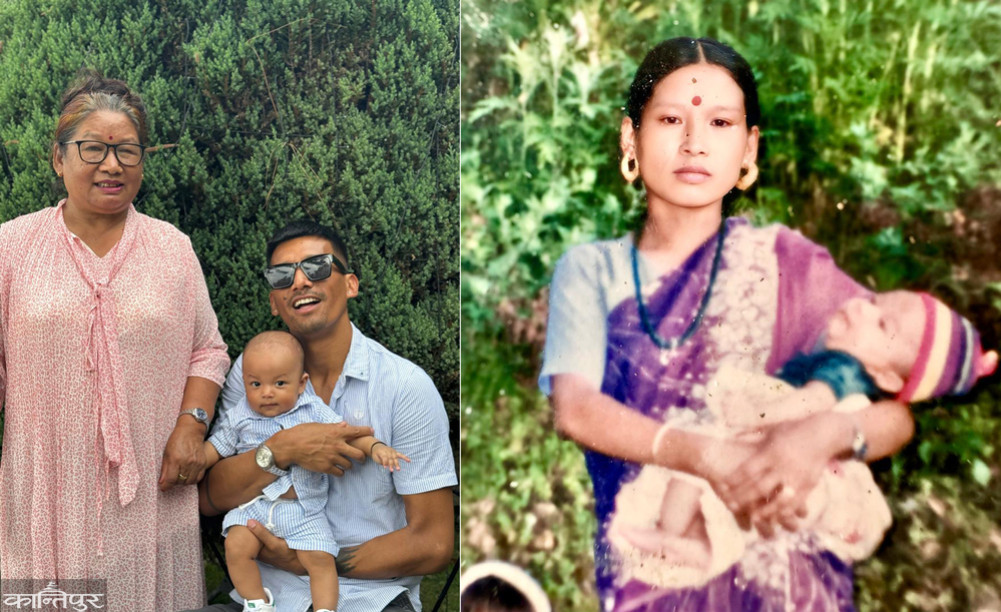
Harkamaya devoted her life to the happiness of her children after her husband disappeared when her children were young.
We use Google Cloud Translation Services. Google requires we provide the following disclaimer relating to use of this service:
This service may contain translations powered by Google. Google disclaims all warranties related to the translations, expressed or implied, including any warranties of accuracy, reliability, and any implied warranties of merchantability, fitness for a particular purpose, and noninfringement.
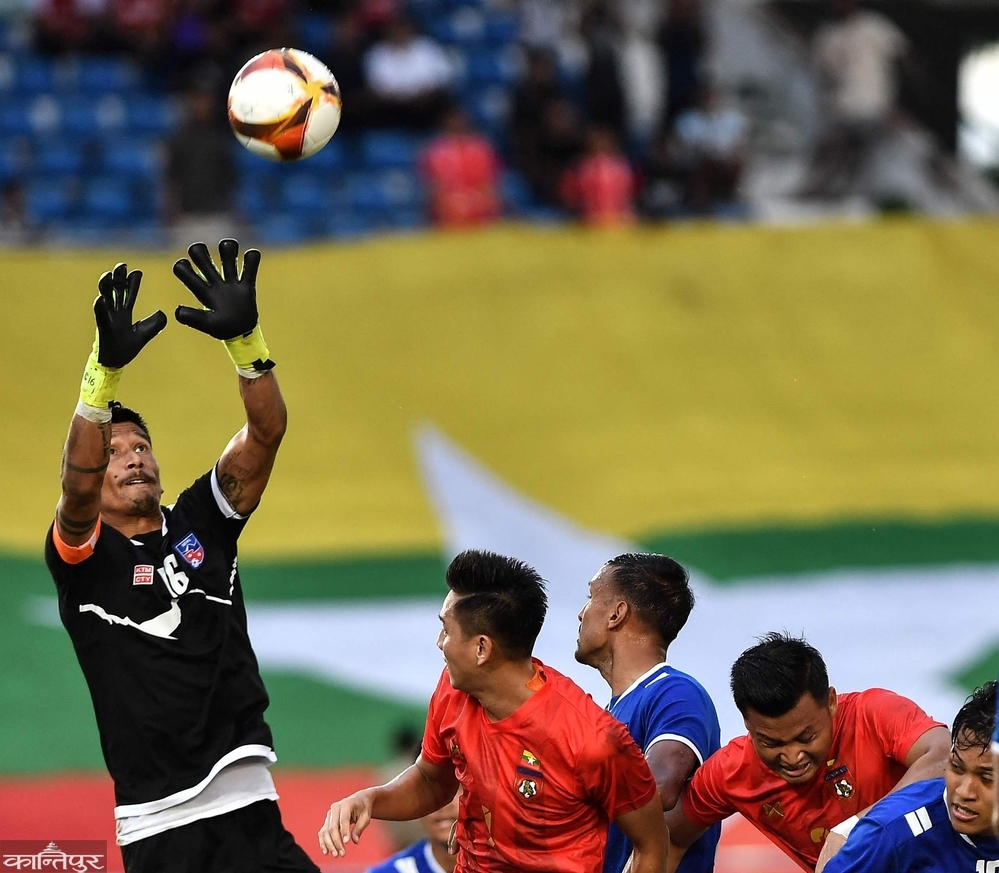
If someone wants to make football their career, Kiran Limbu is a Nepali player worth following. He became the captain and goalkeeper of the Nepali national football team. The player who played the most games for Nepal.
Kiran played more than 100 matches for Nepal. By the time he retires, many records will be held in his name. But this record is not a special reason to follow him. Rather his disciplined personal life.
There are those who are jealous of Kiran's playing life in Nepali football, but his simple, restrained and family life should be appreciated. 'The reason for all this is none other than our mother,' says Kiran, 'What I am, the way I am, is all because of my mother. Even if mother had reduced her sacrifice and penance, at least I would not be in this position today, so all the credit goes to mother. Currently, Kiran lives in his own house in Imadol, Lalitpur. Mother Harkamaya Rai became the head of the household, along with wife Kanchan Niraula and little son Kian. Small family, happy family. Kiran has also dabbled in business these days. Has opened 'Coffee Time' in Lakhetol, Central Baneshwar, along with friend Manasjan Rajbhandari. From the outside, it seems that everything has arrived.
Where was Kiran's life so easy and straightforward? "My mother suffered most of her life only suffering, pain and deprivation. How did he endure so much suffering and bring us here? Even remembering that is surprising. That's why I consider my mother as God. If God really exists, then she is our mother. How do you think that someone was able to say bitter words against his mother?'' says Kiran.
It's like a rule at home, to eat breakfast and dinner with mom. Mother again is not the type to stay silent, she has to go around. Kiran always thinks, 'Is there something wrong with mother? Did something happen? Why is this really so?'' the story begins like this. When Kiran was 12 years old, he probably realized for the first time, that his mother was alone, that his father had left him for many years.
There was an older sister in the house. There was no financial support of any kind from the father. When the children were growing up, the mother was not very old either, she was just young. She got married at the age of 16/17, betrothed, that. He had nothing in his name. Kiran's uncle's house is in a village some distance from Rajarani in Dhankuta. Even though her husband was not with her, Harkamaya decided not to keep her children in the village, otherwise they would be far away from good education.
So they came to Rajarani and there she rented a room and opened a small tea shop. Till then there was extreme economic crisis, there was nothing in the name of development, that's why life was difficult. It used to take two/three days to go to Dharan for ration. That shop alone was not enough to support the family, so Harkmaya alone was not able to acquire much land. Kiran also has a vague memory of farming on someone else's land. Kiran remembers plowing by himself. ``My mother used to plough,'' Kiran remembers now, ``We were very young, my mother used to go to the forest at four in the morning to collect grass and firewood. Others were surprised, how could a single woman go to the forest like that.'
Kiran also remembers her mother selling dokoka doko skus. Kiran does not remember well why her parents separated. Father was employed in the police, so there were postings outside. Meanwhile, he got married elsewhere. He did not look at Harkmaya and his two children. Harkamaya was from Pakkapakki village, she could not keep track of her husband's whereabouts. According to Kiran, his father came till the time of his birth, then he did not come back.
At that time, Kiran does not even remember meeting her father exactly. "I think I met him once when I was a child, but I don't remember anything," he says. Now, Kiran has met her father once/twice, but they don't talk much. "If we had brought another mother and looked at us, things would have been different," says Kiran, "we only saw the mother's struggle." We only saw the pain of the mother's pain.'
Kiran was a child who would get excited when he mentioned football. Ever since he found out, he continued to play football in one form or another. Ultimately, football gave him another life. Kiran was just 14 years old, selected for ANFA Academy in Kathmandu from Dhankuta. Must have been around 2055/056, he went straight from school football to the academy. After that, his rising playing career only continued to rise.
He moved to Kathmandu because of football, his mother stayed there in the village. At that time, Kiran realized very well that her mother was really suffering. After a long time, one day Kiran asked his mother, "Why didn't you get married again?" It was also the age?' Again, what does Kiran think if her mother had married another,
His life was hellish. Harkamaya's answer to her son's question was, 'I had one son and one daughter each. I thought, I will teach them well anyway and make them great people. It was so bold. That's why I chose this life. Harkamaya did not give importance to her personal life for the sake of her children. Instead she struggled a lot. "That's why I bow down when I say yes," adds Kiran.
He thinks again, how did his mother have such courage? Was it in the blood? He has been asking the same question to his mother. The answer was, 'Perhaps by looking at your faces.' Meanwhile, they had the full support of their maternal uncle, Kiran was born in the uncle's house. Two uncles. Harkamaya's sad days were not over even after Kiran came to Kathmandu. She runs a grocery store and manages to make a tin hut.
'After I started playing football from a club in Kathmandu, I also started earning money, but in the meantime, my mother never told me that I needed money. The mother was working and managing the expenses herself. One thing he always said is that you should save the money you earn. He repeated this over and over and said, 'That's why Kiran saved as much as he could and did not spend it. Since he did not spend, he did not develop bad habits.
Lalitkrishna Shrestha, president of Three Star Club at that time, also helped him equally. At that time, Lalit sir took care of me like a parent, so it was very easy for me. I saved as much money as I earned.' This time lasted for at least 10 years, Kiran was alone in Kathmandu. There mother alone in the village. Meanwhile, Kiran used to send some money to the village knowingly.
Kiran now feels that her early life taught her to save money. "I knew my responsibilities at that time, that's why I never did things that were going around". He also learned how to be disciplined by playing football. He had only one goal, to be a good player no matter what.
Kiran got the opportunity to debut for Nepal in 2008. The tournament was the AFC Challenge Cup Qualifiers held in Cambodia. He was given the opportunity to play for Nepal for the first time by German coach Thomas Plath, that too in the starting 11. This debut was not pleasant, he lasted only 23 minutes on the field. He was seriously injured in a fight with an opposing player and had to undergo jaw surgery. He felt at that time, maybe now the sports life will not go forward. But Hares did not eat, did not stop playing.
After three years in 2011, he returned to the Nepali team. Coach Graham Roberts gave him another chance in the friendly match against Bhutan in Pokhara. Everyone knows what happened next. He first took over the captaincy of Nepal in 2018, when the SAFF Championship was held in Bangladesh. He wore the captain's 'arm band' for the first time in the match against Bhutan.
Meanwhile, Kiran also went abroad and played, earning well from playing and also built a house in Imadol. Now Kiran is very happy to live with her mother in the same house. Mrs. Kanchan also respects and loves her mother, she is equally grateful. Kiran should always talk to her mother when she is at home. Kanchan also became an equal participant in this conversation. Meanwhile, talk about the old days and about the future.
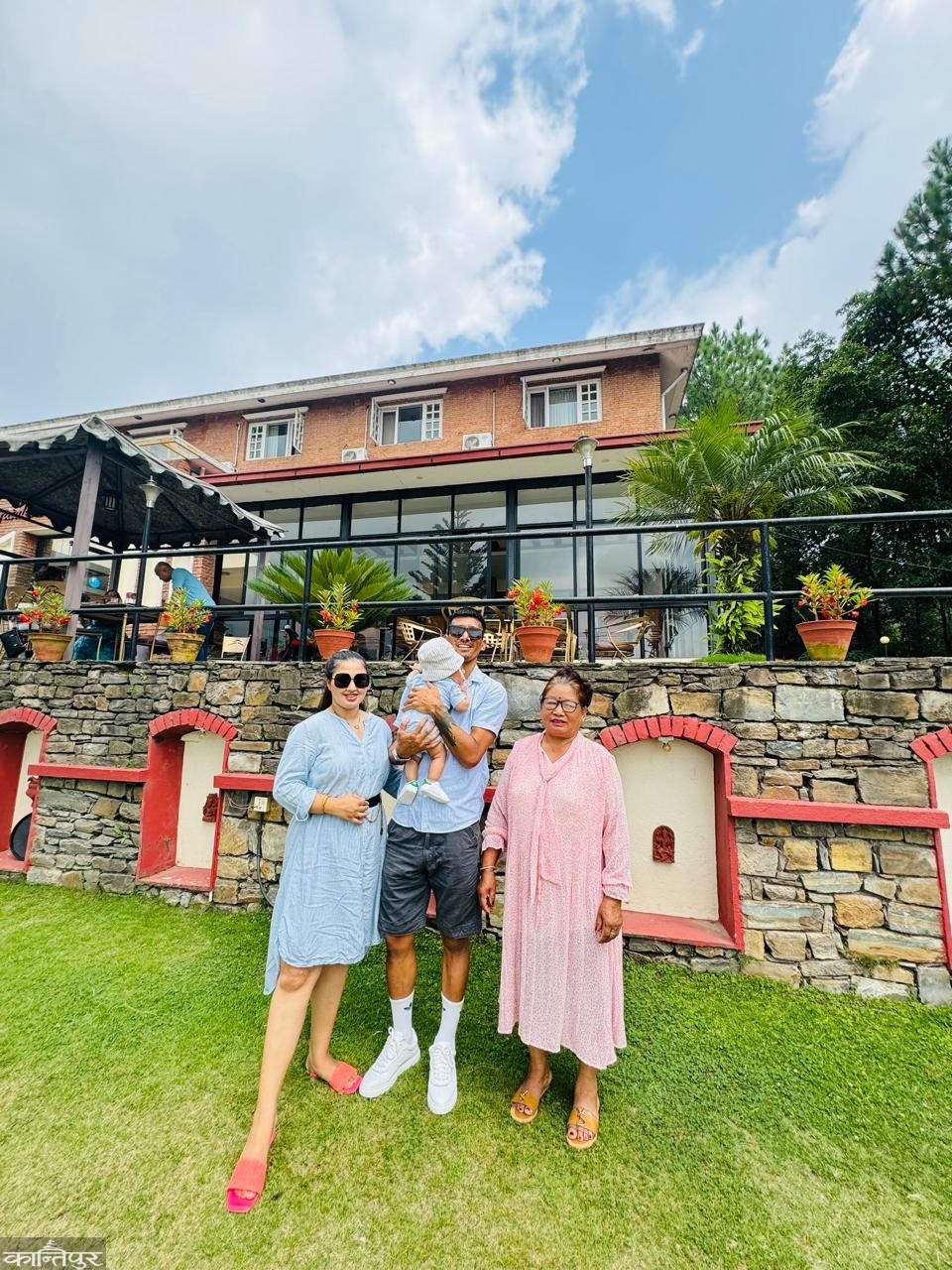
Mother Harkmaya is now 63 years old, equally agile. She is also growing something in the small land next to the house. She cuts the light herself. She keeps cleaning the house as much as possible. Health is equally good. "His health must be good because he has done a lot of work in the village," says Kiran. Now he feels very happy and he does not forget to give credit to football for this.
"Football has given me everything, that's why I can never criticize Nepali football, I will never consider it bad," says Kiran. Harkmaya is not happy with Kiran's progress, even now she is asking her son to save.