Around 2000 second generation Nepalis are trying to get to know their ancestral land, history and culture through Nepali language schools.
We use Google Cloud Translation Services. Google requires we provide the following disclaimer relating to use of this service:
This service may contain translations powered by Google. Google disclaims all warranties related to the translations, expressed or implied, including any warranties of accuracy, reliability, and any implied warranties of merchantability, fitness for a particular purpose, and noninfringement.
Sneha Aryal from South Australia was 5 years old when she used to go to a Nepali language school. Born here, the Nepali language school not only taught her to write and speak Nepali, but also gave her the opportunity to know and learn about Nepali art culture and tradition.
She is currently pursuing higher education at the university here and represents the second generation of Nepalese. She is equally fluent in speaking and writing Nepali.
About 2,000 second-generation Nepalis like Sneha, who are now growing up in Australia, are trying to get to know their ancestral land, its history and culture closely from Nepali language schools operating in every state and city.
in Australia in the year 2000 The foundation of the Nepali language school was laid from the beginning. In Sydney, Guthi Australia and Gorkha Nepalese Community started this project with the aim of bringing the Nepali language to the second generation. However, with Shabdamala officially registering at the end of 2000 and the formalization of the language school in Adelaide, South Australia in 2008, this process is now spreading. Shabdamala has established 8 branches in Sydney alone. 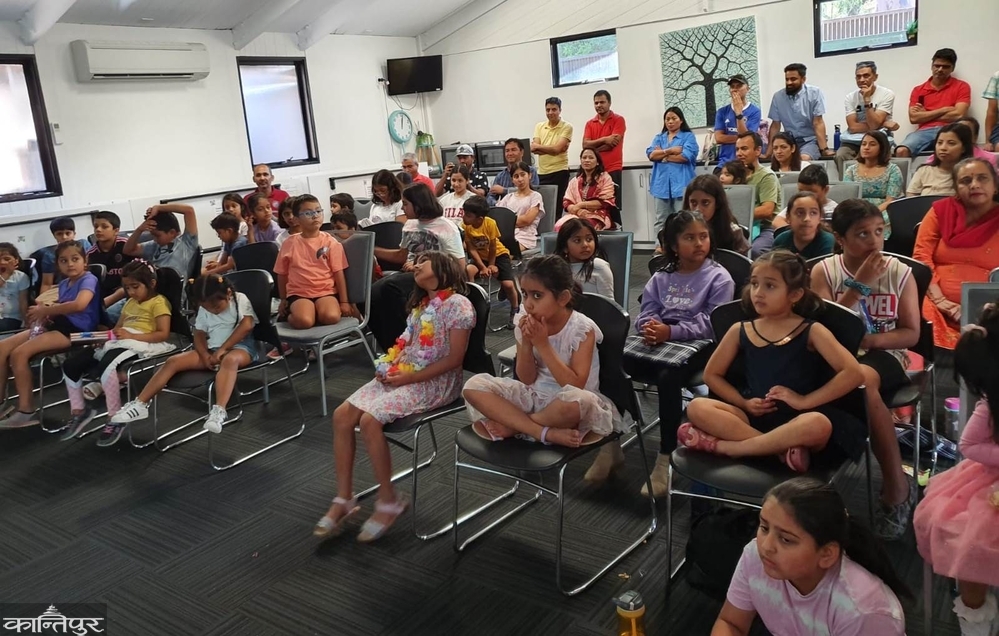
Now dozens of such language schools are operating in every state and city of Australia. These schools are not only teaching the Nepali language to the Nepali children growing up here, they are also passing on their identity such as festivals, traditions, art style, culture, music, dance etc. .
Love, love and interest towards Nepal can be clearly seen in the eyes of the children who come to study in this school. They look so excited that they reach the school half an hour before the class starts.
Every child who comes to the school has the same love for Nepal and the fascination of learning language and culture. The learning sequence that starts with the national anthem of Nepal sometimes ends with music and dance. They are making pictures from Nepal's national flag to Mount Everest and Buddha. From Jhapa in the east to Mahakali in the west, they are trying to get to know the art culture.
Children from 5 years to 14 years study in these schools. The aim of the school is to introduce the Nepali alphabet from a young age and inform about Nepal. "Our effort is to keep the children connected with Nepal," says Ankur Upadhyay, a parent and teacher who has been involved in this work since the establishment of the Nepali Pathshala. 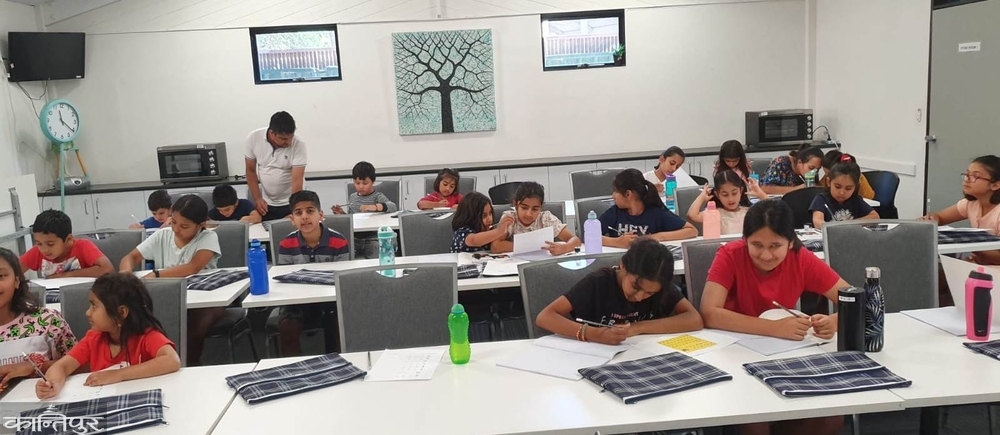
Studying children go to the multicultural program here and show Nepali traditional dance . Dressed in Nepali national dress, they have become a means to introduce Nepal as well.
'The fascination shown by our children towards Nepal, Nepali art culture and tradition inspires us to continue this work,' said Chandramani Pandey, the principal of the school. English speaking He is amazed that even after being born and brought up in the community, he kept the love of Nepal alive.
Just a few days ago, Nepali Vidyalaya, another language school operating in Adelaide, South Australia, was celebrating its tenth anniversary, and hundreds of parents present became emotional. They are happy not only that their children have learned Nepali language but also to see Nepali art culture in Australia were seen . In this school, every week about 150 students are trying to learn Nepali language and get to know Nepal closely.
Even the government here has been giving full support to such schools. Being a multicultural country, the Australian state government encourages children from different countries and cultures to get to know their country and its language and culture.
Giving financial support (grant) for school operation, providing training to teachers and also monitoring the school . According to the school administrators, the Ministry of Education and the Ministry of Multiculturalism encourage such schools through financial and other programs. 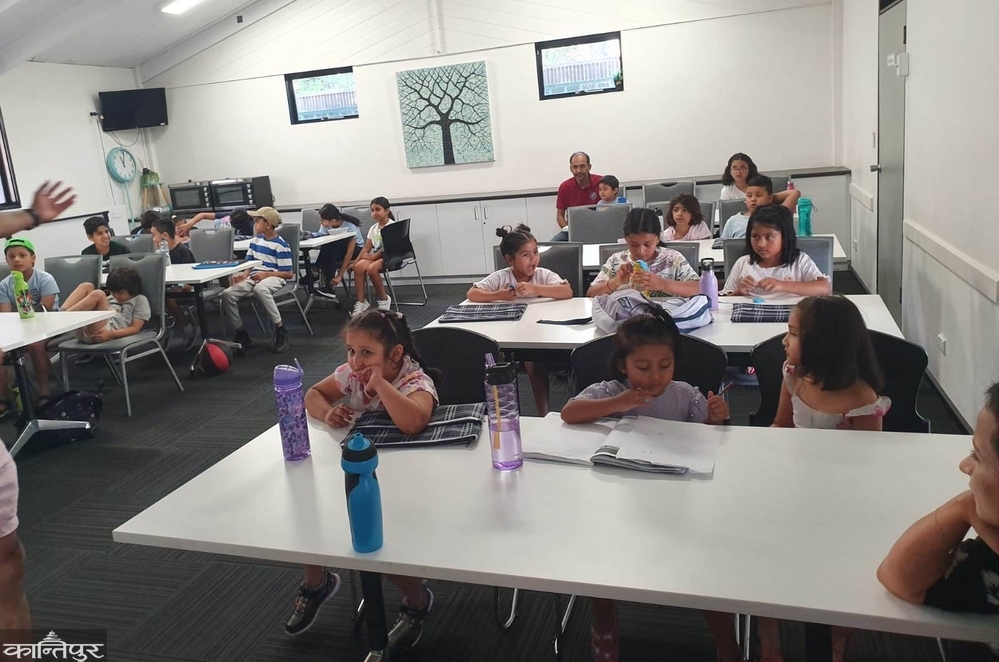
parents do not have to pay any fee to enroll in such schools, and the attraction towards it is increasing . Although the local government provides some financial support, most of the schools are run entirely by volunteers. Some schools provide a limited amount of stipend to teachers who teach children as volunteers.
Children learn their own language and culture, and on the other hand meet with other children from the Nepali community, so all parents are attracted to these classes. Sometimes children's favorite foods, sports, picnics, barbecues and other programs also encourage children to come to class regularly.
Bishnu Ghimire, Chairman of the Board of Directors of Shabdamala in Sydney, shares his experience of Nepali Language Pathshala having achieved significant success in a period of one and a half decades. He is introducing Nepal and the Nepali language to about 400 Nepali second generation children through his 8 branches. "It has given not only the children but also the parents an opportunity to expand brotherhood and relationship with each other," he said.
Nepali language schools are now not only in cities like Sydney, Melbourne, Adelaide, but also in Perth, Brisbane and other states and cities. This is making the second generation children growing up in Australia closer to the Nepali language, art culture and tradition. They are able to speak openly about Nepal with children from other communities.

