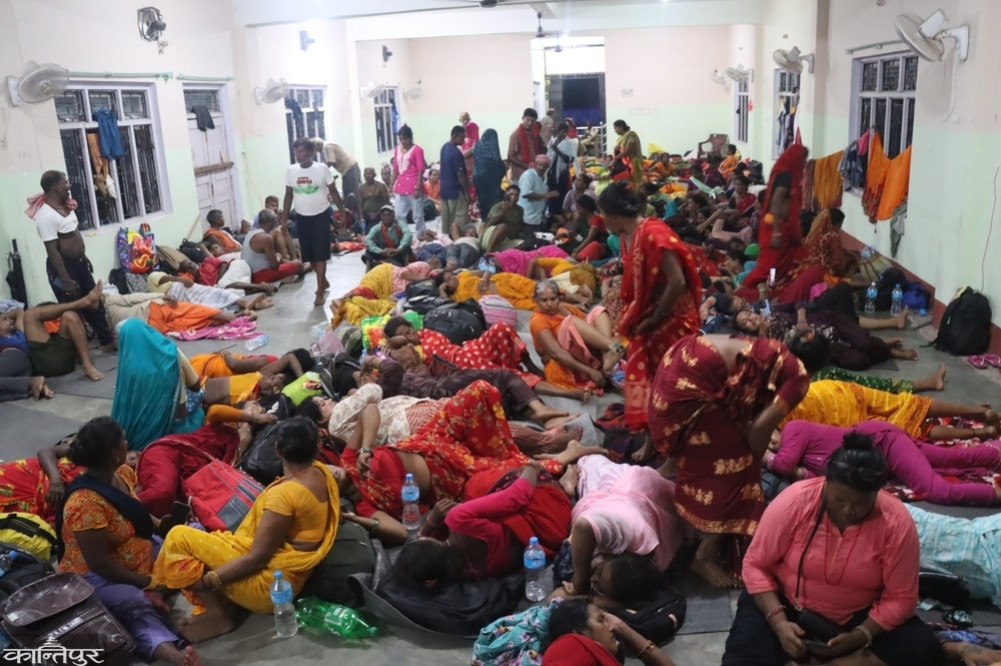
The average interest rate on loans in commercial banks is 6.64 percent, and the amount that can be loaned out by banks is around Rs. 1.56 trillion. However, ordinary citizens are taking loans from moneylenders at interest rates of up to 48 percent instead of going to banks.
We use Google Cloud Translation Services. Google requires we provide the following disclaimer relating to use of this service:
This service may contain translations powered by Google. Google disclaims all warranties related to the translations, expressed or implied, including any warranties of accuracy, reliability, and any implied warranties of merchantability, fitness for a particular purpose, and noninfringement.
Sehra Khatun, 40, of Jayanagar, Garuda Municipality-1, Rautahat, borrowed Rs 150,000 from her village moneylender Jayamangal Mahato on 17 Magh 2073 to cover household expenses. Mahato gave the loan for one year on the condition of charging 36 percent interest per annum. Saying that the amount he had given was at risk, he forced Khatun to put his thumbprint on the tamsuk (document) of the principal amount of Rs 600,000. Even after Khatun had paid Rs 200,000, the loan has not been repaid.
000
Shivshankar Mahato of Vrindavan Municipality-5, Rautahat, borrowed Rs 2.7 million from Shivprasad Rai Yadav of Gujra Municipality-8 in 2072 BS to build a house. He also signed a document stating that he would pay interest at the rate of 3 percent for one year. Along with this, he gave Yadav 1 bigha 4 katta land after passing the registration. Mahato could not pay the interest and principal in a year, but after 6 years he paid 2.5 million rupees. Yadav said that he had already sold 1 bigha 4 katta land for 8.4 million. Mahato says, ‘I paid 2.5 million. They are asking me to pay millions more. They have sold the land. What should I do now?’
000
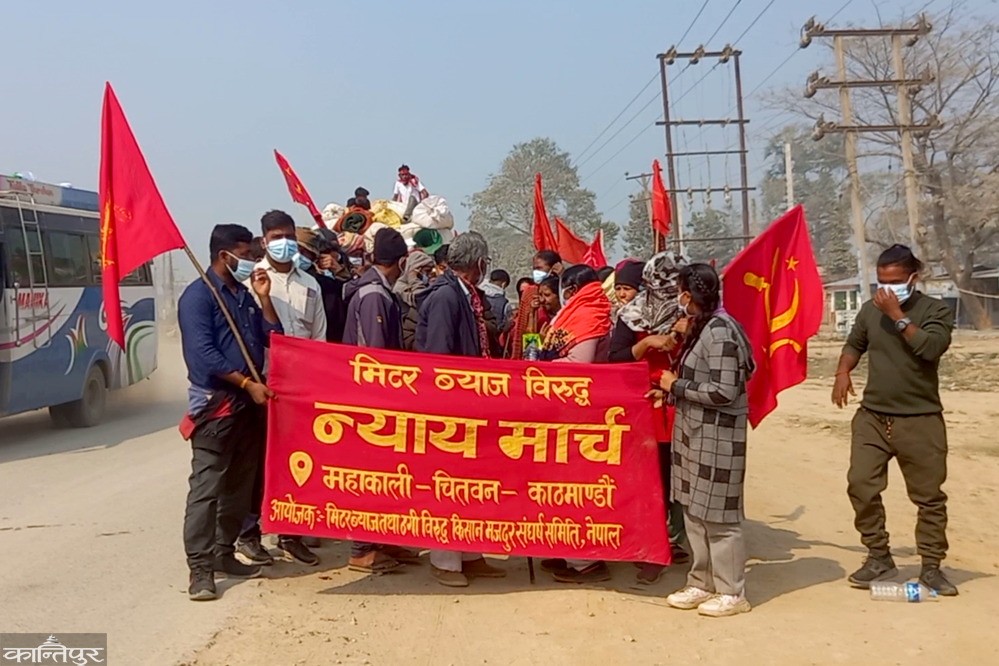
Khatun and Mahato are representative characters of meter interest victims. The high interest charges of moneylenders have led to the uprising of thousands of such citizens. According to the commission led by Gauri Bahadur Karki, formed in 2079 to provide justice to meter interest victims, more than 24,000 victims have filed complaints with various district administration offices. The victims have complained that they are forced to pay 36 percent interest and in some cases, interest on interest. Some victims say that interest of up to 48 percent is being charged.
The problem of meter interest is not new. After the metered rate victims' movement, agreement with the government, and failure to implement the agreement, the cycle of movement is going on again. The government and metered rate victims reached an agreement for the fourth time on Friday. But it is not certain when a solution will be found.
This metered rate problem is raising questions about the country's financial policy and the justification of the policies and programs put forward by the state for inclusive financial access. Experts have commented that the country's financial system is not easy for the common citizen to access and services are not provided according to the needs of the citizens, so they have to take loans from moneylenders at high interest rates. The interest rates of banks are very low.
In the last three decades, interest rates have been raised only three times in the country. Apart from that, interest rates have remained average for most of the years. Even when interest rates are low, citizens have not been able to get easy financial facilities according to their needs. Experts say that this confirms that the country has not been able to develop a banking system that is in line with the capacity, needs, and literacy levels of the citizens.
Even though the country has gone federal, the financial system has not been modified accordingly, so many citizens have not been able to get even basic banking services, said economist and former executive director of the Nepal Rastra Bank, Nar Bahadur Thapa. ‘The country has gone to financial federalism, commercial banks have reached all 753 local levels. But financial services are not enough,’ he said, ‘There has been no coordination between our financial system and financial federalism. The Nepal Rastra Bank should adopt a policy that is in line with financial federalism by modifying the financial structure itself.’ In the past, there were development banks and finance companies across the country according to districts and regions.
They used to provide financial services to small and medium-sized entrepreneurs or borrowers. After the Nepal Rastra Bank reduced the number of development banks and finance companies, the citizens they were serving were deprived of financial access. In the past, microfinance and cooperative organizations had fulfilled the financial needs of many citizens. After corruption increased, the Nepal Rastra Bank tightened microfinance. There were also problems in the cooperative sector.
Commercial banks and microfinance have not been able to cover the ‘missing middle’, so a large number of citizens have had to rely on usurers or moneylenders for financial services, says Thapa. ‘If banks and financial institutions at the provincial and local levels had been envisaged in the financial system, just like the three-tier federalism, the citizens of those areas would have received financial services effectively,’ he said. ‘It is essential to revise the current financial structure to bring the class currently deprived of financial services into the financial system.’
The ‘Financial Literacy Baseline Survey’ of the Nepal Rastra Bank in December 2079 showed that nearly 72 percent of the country’s adult population has to rely on moneylenders, family and friends for savings or loans. While the government was claiming that financial literacy had increased in the country and financial access had expanded, the survey report showed that the majority of the adult population did not have access to the formal banking system. By then, commercial banks had branches in 752 local levels, and now there are branches in all municipalities.
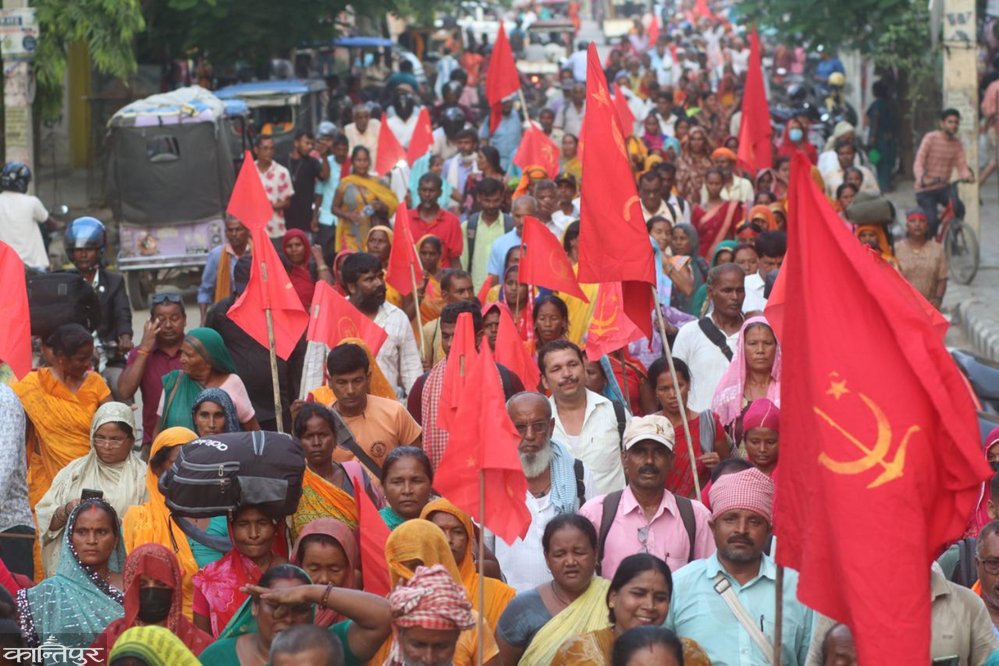 Although the government's goal is to expand banking services across the country to end the compulsion of citizens to take loans from moneylenders at high interest rates, the survey pointed out that the situation of financial access is very poor in reality. The survey also showed that about 45.5 percent of people are using savings and loans through collective groups (informal groups). 'A large number (45.54 percent) of people are still using collective savings and loans,' the survey report said. The report shows that the financial literacy of Nepalis at the national level is 57.9 percent. Experts say that this situation has not improved much.
Santosh Koirala, President of the Nepal Bankers Association, admitted that banks have not been able to bring a separate 'product' to improve the financial condition of the poor and low-income groups. 'It is an old practice for citizens to take loans from moneylenders. It seems that some citizens have not come forward for various reasons. The number has decreased,' he said, 'There is a certain process for taking loans through formal means, including banks and financial institutions, and documents are required, which citizens are not accustomed to. They find it easy with the moneylender. The bank may also not have been able to explain.'
Koirala says that borrowers also become victims due to the intentions of moneylenders. 'The poor and the disadvantaged do not have access to banks. Are the financial literacy programs conducted for financial inclusion not sufficient?' he added.
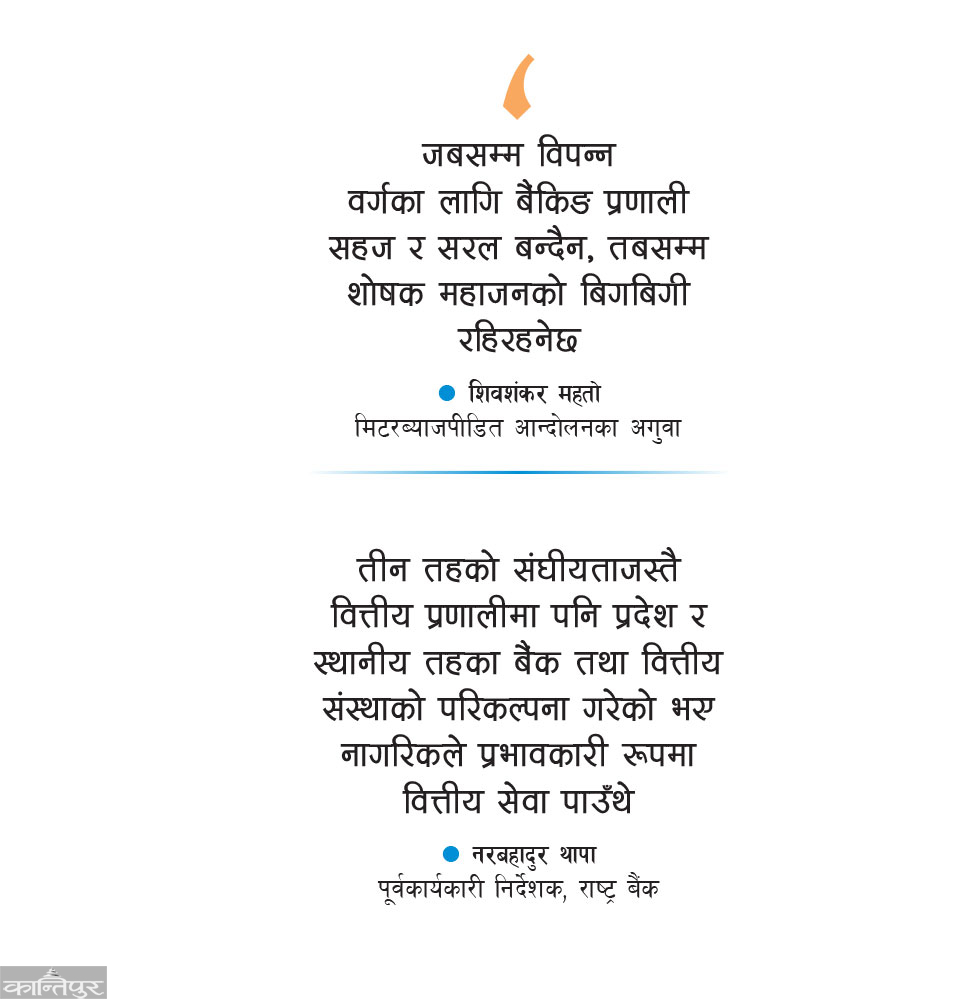 Rastra Bank spokesperson Guru Prasad Poudel said that financial inclusion has not been achieved as expected due to the lack of easy availability of financial tools and financial literacy according to the target group along with the physical presence of financial institutions. 'Although access to financial institutions is a prerequisite for financial inclusion, it is not sufficient,' he said, 'To increase financial access, the Rastra Bank has extended commercial bank branches to all 753 local levels. Even though banks have reached physically, financial services are yet to reach all citizens. There is still a need to introduce financial tools (products) according to the needs and demands of customers.’
In the past, the Rastra Bank adopted a policy of increasing the number of banks and financial institutions to increase financial inclusion, but now it has changed its strategy, says Spokesperson Poudel. ‘In the 1940s, the Rastra Bank increased the number of various types of banks by adding financial institutions through the Financial Sector Reform Program to increase financial inclusion. Then, the branches reached the physical level, but the service did not reach the expected level,’ he added, ‘After that, the Rastra Bank strengthened the institutions through mergers and adopted a strategy of expanding services through the branches of those institutions. It adopted a policy of financial literacy. Now the Rastra Bank has adopted a strategy of expanding digital financial services by increasing financial literacy. In the monetary policy of the current fiscal year, it has also promoted digital banking through non-banking institutions for P2P lending.’
According to Spokesperson Poudel, the Rastra Bank has now reached the next stage of financial inclusion, which is ‘digital empowerment.’ ‘The National Bank is clear on this issue that financial inclusion is achieved only when citizens have access to financial services, the ability to understand those services, the confidence to use them safely, and the opportunity to use them to improve their financial lives,’ he added, ‘Therefore, the essence of financial inclusion is not just opening a bank account, but also qualitative improvement in the economic participation, capacity, and prosperity of citizens.’
Financial access opens the door to convenience, financial education gives citizens the ability (confidence) to enter that door, and digitization ensures meaningful participation in the modern economy, claims Spokesperson Poudel.
While interest rates have been at historically low levels for the last three years, excess liquidity has accumulated in banks. As of mid-Jeshta, the average interest rate on loans in commercial banks is 6.64 percent. In addition, according to various ‘products,’ commercial banks are disbursing loans at even lower interest rates.
As of 25 Asad, the amount that can be lent in banks (excess liquidity) is Rs. 1.56 trillion. Due to low credit demand and increasing remittances, deposits have increased, and the amount of money that can be given to banks and financial institutions has increased continuously in all months of the last fiscal year 2082/83.
In Shrawan of the last fiscal year, banks and financial institutions had excess liquidity of about Rs 100.11 trillion. According to the National Bank, there was excess liquidity of Rs 100.46 trillion in Bhadra, Rs 110.68 trillion in Asoj, Rs 100.90 trillion in Kartik, Rs 120.16 trillion in Mangsir, Rs 120.24 trillion in Poush, Rs 120.22 trillion in Magh, Rs 120.50 trillion in Falgun, Rs 120.83 trillion in Chait, Rs 130.65 trillion in Baisakh, and Rs 130.88 trillion in Jestha. Citizens are also relying on moneylenders to get even small loans.
Especially in the villages of Terai-Madhesh, there are a large number of poor people who are trapped in the cycle of unfair transactions (meter interest) and moneylenders. Most of the expenses are written as household expenses. Despite the low interest rates, the victims say that they have to rely on moneylenders due to lack of income, documents and access. They say that the cumbersome procedures of the banks also discourage them. The banks first ask for proof of ‘regular income source’, but the victims say that they do not have any.
Shyamkumari Thakur, 32, of Mangalpur, Dhanushadham-2, said that the poor class who earn their living by working as daily wage laborers or opening small shops do not have any documents of institutional income source. Shyamkumari's husband Bhojendra Thakur had taken a loan of 350,000 from Shivaji Yadav of the village in Bhadra 2068. For that, he deposited 2 kathas in the name of the moneylender at that time. She had taken the loan to start a small business at home.
Shyamkumari was trying to take a loan from the bank. But she said that since they do not have access to banks, they are also subject to high interest rates. "Banks look for safe collateral. The poor, landless or those living on undeveloped land do not have assets that the bank can trust. Even if someone has collateral, it is very difficult to get around its valuation, land revenue and survey," she said.
Even though the government has taken a policy of establishing bank branches at every local level, banks have still not been able to focus on rural and poor people, said Shivshankar Mahato, leader of the meter interest victim movement. According to Mahato, banks are hesitant to invest in small and unsecured loans. He said that even the concessional loans brought for small businessmen and the poor fall into the hands of the unscrupulous and those with access. Mahato is also one of the victims. "Until the banking system becomes easy and simple for the poor, the problem of exploitative moneylenders will continue," he said, "Unsecured and simple loans should be arranged for the poor." Banks should develop a system for providing loans with less documentation and on the recommendation of local people's representatives.'' According to Mahato, most of those affected by meter interest are from poor communities. Most of them are illiterate. ''Even those who cannot read or write go to moneylenders to borrow money. They cannot decipher what is written on the paper,'' he said.
Mahato says that financial literacy classes should be conducted to make women and the poor in rural areas aware of fraud by moneylenders. According to him, moneylenders write the principal and prevailing interest in small letters at the very end of the tamasuk. When a case is filed, the moneylender tears out the small letters written at the end of the tamasuk and presents it to the court.
 In legal and practical terms, improper transactions (meter interest) refer to illegal financial transactions carried out with the intention of charging interest in excess of the limit (more than 10 percent) prescribed by the prevailing law. अधिवक्ता विपिन गौतमका अनुसार साहुले ऋणीको बाध्यताको फाइदा उठाउँदै विभिन्न प्रपञ्च रच्छन्, जसलाई मुलुकी अपराध संहिता (दोस्रो संशोधन) ऐन, २०८० ले स्पष्ट रूपमा कसुर ठहर गरेको छ ।
‘ऋणीको समस्याको फाइदा उठाउँदै कपाली तमसुकमा रकम बढाउने, खाएको ऋणभन्दा दोब्बर, तेब्बर वा सोभन्दा बढी रकमको तमसुक बनाउन लगाउने काम भएका छन्,’ उनले भने, ‘प्रत्येक वर्ष वा केही महिनामा पुरानो ब्याजलाई साँवामा जोडेर नयाँ तमसुक बनाउने, ब्याजलाई नै साँवामा गाभ्ने जस्ता हर्कतकै कारण आज ऋणीहरू घरबारविहीन भएका छन् ।’
ऋणको धितो भन्दै ऋणीको जायजेथा वा जग्गा आफ्नो वा आफन्तका नाममा मालपोत कार्यालयबाटै रजिस्ट्रेसन पास गराएर लिने र पछि फिर्ता नगर्ने घटनाका धेरै उजुरी परेको जिल्ला प्रशासन कार्यालय गौरले जनाएको छ । सुरक्षाका नाममा ऋणीबाट बैंकको खाली चेकमा हस्ताक्षर गराउने र पछि मनलाग्दी रकम भरेर ‘चेक बाउन्स’ को मुद्दा हाल्ने धम्की दिने गरेको पीडितहरू सुनाउँछन् ।