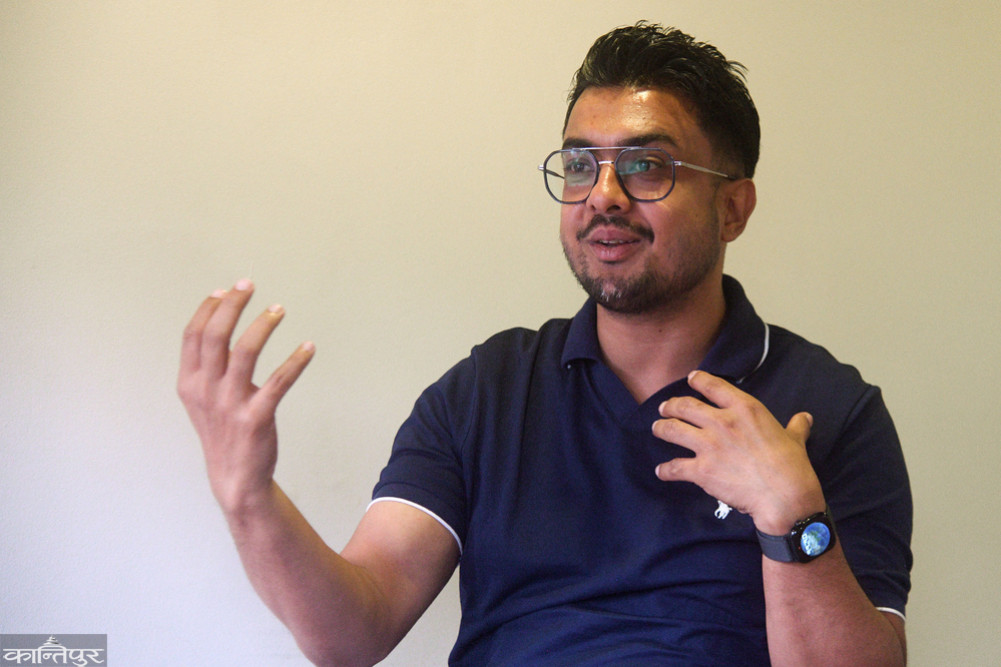
Even after starting his business, Sudeep didn't think about going abroad for many years, but now that desire has disappeared. He is rooted in the soil of this place, someone who sees opportunity in crisis.
We use Google Cloud Translation Services. Google requires we provide the following disclaimer relating to use of this service:
This service may contain translations powered by Google. Google disclaims all warranties related to the translations, expressed or implied, including any warranties of accuracy, reliability, and any implied warranties of merchantability, fitness for a particular purpose, and noninfringement.
A person's life is sometimes defined not by what he saw, but by the dreams he had to give up. Many children who have the desire to fly in the sky end up compromising with various responsibilities as they grow up. Some people's dreams are snatched away by time, some by circumstances. And some dreams are lost in the womb of a new dream and are reborn in another form.
The 'future' of Sudip Ghimire, the president of the Nepali Youth Entrepreneur Forum under the Federation of Nepalese Chambers of Commerce and Industry, also speaks a similar language. Sudip, who was born in Hetauda, had a firm dream in his heart, to become a pilot and one day fly above the clouds.
That dream was still alive even when he reached school life in Itahari and then college in Kathmandu. The moment he passed his ISC from St. Xavier's College in Kathmandu, business enveloped him. The family business, the weight of responsibility and the demands of time became so heavy that his dream of becoming a pilot was gradually absorbed into his business. Then a strange reckoning began in his life – studies became part-time, business full-time.
Perhaps this is where another Sudeep was born, where others could see the death of dreams, he saw the birth of opportunities. Business was not just his job, it gradually became his nature. And, eventually, it became a sweet addiction. He became the 'Ammaali' of entrepreneurship and creativity. The Ammaali of karma.
Sudeep's grandfather was a farmer. His father (Shiv Ghimire) is the first generation of their professional life. At the time of Ekta, they had 44 petrol pumps and around two hundred tankers from Mechi to Mahakali. Many of them got jobs. But during the festive season, when the employees were on leave, Sudeep would stay at the petrol pump in the evening and morning. He would pay the bills and keep the accounts neat.
‘Maybe that’s why I developed a hunger for professionalism,’ Sudeep muses in his memory, ‘and my current position is probably built on that foundation.’
His father was diagnosed with diabetes and high blood pressure at the age of 42. By then, the family had already laid a good foundation for the business. Expanding the business that his father, who hails from the hills, had built through years of hard work became Sudeep’s first responsibility at that time. He decided to strengthen the foundation of the business on his own soil rather than going abroad.
After completing his Plus Two in 2064, he started studying BBA at Don Bosco College in Kathmandu. But deciding to keep his studies part-time and pursue business full-time, he reached Dharan. At that time, the family had established an export-oriented Katha industry. Together with a Marwari partner, he began to handle the operation and management of the industry.
The Dharan industry was shifted to Itahari a year later. Then, the Sugam Gas Industry was established in Khanikhola, Dhading. There was also a plan to open a feed industry in Hetauda, but it did not succeed.
The business group led by Sudeep is spread across the country. Seven gas industries are operating from Dhangadhi to Itahari. Four petrol pumps are running. ‘All the materials produced by the katha industry are exported to India. Khair wood is the main raw material of that industry, which is used in the paan and pharmaceutical industries,’ he said.
Orthodox tea is being produced under the ‘Sagarmatha Tea’ brand in Sankhuwasabha under the enterprise led by Sudeep. Kalanga, Sanigad and Bungol hydroelectric projects in Bajhang have already started production. Another project is under construction in Bhojpur. A natural gas plant has been established in Simara. Samriddhi Finance is in operation, which is being merged with Pokhara Finance. He aims to gradually turn it into a development bank.
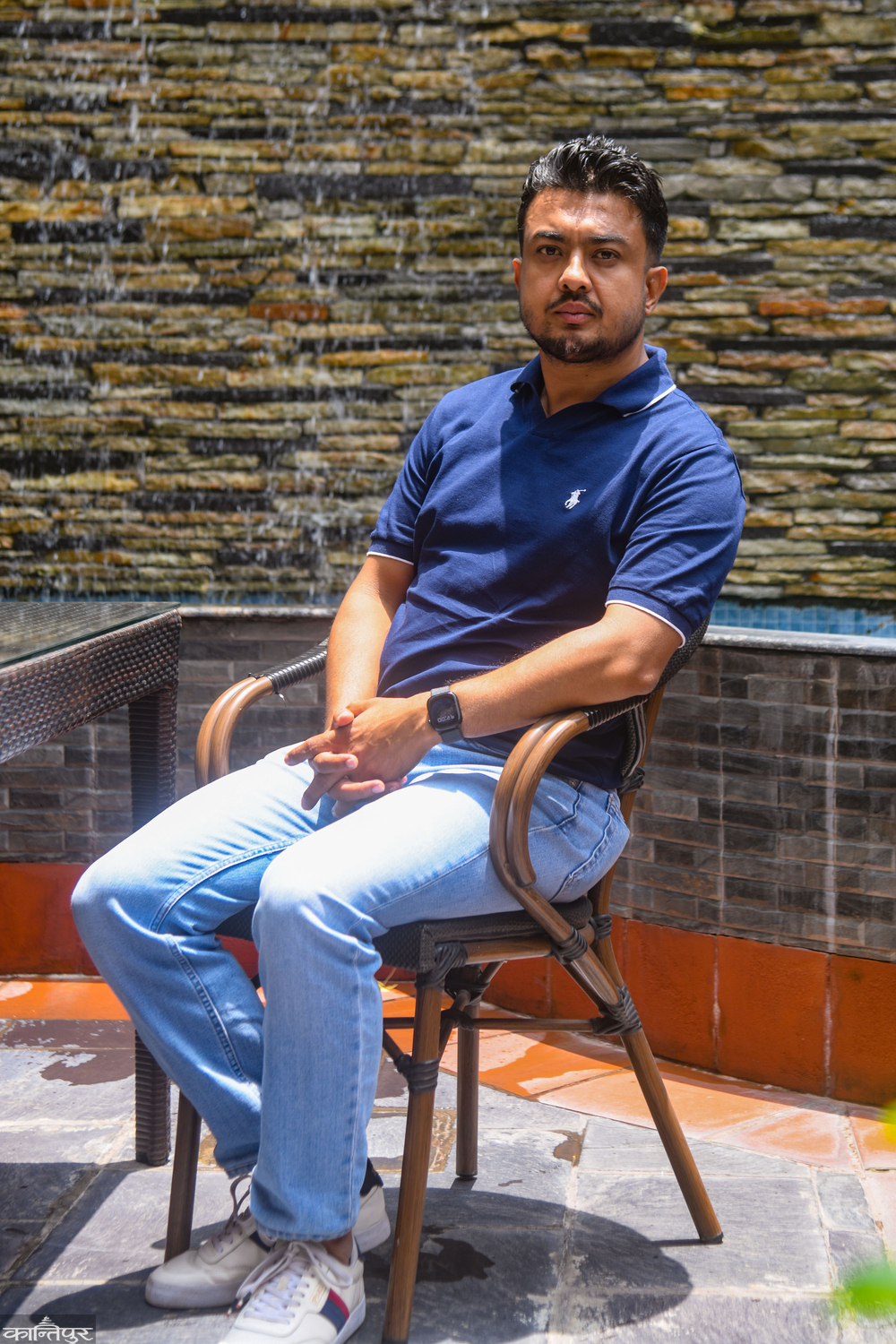
Sudeep is also preparing to enter the hotel business. In the field of information technology, the work of developing various software through the company 'Tidy Days' has not stopped. 'The annual turnover of the business run under my leadership is about 15 billion rupees,' said Sudeep, 'of which about 2,000 people have been directly employed.'
Sudeep's plans are not limited to this. He aims to expand his business in the energy, tourism, information technology and financial sectors. Sometimes his heart sinks. Although there are ample investment opportunities in Nepal, he complains that procedural complexity remains. He has a bitter experience that investors still have to visit many agencies for a single project.
Even after starting his business, Sudeep did not think of going abroad for many years. But now that desire has disappeared. He is rooted in this soil, who sees potential in crises. 'Even though Nepal faces economic crises from time to time, it also has the ability to come out of them quickly,' he said, 'That is why I am optimistic. There are problems in Nepal, but there are even more possibilities here.'
He believes that being able to do business in his own country with his family is his greatest achievement. He says that he has invested in the information technology sector because he can work with many countries of the world while staying in Nepal.
He sees that Nepali youth who have gone abroad are also trying to connect with their homeland in some way or the other. Therefore, he urges the youth to go abroad, study, learn skills, gain experience and become financially capable. But he believes that ultimately, it will be more meaningful if they can contribute to their country by returning to Nepal. He suggests that even if it is not possible to return, they should work to enhance the reputation of Nepal and Nepalis around the world.
Sudeep's business journey is not only successful. He becomes serious when he remembers the bitter reality of facing major obstacles due to various rumors and opposition while establishing Sugam Gas Industry. He remembers that after struggling for two to four months and succeeding in bringing the industry into operation, it gave him new confidence. He understands that the fact that seven gas industries are now operating across the country is the result of that struggle.
Sudeep also had to face failure in some businesses such as the gudukha industry, plywood industry and bitumen import. He admits that not all businesses currently in operation are equally successful. But he is clear – both success and failure in business are learning stages.
Sudeep has two sons. He is married to his classmate Shweta Dahal, with whom he studied together from school to St. Xavier's in Itahari. His wife is an engineer. She has been handling the engineering side of the business.
Sudeep loves to travel. Hills and mountains are his special favorites. He has been to Manang and Mustang two-three times. Japan is his favorite country. The civilization and culture there have touched him deeply.
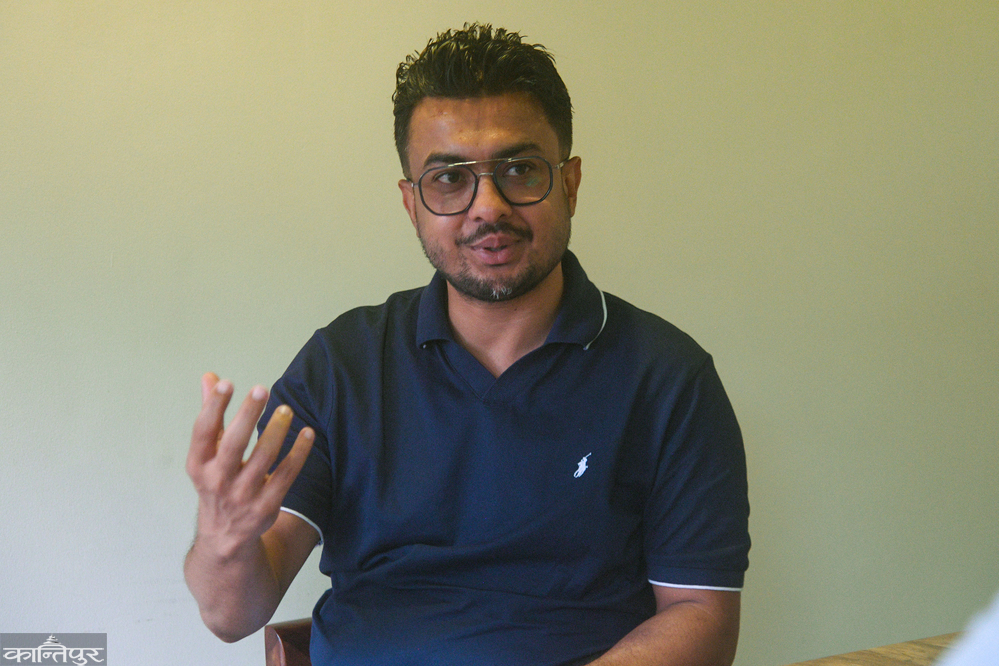
Sudeep likes to read books on history, especially the history of economics. James Clear's 'Atomic Habits' has shaken him from the inside. Cricket is his favorite game. Having played cricket in his student life, he is now fascinated by golf. He has not lost the habit of going out on his bicycle whenever he gets free time.
Sudeep, who wakes up early in the morning and starts his day, usually reaches the office by nine o'clock. He says that although he wants to return home as soon as possible in the evening and spend time with his family, it is not always possible due to his busy schedule.
He remembers the couple Binod Chaudhary and Shesh Ghale in Nepal as his professional inspiration. The struggle and journey of China's Jack Ma abroad has influenced him the most. The biggest foundation of success is discipline and time management. 'Long-term success in life is not possible if everyone cannot utilize the time that is available equally to everyone in the right way,' he sounded firm.
Sudeep is active in the field of startup and entrepreneurship promotion through the Federation of Nepalese Chambers of Commerce and Industry's Young Entrepreneurs Forum. He says that this forum, which has about 1,200 members from all over the country, is helping to transform the new ideas of the youth into practical enterprises.
When he was young, the wings of a ship shone brightly in his eyes, but life handed him a different kind of 'cockpit'. He wanted to be a captain, or pilot, of a ship, but fate led him to the world of industry, enterprise, and creative ventures. He is still flying today. The difference is, now his wings are tied to industry, enterprise, and the future of thousands of people.