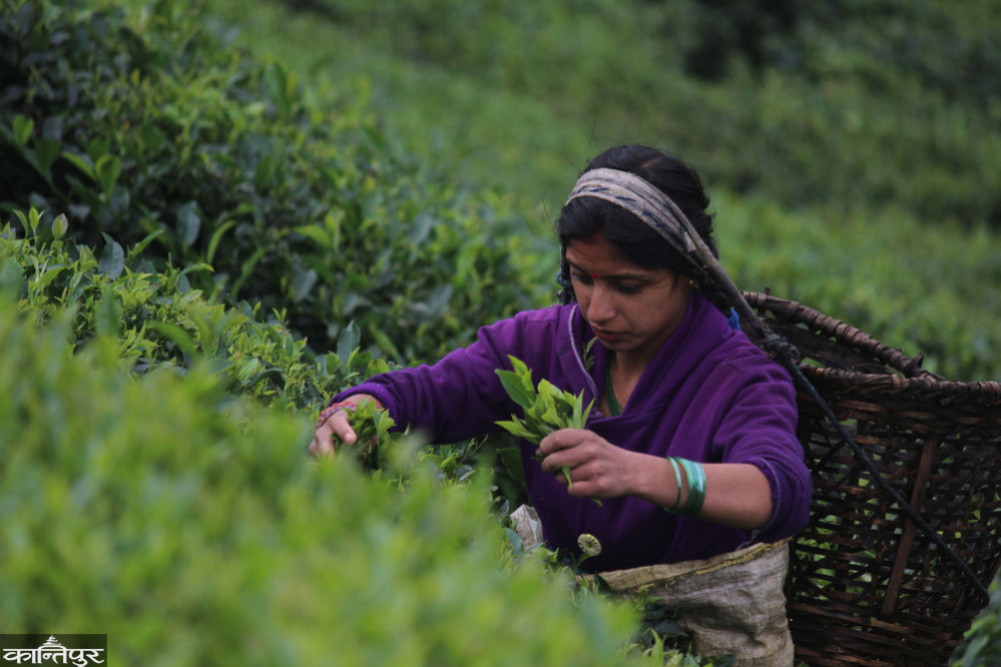
A meeting of the Nepal Tea Producers Association held on Sunday decided to close 30 tea factories, both small and large, and more than a dozen tea gardens in Jhapa from Ashad 40.
We use Google Cloud Translation Services. Google requires we provide the following disclaimer relating to use of this service:
This service may contain translations powered by Google. Google disclaims all warranties related to the translations, expressed or implied, including any warranties of accuracy, reliability, and any implied warranties of merchantability, fitness for a particular purpose, and noninfringement.
Tea factories and plantations in Jhapa are also set to close in protest against the Indian Tea Board's restrictions on Nepali tea exports.
A meeting of the Nepal Tea Producers Association held on Sunday decided to close 30 tea factories, both large and small, and more than a dozen tea plantations in Jhapa from Ashad 40.
According to the association's senior vice-president, Shiva Kumar Gupta, the industry and plantation shutdown program will continue until the Indian side removes the restrictions on Nepali tea exports. 'We have decided to continue the shutdown until India removes the restrictions,' Gupta said.
Earlier, 53 tea factories in Suryodaya Municipality of Ilam have also announced to stop production from Ashad 10. Industrialists have complained that exports have been affected when vehicles carrying Nepali tea were stopped in India due to the new quality testing process implemented by the Indian Tea Board.
Tea has been cultivated in an area of more than 10,000 hectares in Jhapa. More than 20,000 farmers and workers are directly involved in the tea sector here. The closure of industries and plantations will affect farmers, workers and thousands of families dependent on the tea business.
According to industry players, due to the obstacles seen in the sale of Nepali tea in the Indian market, there is a large amount of ready-made tea in the industries, and the payment for green tea leaves purchased from farmers has also started to be affected.
Tea business players have been demanding immediate diplomatic initiatives with India through the Nepal government to resolve the problem and remove the obstacles seen in exports.