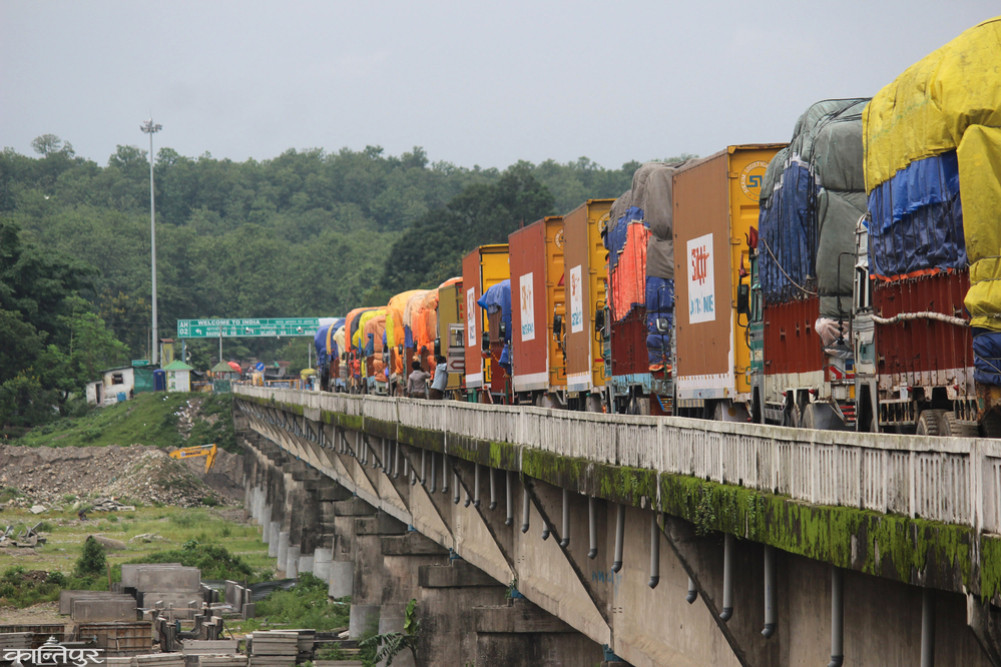
Due to India's continued blockade, Indian importers have become hesitant to buy Nepali tea.
We use Google Cloud Translation Services. Google requires we provide the following disclaimer relating to use of this service:
This service may contain translations powered by Google. Google disclaims all warranties related to the translations, expressed or implied, including any warranties of accuracy, reliability, and any implied warranties of merchantability, fitness for a particular purpose, and noninfringement.
India has resumed restrictions on tea exports, which were eased on 20th Jestha after a three-week ban. Tea entrepreneurs say that traders have stopped exports after the Tea Board of India (TBI) reached the importer's warehouse and started collecting tea samples for laboratory testing.
They say that samples of each bag of Nepali tea consignment that reached Kolkata, India, have been collected and sent to the laboratory for testing. They have been instructed not to sell or distribute tea until the test report is received.
Earlier, on 18th Baisakh, the Indian Tea Board implemented a new 'Standard Operating Procedure' (SOP) for tea going to India from Nepal and made it mandatory to conduct laboratory testing, which halted exports for 21 days. After widespread protests, the Indian side gave written information that it would only do 'random sampling' without testing each truck, and exports resumed. But now that the samples have been sent to the warehouse again and started testing, traders are confused, said Shiv Kumar Gupta, Senior Vice President of the Nepal Tea Producers Association.
More than a week after samples were collected from more than half a dozen trucks that reached Kolkata, most of the reports have not been received. About 50,000 kg of Nepali tea is now stuck in Indian warehouses.
More than a week after samples were collected from more than half a dozen trucks that reached Kolkata, most of the reports have not been received. ‘After going to the warehouse to collect samples, even the traders are hesitant to buy tea,’ said Gupta. ‘The board’s intention is clear that Indian traders should not buy Nepali tea.’ According to Gupta, samples are collected from each bag of tea that has left Nepal as soon as it reaches the warehouse and sent to the laboratory. Sales have been stopped until the report is received. This is why traders have stopped submitting forms for new exports. They fear that if the test results do not meet the standards, they may have to destroy their goods.
Its impact has so far been mainly limited to orthodox tea exports. Because the production of CTC tea has decreased significantly this season. “The production of CTC tea has decreased by about 50 percent due to the low availability of green leaves in tea gardens,” Gupta said. “Orthodox tea production has not been affected. Most of the tea being exported to India is orthodox.”
Earlier, the Indian Tea Board had also implemented a system requiring importers to submit information including the date of arrival of the tea, warehouse address, container details and proforma invoice to the ‘Tea Council’ portal before the tea reaches India. Nepali businessmen have been interpreting this as a non-trade barrier.
According to Indra Adhikari, Agriculture Officer at the Birtamod Regional Office of the Nepal Tea Development Corporation, Nepal produces about 26 million kg of tea annually. Of this, about 90 percent of orthodox tea is exported, while 80 to 90 percent of the exports depend on the Indian market.
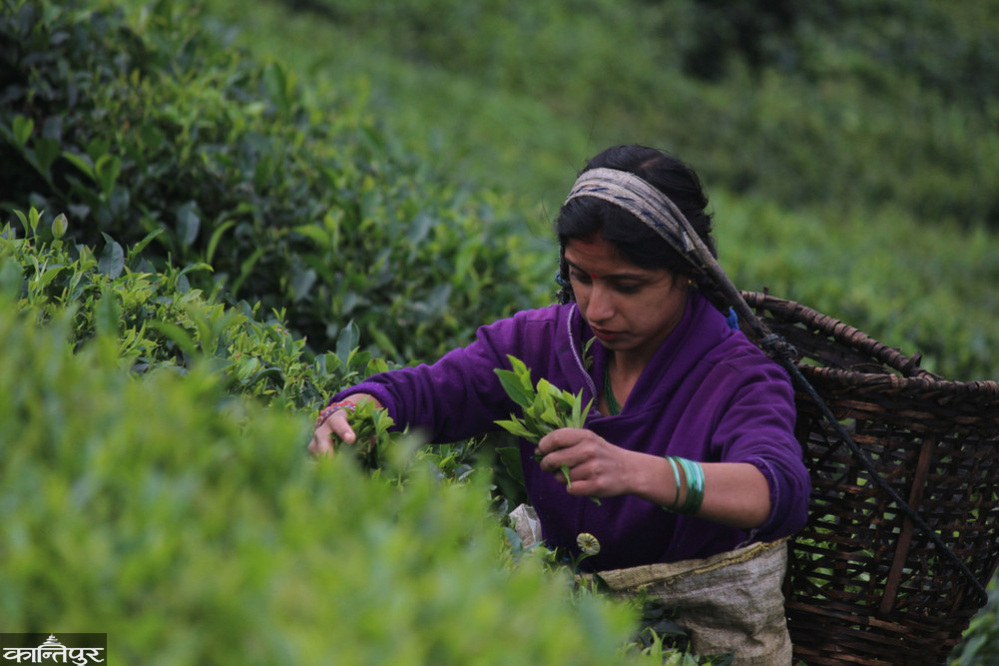 Nepal’s tea sector is already under pressure. In the last fiscal year, tea production decreased by 25 to 30 percent due to the outbreak of the looper insect. Due to rising production costs, many farmers have started turning to alternative crops. The Tea Board of India had started a mandatory testing system for tea imported from all countries, including Nepal, from May 1 to strengthen quality control and prevent adulteration. Under the said standard operating procedure (SOP), sampling and laboratory testing of every consignment of tea imported was made mandatory.
Indian importers were required to submit detailed shipment details through the Tea Board's portal and pay Rs 11,120 per sample plus applicable GST.
Instant tea and ready-to-drink tea were exempted from this rule. This move seriously affected Nepal's tea exports, leading to diplomatic initiatives between Kathmandu and New Delhi.
India revised the procedure on May 20 after discussions between officials of the two countries. As per the directives of the Indian Ministry of Commerce and Industry, the Tea Board of India exempted tea imported for domestic consumption from mandatory laboratory testing and this rule was applicable only for tea imported for re-export
remained in place. Indian customs authorities and the Food Safety and Standards Authority of India were allowed to continue collecting random samples under their risk management system.
The relaxed regime was a great relief to Nepali producers and exporters, as most of them are heavily dependent on the Indian market. Recent developments, however, suggest that the testing regime has been practically re-implemented, even though there has been no formal notification.
An official of the Nepal Tea and Coffee Development Board said that they have received information that Indian authorities are conducting mandatory laboratory testing of tea imported from Nepal, but have not received any official letter in this regard. The resumption of the blockade, which has resumed less than two weeks after the lifting of the ban, has renewed concerns among tea producers about market access.
Nepal exports about 90 percent of its orthodox tea to India, making Nepal completely dependent on neighboring India for its tea trade. Only a very small portion of Nepali tea reaches third-country markets. Nepal produces 7,838 tonnes of orthodox tea annually. Exports to third countries account for only 11.4 percent of total orthodox tea exports.
The situation of certified organic orthodox tea is somewhat better. 21.63 percent of its total production reaches overseas markets. Tea exports are already on the decline in the current fiscal year. According to the Trade and Export Promotion Center, Nepal exported 11,393 tons of tea worth Rs 3.35 billion in the first 10 months of the current fiscal year (up to mid-Jeshtha). This is lower than the 14,300 tons worth Rs 3.97 billion in the same period last year.
Last fiscal year, Nepal exported 15,598 tons of tea worth Rs 4.59 billion. Despite some recent progress in bilateral recognition of food testing certificates, the problem of repeated testing has become a major headache for Nepali exporters.